
3 months 3 weeks ago
Lacking much historical information and assuming (1) that victims of injustice generally do worse than they otherwise would and (2) that those from the least well-off group in the society have the highest probabilities of being the (descendants of) victims of the most serious injustice who are owed compensation by those who benefited from the injustices, ... then a rough rule of thumb for rectifying injustices might seem to be the following: organize society so as to maximize the position of whatever group ends up least well-off in the society.
▼
Source
pp. [http://books.google.com/books?id=fVITAAAAQBAJ&pg=PT138 231-232]

3 months 3 weeks ago
The whole historic existence of mankind is nothing else than the gradual transition from the personal, animal conception of life to the social conception of life, and from the social conception of life to the divine conception of life.
▼
Source
Chapter IV, Christianity Misunderstood by Men of Science

3 months 3 weeks ago
Like every 'intellectual', a philosophy teacher is a petty bourgeois. When he opens his mouth, it is petty-bourgeois ideology that speaks: its resources and ruses are infinite.
▼
Source
p. 2

3 months 3 weeks ago
I saw men go up and down, In the country and the town, With this tablet on their neck,— 'Judgement and a judge we seek.' Not to monarchs they repair, Nor to learned jurist's chair; But they hurry to their peers, To their kinsfolk and their dears; Louder than with speech they pray,— 'What am I? companion, say.'
▼
Source
Astræa
3 months 3 weeks ago
Impulse, subjectivity and profanation, the old adversaries of materialistic alienation, now succumb to it. ... The representatives of the opposition to the authoritarian schema become witnesses to the authority of commercial success. ... In the service of success they renounce that insubordinate character which was theirs.
▼
Source
p. 273

3 months 3 weeks ago
Through certain humors or passions, and from temper merely, a man may be completely miserable, let his outward circumstances be ever so fortunate.
▼
Source
As quoted in Day's Collacon : An Encyclopaedia of Prose Quotations: (1884), p. 930; Actual quote: "That thro certain Humours or Passions, and from Temper merely, a Man may be completely miserable; let his outward Circumstances be ever so fortunate." An in
3 months 3 weeks ago
The specific political distinction to which political actions and motives can be reduced is that between friend and enemy.
3 months 3 weeks ago
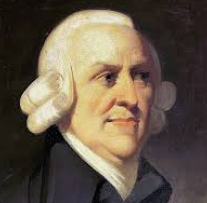
It has been called “the outpouring not only of a great mind, but of a whole epoch.” Yet it is not, in the strict sense of the word, an “original” book. There is a long line of observers before Smith who have approached his understanding of the world: Locke, Steuart, Mandeville, Petty, Cantillon, Turgot, not to mention Quesnay and Hume again. Smith took from all of them: there are over a hundred authors mentioned by name in his treatise. But where others had fished here and there, Smith spread his net wide; where others had clarified this and that issue, Smith illuminated the entire landscape. The Wealth of Nations is not a wholly original book, but it is unquestionably a masterpiece.
▼
Source
Robert Heilbroner, The Worldly Philosophers 7th ed. (1999), Chapter III. The Wonderful World of Adam Smith
3 months 3 weeks ago
What remains is the remarkable and, for many, certainly disquieting diagnosis that all genuine political theories presuppose man to be evil, i.e., by no means an unproblematic but a dangerous and dynamic being.
3 months 3 weeks ago
Partisans of the free market invoke Adam Smith in order to lend the authority of his name to the case they themselves want to make: for the complete removal of the state from economic enterprise; for the economic sovereignty of the market; and for leaving all questions of production and distribution to the magic of the invisible hand... But...the reason Adam Smith wanted an end to government intervention in the market was that in his time (in contrast to today) it was only thanks to state intervention that what he called "the mean rapacity, the monopolising spirit of merchants and manufacturers" was able to dominate the economy, to the great detriment of the society as a whole.
▼
Source
Heinz Lubasz, 'Adam Smith and the ‘free market’', in Stephen Copley and Kathryn Sutherland (eds.), Adam Smith's Wealth of Nations: New Interdisciplinary Essays (1995), p. 49
3 months 3 weeks ago
Such ... was the theory (an outgrowth of Malthusian) of the selection and struggle for existence as the basis of human progress. Such again, is Marx's theory, with regard to the gradual destruction of small private production by large capitalistic production... as an inevitable decree of fate. However unfounded such theories are, however contrary to all that is known and confessed by humanity, and however obviously immoral these may be, they are accepted with credulity, pass uncriticized, and are preached ... To this class belongs this astonishing theory of the Baungarten trinity — Goodness, Beauty and Truth — according to which it appears that the very best that can be done by the art of nations after 1900 years of Christian teaching is to choose as the ideal of their life that which was held by a small, semi-savage, slaveholding people who lived 2000 years ago, who imitated the nude human body extremely well, and erected buildings pleasing to the eye. Educated people write long, nebulous treatises on beauty as a member of the aesthetic trinity of beauty, truth, and goodness... and they all think that by pronouncing these sacrosanct words, they speak of something quite definite and solid... on which they can base their opinions. ... only for the purpose of justifying the false importance we attribute to an art that conveys every feeling, provided those feelings give us pleasure.

3 months 3 weeks ago
Certainly no man can rightfully be required to join, or support, an association whose protection he does not desire.
▼
Source
Section III, p. 7
3 months 3 weeks ago
Act, if you like,—but you do it at your peril. Men's actions are too strong for them. Show me a man who has acted, and who has not been the victim and slave of his action. What they have done commits and enforces them to do the same again. The first act, which was to be an experiment, becomes a sacrament. The fiery reformer embodies his aspiration in some rite or covenant, and he and his friends cleave to the form, and lose the aspiration. The Quaker has established Quakerism, the Shaker has established his monastery and his dance; and, although each prates of spirit, there is no spirit, but repetition, which is anti-spiritual.
▼
Source
Goethe; or, the Writer

3 months 3 weeks ago
Whatever good fortune befalls you, attribute it to the gods.
3 months 3 weeks ago
Now to get back to our given Church: it lives almost entirely for modesty and moneyed piety. It zealously inveighs against the harm done to Joseph and the sheep, but it has made its arrangements with the upper classes and serves as their spiritual defender. It bristles at see-through blouses, but not at slums in which half-naked children starve, and not, above all, at the conditions that keep three quarters of mankind in misery. It condemns desperate girls who abort a foetus, but it consecrates war, which aborts millions. It has nationalized its God, nationalized him into ecclesiastic organization, and has inherited the Roman empire under the mask of the Crucified. It preserves misery and injustice, having first tolerated and then approved the class power that causes them; it prevents any seriousness about deliverance by postponing it to St. Never-Ever's Day or shifting it to the beyond.
▼
Source
p. 144

3 months 3 weeks ago
Blood will stream over Europe until the nations become aware of the frightful madness which drives them in circles. And then, struck by celestial music and made gentle, they approach their former altars all together, hear about the works of peace, and hold a great celebration of peace with fervent tears before the smoking altars.
▼
Source
As quoted in the Fourth Leaflet of the White Rose (1942)
3 months 3 weeks ago
Here the ways of men part: if you wish to strive for peace of soul and pleasure, then believe; if you wish to be a devotee of truth, then inquire.
▼
Source
Letter to Elisabeth Nietzsche, Bonn, 1865-06-11, quoted as epigraph in Walter Kaufmann, The Faith of a Heretic (1961)
3 months 3 weeks ago
Unfortunately not only were the rulers, who were considered supernatural beings, benefited by having the peoples in subjection, but as a result of the belief in, and during the rule of, these pseudodivine beings, ever larger and larger circles of people grouped and established themselves around them, and under an appearance of governing took advantage of the people. And when the old deception of a supernatural and God-appointed authority had dwindled away these men were only concerned to devise a new one which like its predecessor should make it possible to hold the people in bondage to a limited number of rulers.
▼
Source
III

3 months 3 weeks ago
A scholar ... should turn his ears from the talk of the illiterate and not take it to heart.
▼
Source
Treatise 3: “The Study of the Torah,” H. Russell, trans. (1983), p. 69
3 months 3 weeks ago
We are born believing. A man bears beliefs as a tree bears apples.
▼
Source
Worship
3 months 3 weeks ago
Technology paces industry, but there's a long lag in the process. Industry paces economics. It changes the tools, a great ecological change. And in that manner we come finally to everyday life. The politician is someone who deals in man's problems of adjustment. To ask a politician to lead us is to ask the tail of a dog to lead the dog.
▼
Source
"The Designers and the Politicians" (1962), later published in Beyond Left & Right : Radical Thought for Our Times (1968) by Richard Kostelanetz, p. 368
3 months 3 weeks ago
When you say that if I deny, that the operations of seeing, hearing, attending, wishing, &c., can be ascribed to God, or that they exist in him in any eminent fashion, you do not know what sort of God mine is ; I suspect that you believe there is no greater perfection than such as can be explained by the aforesaid attributes. I am not astonished ; for I believe that, if a triangle could speak, it would say, in like manner, that God is eminently triangular, while a circle would say that the divine nature is eminently circular. Thus each would ascribe to God its own attributes, would assume itself to be like God, and look on everything else as ill-shaped. The briefness of a letter and want of time do not allow me to enter into my opinion on the divine nature, or the questions you have propounded. Besides, suggesting difficulties is not the same as producing reasons. That we do many things in the world from conjecture is true, but that our redactions are based on conjecture is false. In practical life we are compelled to follow what is most probable ; in speculative thought we are compelled to follow truth. A man would perish of hunger and thirst, if he refused to eat or drink, till he had obtained positive proof that food and drink would be good for him. But in philosophic reflection this is not so. On the contrary, we must take care not to admit as true anything, which is only probable. For when one falsity has been let in, infinite others follow. Again, we cannot infer that because sciences of things divine and human are full of controversies and quarrels, therefore their whole subject-matter is uncertain ; for there have been many persons so enamoured of contradiction, as to turn into ridicule geometrical axioms.
▼
Source
[http://oll.libertyfund.org/?option=com_staticxt&staticfile=show.php%3Ftitle=1711&chapter=144218&layout=html&Itemid=27 Letter 56 (60), to Hugo Boxel (1674)]
3 months 3 weeks ago
No explanation is required for Holy Writing. Whoso speaks truly is full of eternal life, and wonderfully related to genuine mysteries does his Writing appear to us, for it is a Concord from the Symphony of the Universe.
3 months 3 weeks ago
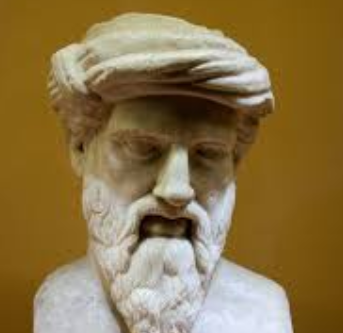
Number is the ruler of forms and ideas, and the cause of gods and daemons.
▼
Source
As quoted in Life of Pythagoras (c. 300) by Iamblichus of Chalcis, as translated by Thomas Taylor (1818) | Variants: | Number rules the universe. | As quoted in The Story of a Number (1905) by E. Maor; also in Comic Sections (1993) by Desmond MacHale
3 months 3 weeks ago
This is the antinomy: Insofar as we believe in morality we pass sentence on existence.
▼
Source
Sec. 6 (Notebook W II 2. Autumn 1887, KGW VIII, 2.237, KSA 12.571 [citations are to Nietzsche's manuscripts by archival code, and the page numbers in which the entire section can be found transcribed therefrom, in the hardcover and softcover historical-cr
3 months 3 weeks ago
In life, in true life, there can be nothing better than what is. Wanting something different than what is, is blasphemy.
▼
Source
p. 209
3 months 3 weeks ago
God cannot be compared to anything. Note this.
▼
Source
Ch.7
3 months 3 weeks ago
United States! the ages plead, — Present and Past in under-song, — Go put your creed into your deed, Nor speak with double tongue.
▼
Source
Ode, st. 5
3 months 3 weeks ago
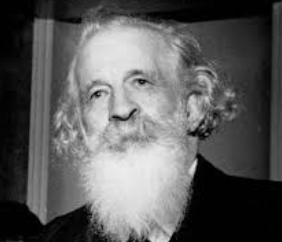
I live on Earth at present, and I don't know what I am. I know that I am not a category. I am not a thing — a noun. I seem to be a verb, an evolutionary process — an integral function of the universe.
▼
Source
I Seem to Be a Verb (1970)
3 months 3 weeks ago
The repose of sleep refreshes only the body. It rarely sets the soul at rest. The repose of the night does not belong to us. It is not the possession of our being. Sleep opens within us an inn for phantoms. In the morning we must sweep out the shadows.
▼
Source
Ch. 2, sect. 3
3 months 3 weeks ago
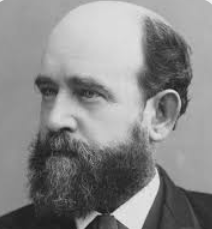
Those who are most to be considered, those for whose help the struggle must be made, if labor is to be enfranchised, and social justice won, are those least able to help or struggle for themselves, those who have no advantage of property or skill or intelligence, — the men and women who are at the very bottom of the social scale. In securing the equal rights of these we shall secure the equal rights of all. Hence it is, as Mazzini said, that it is around the standard of duty rather than around the standard of self-interest that men must rally to win the rights of man. And herein may we see the deep philosophy of Him who bade men love their neighbors as themselves. In that spirit, and in no other, is the power to solve social problems and carry civilization onward.
▼
Source
Ch. 21 : Conclusion
3 months 3 weeks ago
There is, properly speaking, no Misfortune in the world. Happiness and Misfortune stand in continual balance. Every Misfortune is, as it were, the obstruction of a stream, which, after overcoming this obstruction, but bursts through with the greater force.
3 months 3 weeks ago
Eat not the heart.
▼
Source
Symbol 30; explained in the edition used here: "This Symbol signifies that it is not proper to divulse the union and consent of the universe. And still further it signifies this, Be not envious, but philanthropic and communicative; and from this it exhort
3 months 3 weeks ago
Merchant and pirate were for a long period one and the same person. Even today mercantile morality is really nothing but a refinement of piratical morality.
3 months 3 weeks ago
If I could kill him and create a new person exactly the same as he is now, I would do so happily.
▼
Source
Sophia Tolstaya, The Diaries of Sophia Tolstoy, trans. Cathy Porter (Random House, 1985), 16 December 1862.
3 months 3 weeks ago
The error of the ignorant goes so far as to say that God's power is insufficient, because he has given to this Universe the properties which they imagine cause these great evils, and which do not help all evil-disposed persons to obtain the evil which they seek, and to bring their evil souls to the aim of their desires, though these, as we have shown, are really without limit.
▼
Source
Ch.12
3 months 3 weeks ago
The ornament of a house is the friends who frequent it.
▼
Source
Domestic Life
3 months 3 weeks ago
Truth is cosmically total: synergetic. Verities are generalized principles stated in semimetaphorical terms. Verities are differentiable. But love is omniembracing, omnicoherent, and omni-inclusive, with no exceptions. Love, like synergetics, is nondifferentiable, i.e., is integral.
▼
Source
[http://www.rwgrayprojects.com/synergetics/s10/p0520.html#1005.50 1005.54]

3 months 3 weeks ago
The moment after, I began to respire 20 quarts of unmingled nitrous oxide. A thrilling, extending from the chest to the extremities, was almost immediately produced. I felt a sense of tangible extension highly pleasurable in every limb; my visible impressions were dazzling, and apparently magnified, I heard distinctly every sound in the room and was perfectly aware of my situation. By degrees, as the pleasurable sensations increased, I last all connection with external things; trains of vivid visible images rapidly passed through my mind, and were connected with words in such a manner, as to produce perceptions perfectly novel. I existed in a world of newly connected and newly modified ideas. I theorised — I imagined that I made discoveries. When I was awakened from this semi-delirious trance by Dr. Kinglake, who took the bag from my mouth, indignation and pride were the first feelings produced by the sight of the persons about me. My emotions were enthusiastic and sublime; and for a minute I walked round the room, perfectly regardless of what was said to me. As I recovered my former state of mind, I felt an inclination to communicate the discoveries I had made during the experiment. I endeavoured to recall the ideas, they were feeble and indistinct; one collection of terms, however, presented itself: and with the most intense belief and prophetic manner, I exclaimed to Dr Kinglake, "Nothing exists but thoughts!—the universe is composed of impressions, ideas, pleasures and pains!"
▼
Source
Researches, Chemical and Philosophical: Chiefly Concerning Nitrous Oxide, Or Dephlogisticated Nitrous Air, and Its Respiration (London: J. Johnson, 1800) pp. 487-489 [https://books.google.com/books?id=jhUAAAAAQAAJ&pg=PA487#v=onepage&q&f=true]
3 months 3 weeks ago
Patience cometh by the grace of the Soul.
3 months 3 weeks ago
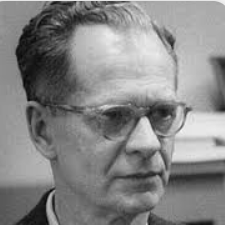
Many instructional arrangements seem "contrived", but there is nothing wrong with that. It is the teacher's function to contrive conditions under which students learn. Their relevance to a future usefulness need not be obvious. It is a difficult assignment. The conditions the teacher arranges must be powerful enough to compete with those under which the student tends to behave in distracting ways.
▼
Source
"Free and Happy Student" in The Phi Delta Kappan (September 1973); later published in Reflections on Behaviorism and Society (1978)

3 months 3 weeks ago
One of the most difficult of the philosopher's tasks is to find out where the shoe pinches.
▼
Source
p. 61
3 months 3 weeks ago
I do not ascribe to God ignorance of anything or any kind of weakness; I hold that Divine Providence is related and closely connected with the intellect, because Providence can only proceed from an intelligent being, from a being that is itself the most perfect Intellect. Those creatures, therefore, which receive part of that intellectual influence, will become subject to the action of Providence in the same proportion as they are acted upon by the intellect. This theory is in accordance with reason and with the teaching of the Scripture, whilst the other theories previously mentioned either exaggerate Divine Providence of detract from it.
▼
Source
Ch.17
3 months 3 weeks ago
This world belongs to the energetic.
▼
Source
Resources
3 months 3 weeks ago
The synergetic integral of the totality of principles is God, whose sum-total behavior in pure principle is beyond our comprehension and is utterly mysterious to us, because as humans — in pure principle — we do not and never will know all the principles.

3 months 3 weeks ago
Any one thing in the creation is sufficient to demonstrate a Providence to an humble and grateful mind.
▼
Source
Book I, ch. 16, § 7.
3 months 3 weeks ago
Virtue is harmony.
▼
Source
This is often published as a direct quote of Pythagoras, but seems to be derived from the account of Diogenes Laertius of Pythagorean doctrines, where he simply describes the statement as a precept of his followers. In the translation of C. D. Yonge (1853
3 months 3 weeks ago
Scepticism is not irrefutable, but obviously nonsensical, when it tries to raise doubts where no questions can be asked. For doubt can exist only where a question exists, a question only where an answer exists, and an answer only where something can be said. (6.51)
3 months 3 weeks ago
How great is the usefulness of every precept that delivers us from this great error, and leads us back to the true faith: that God, the Creator of all things, rules the Universe; that He must be served, loved, and feared, and not those imaginary deities. According to this faith we approach the true God, and obtain His favour without having recourse to burdensome means; for nothing else is required but to love and fear Him; this is the aim in serving God, as will be shown. Comp. "And now, Israel, what doth the Lord thy God require of thee but to fear the Lord?" &c. (Deut. x. 12)
▼
Source
Ch.29
3 months 3 weeks ago
The bitterest tragic element in life to be derived from an intellectual source is the belief in a brute Fate or Destiny.
▼
Source
"The Tragic", p. 217. From The Dial (April 1844) p. 515
CivilSimian.com created by AxiomaticPanic, CivilSimian, Kalokagathia