

3 months 3 weeks ago
Human intuitions are systematically biased. Evolutionary psychology explains how our moral intuitions and the rationalisations they spawn have been shaped by millennia of natural selection to maximise the inclusive fitness of our genes, not to track the welfare of other sentient beings impartially conceived. Many human cultures have found nothing intuitively wrong with aggressive warfare, slavery, wife-beating, infanticide or female genital mutilation. Ultimately, folk morality is a doomed enterprise as hopeless as folk physics. A mature posthuman ethics, I'd argue, must be committed to the well-being of all sentient life; and mature posthuman technology offers the means to deliver that commitment.
▼
Source
[https://www.hedweb.com/population-ethics/postdarwinian.html "Post-Darwinian Ethics?"], H+ Magazine, May 2009
3 months 3 weeks ago
He, who will not reason, is a bigot; he, who cannot, is a fool; and he, who dares not, is a slave.
▼
Source
in [http://books.google.com/books?id=U9FOAAAAYAAJ&pg=PR15 Academical Questions (1805), Preface, p. 15]
3 months 3 weeks ago
The most fatal error that could be committed by the leaders of religious thought is the attempt to force into their own age conceptions which have lived their life, and come to their natural end in preceding ages.
3 months 3 weeks ago
Successful people never worry about what others are doing.
▼
Source
Alleged source in Plato unknown. Earliest occurrence to have been located is a [https://twitter.com/ochocinco/status/93332058864238592 Tweet from 2011].

3 months 3 weeks ago
He states... that he learned more about the structure and peculiarities of stones... by conversing with a few masons... than he could ever gather from the works of Aristotle and Pliny.
▼
Source
Introductory Remarks

3 months 3 weeks ago
We understand God by everything in ourselves that is fragmentary, incomplete, and inopportune.

3 months 3 weeks ago
To all men it is evident that the social interests of one hundred and fifty Millions of us depend on the mysterious industry there carried on; and likewise that the dissatisfaction with it is great, universal, and continually increasing in intensity,—in fact, mounting, we might say, to the pitch of settled despair.
3 months 3 weeks ago
Humans are prone to status quo bias. So let's do a thought-experiment. Imagine we stumble across an advanced civilisation that has abolished predation, disease, famine, and all the horrors of primitive Darwinian life. The descendants of archaic lifeforms flourish unmolested in their wildlife parks – free living, but not "wild". Should we urge scrapping their regime of compassionate stewardship of the living world – and a return to asphyxiation, disembowelling and being eaten alive? Or is a happy biosphere best conserved intact?
▼
Source
Reply to "[https://qr.ae/TWKYMB Should humans wipe out all carnivorous animals so the succeeding generations of herbivores can live in peace?]", Quora, 16 Jun. 2018

3 months 3 weeks ago
My analysis was that the only wish of Communism was the need to stay in power.
▼
Source
[https://www.theguardian.com/society/2010/nov/03/zygmunt-bauman-ed-miliband-labour "The sociologist influencing Labour's new generation"], The Guardian (3 November 2010)
3 months 3 weeks ago
Now it is not our purpose here to condemn this world, from the standpoint of some "holiday-world" of philosophy. No words need be wasted on saying that this work-a-day world is very much with us, that in it the foundations of our physical existence are secured, without which no one can philosophize at all! Nevertheless, let us also recall, that among the voices which fill the workplace and the markets ("How do you get this or that item of daily existence?" "Where do you get that?" etc.) — in the midst of all these voices suddenly one calls above the rest: "Why is there anything at all, and not nothing?" — asking that age-old question, which Heidegger called the basic question of all metaphysics! Must we explicitly state how unfathomable this philosopher's question is, in comparison with that everyday world of needs and purposefulness? If such a question as this were asked, without introduction or interpretation, in the company of those people of efficiency and success, wouldn't the questioner be considered rather … mad?
▼
Source
pp. 66—67
3 months 3 weeks ago
We can imagine that the Academy, which could be attended only by men of leisure, was a cradle of discontent. The author of the Laws was a disgruntled old man, full of political rancor, fearing and hating the crowd and above all their demagogues; his prejudices had crystallized and he had become an old doctrinaire, unable to see anything but the reflections of his own personality and to hear anything but the echoes of his own thoughts. The worst of it was that he, a noble Athenian, admired the very Spartans who had defeated and humiliated his fatherland. Plato was witnessing a social revolution (even as we are) and he could not bear it at all. His main concern was: how could one stop it.
▼
Source
George Sarton, A History of Science (1952), Vol. 1 p. 409
3 months 3 weeks ago
When you have understood that nothing is, that things do not even deserve the status of appearances, you no longer need to be saved, you are saved, and miserable forever.
3 months 3 weeks ago
[I]t is our fatalest misery just now, not easily alterable, and yet urgently requiring to be altered, That no British man can attain to be a Statesman, or Chief of Workers, till he has first proved himself a Chief of Talkers: which mode of trial for a Worker, is it not precisely, of all the trials you could set him upon, the falsest and unfairest?
3 months 3 weeks ago
Philosophy is an everlasting fire, sometimes damped down by setting itself limits, then flaring into new life as it consumes them. Every field of inquiry is limited, but philosophy has an essential relation to the question of limits, to its own limits.
▼
Source
Introduction, p. xiii
3 months 3 weeks ago
In all sectors of society there should be roughly equal prospects of culture and achievement for everyone similarly motivated and endowed. The expectations of those with the same abilities and aspirations should not be affected by their social class.
▼
Source
Chapter II, Section 12, pg. 73

3 months 3 weeks ago
Liquids are very poor conductors of heat; but they have, like aeriform media, the property of carrying it rapidly in certain directions. This is the same property which, combining with, combining with the centrifugal force, displaces and mingles all parts of the atmosphere... [and] ocean, and maintains in them, regular and immense currents.

3 months 3 weeks ago
I suppose I must be out of sorts to feel everything so deeply. Sometimes, however, it seems to me that i am not really a human being at all, but like a bird or a beast in human form. I feel so much more at home even in a scrap of garden like the one here, and still more in the meadows when the grass is humming with bees than - at one of the our party congresses.
▼
Source
Prison Letter, (May 12, 1917), Rosa Luxemburg Speaks

3 months 3 weeks ago
It is the courage to make a clean breast of it in the face of every question that distinguishes the philosopher. He must be like Sophocles' Oedipus, who, seeking enlightenment concerning his terrible fate, pursues his indefatigable inquiry even though he divines that appalling horror awaits him in the answer. But most of us carry with us the Jocasta in our hearts, who begs Oedipus, for God's sake, not to inquire further.
▼
Source
Letter to Johann Wolfgang von Goethe (November 1815)[https://archive.org/details/schopenhauerbri00schegoog/page/90/mode/1up?view=theater]
3 months 3 weeks ago
Having always lived in fear of being surprised by the worst, I have tried in every circumstance to get a head start, flinging myself into misfortune long before it occurred.
3 months 3 weeks ago
It must have been in his teens, perhaps rather early, that he and his elder brother John, with William Bell (afterwards of Wylie Hill, and a noted drover) and his brother, all met in the kiln at Eelief to play cards. The corn was dried then at home. There was a fire, therefore, aud perhaps it was both heat and light. The boys had played, perhaps, often enough for trifling stakes, and always parted in good humor. One night they came to some disagreement. My father spoke out what was in him about the folly, the sinfulness, of quarreling over a perhaps sinful amusement. The earnest mind persuaded other minds. They threw the cards into the fire, and (I think the younger Bell told my brother James) no one of the four ever touched a card again through life. My father certainly never hinted at such a game since I knew him. I cannot remember that I, at that age, had any such force of belief. Which of us can?
3 months 3 weeks ago
A just system must generate its own support.
▼
Source
Chapter V, Section 41, p. 261
3 months 3 weeks ago
Great as Bacon was, he was far from being free from the mistakes and prejudices of those who went before him. Even some of the most wild and absurd opinions of the antients have the sanction of his approbation and authority. He does not hesitate to assent to an opinion... that visual rays proceed from the eye; giving this reason for it, that every thing in nature is qualified to discharge its proper functions by its own powers, in the same manner as the sun, and other celestial bodies. He acknowledges, however, that the presence of light, as well as several other circumstances, is necessary to vision.
▼
Source
Period I To the Revival of Letters in Erope
3 months 3 weeks ago
One Step Forward, Two Steps Backward, written by Lenin, an outstanding member of the Iskra group, is a methodical exposition of the ideas of the ultra-centralist tendency in the Russian movement. The viewpoint presented with incomparable vigor and logic in this book, is that of pitiless centralism.
3 months 3 weeks ago
If a person is stupid, we excuse him by saying that he cannot help it; but if we attempted to excuse in precisely the same way the person who is bad, we should be laughed at.
▼
Source
E. Payne, trans., vol. 2, p. 230
3 months 3 weeks ago
It is trifling to believe in what you do or in what others do. You should avoid simulacra and even "realities"; you should take up a position external to everything and everyone, drive off or grind down your appetites, live, according to a Hindu adage, with as few desires as a "solitary elephant.
3 months 3 weeks ago
It is really, as Coleridge I think said of something else, like reading a story by flashes of lightning!
▼
Source
Francis Jeffrey, [http://carlyleletters.dukejournals.org/cgi/content/full/9/1/lt-18370530-TC-JAC-01#FN4 letter to Carlyle] (30 May 1837) on The French Revolution. This is often repeated as stating that Carlyle's style is “like reading history by flashes o
3 months 3 weeks ago
Natural justice is a symbol or expression of usefulness, to prevent one person from harming or being harmed by another.
▼
Source
Variant: Natural justice is a pledge of reciprocal benefit, to prevent one man from harming or being harmed by another.
3 months 3 weeks ago
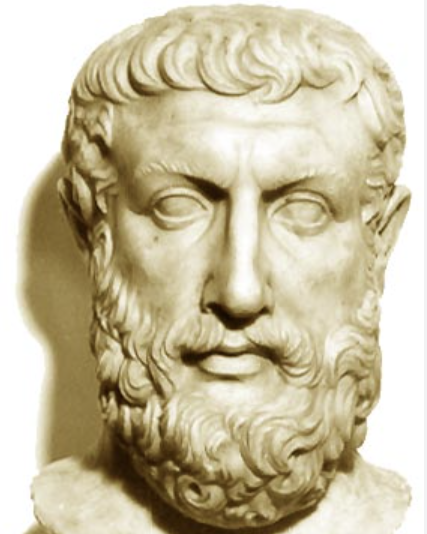
One of Parmenides' merits is to have been the first philosopher who strove to handle general concepts like "being", "not-being", "knowing", "unity", "identity", in their systematic connection.
▼
Source
Willem Jacob Verdenius, in Parmenides (1964), p. 2
3 months 3 weeks ago
To beautify life is to give it an object.
▼
Source
On Oscar Wilde (1882)

3 months 3 weeks ago
Do not unjustly eat what the water has given up, and do not desire as food the flesh of slaughtered animals, Or the white (milk) of mothers who intended its pure draught for their young, not for noble ladies. And do not grieve the unsuspecting birds by taking their eggs; for injustice is the worst of crimes. And spare the honey which the bees get betimes by their industry from the flowers of fragrant plants; For they did not store it that it might belong to others, nor did they gather it for bounty and gifts. I washed my hands of all this; and would that I had perceived my way ere my temples grew hoar!
▼
Source
1. 232, 8
3 months 3 weeks ago
No doubt, when modesty was made a virtue, it was a very advantageous thing for the fools, for everybody is expected to speak of himself as if he were one.
▼
Source
Vol. 1, Ch. 3, Section 2: Pride
3 months 3 weeks ago
This very second has vanished forever, lost in the anonymous mass of the irrevocable. It will never return. I suffer from this and I do not. Everything is unique — and insignificant.
3 months 3 weeks ago
Politics and strategy are one. Nations should live in an atmosphere of self-criticism because it is healthy, but always with one heart and one mind. Stoop to the unhappy, and lift them up in your arms! Thaw out frozen America with the fire of your hearts! Make the natural blood of the nations´ course vigorously through their veins! The new American are on their feet, saluting each other from nation to nation, the eyes of the laborers shining with joy. The natural statesman arises, schooled in the direct study of Nature. He reads to apply his knowledge, not to imitate.
3 months 3 weeks ago
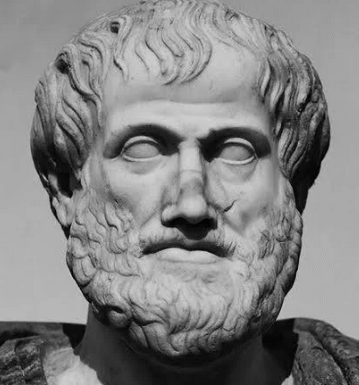
There is... something which is in energy only; and there is something which is both in energy and capacity. ...of relatives, one is predicated as according to excess and defect: another according to the effective and passive, and, in short, the motive, and that which may be moved... Motion, however, has not a substance separate from things... But each of the categories subsists in a twofold manner in all things. Thus... one thing pertaining to it is form, and another privation. ...So the species of motion and mutation are as many as those of being. But since in every genus of things, there is that which is in entelecheia, and that which is in capacity; motion is the entelecheia of that which is in capacity... That there is energy, therefore, and that a thing then happens to be moved, when this energy exists, and neither prior nor posterior to it, is manifest. ... Neither motion nor mutation can be placed in any other genus; nor have those who have advanced a different opinion concerning it spoken rightly. ...for by some motion is said to be difference, inequality, and non-being; though it is not necessary that any of these should be moved... Neither is mutation into these, nor from these, rather than from their opposites. ...The cause, however, why motion appears to be indefinite, is because it can neither be simply referred to the capacity, nor to the energy of beings. ...It is difficult to apprehend what motion is: for it is necessary to refer it either to privation, or to capacity, or to simple energy; but it does not appear that it can be any of these. The above-mentioned mode, therfore remains, viz. that it is a certain energy; but... difficult to be perceived, but which may have a subsistence.
▼
Source
Book III, Ch. I, pp. 137-147.

3 months 3 weeks ago
Justice is peculiarly stringent. Its demands may not be modified. Judges and rulers must 'do justice though the heavens fall', not allow family connections, friendship, or even personal worth to turn them aside.
3 months 3 weeks ago
Reading is merely a surrogate for thinking for yourself; it means letting someone else direct your thoughts. Many books, moreover, serve merely to show how many ways there are of being wrong, and how far astray you yourself would go if you followed their guidance. You should read only when your own thoughts dry up, which will of course happen frequently enough even to the best heads; but to banish your own thoughts so as to take up a book is a sin against the holy ghost; it is like deserting untrammeled nature to look at a herbarium or engravings of landscapes.
▼
Source
Vol. 2, Ch. 22, § 261 | Variant translations: | Reading is thinking with some one else's head instead of one's own. | As translated by T. Bailey Saunders | Reading is equivalent to thinking with someone else’s head instead of with one’s own.
3 months 3 weeks ago
If instead of expanding you, putting you in a state of energetic euphoria, your ordeals depress and embitter you, you can be sure you have no spiritual vocation.
3 months 3 weeks ago
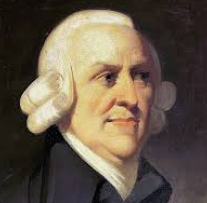
In the languor of disease and the weariness of old age, the pleasures of the vain and empty distinctions of greatness disappear. To one, in this situation, they are no longer capable of recommending those toilsome pursuits in which they had formerly engaged him. In his heart he curses ambition, and vainly regrets the ease and the indolence of youth, pleasures which are fled for ever, and which he has foolishly sacrificed for what, when he has got it, can afford him no real satisfaction. In this miserable aspect does greatness appear to every man when reduced either by spleen or disease to observe with attention his own situation, and to consider what it is that is really wanting to his happiness. Power and riches appear then to be, what they are, enormous and operose machines contrived to produce a few trifling conveniencies to the body, consisting of springs the most nice and delicate, which must be kept in order with the most anxious attention, and which, in spite of all our care, are ready every moment to burst into pieces, and to crush in their ruins their unfortunate possessor. ...But though this splenetic philosophy, which in time of sickness or low spirits is familiar to every man, thus entirely depreciates those great objects of human desire, when in better health and in better humour, we never fail to regard them under a more agreeable aspect. Our imagination, which in pain and sorrow seems to be confined and cooped up within our own persons, in times of ease and prosperity expands itself to every thing around us. We are then charmed with the beauty of that accommodation which reigns in the palaces and economy of the great; and admire how every thing is adapted to promote their ease, to prevent their wants, to gratify their wishes, and to amuse and entertain their most frivolous desires. If we consider the real satisfaction which all these things are capable of affording, by itself and separated from the beauty of that arrangement which is fitted to promote it, it will always appear in the highest degree contemptible and trifling. But we rarely view it in this abstract and philosophical light. We naturally confound it, in our imagination with the order, the regular and harmonious movement of the system, the machine or economy by means of which it is produced. The pleasures of wealth and greatness, when considered in this complex view, strike the imagination as something grand, and beautiful, and noble, of which the attainment is well worth all the toil and anxiety which we are so apt to bestow upon it.And it is well that nature imposes upon us in this manner. It is this deception which rouses and keeps in continual motion the industry of mankind.
▼
Source
Chap. I.

3 months 3 weeks ago
Ah! why do women condescend to receive a degree of attention and respect from strangers different from that reciprocation of civility which the dictates of humanity and the politeness of civilization authorize between man and man? And why do they not discover, when, "in the noon of beauty's power", that they are treated like queens only to be deluded by hollow respect. Confined, then, in cages like the feathered race, they have nothing to do but to plume themselves, and stalk with mock majesty from perch to perch.
▼
Source
Ch. 4

3 months 3 weeks ago
Scientists work from models acquired through education and through subsequent exposure to the literature often without quite knowing or needing to know what characteristics have given these models the status of community paradigms
▼
Source
p. 46

3 months 3 weeks ago
While the Marxist faith in central planning is now confined to a few dingy sects, a quasi-religious belief in free markets continues to shape the policies of governments.Many writers have pointed to the havoc and ruin that have accompanied the imposition of free markets across the world. Whether in Africa, Asia, Latin America or post-communist Europe, policies of wholesale privatisation and structural adjustment have led to declining economic activity and social dislocation on a massive scale.
▼
Source
[http://www.guardian.co.uk/books/2007/sep/15/politics "The end of the world as we know it,"] The Guardian (2007-09-15)

3 months 3 weeks ago
Six feet of land was all that he needed.
▼
Source
How Much Land Does a Man Need? (1886)
3 months 3 weeks ago
Happiness exists on earth, and it is won through prudent exercise of reason, knowledge of the harmony of the universe, and constant practice of generosity. He who seeks it elsewhere will not find it for, having drunk from all the glasses of life, he will find satisfaction only in those.
3 months 3 weeks ago
Perhaps then we must begin with such facts as are known to us from individual experience. It is necessary therefore that the person who is to study, with any tolerable chance of profit, the principles of nobleness and justice and politics generally, should have received a good moral training.
▼
Source
(Bk I, Ch II)
3 months 3 weeks ago
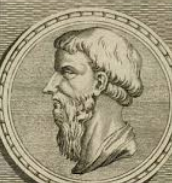
These decrees of yours are no different from spiders' webs. They'll restrain anyone weak and insignificant who gets caught in them, but they'll be torn to shreds by people with power and wealth.
▼
Source
Discussing Solon's laws with him, as quoted by Plutarch, in Solon ch. 5; translation by Robin Waterfield from Plutarch Greek Lives (1998) p. 50. | Variants: | Written laws are like spiders’ webs; they will catch, it is true, the weak and poor, but would b
3 months 3 weeks ago
Every parting gives a foretaste of death; every coming together again a foretaste of the resurrection.
▼
Source
"Psychological Observations"
3 months 3 weeks ago
After all, why should ordinary people want to contemplate the End, especially when we see the condition of those who do?
3 months 3 weeks ago
China has been long one of the richest, that is, one of the most fertile, best cultivated, most industrious, and most populous countries in the world. It seems, however, to have been long stationary. Marco Polo, who visited it more than five hundred years ago, describes its cultivation, industry, and populousness, almost in the same terms in which they are described by travellers in the present times.
▼
Source
Chapter VIII, p. 86.
3 months 3 weeks ago
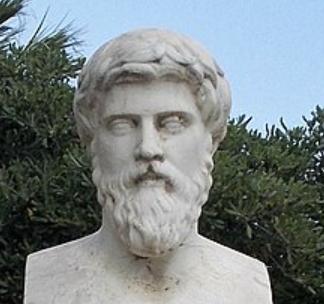
Antagoras the poet was boiling a conger, and Antigonus, coming behind him as he was stirring his skillet, said, "Do you think, Antagoras, that Homer boiled congers when he wrote the deeds of Agamemnon?" Antagoras replied, "Do you think, O king, that Agamemnon, when he did such exploits, was a peeping in his army to see who boiled congers?"
▼
Source
46 Antigonus I
3 months 3 weeks ago
The evil of totalitarianism is not only that it fails to protect specific liberties but that it extinguishes the very possibility of freedom.
▼
Source
'Isaiah Berlin: The Value of Decency' (p.104)
CivilSimian.com created by AxiomaticPanic, CivilSimian, Kalokagathia