

3 months 3 weeks ago
As incompetent in life as in death, I loathe myself and in this loathing I dream of another life, another death. And for having sought to be a sage such as never was, I am only a madman among the mad.

3 months 3 weeks ago
But all this language gotten, and augmented by Adam and his posterity, was again lost at the tower of Babel, when by the hand of God, every man was stricken for his rebellion, with an oblivion of his former language.
▼
Source
The First Part, Chapter 4, p. 12 (See also: Julian Jaynes)

3 months 3 weeks ago
It depends on what we read, after all manner of Professors have done their best for us.
3 months 3 weeks ago
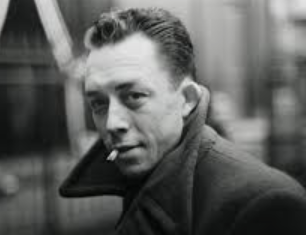
What was also unusual for Americans was that so many of the revered figures were writers and intellectuals. This is perhaps because to a very large extent theirs was a movement from the universities. Perhaps the single most influential writer for young people in the sixties was Algerian-born French Nobel Prize laureate Albert Camus, who died in 1960 in an automobile crash at age forty-seven, just as what should have been his best decade was beginning. Because of his 1942 essay, “The Myth of Sisyphus,” in which he argued that the human condition was fundamentally absurd, he was often associated with the existential movement. But he refused to consider himself part of that group. He was not a joiner, which is one of the reasons he was more revered than the existentialist and communist Jean-Paul Sartre, even though Sartre lived through and even participated in the sixties student movements. Camus, who worked with the Resistance against the Nazi occupiers of France editing an underground newspaper, Le Combat, often wrote from the perspective of a moral imperative to act. His 1948 novel, The Plague, is about a doctor who risks his life and family to rid his community of a sickness he discovers. In the 1960s, students all over the world read The Plague and interpreted it as a call to activism. Mario Savio’s famous 1964 speech, “There’s a time when the operation of the machine becomes so odious . . . you’ve got to put your bodies upon the gears . . . and you’ve got to make it stop,” sounds like a line from The Plague. “There are times when the only feeling I have is one of mad revolt,” Camus wrote. American civil rights workers read Camus. His books were passed from one volunteer to the next in SNCC. Tom Hayden wrote that he considered Camus to be one of the great influences in his decision to leave journalism and become a student activist. Abbie Hoffman used Camus to explain in part the Yippie! movement, referring to Camus’s words in Notebooks: “The revolution as myth is the definitive revolution.”
▼
Source
Mark Kurlansky, 1968: The Year that Rocked the World (2004), p. 107-08, ISBN 0-345-45581-9

3 months 3 weeks ago
This argument too shows that in truth we know nothing about anything, but every man shares the generally prevailing opinion.

3 months 3 weeks ago
Society is not homogeneous, and those who do not deliberately close their eyes have to recognize that men differ greatly from one another from the physical, moral, and intellectual viewpoints.
▼
Source
p. 281.
3 months 3 weeks ago
"The meaning of culture" is nothing less than the conduct of life itself, fortified, thickened, made more crafty and subtle, by contact with books and with art.
▼
Source
p. 134
3 months 3 weeks ago
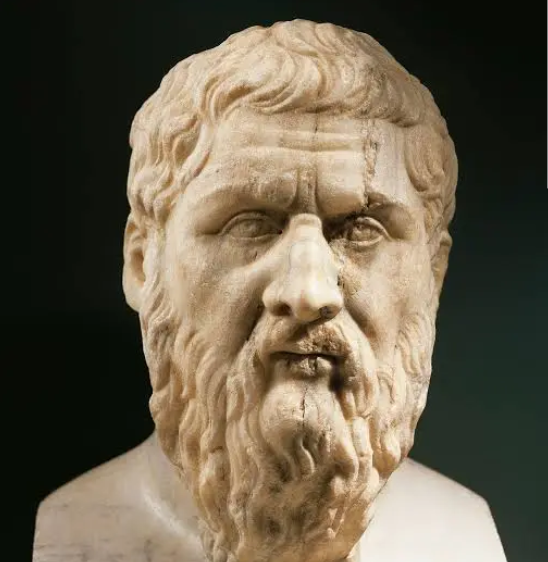
It is difficult to set forth any of the greater ideas, except by the use of examples; for it would seem that each of us knows everything that he knows as if in a dream and then again, when he is as it were awake, knows nothing of it all.
▼
Source
277d
3 months 3 weeks ago
To hope is to contradict the future.
3 months 3 weeks ago
Whatsoever therefore is consequent to a time of Warre, where every man is Enemy to every man; the same is consequent to the time, wherein men live without other security, than what their own strength, and their own invention shall furnish them withall. In such condition, there is no place for Industry; because the fruit thereof is uncertain: and consequently no Culture of the Earth; no Navigation, nor use of the commodities that may be imported by Sea; no commodious Building; no Instruments of moving, and removing things as require much force; no Knowledge of the face of the Earth; no account of Time; no Arts; no Letters; no Society; and which is worst of all, continuall feare, and danger of violent death; And the life of man solitary, poore, nasty, brutish, and short.
▼
Source
The First Part, Chapter 13, p. 62
3 months 3 weeks ago
Such souls are, in these days, getting somewhat out of humour with the world. Your very Byron, in these days, is at least driven mad; flatly refuses fealty to the world. The world with its injustices, its golden brutalities, and dull yellow guineas, is a disgust to such souls: the ray of Heaven that is in them does at least pre-doom them to be very miserable here. Yes:—and yet all misery is faculty misdirected, strength that has not yet found its way. The black whirlwind is mother of the lightning. No smoke, in any sense, but can become flame and radiance! Such soul, once graduated in Heaven's stern University, steps out superior to your guinea.
3 months 3 weeks ago
Seek after the good, and with much toil shall ye find it; the evil turns up of itself without your seeking it.

3 months 3 weeks ago
The tradition of the oppressed teaches us that the "state of emergency" in which we live is not the exception but the rule. We must attain to a conception of history that is in keeping with this insight. Then we shall clearly realize that it is our task to bring about a real state of emergency, and this will improve our position in the struggle against Fascism. One reason why Fascism has a chance is that in the name of progress its opponents treat it as a historical norm. The current amazement that the things we are experiencing are "still" possible in the twentieth century is not philosophical. This amazement is not the beginning of knowledge — unless it is the knowledge that the view of history which gives rise to it is untenable.
▼
Source
VIII
3 months 3 weeks ago
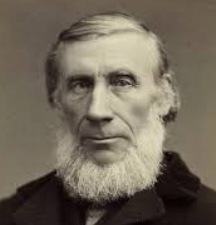
A point highly illustrative of the character of Faraday now comes into view. He gave an account of his discovery of Magneto-electricity in a letter to his friend M. Hachette, of Paris, who communicated the letter to the Academy of Sciences. The letter was translated and published ; and immediately afterwards two distinguished Italian philosophers took up the subject, made numerous experiments, and published their results before the complete memoirs of Faraday had met the public eye. This evidently irritated him. He reprinted the paper of the learned Italians in the Philosophical Magazine accompanied by sharp critical notes from himself. He also wrote a letter dated Dec. 1,1832, to Gay Lussac, who was then one of the editors of the Annales de Chimie in which he analysed the results of the Italian philosophers, pointing out their errors, and' defending himself from what he regarded as imputations on his character. The style of this letter is unexceptionable, for Faraday could not write otherwise than as a gentleman; but the letter shows that had he willed it he could have hit hard. We have heard much of Faraday's gentleness and sweetness and tenderness. It is all true, but it is very incomplete. You cannot resolve a powerful nature into these elements, and Faraday's character would have been less admirable than it was had it not embraced forces and tendencies to which the silky adjectives "gentle" and "tender" would by no means apply. Underneath his sweetness and gentleness was the heat of a volcano. He was a man of excitable and fiery nature; but through high self-discipline he had converted the fire into a central glow and motive power of life, instead of permitting it to waste itself in useless passion. "He that is slow to anger" saith the sage, "is greater than the mighty, and he that ruleth his own spirit than he that taketh a city." Faraday was not slow to anger, but he completely ruled his own spirit, and thus, though he took no cities, he captivated all hearts.
▼
Source
"Points of Character", p. 37.
3 months 3 weeks ago
Socrates: The disgrace begins when a man writes not well, but badly. Phaedrus: Clearly. Socrates: And what is well and what is badly—need we ask Lysias, or any other poet or orator, who ever wrote or will write either a political or any other work, in metre or out of metre, poet or prose writer, to teach us this?
▼
Source
258d | paraphrased in Zen and the Art of Motorcycle Maintenance by Robert M. Pirsig: "And what is good, Phaedrus, and what is not good—need we ask anyone to tell us these things?"
3 months 3 weeks ago
And therefore I think you have done very wisely to make it your business to consider the Phœnomena relating to the present question, which have been afforded by experiments, especially since it might seem injurious to our senses, by whose mediation we acquire so much of the knowledge we have of things corporal, to have recourse to far-fetched and abstracted Ratiocination, to know what are the sensible ingredients of those sensible things that we daily see and handle, and are supposed to have the liberty to untwist (if I may so speak) into the primitive bodies they consist of.
3 months 3 weeks ago
It is an understatement to say that in this society injustices abound: in truth, it is itself the quintessence of injustice.
3 months 3 weeks ago
Power as is really divided, and as dangerously to all purposes, by sharing with another an Indirect Power, as a Direct one.
▼
Source
The Third Part, Chapter 42, p. 315
3 months 3 weeks ago
It is the very joy of man's heart to admire, where he can; nothing so lifts him from all his mean imprisonments, were it but for moments, as true admiration.

3 months 3 weeks ago
Human intuitions are systematically biased. Evolutionary psychology explains how our moral intuitions and the rationalisations they spawn have been shaped by millennia of natural selection to maximise the inclusive fitness of our genes, not to track the welfare of other sentient beings impartially conceived. Many human cultures have found nothing intuitively wrong with aggressive warfare, slavery, wife-beating, infanticide or female genital mutilation. Ultimately, folk morality is a doomed enterprise as hopeless as folk physics. A mature posthuman ethics, I'd argue, must be committed to the well-being of all sentient life; and mature posthuman technology offers the means to deliver that commitment.
▼
Source
[https://www.hedweb.com/population-ethics/postdarwinian.html "Post-Darwinian Ethics?"], H+ Magazine, May 2009
3 months 3 weeks ago
He, who will not reason, is a bigot; he, who cannot, is a fool; and he, who dares not, is a slave.
▼
Source
in [http://books.google.com/books?id=U9FOAAAAYAAJ&pg=PR15 Academical Questions (1805), Preface, p. 15]
3 months 3 weeks ago
The most fatal error that could be committed by the leaders of religious thought is the attempt to force into their own age conceptions which have lived their life, and come to their natural end in preceding ages.
3 months 3 weeks ago
Successful people never worry about what others are doing.
▼
Source
Alleged source in Plato unknown. Earliest occurrence to have been located is a [https://twitter.com/ochocinco/status/93332058864238592 Tweet from 2011].
3 months 3 weeks ago
He states... that he learned more about the structure and peculiarities of stones... by conversing with a few masons... than he could ever gather from the works of Aristotle and Pliny.
▼
Source
Introductory Remarks
3 months 3 weeks ago
We understand God by everything in ourselves that is fragmentary, incomplete, and inopportune.
3 months 3 weeks ago
To all men it is evident that the social interests of one hundred and fifty Millions of us depend on the mysterious industry there carried on; and likewise that the dissatisfaction with it is great, universal, and continually increasing in intensity,—in fact, mounting, we might say, to the pitch of settled despair.
3 months 3 weeks ago
Humans are prone to status quo bias. So let's do a thought-experiment. Imagine we stumble across an advanced civilisation that has abolished predation, disease, famine, and all the horrors of primitive Darwinian life. The descendants of archaic lifeforms flourish unmolested in their wildlife parks – free living, but not "wild". Should we urge scrapping their regime of compassionate stewardship of the living world – and a return to asphyxiation, disembowelling and being eaten alive? Or is a happy biosphere best conserved intact?
▼
Source
Reply to "[https://qr.ae/TWKYMB Should humans wipe out all carnivorous animals so the succeeding generations of herbivores can live in peace?]", Quora, 16 Jun. 2018

3 months 3 weeks ago
My analysis was that the only wish of Communism was the need to stay in power.
▼
Source
[https://www.theguardian.com/society/2010/nov/03/zygmunt-bauman-ed-miliband-labour "The sociologist influencing Labour's new generation"], The Guardian (3 November 2010)
3 months 3 weeks ago
Now it is not our purpose here to condemn this world, from the standpoint of some "holiday-world" of philosophy. No words need be wasted on saying that this work-a-day world is very much with us, that in it the foundations of our physical existence are secured, without which no one can philosophize at all! Nevertheless, let us also recall, that among the voices which fill the workplace and the markets ("How do you get this or that item of daily existence?" "Where do you get that?" etc.) — in the midst of all these voices suddenly one calls above the rest: "Why is there anything at all, and not nothing?" — asking that age-old question, which Heidegger called the basic question of all metaphysics! Must we explicitly state how unfathomable this philosopher's question is, in comparison with that everyday world of needs and purposefulness? If such a question as this were asked, without introduction or interpretation, in the company of those people of efficiency and success, wouldn't the questioner be considered rather … mad?
▼
Source
pp. 66—67
3 months 3 weeks ago
We can imagine that the Academy, which could be attended only by men of leisure, was a cradle of discontent. The author of the Laws was a disgruntled old man, full of political rancor, fearing and hating the crowd and above all their demagogues; his prejudices had crystallized and he had become an old doctrinaire, unable to see anything but the reflections of his own personality and to hear anything but the echoes of his own thoughts. The worst of it was that he, a noble Athenian, admired the very Spartans who had defeated and humiliated his fatherland. Plato was witnessing a social revolution (even as we are) and he could not bear it at all. His main concern was: how could one stop it.
▼
Source
George Sarton, A History of Science (1952), Vol. 1 p. 409
3 months 3 weeks ago
When you have understood that nothing is, that things do not even deserve the status of appearances, you no longer need to be saved, you are saved, and miserable forever.
3 months 3 weeks ago
[I]t is our fatalest misery just now, not easily alterable, and yet urgently requiring to be altered, That no British man can attain to be a Statesman, or Chief of Workers, till he has first proved himself a Chief of Talkers: which mode of trial for a Worker, is it not precisely, of all the trials you could set him upon, the falsest and unfairest?
3 months 3 weeks ago
Philosophy is an everlasting fire, sometimes damped down by setting itself limits, then flaring into new life as it consumes them. Every field of inquiry is limited, but philosophy has an essential relation to the question of limits, to its own limits.
▼
Source
Introduction, p. xiii
3 months 3 weeks ago
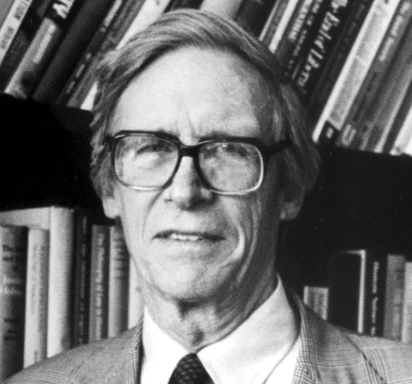
In all sectors of society there should be roughly equal prospects of culture and achievement for everyone similarly motivated and endowed. The expectations of those with the same abilities and aspirations should not be affected by their social class.
▼
Source
Chapter II, Section 12, pg. 73

3 months 3 weeks ago
Liquids are very poor conductors of heat; but they have, like aeriform media, the property of carrying it rapidly in certain directions. This is the same property which, combining with, combining with the centrifugal force, displaces and mingles all parts of the atmosphere... [and] ocean, and maintains in them, regular and immense currents.
3 months 3 weeks ago
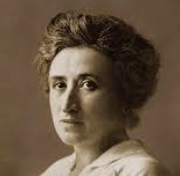
I suppose I must be out of sorts to feel everything so deeply. Sometimes, however, it seems to me that i am not really a human being at all, but like a bird or a beast in human form. I feel so much more at home even in a scrap of garden like the one here, and still more in the meadows when the grass is humming with bees than - at one of the our party congresses.
▼
Source
Prison Letter, (May 12, 1917), Rosa Luxemburg Speaks

3 months 3 weeks ago
It is the courage to make a clean breast of it in the face of every question that distinguishes the philosopher. He must be like Sophocles' Oedipus, who, seeking enlightenment concerning his terrible fate, pursues his indefatigable inquiry even though he divines that appalling horror awaits him in the answer. But most of us carry with us the Jocasta in our hearts, who begs Oedipus, for God's sake, not to inquire further.
▼
Source
Letter to Johann Wolfgang von Goethe (November 1815)[https://archive.org/details/schopenhauerbri00schegoog/page/90/mode/1up?view=theater]
3 months 3 weeks ago
Having always lived in fear of being surprised by the worst, I have tried in every circumstance to get a head start, flinging myself into misfortune long before it occurred.
3 months 3 weeks ago
It must have been in his teens, perhaps rather early, that he and his elder brother John, with William Bell (afterwards of Wylie Hill, and a noted drover) and his brother, all met in the kiln at Eelief to play cards. The corn was dried then at home. There was a fire, therefore, aud perhaps it was both heat and light. The boys had played, perhaps, often enough for trifling stakes, and always parted in good humor. One night they came to some disagreement. My father spoke out what was in him about the folly, the sinfulness, of quarreling over a perhaps sinful amusement. The earnest mind persuaded other minds. They threw the cards into the fire, and (I think the younger Bell told my brother James) no one of the four ever touched a card again through life. My father certainly never hinted at such a game since I knew him. I cannot remember that I, at that age, had any such force of belief. Which of us can?
3 months 3 weeks ago
A just system must generate its own support.
▼
Source
Chapter V, Section 41, p. 261
3 months 3 weeks ago
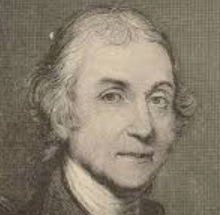
Great as Bacon was, he was far from being free from the mistakes and prejudices of those who went before him. Even some of the most wild and absurd opinions of the antients have the sanction of his approbation and authority. He does not hesitate to assent to an opinion... that visual rays proceed from the eye; giving this reason for it, that every thing in nature is qualified to discharge its proper functions by its own powers, in the same manner as the sun, and other celestial bodies. He acknowledges, however, that the presence of light, as well as several other circumstances, is necessary to vision.
▼
Source
Period I To the Revival of Letters in Erope
3 months 3 weeks ago
One Step Forward, Two Steps Backward, written by Lenin, an outstanding member of the Iskra group, is a methodical exposition of the ideas of the ultra-centralist tendency in the Russian movement. The viewpoint presented with incomparable vigor and logic in this book, is that of pitiless centralism.
3 months 3 weeks ago
If a person is stupid, we excuse him by saying that he cannot help it; but if we attempted to excuse in precisely the same way the person who is bad, we should be laughed at.
▼
Source
E. Payne, trans., vol. 2, p. 230
3 months 3 weeks ago
It is trifling to believe in what you do or in what others do. You should avoid simulacra and even "realities"; you should take up a position external to everything and everyone, drive off or grind down your appetites, live, according to a Hindu adage, with as few desires as a "solitary elephant.
3 months 3 weeks ago
It is really, as Coleridge I think said of something else, like reading a story by flashes of lightning!
▼
Source
Francis Jeffrey, [http://carlyleletters.dukejournals.org/cgi/content/full/9/1/lt-18370530-TC-JAC-01#FN4 letter to Carlyle] (30 May 1837) on The French Revolution. This is often repeated as stating that Carlyle's style is “like reading history by flashes o
3 months 3 weeks ago
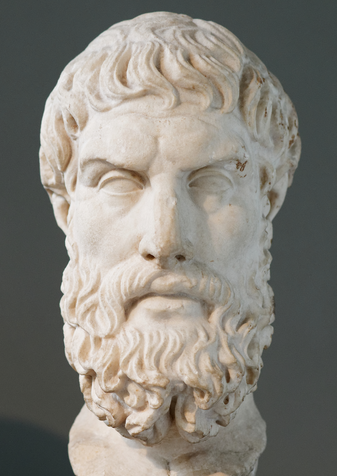
Natural justice is a symbol or expression of usefulness, to prevent one person from harming or being harmed by another.
▼
Source
Variant: Natural justice is a pledge of reciprocal benefit, to prevent one man from harming or being harmed by another.
3 months 3 weeks ago
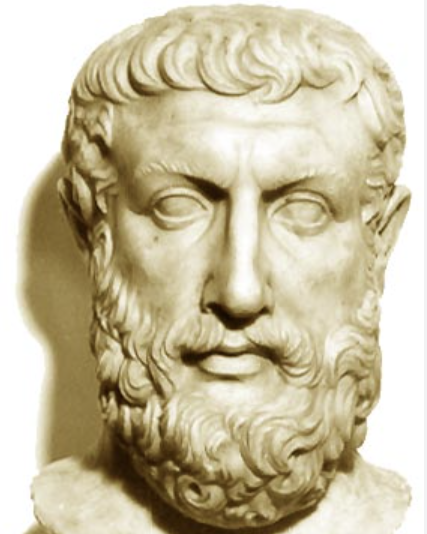
One of Parmenides' merits is to have been the first philosopher who strove to handle general concepts like "being", "not-being", "knowing", "unity", "identity", in their systematic connection.
▼
Source
Willem Jacob Verdenius, in Parmenides (1964), p. 2
3 months 3 weeks ago
To beautify life is to give it an object.
▼
Source
On Oscar Wilde (1882)

3 months 3 weeks ago
Do not unjustly eat what the water has given up, and do not desire as food the flesh of slaughtered animals, Or the white (milk) of mothers who intended its pure draught for their young, not for noble ladies. And do not grieve the unsuspecting birds by taking their eggs; for injustice is the worst of crimes. And spare the honey which the bees get betimes by their industry from the flowers of fragrant plants; For they did not store it that it might belong to others, nor did they gather it for bounty and gifts. I washed my hands of all this; and would that I had perceived my way ere my temples grew hoar!
▼
Source
1. 232, 8
3 months 3 weeks ago
No doubt, when modesty was made a virtue, it was a very advantageous thing for the fools, for everybody is expected to speak of himself as if he were one.
▼
Source
Vol. 1, Ch. 3, Section 2: Pride
CivilSimian.com created by AxiomaticPanic, CivilSimian, Kalokagathia