
3 months 3 weeks ago
Never had a colony or a possession made so a great sacrifice for the master country. Every Hindu conscious of India looked forward hopefully now, as a reward for this bloody loyalty, to the admission of his country into the fellowship of free dominions under the English flag. After the war, Lloyd George, then Premier, declared with unstatesmanlike, clarity that Britain intended always to rule India, that there must always, remain in India "a steel frame" of British power and British dominance. This was the best traditions of imperialistic hypocrisy. The Montagu-Chelmsform reform fell short of promises. Dr. Rutherford, a Member of Parliament, wrote: "Never in the history of the world was such a hoax perpetrated upon a great people as England perpetrated upon India, when in return for India's invaluable service during the War, we gave to the Indian nation such a discreditable, disgraceful, undemocratic, tyrannical constitution. (source: The Case for India - By Will Durant Simon and Schuster, New York. 1930 p. 123-128).

3 months 3 weeks ago
Anything done against faith or conscience is sinful.
▼
Source
Commentary on Romans, cap 14, I 3

3 months 3 weeks ago
Incorporeal hypostases, in descending, are distributed into parts, and multiplied about individuals with a diminution of power; but when they ascend by their energies beyond bodies, they become united, and proceed into a simultaneous subsistence, through exuberance of power.
▼
Source
11

3 months 3 weeks ago
There are uncertain truths — even true statements that we may take to be false — but there are no uncertain certainties. Since we can never know anything for sure, it is simply not worth searching for certainty; but it is well worth searching for truth; and we do this chiefly by searching for mistakes, so that we have to correct them.

3 months 3 weeks ago
This new fraud is just like the old ones: its essence lies in substituting something external for the use of our own reason and conscience and that of our predecessors: in the Church teaching this external thing was revelation, in the scientific teaching it is observation. The trick played by this science is to destroy man's faith in reason and conscience by directing attention to the grossest deviations from the use of human reason and conscience, and having clothed the deception in a scientific theory, to assure them that by acquiring knowledge of external phenomena they will get to know indubitable facts which will reveal to them the law of man's life. And the mental demoralization consists in this, that coming to believe that things which should be decided by conscience and reason are decided by observation, these people lose their consciousness of good and evil and become incapable of understanding the expression and definitions of good and evil that have been formed by the whole preceding life of humanity. All this, in their jargon, is conditional and subjective. It must all be abandoned - they say - the truth cannot be understood by one's reason, for one may err, but there is another path which is infallible and almost mechanical: one must study facts. And facts must be studied on the basis of the scientists' science, that is, on the basis of two unfounded propositions: positivism and evolution which are put forward as indubitable truths. And the reigning science, with not less misleading solemnity than the Church, announces that the solution of all questions of life is only possible by the study of the facts of nature, and especially of organisms. A frivolous crowd of youths mastered by the novelty of this authority, which is as yet not merely not destroyed but not even touched by criticism, throws itself into the study of these facts of natural science as the sole path which, according to the assertions of the prevailing doctrine, can lead to the elucidation of the questions of life. But the further these disciples advance in this study the further and further are they removed not only from the possibility but even from the very thought of solving life's problems, and the more they become accustomed not so much to observe as to take on trust what they are told of the observations of others (to believe in cells, in protoplasm, in the fourth state of matter,1 &c.), the more and more does the form hide the contents from them; the more and more do they lose consciousness of good and evil and capacity to understand the expressions and definitions of good and evil worked out by the whole preceding life of humanity; the more and more do they adopt the specialized scientific jargon of conventional expressions which have no general human significance; the farther and farther do they wander among the debris of quite unilluminated observations; the more and more do they lose capacity not only to think independently but even to under-stand another man's fresh human thought lying outside their Talmud; and, what is most important, they pass their best years in growing unaccustomed to life, that is, to labour, and grow accustomed to consider their condition justified, while they become physically good-for-nothing parasites. And just like the theologians and the Talmudists they completely castrate their brains and become eunuchs of thought. And just like them, to the degree to which they become stupefied, they acquire a self-confidence which deprives them for ever of the possibility of returning to a simple clear and human way of thinking.

3 months 3 weeks ago
Liberal education reminds those members of a mass democracy who have ears to hear, of human greatness.
▼
Source
“What is liberal education,” p. 5

3 months 3 weeks ago
Man Thinking must not be subdued by his instruments.
▼
Source
par. 20

3 months 3 weeks ago
Acknowledging continuities between nineteenth century anti-slavery struggles, twentieth century civil rights struggles, twenty-first century abolitionist struggles—and when I say abolitionist struggles I’m referring to the abolition of imprisonment as the dominant mode of punishment, the abolition of the prison industrial complex—acknowledging these continuities requires a challenge to the closures that isolate the freedom movement of the twentieth century from the century preceding and the century following.
3 months 3 weeks ago
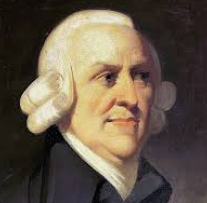
II. The tax which each individual is bound to pay ought to be certain, and not arbitrary.
▼
Source
Chapter II, Part II, p. 892.
3 months 3 weeks ago
As one of our Swiss friends put it: "Now every German tailor living in Japan, China, or Moscow feels that he has the German navy and all of Germany's power behind him. This proud consciousness sends him into an insane rapture: the German has finally lived to see the day when he can say with pride, relying on his own state, like an Englishman or an American, 'I am a German.' True, when the Englishman or American says 'I am an Englishman,' or 'I am an American,' he is saying 'I am a free man.' The German, however, is saying 'I am a slave, but my emperor is stronger than all other princes, and the German soldier who is strangling me will strangle all of you.'"
3 months 3 weeks ago
A sensation is the feeling of an external stimulus or an internal condition.
▼
Source
Ch. 6 : Our Souls

3 months 3 weeks ago
Lacking much historical information and assuming (1) that victims of injustice generally do worse than they otherwise would and (2) that those from the least well-off group in the society have the highest probabilities of being the (descendants of) victims of the most serious injustice who are owed compensation by those who benefited from the injustices, ... then a rough rule of thumb for rectifying injustices might seem to be the following: organize society so as to maximize the position of whatever group ends up least well-off in the society.
▼
Source
pp. [http://books.google.com/books?id=fVITAAAAQBAJ&pg=PT138 231-232]
3 months 3 weeks ago
The whole historic existence of mankind is nothing else than the gradual transition from the personal, animal conception of life to the social conception of life, and from the social conception of life to the divine conception of life.
▼
Source
Chapter IV, Christianity Misunderstood by Men of Science

3 months 3 weeks ago
Like every 'intellectual', a philosophy teacher is a petty bourgeois. When he opens his mouth, it is petty-bourgeois ideology that speaks: its resources and ruses are infinite.
▼
Source
p. 2
3 months 3 weeks ago
I saw men go up and down, In the country and the town, With this tablet on their neck,— 'Judgement and a judge we seek.' Not to monarchs they repair, Nor to learned jurist's chair; But they hurry to their peers, To their kinsfolk and their dears; Louder than with speech they pray,— 'What am I? companion, say.'
▼
Source
Astræa
3 months 3 weeks ago
Impulse, subjectivity and profanation, the old adversaries of materialistic alienation, now succumb to it. ... The representatives of the opposition to the authoritarian schema become witnesses to the authority of commercial success. ... In the service of success they renounce that insubordinate character which was theirs.
▼
Source
p. 273

3 months 3 weeks ago
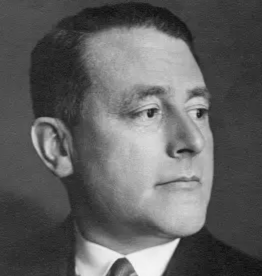
Through certain humors or passions, and from temper merely, a man may be completely miserable, let his outward circumstances be ever so fortunate.
▼
Source
As quoted in Day's Collacon : An Encyclopaedia of Prose Quotations: (1884), p. 930; Actual quote: "That thro certain Humours or Passions, and from Temper merely, a Man may be completely miserable; let his outward Circumstances be ever so fortunate." An in
3 months 3 weeks ago
The specific political distinction to which political actions and motives can be reduced is that between friend and enemy.
3 months 3 weeks ago
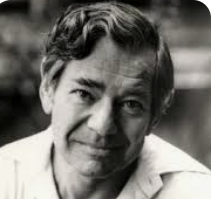
It has been called “the outpouring not only of a great mind, but of a whole epoch.” Yet it is not, in the strict sense of the word, an “original” book. There is a long line of observers before Smith who have approached his understanding of the world: Locke, Steuart, Mandeville, Petty, Cantillon, Turgot, not to mention Quesnay and Hume again. Smith took from all of them: there are over a hundred authors mentioned by name in his treatise. But where others had fished here and there, Smith spread his net wide; where others had clarified this and that issue, Smith illuminated the entire landscape. The Wealth of Nations is not a wholly original book, but it is unquestionably a masterpiece.
▼
Source
Robert Heilbroner, The Worldly Philosophers 7th ed. (1999), Chapter III. The Wonderful World of Adam Smith
3 months 3 weeks ago
Heresy is a set of opinions "at variance with established or generally received principles." In this sense, heresy is the price of all originality and innovation.
3 months 3 weeks ago
Art is not, as the metaphysicians say, the manifestation of some mysterious Idea of beauty or God; it is not, as the aesthetical physiologists say, [play or] a game in which one releases surplus energy, ...not the production of pleasing objects, and is above all, not pleasure itself, but it is the means of union among mankind, joining them in the same feelings, and necessary for the life and progress toward the good of the individual and of humanity.

3 months 3 weeks ago
For this reason, whoever desires liberty, should understand these vital facts, viz.:
3 months 3 weeks ago
The hand that rounded Peter's dome, And groined the aisles of Christian Rome, Wrought in a sad sincerity, Himself from God he could not free; He builded better than he knew, The conscious stone to beauty grew.
▼
Source
The Problem, st. 2
3 months 3 weeks ago
What appears as the positive is essentially the negative, i.e. the thing that is to be criticized.
▼
Source
p. 18

3 months 3 weeks ago
Greet your son Aristocleides from me. I pray he may not turn out like you, since you, too, were once an irreproachable young man.
▼
Source
to Gordias, Epp. Apoll. 46
3 months 3 weeks ago
What the circumstances are, which, in modern Europe, have contributed to disturb this order of nature, and, in particular, to encourage the industry of towns, at the expense of that of the country, Mr. Smith has investigated with great ingenuity; and in such a manner, as to throw much new light on the history of that state of society which prevails in this quarter of the globe. His observations on this subject tend to show, that these circumstances were, in their first origin, the natural and the unavoidable result of the peculiar situation of mankind during a certain period; and that they took their rise, not from any general scheme of policy, but from the private interests and prejudices of particular orders of men.
▼
Source
Dugald Stewart, Account of the Life and Writings of Adam Smith, LL.D., quoted in The Works of Dugald Stewart, Vol. VII (1829), p. 57
3 months 3 weeks ago
The whole world knows that virtue consists in the subjugation of one's passions, or in self-renunciation. It is not just the Christian world, against whom Nietzsche howls, that knows this, but it is an eternal supreme law towards which all humanity has developed, including Brahmanism, Buddhism, Confucianism, and the ancient Persian religion. And suddenly a man appears who declares that he is convinced that self-renunciation, meekness, submissiveness and love are all vices that destroy humanity (he has in mind Christianity, ignoring all the other religions).One can understand why such a declaration baffled people at first. But after giving it a little thought and failing to find any proof of the strange propositions, any rational person ought to throw the books aside and wonder if there is any kind of rubbish that would not find a publisher today. But this has not happened with Nietzsche´s books. The majority of pseudo-enlightened people seriously look into the theory of the Übermensch, and acknowledge its author to be a great philosopher, a descendant of Descartes, Leibniz and Kant. And all this has come about because the majority of pseudo-enlightened men of today object to any reminder of virtue, or to its chief premise: self-renunciation and love—virtues that restrain and condemn the animal side of their life. They gladly welcome a doctrine, however incoherently and disjointedly expressed, of egotism and cruelty, sanctioning the idea of personal happiness and superiority over the lives of others, by which they live.
▼
Source
Chapter 11

3 months 3 weeks ago
Silence is a fence around wisdom.
▼
Source
Chapter 2, Section 5, p. 33
3 months 3 weeks ago
We may well call it black diamonds. Every basket is power and civilization. For coal is a portable climate. It carries the heat of the tropics to Labrador and the polar circle; and it is the means of transporting itself withersoever it is wanted. Watt and Stephenson whispered in the ear of mankind their secret, that a half-ounce of coal will draw two tons a mile, and coal carries coal, by rail and by boat, to make Canada as warm as Calcutta, and with its comfort brings its industrial power.
▼
Source
Wealth

3 months 3 weeks ago
… our countless addictions, distractions, dissipations of passion that might have served as the core of self.
▼
Source
p. 7
3 months 3 weeks ago
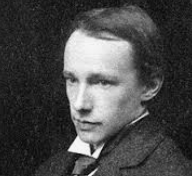
By far the most valuable things, which we know or can imagine, are certain states of consciousness, which may roughly be described as the pleasures of human intercourse and the enjoyment of beautiful objects. No one, probably, who has asked himself the question, has ever doubted that personal affection and the appreciation of what is beautiful in Art or Nature, are good in themselves; nor, if we consider strictly what things are worth having purely for their own sakes, does it appear probable that any one will think that anything else has nearly so much value as the things which are included under these two heads.
▼
Source
Principia Ethica (1903; revised edition, Cambridge University Press, 1993).
3 months 3 weeks ago
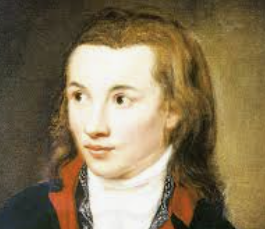
Nothing is more indispensable to true religiosity than a mediator that links us with divinity.
▼
Source
Fragment No. 74

3 months 3 weeks ago
A questioner asks: If human nature is evil, then where do ritual and rightness come from? I reply: ritual and rightness are always created by the conscious activity of the sages.
▼
Source
Sources of Chinese Tradition (1999), vol. 1, p. 180
3 months 3 weeks ago
The artist — as the one who compels motion through art media toward art — cannot be simultaneously the absorptive instrument of art's own activity.
▼
Source
page 41
3 months 3 weeks ago
Division of labor is a justification for sloth.
▼
Source
p. 79
3 months 3 weeks ago
There is no difference whether a person stand at the centre of the earth or at the highest point of the ninth sphere... he is no further away from God in the one case, or nearer to Him in the other; those only approach Him who obtain a knowledge of Him; while those who remain ignorant of Him recede from Him. ...I shall further elucidate... what constitutes the difference in our perception of God.
3 months 3 weeks ago
There is always a best way of doing everything, if it be to boil an egg. Manners are the happy ways of doing things; each once a stroke of genius or of love, — now repeated and hardened into usage. They form at last a rich varnish, with which the routine of life is washed, and its details adorned.
▼
Source
Behavior
3 months 3 weeks ago
I have to ask... are you familiar with the word “synergy”?
3 months 3 weeks ago
A man is a man to the extent that he is a superman. A man should be defined by the sum of those tendencies which impel him to surpass the human condition.
▼
Source
Introduction
3 months 3 weeks ago
But in life, as we are cognizant of it, mental development can go but a little way. The mind hardly begins to awake ere the bodily powers decline — it but becomes dimly conscious of the vast fields before it, but begins to learn and use its strength, to recognize relations and extend its sympathies, when, with the death of the body, it passes away. Unless there is something more, there seems here a break, a failure. Whether it be a Humboldt or a Herschel, a Moses who looks from Pisgah, a Joshua who leads the host, or one of those sweet and patient souls who in narrow circles live radiant lives, there seems, if mind and character here developed can go no further, a purposelessness inconsistent with what we can see of the linked sequence of the universe.

3 months 3 weeks ago
Speaking generally, he holds dominion, to whom are entrusted by common consent affairs of state — such as the laying down, interpretation, and abrogation of laws, the fortification of cities, deciding on war and peace, &c. But if this charge belong to a council, composed of the general multitude, then the dominion is called a democracy; if the council be composed of certain chosen persons, then it is an aristocracy ; and, if, lastly, the care of affairs of state, and, consequently, the dominion rest with one man, then it has the name of monarchy.
▼
Source
Ch. 2, Of Natural Right
3 months 3 weeks ago
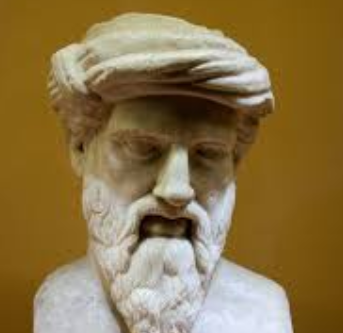
Life is a disease of the spirit; a working incited by Passion. Rest is peculiar to the spirit.
3 months 3 weeks ago
A blow from your friend is better than a kiss from your enemy.
▼
Source
As quoted in Geary's Guide to the World's Great Aphorists (2007) by James Geary, p. 118
3 months 3 weeks ago
Where could we find an instance of cultural pathology which philosophy restored to health? If philosophy ever manifested itself as helpful, redeeming, or prophylactic, it was in a healthy culture. The sick, it made even sicker.
▼
Source
p. 27
3 months 3 weeks ago
I knew practically the whole of Lermontov by heart, and such writers as Chernyshevsky, Lev Tolstoi and Uspensky had, somehow, become part of my life.
▼
Source
Nadezhda Krupskaya [https://web.archive.org/web/20080321232230/http://www.rcgfrfi.easynet.co.uk/ww/lenin/bio-bks.htm "Reminiscences of Lenin by His Relatives"] (1956)
3 months 3 weeks ago
Men frequently think that the evils in the world are more numerous than the good things; many sayings and songs of the nations dwell on this idea. ...Not only common people make this mistake, but even many who think they are wise.
▼
Source
Ch.12
3 months 3 weeks ago
In the vaunted works of Art The master stroke is Nature's part.
▼
Source
Art
3 months 3 weeks ago
The youth of humanity all around our planet are intuitively revolting from all sovereignties and political ideologies. The youth of Earth are moving intuitively toward an utterly classless, raceless, omnicooperative, omniworld humanity. Children freed of the ignorantly founded educational traditions and exposed only to their spontaneously summoned, computer-stored and -distributed outflow of reliable-opinion-purged, experimentally verified data, shall indeed lead society to its happy egress from all misinformedly conceived, fearfully and legally imposed, and physically enforced customs of yesterday. They can lead all humanity into omnisuccessful survival as well as entrance into an utterly new era of human experience in an as-yet and ever-will-be fundamentally mysterious Universe.
3 months 3 weeks ago
All large political questions are at bottom economic questions.
▼
Source
General Introduction
3 months 3 weeks ago
Neither will the horse be adjudged to be generous, that is sumptuously adorned, but the horse whose nature is illustrious; nor is the man worthy who possesses great wealth, but he whose soul is generous.
▼
Source
"Pythagorean Ethical Sentences From Stobæus" (1904)
CivilSimian.com created by AxiomaticPanic, CivilSimian, Kalokagathia