

3 months 3 weeks ago
Obstinacy is the result of the will forcing itself into the place of the intellect.
▼
Source
Vol. 2, Ch. 26, § 321

3 months 3 weeks ago
Philosophers write for professors; thinkers for writers.
3 months 3 weeks ago
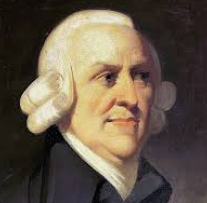
The wise and virtuous man is at all times willing that his own private interests should be sacrificed to the public interest of his own particular society--that the interests of this order of society be sacrificed to the greater interest of the state. He should therefore he equally willing that all those inferior interests should be sacrificed to the greater society of all sensible and intelligent beings.
▼
Source
Section II, Chap. III; cited by Reinhold Niebuhr, The Children of Light and the Children of Darkness, New York: Charles Scribner's Sons, 1941, 24-25.

3 months 3 weeks ago
Women becoming, consequently weaker, in mind and body, than they ought to be...have not sufficient strength to discharge the first duty of a mother; and sacrificing to lasciviousness the parental affection...either destroy the embryo in the womb, or cast if off when born. Nature in every thing demands respect, and those who violate her laws seldom violate them with impunity.
▼
Source
Ch. 8

3 months 3 weeks ago
Scientific revolutions are inaugurated by a growing sense... that an existing paradigm has ceased to function adequately in the exploration of an aspect of nature to which that paradigm itself had previously led the way.
▼
Source
p. 91 (2012 ed.)

3 months 3 weeks ago
The British state has defaulted on its core functions while attempting to remake society.
▼
Source
New Statesman, [https://www.newstatesman.com/comment/2024/10/the-tories-have-a-chance-but-only-if-they-elect-a-leader-willing-to-disrupt 9 October 2024]
3 months 3 weeks ago
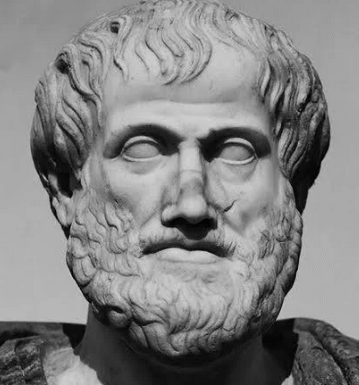
Now the mass of mankind are plainly... choosing a life like that of brute animals...
▼
Source
(Bk. 1, Chapter III)

3 months 3 weeks ago
You can choose whatever name you like for the two types of government. I personally call the type of government which can be removed without violence "democracy", and the other "tyranny".
▼
Source
As quoted in Freedom: A New Analysis (1954) by Maurice William Cranston, p. 112

3 months 3 weeks ago
Government is violence, Christianity is meekness, non-resistance, love. And, therefore, government cannot be Christian, and a man who wishes to be a Christian must not serve government.
▼
Source
[https://en.wikisource.org/wiki/Letter_to_Dr._Eugen_Heinrich_Schmitt Letter to Dr. Eugen Heinrich Schmitt] (October 12, 1896), translated by [https://en.wikisource.org/wiki/Author:Nathan_Haskell_Dole Nathan Haskell Dole]
3 months 3 weeks ago
It is the duty of man to raise up man. One is guilty of all abjection that one does not help to relieve. Only those who spread treachery, fire, and death out of hatred for the prosperity of others are undeserving of pity.
3 months 3 weeks ago
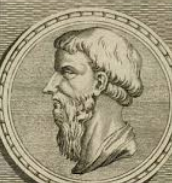
A view of the unseemly actions of drunken men is the most effectual dissuasive from wine.
▼
Source
As quoted in Diogenes Laertius, The Lives and Opinions of Eminent Philosophers, Chapter "Life of Anacharsis", 1702 edition, John Nicholson, p. 55
3 months 3 weeks ago
Because people have no thoughts to deal in, they deal cards, and try and win one another’s money. Idiots!
3 months 3 weeks ago
Everyone is mistaken, everyone lives in illusion. At best, we can admit a scale of fictions, a hierarchy of unrealities, giving preference to one rather than to another; but to choose, no, definitely not that...
3 months 3 weeks ago
The liberal reward of labour, therefore, as it is the affect of increasing wealth, so it is the cause of increasing population. To complain of it, is to lament over the necessary effect and cause of the greatest public prosperity.
▼
Source
Chapter VIII, p. 97.
3 months 3 weeks ago
Those who deny the first principle should be flogged or burned until they admit that it is not the same thing to be burned and not burned, or whipped and not whipped.
▼
Source
Metaphysics, Book I
3 months 3 weeks ago
Lamachus chid a captain for a fault; and when he had said he would do so no more, "Sir," said he, "in war there is no room for a second miscarriage." Said one to Iphicrates, "What are ye afraid of?" "Of all speeches," said he, "none is so dishonourable for a general as ‘I should not have thought of it.'"
▼
Source
52 Iphicrates
3 months 3 weeks ago
Contrary to the cartoon history of ideas that prevails today, Darwinism’s threat to religion did not come principally from challenging the biblical account of creation. Until a few centuries ago the Genesis story was known to be a myth – a poetic way of rendering truths that would otherwise be inaccessible. At the beginning of the Christian religion, Augustine warned against the dangers of literalism. The Jewish scholars who preceded him always viewed the Genesis story as a metaphor for truths that could not be accessed in any other way. It was only with the rise of modern science that the Genesis myth came to be misunderstood as an explanatory theory. Yet Darwinism was still a major threat to religion, for it confronted Victorians with the prospect of their final mortality. Darwin forced them to ask why their lives should not end like those of other animals, in nothingness. If this was so, how could human existence have meaning? How could human values be maintained if human personality was destroyed at death?
▼
Source
Cross-correspondences (pp. 21-22)
3 months 3 weeks ago
For well-being and health, again, the homestead should be airy in summer, and sunny in winter. A homestead possessing these qualities would be longer than it is deep; and its main front would face the south.
▼
Source
[http://artflx.uchicago.edu/perseus-cgi/citequery3.pl?dbname=PerseusGreekTexts&getid=1&query=Arist.%20Oec.%201345a.20 1345a.20], Economics (Oeconomica), Greek Texts and Translations, Perseus under PhiloLogic.
3 months 3 weeks ago
In speaking of sociological laws or natural laws of social life I have in mind such laws as are formulated by modern economic theories, for instance, the theory of international trade, or the theory of the trade cycle. These and other important sociological laws are connected with the functioning of social institutions. These laws play a role in our social life corresponding to the role played in mechanical engineering by, say, the principle of the lever. For institutions, like levers, are needed if we want to achieve anything which goes beyond the power of our muscles. Like machines, institutions multiply our power for good or evil. Like machines, they need intelligent supervision by someone who understands their way of functioning and, most of all, their purpose, since we cannot build them so that they work entirely automatically.
▼
Source
Karl Popper, The Open Society and its Enemies, Vol I Plato Chapter 5: Nature and Convention. P. 67
3 months 3 weeks ago
You will die — and it will all be over. You will die and find out everything — or cease asking.
▼
Source
Bk. V, Ch. 1

3 months 3 weeks ago
I feel that we are all philosophers, and that those who describe themselves as a ‘philosopher’ simply do not have a day job to go to.
▼
Source
in Hendricks, V: “Feisty Fragments for Philosophy”, King’s College Publications, London,2004.

3 months 3 weeks ago
To different minds, the same world is a hell, and a heaven.
▼
Source
December 20, 1822

3 months 3 weeks ago
Birth control - individual choice, safe contraceptive methods, as well as abortions when necessary - is a fundamental prerequisite for the emancipation of women.
▼
Source
Chapter 12, "Racism, Birth Control and Reproductive Rights"
3 months 3 weeks ago
The roots of education ... are bitter, but the fruit is sweet.
3 months 3 weeks ago
There are many difficulties impeding the rapid spread of reasonableness. One of the main difficulties is that it always takes two to make a discussion reasonable. Each of the parties must be ready to learn from the other. You cannot have a rational discussion with a man who prefers shooting you to being convinced by you.
3 months 3 weeks ago
He did not, and could not, understand the meaning of words apart from their context. Every word and action of his was the manifestation of an activity unknown to him, which was his life.
▼
Source
About Platon Karataev in Bk. XII, ch. 13

3 months 3 weeks ago
Political Zionism is problematic for obvious reasons. But I can never forget what it achieved as a moral force in an era of complete dissolution. It helped to stem the tide of ‘progressive’ leveling of venerable, ancestral differences; it fulfilled a conservative function.
▼
Source
Quoted by [https://wiki.projectherzl.com/wiki/Zionism:_In_their_own_words Project Herzl]
3 months 3 weeks ago
I wish to write such rhymes as shall not suggest a restraint, but contrariwise the wildest freedom.
▼
Source
June 27, 1839
3 months 3 weeks ago
As we approach the millennium, we need to demystify the notion that this country is monolingual.
3 months 3 weeks ago
To be or not to be...Neither one nor the other.
3 months 3 weeks ago
To give the monopoly of the home-market to the produce of domestic industry, in any particular art or manufacture, is in some measure to direct private people in what manner they ought to employ their capitals, and must, in almost all cases, be either a useless or a hurtful regulation.
▼
Source
Chapter II, p. 489.
3 months 3 weeks ago
I am a fanatic lover of liberty, considering it as the unique condition under which intelligence, dignity and human happiness can develop and grow; not the purely formal liberty conceded, measured out and regulated by the State, an eternal lie which in reality represents nothing more than the privilege of some founded on the slavery of the rest; not the individualistic, egoistic, shabby, and fictitious liberty extolled by the School of J.-J. Rousseau and other schools of bourgeois liberalism, which considers the would-be rights of all men, represented by the State which limits the rights of each — an idea that leads inevitably to the reduction of the rights of each to zero. No, I mean the only kind of liberty that is worthy of the name, liberty that consists in the full development of all the material, intellectual and moral powers that are latent in each person; liberty that recognizes no restrictions other than those determined by the laws of our own individual nature, which cannot properly be regarded as restrictions since these laws are not imposed by any outside legislator beside or above us, but are immanent and inherent, forming the very basis of our material, intellectual and moral being — they do not limit us but are the real and immediate conditions of our freedom.
▼
Source
[http://libcom.org/library/paris-commune-mikhail-bakunin "La Commune de Paris et la notion de l'état" (The Commune of Paris and the notion of the state)] as quoted in Noam Chomsky: [http://pbahq.smartcampaigns.com/node/222 Notes on Anarchism (1970)]
3 months 3 weeks ago
Great organizers, as much as inevitable slaves, tend to stoic moods: it is difficult to be either master or servant if one is sensitive.
3 months 3 weeks ago
Nothing carries so much authority today as science, but there is actually no such thing as ‘the scientific world-view’. Science is a method of inquiry, not a view of the world. Knowledge is growing at accelerating speed; but no advance in science will tell us whether materialism is true or false, or whether humans possess free will. The belief that the world is composed of matter is metaphysical speculation, not a testable theory. Science may succeed in explaining events in terms of causes and effects. In some accounts it may be able to formulate laws of nature. But what does it mean for something to cause something else and what is a law of nature? These are questions for philosophy or religion, not for science.
▼
Source
Freedom for Über-Marionettes: What Science Won't Tell You (p. 149)
3 months 3 weeks ago
[T]he history of mankind could... be described as a history of outbreaks of fashionable philosophical and religious maladies. These... have... one serious function... evoking criticism.
3 months 3 weeks ago
I cannot recall those years without horror, loathing, and heart-rending pain. I killed people in war, challenged men to duels with the purpose of killing them, and lost at cards; I squandered the fruits of the peasants' toil and then had them executed; I was a fornicator and a cheat. Lying, stealing, promiscuity of every kind, drunkenness, violence, murder — there was not a crime I did not commit... Thus I lived for ten years.
▼
Source
Pt. I, ch. 2
3 months 3 weeks ago
“Our ideas” are only partly our ideas. Most of our ideas are abbreviations or residues of the thought of other people, of our teachers (in the broadest sense of the term) and of our teachers’ teachers; they are abbreviations and residues of the thought of the past. These thoughts were once explicit and in the center of consideration and discussion. It may even be presumed that they were once perfectly lucid. By being transmitted to later generations they have possibly been transformed, and there is no certainty that the transformation was effected consciously and with full clarity. … This means that the clarification of our political ideas insensibly changes into and becomes indistinguishable from the history of political ideas.
▼
Source
p. 73
3 months 3 weeks ago
Standing on the bare ground, — my head bathed by the blithe air, and uplifted into infinite space, — all mean egotism vanishes. I become a transparent eye-ball; I am nothing; I see all; the currents of the Universal Being circulate through me; I am part or particle of God.
▼
Source
Nature
3 months 3 weeks ago
The most important message, which we have also learned from the work of Chandra Mohanty and Jacqui Alexander, is that we can never assume that the category “women” equally represents all women. [There are] hierarchies of race and class, and now that we have begun to challenge the binary assumptions behind gender, we can say hierarchies of gender as well. Where, for example, does a transgender woman figure into the hierarchy?
3 months 3 weeks ago
...the greatest French writer to honour our language since the death of Paul Valery.
▼
Source
Saint-John Perse from "On the Heights of Despair"
3 months 3 weeks ago
The Hudson's Bay Company, before their misfortunes in the late war, had been much more fortunate than the Royal African Company.
▼
Source
Chapter I, Part III, p. 806.
3 months 3 weeks ago
Of escape there are but three methods — two chimerical and a third real. The first two are the dram-shop and the church, debauchery of the body or debauchery of the mind; the third is social revolution.
3 months 3 weeks ago
It is life that educates, and perhaps love more than anything else in life.
▼
Source
Ch. 2 : On Youth

3 months 3 weeks ago
The highest perfection of human life consists in the mind of man being detached from care, for the sake of God.
▼
Source
III, 130, 3

3 months 3 weeks ago
Individuals have rights and there are things no person or group may do to them (without violating their rights). So strong and far-reaching are these rights that they raise the question of what, if anything, the state and its officials may do. How much room do individual rights leave for the state?
▼
Source
Preface, p. ix
3 months 3 weeks ago
Alan Ebenstein, Hayek's Journey: The Mind of Friedrich Hayek (2003), Ch. 15. Karl Popper
3 months 3 weeks ago
In the year 1884 I wrote a book under the title "What I Believe," in which I did in fact make a sincere statement of my beliefs. In affirming my belief in Christ's teaching, I could not help explaining why I do not believe, and consider as mistaken, the Church's doctrine... Among the many points in which this doctrine falls short of the doctrine of Christ I pointed out as the principal one the absence of any commandment of non-resistance to evil by force. The perversion of Christ's teaching by the teaching of the Church is more clearly apparent in this than in any other point of difference.
▼
Source
Preface
3 months 3 weeks ago
All there is to thinking is seeing something noticeable, which makes you see something you weren't noticing, which makes you see something that isn't even visible.
▼
Source
Attributed to Strauss at many sites on the internet, this is actually Norman Maclean, in A River Runs Through It (1976)
3 months 3 weeks ago
The two parties which divide the state, the party of Conservatism and that of Innovation, are very old, and have disputed the possession of the world ever since it was made. This quarrel is the subject of civil history. The conservative party established the reverend hierarchies and monarchies of the most ancient world. The battle of patrician and plebeian, of parent state and colony, of old usage and accommodation to new facts, of the rich and the poor, reappears in all countries and times. The war rages not only in battle-fields, in national councils and ecclesiastical synods, but agitates every man's bosom with opposing advantages every hour. On rolls the old world meantime, and now one, now the other gets the day, and still the fight renews itself as if for the first time, under new names and hot personalities. Such an irreconcilable antagonism of course must have a correspondent depth of seat in the human constitution. It is the opposition of Past and Future, of Memory and Hope, of the Understanding and the Reason. It is the primal antagonism, the appearance in trifles of the two poles of nature.
3 months 3 weeks ago
It was my experience in the Angela Davis trial that propelled me into a study of Afro-American women's history and, ultimately, into women's studies.
▼
Source
Bettina Aptheker Woman's Legacy: Essays on Race, Sex, and Class in American History (1982)
CivilSimian.com created by AxiomaticPanic, CivilSimian, Kalokagathia