
3 months 3 weeks ago
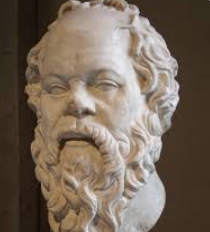
Upon the earth are animals and men, some in a middle region, others dwelling about the air as we dwell about the sea; others in islands which the air flows round, near the continent; and in a word, the air is used by them as the water and the sea are by us, and the ether is to them as the air is to us. Moreover, the temperament of their seasons is such that they have no disease, and live much longer than we do, and have sight and hearing and smell, and all the other senses, in far greater perfection, in the same degree that air is purer than water or the ether than air. Also they have temples and sacred places in which the gods really dwell, and they hear their voices and receive their answers and are conscious of them and hold converse with them, and they see the sun, moon, and stars as they really are, and their other blessedness is of a piece with this.
3 months 3 weeks ago
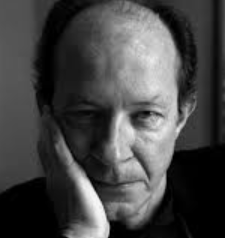
Ease names perfectly that "free use of the proper" that, according to an expression of Friedrich Hölderlin's, is "the most difficult task."
▼
Source
page 25.
3 months 3 weeks ago
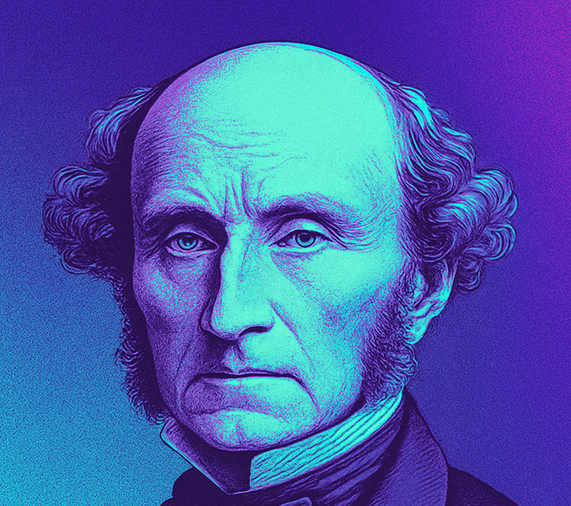
Moreover, if the character is formed, and the mind made up, on the few cardinal points of human opinion, agreement of conviction and feeling on these, has been felt in all times to be an essential requisite of anything worthy the name of friendship, in a really earnest mind. All these circumstances united, made the number very small of those whose society, and still more whose intimacy, I now voluntarily sought.
▼
Source
([https://archive.org/details/autobiography01mill/page/229/mode/1up p. 229])

3 months 3 weeks ago
Choose what's best.—Best is what benefits me. (Hays translation)
▼
Source
III, 6

3 months 3 weeks ago
It is now generally accepted that the roots of our ethics lie in patterns of behavior that evolved among our pre-human ancestors, the social mammals and that we retain within our biological nature elements of these evolved responses. We have learned considerably more about these responses, and we are beginning to to understand how they interact with our capacity to reason.
▼
Source
Preface To The 2011 edition, p. xi
3 months 3 weeks ago
The secret of change is to focus all of your energy, not on fighting the old, but on building the new.
▼
Source
This is actually a [http://books.google.com/books?id=FUIHmRHf8SUC&lpg=PA130&dq=%22not%20on%20fighting%20the%20old%20but%20on%20building%20the%20new%22&pg=PA130#v=onepage&q=%22not%20on%20fighting%20the%20old%20but%20on%20building%20the%20new%22&f=false quo
3 months 3 weeks ago
After a violent convulsion Europe fears fresh disasters, and feel the end for a long repose; the sovereigns of all the European nations are assembled to give her peace. All of them seem to desire peace, all are famed for their wisdom, yet they will not reach their goal. I have asked myself why all the efforts of the statesmen are powerless against the evils which afflict Europe, and I have perceived that there is no salvation for Europe except through a general reorganization. I have thought out a plan of reorganization: the explanation of this plan is the subject of this work.
▼
Source
Opening, Ch. I
3 months 3 weeks ago
Kant and Mill disagree about many things – even basic things – not only about the substantive foundations of ethics but also about moral psychology and about how such basic moral notions as duty and conscience are to be conceived. But these differences seem to me only to make all the clearer the close parallels in their conception of the structure and aims of ethical theory.
▼
Source
Allen W. Wood, Kantian Ethics (2008), Ch. 3. Ethical Theory
3 months 3 weeks ago
The masses are our masters; and for every one who looks facts in the face his existence has become dependent on them, so that the thought of them must control his doings, his cares, and his duties. Even an articulated mass always tends to become unspiritual and inhuman. It is life without existence, superstitions without faith. It may stamp all flat; it is disinclined to tolerate independence and greatness, but prone to constrain people to become as automatic as ants.
3 months 3 weeks ago
Doth perfect beauty stand in need of praise at all? Nay; no more than law, no more than truth, no more than loving kindness, nor than modesty.
▼
Source
IV, 20
3 months 3 weeks ago
At one level, this movement on behalf of oppressed farm animals is emotional...Yet the movement is also the product of a deep intellectual ferment pioneered by the Princeton scholar Peter Singer...This idea popularized by Professor Singer — that we have ethical obligations that transcend our species — is one whose time appears to have come...What we’re seeing now is an interesting moral moment: a grass-roots effort by members of one species to promote the welfare of others...animal rights are now firmly on the mainstream ethical agenda.
▼
Source
Nicholas Kristof, [http://www.nytimes.com/2009/04/09/opinion/09kristof.html "Humanity Even for Nonhumans," in The New York Times (8 April 2009)].

3 months 3 weeks ago
Opportunities multiply as they are seized.
▼
Source
Sun Tzu among many other military thinkers and leaders believed in fate and determination from the correct application of theory, the state of the opponent's and one's own power, and a code for the general and a code for the soldier to follow, rather than
3 months 3 weeks ago
Without passion, man is a mere latent force and possibility, like the flint which awaits the shock of the iron before it can give forth its spark.
▼
Source
27 October 1856
3 months 3 weeks ago
The other reason is that what happens to the individual is a cause of well-being in what directs the world--of its well-being, its fulfillment, or its very existence, even. Because the whole is damaged if you cut away anything--anything at all--from its continuity and its coherence. Not only its parts, but its purposes. And that's what you're doing when you complain: hacking and destroying.
▼
Source
V, 7 (Hays translation)

3 months 3 weeks ago
Speech is human, silence is divine, yet also brutish and dead: therefore we must learn both arts.
▼
Source
Notebooks (1830).
3 months 3 weeks ago
Philosophers get attention only when they appear to be doing something sinister—corrupting the youth, undermining the foundations of civilization, sneering at all we hold dear. The rest of the time everybody assumes that they are hard at work somewhere down in the sub-basement, keeping those foundations in good repair. Nobody much cares what brand of intellectual duct tape is being used.
▼
Source
"Philosophical Convictions." The Nation, June 14, 2004.

3 months 3 weeks ago
More tears are shed over answered prayers than unanswered ones.
▼
Source
First attributed to St. Teresa by Truman Capote in "Go Ahead and Ask Me Anything.' (And So She Did): An Interview with Truman Capote" by Gloria Steinem, in McCall's magazine (November 1967), as the source of the title of a novel he was working on called A

3 months 3 weeks ago
To what higher station, to what greater glory can any mortal aspire, than to be, during the whole course of his life, the support of good, the controul of bad government, and the guardian of public liberty?
▼
Source
p. 29
3 months 3 weeks ago
Never let the future disturb you. You will meet it, if you have to, with the same weapons of reason which today arm you against the present.
▼
Source
VII, 8 (Penguin Classics edition of Meditations, translated by Maxwell Staniforth)
3 months 3 weeks ago
The eye of the intellect "sees in all objects what it brought with it the means of seeing."
▼
Source
Varnhagen von Ense's Memoirs.

3 months 3 weeks ago
Do we believe it lawful for a human oath to be superadded to one divine, for a man to come under promise to another master after Christ, and to abjure father, mother, and all nearest kinsfolk, whom even the law has commanded us to honour and love next to God Himself, to whom the gospel, too, holding them only of less account than Christ, has in like manner rendered honour? Shall it be held lawful to make an occupation of the sword, when the Lord proclaims that he who uses the sword shall perish by the sword? And shall the son of peace take part in the battle when it does not become him even to sue at law? And shall he apply the chain, and the prison, and the torture, and the punishment, who is not the avenger even of his own wrongs? Shall he, forsooth, either keep watch-service for others more than for Christ, or shall he do it on the Lord’s day, when he does not even do it for Christ Himself? And shall he keep guard before the temples which he has renounced? And shall he take a meal where the apostle has forbidden him? And shall he diligently protect by night those whom in the day-time he has put to flight by his exorcisms, leaning and resting on the spear the while with which Christ’s side was pierced? Shall he carry a flag, too, hostile to Christ? And shall he ask a watchword from the emperor who has already received one from God? Shall he be disturbed in death by the trumpet of the trumpeter, who expects to be aroused by the angel’s trump? And shall the Christian be burned according to camp rule, when he was not permitted to burn incense to an idol, when to him Christ remitted the punishment of fire?
▼
Source
Chapter XI

3 months 3 weeks ago
It is inconceivable that inanimate brute matter should, without the mediation of something else which is not material, operate upon and affect other matter without mutual contact, as it must be, if gravitation in the sense of Epicurus, be essential and inherent in it. And this is one reason why I desired you would not ascribe innate gravity to me. That gravity should be innate, inherent, and essential to matter, so that one body may act upon another at a distance through a vacuum, without the mediation of anything else, by and through which their action and force may be conveyed from one to another, is to me so great an absurdity that I believe no man who has in philosophical matters a competent faculty of thinking can ever fall into it. Gravity must be caused by an agent acting constantly according to certain laws; but whether this agent be material or immaterial, I have left open to the consideration of my readers.
▼
Source
Newton to Bentley, 25 February 1692/3, The Correspondence of Isaac Newton, ed. H. W. Turnbull (Cambridge: Cambridge University Press, 1961), 3:253-254. Quoted in: Andrew Janiak, [https://plato.stanford.edu/archives/fall2021/entries/newton-philosophy/ "New
3 months 3 weeks ago
Awake, my St. John, leave all meaner thingsTo low ambition, and the pride of kings.Laugh when we must, be candid when you can,And vindicate the ways of God to man.
▼
Source
Alexander Pope, quoted in Ancient and Modern Celebrated Freethinkers (Half-Hours with the Freethinkers) by Charles Bradlaugh, A. Collins, and J. Watts (1877)
3 months 3 weeks ago
The philosopher will ask himself … if the criticism we are now suggesting is not the philosophy which presses to the limit that criticism of false gods which Christianity has introduced into our history.
▼
Source
p. 47
3 months 3 weeks ago
Love that only which happens to thee and is spun with the thread of thy destiny. For what is more suitable?
▼
Source
VII, 57
3 months 3 weeks ago
An intellectual dapperling of these times boasts chiefly of his irresistible perspicacity, his “dwelling in the daylight of truth,” and so forth; which, on examination, turns out to be a dwelling in the rush-light of “closet logic,” and a deep unconsciousness that there is any other light to dwell in or any other objects to survey with it.

3 months 3 weeks ago
The direction of the world overwhelms me at this time. In the long run, all the continents (yellow, black and brown) will spill over onto Old Europe. They are hundreds and hundreds of millions. They are hungry and they are not afraid to die. We no longer know how to die or how to kill. We could preach, but Europe believes in nothing. So, we must wait for the year 1000 or a miracle. For my part, I find it harder and harder to live before a wall.
▼
Source
Correspondance: 1932-1960, p.220, Gallimard, 1981.[https://books.google.com.br/books?id=56VcAAAAMAAJ&q=le+train+du+monde+m%27accable+en+ce+moment.+a+longue+%C3%A9ch%C3%A9ance,+tous+les+continents+(jaune,+noir+et+bistre)&dq=le+train+du+monde+m%27accable+en

3 months 3 weeks ago
I must say, extreme justice is an extreme injury: For we ought not to approve of those terrible laws that make the smallest offences capital, nor of that opinion of the Stoics that makes all crimes equal; as if there were no difference to be made between the killing a man and the taking his purse, between which, if we examine things impartially, there is no likeness nor proportion. God has commanded us not to kill, and shall we kill so easily for a little money?
▼
Source
Ch. 1 : Discourses of Raphael Hythloday, of the Best State of a Commonwealth
3 months 3 weeks ago
Atheism is so senseless. When I look at the solar system, I see the earth at the right distance from the sun to receive the proper amounts of heat and light. This did not happen by chance.
▼
Source
As quoted in Isaac Newton: Inventor, Scientist, and Teacher (1975) by John Hudson Tiner. "Atheism is so senseless" is a statement Newton made indeed in "A short Schem of the true Religion", but no source for the rest of this statement has been located pri
3 months 3 weeks ago
There is room neither for the poet nor for the contemplator in an egalitarian world.
▼
Source
p. 14.
3 months 3 weeks ago
The mind which is free from passions is a citadel, for man has nothing more secure to which he can fly for refuge and for the future be inexpugnable. He then who has not seen this is an ignorant man: but he who has seen it and does not fly to this refuge is unhappy.
▼
Source
VIII, 48

3 months 3 weeks ago
How good would it be if one could die by throwing oneself into an infinite void.
3 months 3 weeks ago
The highest ensign that men ever met and embraced under, the Cross itself, had no meaning save an accidental extrinsic one.
▼
Source
Bk. III, ch. 3.
3 months 3 weeks ago
Great feelings take with them their own universe, splendid or abject. They light up with their passion an exclusive world in which they recognize their climate. There is a universe of jealousy, of ambition, of selfishness or generosity. A universe — in other words a metaphysic and an attitude of mind.

3 months 3 weeks ago
Great is their number who perhaps had attained to perfection, had they not already thought themselves perfect.
3 months 3 weeks ago
The managers - these administrators, experts, directing engineers, production executives, propaganda specialists, technocrats - are the only social group among almost all of whose members we find an attitude of self-confidence. Bankers, capitalist owners, liberal politicians, workers, farmers, shopkeepers-all these display, in public and private, doubts and fears and worries and gloom. But no one who comes into contact with managers will fail to have noticed a very considerable assurance in their whole bearing. They know that they are indispensable in modern society.
▼
Source
p. 281, as cited in: Albert Lepawsky (1949), Administration, p. 13-4
3 months 3 weeks ago
A man discovers what he is actually worth in this world when he faces society as a man, without money, name, or powerful connections, stripped of all but his native potentialities. He soon finds that nothing has less weight than his human qualities. They are prized so low that the market does not even list them. Strict science, which acknowledges man only as a biological concept, reflects man’s lot in the actual world; in himself, man is nothing more than a member of a species. In the eyes of the world, the quality of humanity confers no title to existence, nay, not even a right of sojourn. Such title must be certified by special social circumstances stipulated in documents to be presented on demand.
▼
Source
p. 137.
3 months 3 weeks ago
Either all things proceed from one intelligent source and come together as in one body, and the part ought not to find fault with what is done for the benefit of the whole; or there are only atoms, and nothing else than a mixture and dispersion. Why, then, art thou disturbed? Say to this ruling faculty, Art thou dead, art thou corrupted, art thou playing the hypocrite, art thou become a beast, dost thou herd and feed with the rest?
▼
Source
IX, 39
3 months 3 weeks ago
Consciousness is nature's nightmare.

3 months 3 weeks ago
What I have given in the second book on the nature and properties of curved lines, and the method of examining them, is, it seems to me, as far beyond the treatment in the ordinary geometry, as the rhetoric of Cicero is beyond the a, b, c of children.
▼
Source
Letter to Marin Mersenne (1637) as quoted by D. E. Smith & M. L. Latham Tr. The Geometry of René Descartes (1925)
3 months 3 weeks ago
a matter in regard to which if something be not done, something will do itself one day, and in a fashion that will please nobody
▼
Source
Ch. 1, Condition of England.
3 months 3 weeks ago
If the only significant history of human thought were to be written, it would have to be the history of its successive regrets and its impotences.
3 months 3 weeks ago
It was well that I quitted it at last and walked again into that clear light which I had foolishly forsaken.

3 months 3 weeks ago
There are a great many obscene minds, yet more railing and satirical, but very few fastidious ones. A man must have good manners, be very polite, and even have a great deal of originality to be able to jest gracefully and be felicitous in his remarks about trifles; to jest in such a manner and to make something out of nothing is to create.
▼
Source
4
3 months 3 weeks ago
It is as if thinking itself had been reduced to the level of industrial processes, subjected to a close schedule—in short, made part and parcel of production.
▼
Source
p. 21.
3 months 3 weeks ago
It is not given to a cylinder to move everywhere by its own motion, nor yet to water nor to fire nor to anything else which is governed by nature or an irrational soul, for the things which check them and stand in the way are many. But intelligence and reason are able to go through everything that opposes them, and in such manner as they are formed by nature and as they choose. Place before thy eyes this facility with which the reason will be carried through all things, as fire upwards, as a stone downwards, as a cylinder down an inclined surface, and seek for nothing further. For all other obstacles either affect the body only, which is a dead thing; or, except for opinion and the yielding of reason itself, they do not crush nor do any harm of any kind; for if they did, he who felt it would immediately become bad.
▼
Source
X, 33
3 months 3 weeks ago
Prejudice is the reason of fools.
▼
Source
p. 18
3 months 3 weeks ago
A human being possessed by a belief and not eager to pass it on to others is a phenomenon alien to the earth, where our mania for salvation makes life unbreathable.
3 months 3 weeks ago
We have chosen Mahomet not as the most eminent Prophet; but as the one we are freest to speak of. He is by no means the truest of Prophets; but I do esteem him a true one. Farther, as there is no danger of our becoming, any of us, Mahometans, I mean to say all the good of him I justly can. It is the way to get at his secret: let us try to understand what he meant with the world; what the world meant and means with him, will then be a more answerable question. Our current hypothesis about Mahomet, that he was a scheming Impostor, a Falsehood incarnate, that his religion is a mere mass of quackery and fatuity, begins really to be now untenable to any one. The lies, which well-meaning zeal has heaped round this man, are disgraceful to ourselves only.
3 months 3 weeks ago
The rest of the story, to Grand's thinking, was very simple. The common lot of married couples. You get married, you go on loving a bit longer, you work. And you work so hard that it makes you forget to love.
CivilSimian.com created by AxiomaticPanic, CivilSimian, Kalokagathia