

3 months 3 weeks ago
Now the only sure basis of an alliance is for each party to be equally afraid of the other...
▼
Source
Book III, 3.11-[2]
3 months 3 weeks ago
The claim that suffering is bad for those who experience it and thus ought in general to be prevented when possible cannot be seriously doubted.
▼
Source
"[http://opinionator.blogs.nytimes.com/2010/09/19/the-meat-eaters/ The Meat Eaters]", The New York Times, 19 Sept. 2010

3 months 3 weeks ago
A cucumber is bitter. Throw it away. There are briars in the road. Turn aside from them. This is enough. Do not add, "And why were such things made in the world?"
▼
Source
VIII. 50, trans. George Long
3 months 3 weeks ago
One dies twice: to cease to live is nothing, but to cease to love and to be loved is an insupportable death.
▼
Source
p. 113

3 months 3 weeks ago
His power to adore is responsible for all his crimes: a man who loves a god unduly forces other men to love his god, eager to exterminate them if they refuse.

3 months 3 weeks ago
The "imagination that shudders at the Hell of Dante," is not that the same faculty, weaker in degree, as Dante's own? No one but Shakspeare can embody, out of Saxo Grammaticus, the story of Hamlet as Shakspeare did: but every one models some kind of story out of it; every one embodies it better or worse. We need not spend time in defining. Where there is no specific difference, as between round and square, all definition must be more or less arbitrary. A man that has so much more of the poetic element developed in him as to have become noticeable, will be called Poet by his neighbors.
3 months 3 weeks ago
The artist reconstructs the world to his plan.
▼
Source
Part 4: Rebellion and Art
3 months 3 weeks ago
Ravana, unwilling under the influence of vanity to restore a stranger's wife, as well as Duryodhana to part with a portion of his kingdom.
▼
Source
Arthasastra of Kautilya, giving examples how people suffered from vanity and other vices. quoted in Lal, B. B. (2008). Rāma, his historicity, mandir, and setu: Evidence of literature, archaeology, and other sciences. New Delhi: Aryan Books International.
3 months 3 weeks ago
When men are once checked in what they consider their special excellence, their whole opinion of themselves suffers more than if they had not at first believed in their superiority, the unexpected shock to their pride causing them to give way more than their real strength warrants; and that is probably now the case with the Athenians.
▼
Source
Book VII, 7.66-[3]
3 months 3 weeks ago
I cannot recall a time when American education was not in a "crisis." We have lived through Sputnik (when we were "falling behind the Russians"), through the era of "Johnny can't read," and through the upheavals of the Sixties. Now a good many books are telling us that the university is going to hell in several different directions at once. I believe that, at least in part, the crisis rhetoric has a structural explanation: since we do not have a national consensus on what success in higher education would consist of, no matter what happens, some sizable part of the population is going to regard the situation as a disaster. As with taxation and relations between the sexes, higher education is essentially and continuously contested territory. Given the history of that crisis rhetoric, one's natural response to the current cries of desperation might reasonably be one of boredom.
3 months 3 weeks ago
If you see one cold and vehement at the same time, set him down for a fanatic.
▼
Source
No. 292
3 months 3 weeks ago
In the morning, when thou art sluggish at rousing thee, let this thought be present; “I am rising to a man’s work.”
▼
Source
Meditations. v. 1.
3 months 3 weeks ago
Anything that is too stupid to be spoken is sung.
▼
Source
Source: "Nowadays what isn't worth saying is sung" (Aujourd'hui ce qui ne vaut pas la peine d'être dit, on le chante) — Pierre de Beaumarchais, Le Barbier de Séville (1775), act I, scene II. | In George Bernard Shaw's Man and Superman, act II, there is th
3 months 3 weeks ago
History shows that the thinkers who mounted on the top of the ladder of questions, who set their foot on the last rung, that of the absurd, have bequeathed to posterity only an example of sterility.

3 months 3 weeks ago
...in statu naturae Mensuram juris esse Utilitatem.
▼
Source
In the state of nature, Profit is the measure of Right. | De Cive (1642)
3 months 3 weeks ago
Great souls are always loyally submissive, reverent to what is over them.
3 months 3 weeks ago
We all have a weakness for beauty.
▼
Source
Claimed to be from The First Man, but not an accurate citation. The complete sentence is: "And then he understood that his grandmother's love for her son was physical, that, like everyone, she was in love with the grace and strength of Ernest, and her wea

3 months 3 weeks ago
To a wise man, the whole earth is open; for the native land of a good soul is the whole earth.
▼
Source
Freeman (1948), p. 166 | Variant: To a wise and good man the whole earth is his fatherland. | Durant (1939), Ch. XVI, §II, p. 352 (footnote); citing F. Uberweg, History of Philosophy, New York, 1871, vol. 1, p. 71.

3 months 3 weeks ago
The assertion that men are objectively equal is so absurd that it does not even merit being refuted.
▼
Source
p. 90.
3 months 3 weeks ago
If by the time we're sixty we haven't learned what a knot of paradox and contradiction life is, and how exquisitely the good and the bad are mingled in every action we take, and what a compromising hostess Our Lady of Truth is, we haven't grown old to much purpose.
▼
Source
The Art of Growing Old (1944), p. 13
3 months 3 weeks ago
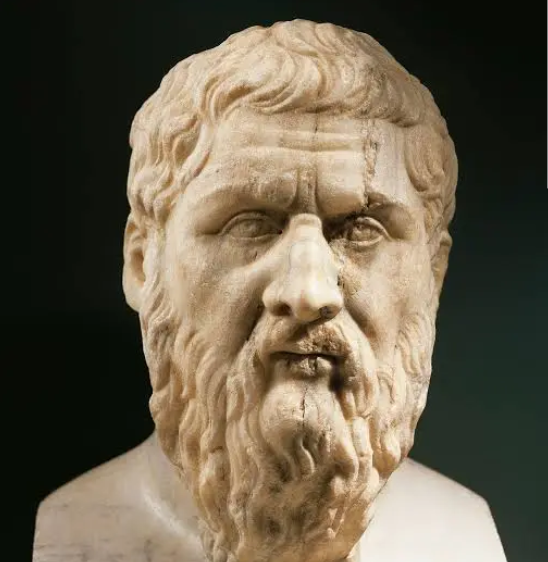
Neither perception nor true opinion, nor reason or explanation combined with true opinion could be knowledge… Then our art of midwifery declare to us that all the offspring that have been born are mere wind-eggs and not worth rearing… and if you remain barren, you will be less harsh and gentler to your associates, for you will have the wisdom not to think you know that which you do not know.
▼
Source
210a-c
3 months 3 weeks ago
I live only because it is in my power to die when I choose to: without the idea of suicide, I'd have killed myself right away.
3 months 3 weeks ago
And this Feare of things invisible, is the naturall Seed of that, which every one in himself calleth Religion; and in them that worship, or feare that Power otherwise than they do, Superstition.
▼
Source
The First Part, Chapter 11, p. 51
3 months 3 weeks ago
Blessed is he who has found his work; let him ask no other blessedness.
▼
Source
Bk. III, ch. 11.
3 months 3 weeks ago
Making money is not without its value, but nothing is baser than to make it by wrong-doing.

3 months 3 weeks ago
Our image of happiness is indissolubly bound up with the image of the past.
▼
Source
II
3 months 3 weeks ago
Pride in one’s work carries with it a determination to accept the demands imposed by that work: in the case of philosophy to follow the argument where it leads, in the case of history to discover what actually happened, in the case of literature to explore to its depths a particular theme. In consequence, this sort of pride demands freedom: it has to be laid low in any authoritarian State. The historian, in such a system, has to conform to official interpretations of the past, the philosopher to dogmas, the writer to stereotypes of human action, the craftsman to “production-schedules.” More subtly, attempts are made to lay pride low in a consumer’s society: the film-director, the novelist, the craftsman are called upon to produce “what will sell” at whatever cost to their pride in workmanship.
▼
Source
p. 290.
3 months 3 weeks ago
The wisdom which knows what are and are not dangers is opposed to the ignorance of them
▼
Source
360d, Benjamin Jowett, trans. | Sometimes misattributed as "Courage is knowing what to fear and what not to fear", this paraphrase is actually from Werner Jaeger's book Paideia: the Ideal of Greek Culture, Volume II, [https://books.google.com/books?id=pAU
3 months 3 weeks ago
I remember, that being once at Leyden, I was brought to the top of a tower, where, in a darkened room (such as is now used in many places to bring in the species of external object) a convex glass, applied to the only hole, by which light was permitted to enter, did project upon a large white sheet of paper, held at a just distance from it, a lively representation of divers of the chief buildings in the town; all which, upon the admission of more light into the room, by opening the window, did immediately disappear, And methinks... that in divers of the philosophical theories, that have been formerly applauded, something not unlike this may be easily observed. for though, whilst they are looked on with such a weak and determinate degree of light, they may appear very artificial and well-proportioned fabrics, yet they appear so but in that twilight, as it were, which is requisite to their conspicuousness. For if but a full light of new experiments and observations be freely let in upon them, the beauty of those (delightful, but fantastical) structures does immediately vanish.
3 months 3 weeks ago
Pursued by our origins...we all are.
3 months 3 weeks ago
The office of the sovereign, be it a monarch or an assembly, consisteth in the end for which he was trusted with the sovereign power, namely the procuration of the safety of the people, to which he is obliged by the law of nature, and to render an account thereof to God, the Author of that law, and to none but Him. But by safety here is not meant a bare preservation, but also all other contentments of life, which every man by lawful industry, without danger or hurt to the Commonwealth, shall acquire to himself. And this is intended should be done, not by care applied to individuals, further than their protection from injuries when they shall complain; but by a general providence, contained in public instruction, both of doctrine and example; and in the making and executing of good laws to which individual persons may apply their own cases.
▼
Source
The Second Part, Chapter 30: Of the Office of the Sovereign Representative
3 months 3 weeks ago
The manner of men's Hero-worship, verily it is the innermost fact of their existence, and determines all the rest,—at public hustings, in private drawing-rooms, in church, in market, and wherever else. Have true reverence, and what indeed is inseparable therefrom, reverence the right man, all is well; have sham-reverence, and what also follows, greet with it the wrong man, then all is ill, and there is nothing.
3 months 3 weeks ago
My own view of the risks and uncertainties is that there is a critical distinction between trying to abolish suffering exclusively via social reform and abolishing suffering directly via biotechnology. As we know, utopian social experiments typically go wrong, sometimes hideously wrong, and end up causing a lot of suffering instead. The abolitionist project of eradicating the biological substrates of suffering sounds like just another utopian scheme, whether it's touted as a grandiose species-project or simply as a byproduct of the Reproductive Revolution explored here. Although the abolition of psychological pain is arguably no more utopian in principle than pain-free surgery, it could presumably go wrong in unanticipated ways too. Perhaps we'll unwittingly create a fool's paradise. But if and when we ever abolish the molecular underpinning of unpleasant experience, and it becomes physiologically impossible for any sentient being to suffer, we thereby change the very meaning of what it is for anything to "go wrong". Unwelcome surprises where no one gets hurt are very different from unwelcome surprises where they do. For what it's worth, I think the abolition of involuntary suffering is the precondition of any civilised posthuman society; and therefore a risk worth taking.
▼
Source
"[https://www.reproductive-revolution.com/ The Reproductive Revolution: Selection Pressure in a Post-Darwinian World]", Talk delivered at the Touch Me Festival, Zagreb, Dec. 2008

3 months 3 weeks ago
Power as the pursuit of more power inevitably founders in the void that lies beyond itself.
▼
Source
Chapter Eight, Nietzsche, p. 181
3 months 3 weeks ago
Christ found the religions of the world oppressed almost to suffocation by the load of formulas piled upon them by the priesthood. He removed the load, and rendered respiration free. He cared little for forms and ceremonies, which had ceased to be the raiment of man's spiritual life. To that life he looked, and it he sought to restore.
3 months 3 weeks ago
My love, Alcibiades, which I hardly like to confess, would long ago have passed away, as I flatter myself, if I saw you loving your good things, or thinking that you ought to pass life in the enjoyment of them.
▼
Source
Socrates speaking to Alcibiades
3 months 3 weeks ago
Among Latin writers, the acceptations of the word nature are so many, that I remember, one author reckons up no less than fourteen or fifteen. Hence we see how easy 'tis for the generality of men, without excepting those who write of natural things, to impose upon others and themselves, in the use of a word so apt to be mis-employ'd. ..the very great ambiguity of this term, and the promiscuous use made of it, without sufficiently attending to its different significations, render many of the expressions wherein 'tis employ'd either unintelligible, improper, or false.
▼
Source
Sect. 1
3 months 3 weeks ago
Tragic paradox of freedom: the mediocre men who alone make its exercise possible cannot guarantee its duration.
3 months 3 weeks ago
Between our Black West Indies and our White Ireland, between these two extremes of lazy refusal to work, and of famishing inability to find any work, what a world have we made of it, with our fierce Mammon-worships, and our benevolent philanderings, and idle godless nonsenses of one kind and another! Supply-and-demand, Leave-it-alone, Voluntary Principle, Time will mend it:—till British industrial existence seems fast becoming one huge poison-swamp of reeking pestilence physical and moral; a hideous living Golgotha of souls and bodies buried alive; such a Curtius' gulf, communicating with the Nether Deeps, as the Sun never saw till now. These scenes, which the Morning Chronicle is bringing home to all minds of men,—thanks to it for a service such as Newspapers have seldom done,—ought to excite unspeakable reflections in every mind. Thirty thousand outcast Needlewomen working themselves swiftly to death; three million Paupers rotting in forced idleness, helping said Needlewomen to die: these are but items in the sad ledger of despair.
3 months 3 weeks ago
... our descendants may recognize that we are the sociopathic emotional primitives in the grip of an affective psychosis. Jealousy, envy, resentment, ridicule, hate, anger, disgust, spite, contempt, schadenfreude and a whole gamut of nameless but mean-spirited states we undergo each day are a toxic legacy of our Darwinian past. More commonly, perhaps, our genetic make-up ensures we simply feel indifference to the plight of all but a handful of significant others in our lives. Right now, for instance, one knows dimly at some level that there is frightful and preventable suffering in the world. Yet most of us feel no overpowering moral urgency to do anything about it.
▼
Source
"[https://www.hedweb.com/ecstasy/index.html Utopian Pharmacology: Mental Health in the Third Millennium MDMA and Beyond]", BLTC Research, last updated 2020

3 months 3 weeks ago
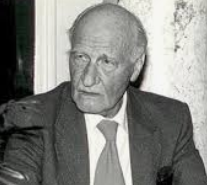
In fact, we almost lost our lives because of his honesty. In 1939, we were running away from Posnan as the Germans were invading - the town was almost on the German border. We took the last train east, but we were stopped at a station which was being bombed by the Germans. We should have run away from the station because that was the object of the bombing, but he wanted to find a ticket inspector to pay for our tickets.
▼
Source
From an interview, as cited in [https://www.theguardian.com/books/2003/apr/05/society "Passion and pessimism"], The Guardian (5 April 2003)
3 months 3 weeks ago
Within the world of total work, the "festival" is either "a break from work" (and thus only there for the sake of work), or it is a more intensive celebration of the principles of work itself (as in the "Labor Days," and thus belongs, again, to the working world). There will naturally be "games" — like the Roman circences — but who would dignify the amusements for the masses with the name of "festival"?
▼
Source
p. 53
3 months 3 weeks ago
It is no idle question to wonder whether Plato, if he had stayed free of the Socratic spell, might not have found an even higher type of the philosophical man, now lost to us forever.
▼
Source
Friedrich Nietzsche, Human, All Too Human: A Book for Free Spirits (1878)
3 months 3 weeks ago
Facing a landscape annihilated by the light, to remain serene supposes a temper I do not have. The sun is my purveyor of black thoughts; and summer the season when I have always reconsidered my relations with this world and with myself, to the greatest prejudice of both.
3 months 3 weeks ago
Let us honor all honest human power of contrivance in its degree. The beaver intellect, so long as it steadfastly refuses to be vulpine, and answers the tempter pointing out short routes to it with an honest "No, no," is truly respectable to me; and many a highflying speaker and singer whom I have known, has appeared to me much less of a developed man than certain of my mill-owning, agricultural, commercial, mechanical, or otherwise industrial friends, who have held their peace all their days and gone on in the silent state. If a man can keep his intellect silent, and make it even into honest beaverism, several very manful moralities, in danger of wreck on other courses, may comport well with that, and give it a genuine and partly human character; and I will tell him, in these days he may do far worse with himself and his intellect than change it into beaverism, and make honest money with it.
3 months 3 weeks ago
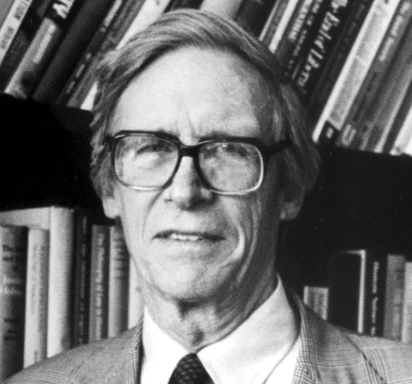
Indeed, it is tempting to suppose that it is self evident that things should be so arranged so as to lead to the most good.
▼
Source
Chapter I, Section 5, pg. 25
3 months 3 weeks ago
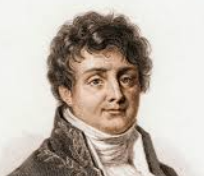
Primary causes are unknown to us; but are subject to simple and constant laws, which may be discovered by observation, the study of them being the object of natural philosophy. Heat, like gravity, penetrates every substance of the universe, its rays occupy all parts of space. The object of our work is to set forth the mathematical laws which this element obeys. The theory of heat will hereafter form one of the most important branches of general physics.
▼
Source
Ch. 1, p. 1
3 months 3 weeks ago
When people come to me saying they want to kill themselves, I tell them, "What's your rush? You can kill yourself any time you like. So calm down. Suicide is a positive act." And they do calm down.
3 months 3 weeks ago
My father's education was altogether of the worst and most limited. I believe he was never more than three months at any school. What he learned there showed what he might have learned. A solid knowledge of arithmetic, a fine antique handwriting — these, with other limited practical etceteras, were all the things he ever heard mentioned as excellent. He had no room to strive for more.
3 months 3 weeks ago
The suppression of liberty is always likely to be irrational.
▼
Source
Chapter IV, Section 33, p. 210
CivilSimian.com created by AxiomaticPanic, CivilSimian, Kalokagathia