

7 months ago
The spontaneous reproduction of superimposed needs by the individual does not establish autonomy; it only testifies to the efficacy of the control.
▼
Source
p. 8
7 months ago
In conditions of private property ... "life-activity" stands in the service of property instead of property standing the service of free life-activity.
▼
Source
"The Foundations of Historical Materialism," Studies in Critical Philosophy (1972), p. 32
7 months ago
Ever since the first World War, when the system of liberalism began to shape into the system of authoritarianism, a widespread opinion has blames Hegelianism for the ideological of the new system.
▼
Source
P. 390
7 months ago
To live one's love and hatred, to live that which one is means defeat, resignation, and death. The crimes of society, the hell that man has made or man become unconquerable cosmic forces.
▼
Source
p. 61
7 months ago
The real field of knowledge is not the given fact about things as they are, but the critical evaluation of them as a prelude to passing beyond their given form. Knowledge deals with appearances in order to get beyond them. .... The concept of reality has thus turned into the concept of possibility. The real is not yet 'actual,' but is at first only the possibility of an actual.
▼
Source
P. 145
7 months ago
The distinction between true and false consciousness, real and immediate interest still is meaningful. But this distinction itself must be validated. Men must come to see it and to find their way from false to true consciousness, from their immediate to their real interest. They can do so only if they live in need of changing their way of life, of denying the positive, of refusing. It is precisely this need which the established society manages to repress to the degree to which it is capable of "delivering the goods" on an increasingly large scale, and using the scientific conquest of nature for the scientific conquest of man.
▼
Source
pp. xlv-xlvi
7 months ago
Positive philosophy made its counter-attack against critical rationalism on two fronts. Comte fought against the French form of negative philosophy, against the heritage of Descartes and the Enlightenment. In Germany, the struggle was directed against Hegel's system. Schelling received an express commission from Frederick William IV 'to destroy the dragon seed' of Hegelianism, while Stahl, another anti-Hegelian, became the philosophical spokesman of the Prussian monarchy in 1840.
▼
Source
P. 326
7 months ago
The slaves of developed industrial civilization are sublimated slaves.
▼
Source
p. 32
7 months ago
The Kantian philosophy left a gulf between thought and being, or between subject and object, which the Hegelian philosophy sought to bridge. The bridge was to be made by positing one universal structure of all being. Being was to be a process wherein a thing 'comprehends' or 'grasps' the various states of existence and draws them into the more or less enduring unity of its 'self,' thus actively constituting itself as 'the same' throughout all change. Everything, in other words, exists more or less as a 'subject.'
▼
Source
P. 64
7 months ago
By virtue of the way it has organized its technological base, contemporary industrial society tends to be totalitarian. For "totalitarian" is not only a terroristic political coordination of society, but also a non-terroristic economic-technical coordination which operates through the manipulation of needs by vested interests.
▼
Source
p. 5
7 months ago
The transition from philosophy to the domain of state and society had been an intrinsic part of Hegel's system.
▼
Source
P. 251
7 months ago
We are again confronted with one of the most vexing aspects of advanced industrial civilization: the rational character of its irrationality. Its productivity and efficiency, its capacity to increase and spread comforts, ... the extent to which this civilization transforms the object world into an extension of man's mind and body makes the very notion of alienation questionable. The people recognize themselves in their commodities; they find their soul in their automobile, hi-fi set, split-level home, kitchen equipment. The very mechanism which ties the individual to his society has changed, and social control is anchored in the new needs which it has produced.
▼
Source
p. 9
7 months ago
Man is a thinking being. His reason enables him to recognize his own potentialities and those of his world. He is thus not at the mercy of the facts that surround him, but is capable of subjecting them to a higher standard, that of reason.
▼
Source
P. 6
7 months ago
To those who hold abstractly to Hegel's political philosophy, Hobhouse replies that the very fact of class society, the patent influence of class interests on the state, renders it impossible to designate the state as expressive of the real will of individuals as a whole. 'Wherever a community is governed by one class or one race, the remaining class or race is permanently in the position of having to take what it can get.'
▼
Source
P. 396
7 months ago
In the form of the oeuvre, the actual circumstances are placed in another dimension where the given reality shows itself as that which it is. Thus it tells the truth about itself; its language ceases to be that of deception, ignorance, and submission. Fiction calls the facts by their name and their reign collapses; fiction subverts everyday experience and shows it to be mutilated and false.
▼
Source
p. 62
7 months ago
We have reached the point where the Objective Logic turns into the Subjective Logic, or, where subjectivity emerges as the true form of objectivity. We may sum up Hegel's analysis in the following schema: The true form of reality requires freedom. Freedom requires self-consciousness and knowledge of the truth. Self-consciousness and knowledge of the truth are the essentials of the subject. The form of reality must be conceived as subject.
▼
Source
P. 154-155
7 months ago
In which the technical apparatus of production and distribution (with an increasing sector of automation) functions, not as the sum-total of mere instruments which can be isolated from their social and political effects, but rather as a system which determines a priori the product of the apparatus as well as the operations of servicing and extending it. In this society, the productive apparatus tends to become totalitarian to the extent to which it determines not only the socially needed occupations, skills, and attitudes, but also individual needs and aspirations. It thus obliterates the Opposition between the private and public existence, between individual and social needs.
▼
Source
p. xlvii
7 months ago
Saint-Simon, like Hegel, begins with the assertion that the social order engendered by the French Revolution proved that mankind has reached the adult state. In contrast to Hegel, however, he described this stage primarily in terms of its economy; the industrial process was the sole integrating factor in the new social order.
▼
Source
P. 330
7 months ago
This is the pure form of servitude: to exist as an instrument.
▼
Source
p. 33
7 months ago
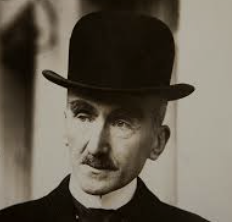
Intuition is a method of feeling one's way intellectually into the inner heart of a thing to locate what is unique and inexpressible in it.
▼
Source
Quoted in Georgia O'Keeffe, 1887-1986 : Flowers in the Desert (2000) by Britta Benke, p. 28
7 months ago
I cannot escape the objection that there is no state of mind, however simple, that does not change every moment.
▼
Source
An Introduction to Metaphysics (1903), translated by T. E. Hulme. New York: G. P. Putnam's Sons, 1912, p. 44
7 months ago
Sex-appeal is the keynote of our whole civilization.
▼
Source
Chapter IV
7 months ago
The remembrance of forbidden fruit is the earliest thing in the memory of each of us, as it is in that of mankind.
▼
Source
Chapter I: Moral Obligation
7 months ago
The present contains nothing more than the past, and what is found in the effect was already in the cause.
▼
Source
Creative Evolution (1907), Chapter I, as translated by Arthur Mitchell (1911), p. 14.; italicized in the original.
7 months ago
Men do not sufficiently realise that their future is in their own hands. Theirs is the task of determining first of all whether they want to go on living or not. Theirs is the responsibility, then, for deciding if they want merely to live, or intend to make just the extra effort required for fulfilling, even on their refractory planet, the essential function of the universe, which is a machine for the making of gods.
7 months ago
Why did we obey? The question hardly occurred to us. We had formed the habit of deferring to our parents and teachers. All the same we knew very well that it was because they were our parents, because they were our teachers. Therefore, in our eyes, their authority came less from themselves than from their status in relation to us.
▼
Source
Chapter I: Moral Obligation
7 months ago
All the living hold together, and all yield to the same tremendous push. The animal takes its stand on the plant, man bestrides animality, and the whole of humanity, in space and in time, is one immense army galloping beside and before and behind each of us in an overwhelming charge able to beat down every resistance and clear the most formidable obstacles, perhaps even death.
▼
Source
Creative Evolution (1907), Chapter III. New York: Henry Holt and Company, 1911, p. 271
7 months ago
The eyes see only what the mind is prepared to comprehend.
▼
Source
Robertson Davies as quoted in The White Bedouin (2007) by George Potter, p. 241
7 months ago
The spectacle of what religions have been in the past, of what certain religions still are to-day, is indeed humiliating for human intelligence. What a farrago of error and folly!'
▼
Source
Chapter II : Static Religion
7 months ago
A philosopher worthy of the name has never said more than a single thing: and even then it is something he has tried to say, rather than actually said. And he has said only one thing because he has seen only one point: and at that it was not so much a vision as a contact...
▼
Source
"L'intuition philosophique (Philosophical Intuition)" (10 April 1911); translated by Mabelle L. Andison in: Henri Bergson, The Creative Mind: An Introduction to Metaphysics, Courier Dover Publications, 2012, p. 91
7 months ago
People talk, indeed, of a "primitive mentality", as, for example, to-day that of the inferior races, and in days gone by that of humanity in general, at whose door the responsibility for superstition should be laid.
▼
Source
Chapter II : Static Religion
7 months ago
The prestige of the Nobel Prize is due to many causes, but in particular to its twofold idealistic and international character: idealistic in that it has been designed for works of lofty inspiration; international in that it is awarded after the production of different countries has been minutely studied and the intellectual balance sheet of the whole world has been drawn up. Free from all other considerations and ignoring any but intellectual values, the judges have deliberately taken their place in what the philosophers have called a community of the mind.
▼
Source
In a letter accepting the 1927 Nobel Prize in literature, read by the French minister, Armand Bernard.
7 months ago
Religion is to mysticism what popularization is to science. What the mystic finds waiting for him, then, is a humanity which has been prepared to listen to his message by other mystics invisible and present in the religion which is actually taught. Indeed his mysticism itself is imbued with this religion, for such was its starting point. His theology will generally conform to that of the theologians. His intelligence and his imagination will use the teachings of the theologians to express in words what he experiences, and in material images what he sees spiritually. And this he can do easily, since theology has tapped that very current whose source is the mystical. Thus his mysticism is served by religion, against the day when religion becomes enriched by his mysticism. This explains the primary mission which he feels to be entrusted to him, that of an intensifier of religious faith.
▼
Source
Chapter III : Dynamic Religion
7 months ago
I would say act like a man of thought and think like a man of action.
▼
Source
Speech at the Descartes Conference in Paris (1937) Quoted in The Forbes Scrapbook of Thoughts on the Business of Life (1950), p. 442, as "Think like a man of action, act like a man of thought."
7 months ago
The open society is one that is deemed in principle to embrace all humanity.
▼
Source
Chapter IV
7 months ago
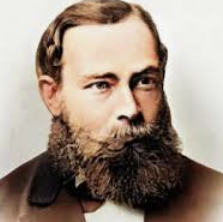
The ideal of strictly scientific method in mathematics which I have tried to realise here, and which perhaps might be named after Euclid I should like to describe in the following way... The novelty of this book does not lie in the content of the theorems but in the development of the proofs and the foundations on which they are based... With this book I accomplish an object which I had in view in my Begriffsschrift of 1879 and which I announced in my Grundlagen der Arithmetik. I am here trying to prove the opinion on the concept of number that I expressed in the book last mentioned.
▼
Source
Vol. 1. pp. 137-140, as cited in: Ralph H. Johnson (2012), Manifest Rationality: A Pragmatic Theory of Argument, p. 87
7 months ago
It really is worth the trouble to invent a new symbol if we can thus remove not a few logical difficulties and ensure the rigour of the proofs. But many mathematicians seem to have so little feeling for logical purity and accuracy that they will use a word to mean three or four different things, sooner than make the frightful decision to invent a new word.
▼
Source
Gottlob Frege in: Dagobert David Runes (1962). Readings in epistemology, theory of knowledge and dialectics. p. 334
7 months ago
A scientist can hardly meet with anything more undesirable than to have the foundations give way just as the work is finished. I was put in this position by a letter from Mr. Bertrand Russell when the work was nearly through the press.
▼
Source
Note in the appendix of Grundlagen der Arithmetik (Vol. 2) after Frege had received a letter of Bertrand Russell in which Russell had explained his discovery of, what is now known as, Russell's paradox.
7 months ago
If I compare arithmetic with a tree that unfolds upward into a multitude of techniques and theorems while its root drives into the depths, then it seems to me that the impetus of the root.
▼
Source
Gottlob Frege, Montgomery Furth (1964). The Basic Laws of Arithmetic: Exposition of the System. p. 10
7 months ago
Is it always permissible to speak of the extension of a concept, of a class? And if not, how do we recognize the exceptional cases? Can we always infer from the extension of one concept's coinciding with that of a second, that every object which falls under the first concept also falls under the second?
▼
Source
Vol. 2, p. 127. Replying to Bertrand Russell's letter about Russell's Paradox; quoted in The Stanford Encyclopedia of Philosophy
7 months ago
Every good mathematician is at least half a philosopher, and every good philosopher is at least half a mathematician.
▼
Source
Attributed to Frege in: A. A. B. Aspeitia (2000), Mathematics as grammar: 'Grammar' in Wittgenstein's philosophy of mathematics during the Middle Period, Indiana University, p. 25
7 months ago
The historical approach, with its aim of detecting how things began and arriving from these origins at a knowledge of their nature, is certainly perfectly legitimate; but it also has its limitations. If everything were in continual flux, and nothing maintained itself fixed for all time, there would no longer be any possibility of getting to know about the world, and everything would be plunged into confusion.
▼
Source
Translation J. L. Austin (Oxford, 1950) as quoted by Stephen Toulmin, Human Understanding: The Collective Use and Evolution of Concepts (1972) Vol. 1, p. 55.
7 months ago
A judgment, for me is not the mere grasping of a thought, but the admission of its truth.
▼
Source
Gottlob Frege (1892). On Sense and Reference, note 7.
7 months ago
If the task of philosophy is to break the domination of words over the human mind, then my concept notation, being developed for these purposes, can be a useful instrument for philosophers. I believe the cause of logic has been advanced already by the invention of this concept notation.
▼
Source
Begriffsschrift (1879) Preface to the Begriffsschrift
7 months ago
We suppose, it would seem, that concepts grow in the individual mind like leaves on a tree, and we think to discover their nature by studying their growth; we seek to define them psychologically, in terms of the human mind. But this account makes everything subjective, and if we follow it through to the end, does away with truth. What is known as the history of concepts is really a history either of our knowledge of concepts or of the meanings of words.
▼
Source
Translation J. L. Austin (Oxford, 1950) as quoted by Stephen Toulmin, Human Understanding: The Collective Use and Evolution of Concepts (1972) Vol. 1, p. 56.
7 months ago
Without some affinity in human ideas art would certainly be impossible; but it can never be exactly determined how far the intentions of the poet are realized.
▼
Source
Gottlob Frege (1892). On Sense and Reference.
7 months ago
I hope I may claim in the present work to have made it probable that the laws of arithmetic are analytic judgments and consequently a priori. Arithmetic thus becomes simply a development of logic, and every proposition of arithmetic a law of logic, albeit a derivative one. To apply arithmetic in the physical sciences is to bring logic to bear on observed facts; calculation becomes deduction.
▼
Source
Gottlob Frege (1950 ). The Foundations of Arithmetic. p. 99.
7 months ago
Often it is only after immense intellectual effort, which may have continued over centuries, that humanity at last succeeds in achieving knowledge of a concept in its pure form, by stripping off the irrelevant accretions which veil it from the eye of the mind.
▼
Source
Translation J. L. Austin (Oxford, 1950) as quoted by Stephen Toulmin, Human Understanding: The Collective Use and Evolution of Concepts (1972) Vol. 1, p. 56.
7 months ago
Being true is different from being taken as true, whether by one or by many or everybody, and in no case is it to be reduced to it. There is no contradiction in something's being true which everybody takes to be false. I understand by 'laws of logic' not psychological laws of takings-to-be-true, but laws of truth. ...If being true is thus independent of being acknowledged by somebody or other, then the laws of truth are not psychological laws: they are boundary stones set in an eternal foundation, which our thought can overflow, but never displace. It is because of this that they have authority for our thought if it would attain truth. They do not bear the relation to thought that the laws of grammar bear to language; they do not make explicit the nature of our human thinking and change as it changes.
▼
Source
Introduction, Tr. Montgomery Furth
7 months ago
Facts, facts, facts,' cries the scientist if he wants to emphasize the necessity of a firm foundation for science. What is a fact? A fact is a thought that is true. But the scientist will surely not recognize something which depends on men's varying states of mind to be the firm foundation of science.
▼
Source
Gottlob Frege (1956). "The thought: A logical inquiry" in: Peter Ludlow (1997) Readings in the Philosophy of Language. p. 27
CivilSimian.com created by AxiomaticPanic, CivilSimian, Kalokagathia