
5 months ago
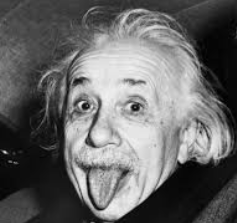
Whereas materialistic historians and philosophers neglect psychic realities, Freud is inclined to overstress their importance. I am not a psychologist, but it seems to me fairly evident that physiological factors, especially our endocrines, control our destiny ... I am not able to venture a judgment on so important a phase of modern thought. However, it seems to me that psychoanalysis is not always salutary. It may not always be helpful to delve into the subconscious. The machinery of our legs is controlled by a hundred different muscles. Do you think it would help us to walk if we analyzed our legs and knew exactly which one of the little muscles must be employed in locomotion and the order in which they work? ... I am not prepared to accept all his [Freud's] conclusions, but I consider his work an immensely valuable contribution to the science of human behavior. I think he is even greater as a writer than as a psychologist. Freud's brilliant style is unsurpassed by anyone since Schopenhauer.
5 months ago
We may assume the existence of an aether; only we must give up ascribing a definite state of motion to it, i.e. we must by abstraction take from it the last mechanical characteristic which Lorentz had still left it. ... But this ether may not be thought of as endowed with the quality characteristic of ponderable media, as consisting of parts which may be tracked through time. The idea of motion may not be applied to it.
▼
Source
On the irrelevance of the luminiferous aether hypothesis to physical measurements, in [https://www.refcm.org/scripture-science-stott/aarch/pages/12-einstein-sidelights-relativity.htm an address at the University of Leiden (5 May 1920)]
5 months ago
Reading after a certain age diverts the mind too much from its creative pursuits. Any man who reads too much and uses his own brain too little falls into lazy habits of thinking, just as the man who spends too much time in the theater is tempted to be content with living vicariously instead of living his own life.

5 months 1 week ago
It's not about telling people how to be, outside of supporting ideals that teach us what to avoid.
5 months 1 week ago
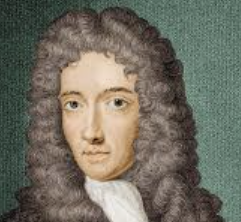
And first the Doctrine that all their Theory is grounded on, seems to me Inevident and undemonstrated, not to say precarious.

5 months 1 week ago
The lover who kills himself for a girl has an experience which is more complete and much more profound than the hero who overturns the world.

5 months 1 week ago
And though this may seem to subtile a deduction of the Lawes of Nature, to be taken notice of by all men;whereof the most part are too busie in getting food, and the rest too negligent to understand; yet to leave all men unexcusable, they have been contracted into one easie sum, intelligble, even to the meanest capacity; and that is, Do not that to another, which thou wouldest not have done to thyselfe; which sheweth him, that he has no more to do in learning the Lawes of Nature, but, when weighing the actions of other men with his own, they seem too heavy, to put them into the other part of the balance, and his own into their place, that his own passions, and selfe love, may adde nothing to the weight; and then there is none of these Laws of Nature that will not appear unto him very reasonable.
▼
Source
The First Part, Chapter 15, p. 79

5 months 1 week ago
Unless some Hero-worship, in its new appropriate form, can return, this world does not promise to be very habitable long.

5 months 1 week ago
Now as of old the gods give men all good things, excepting only those that are baneful and injurious and useless. These, now as of old, are not gifts of the gods: men stumble into them themselves because of their own blindness and folly.

5 months 1 week ago
Enlightenment rationalism, to the extent that its program is taken seriously, is an engine of perpetual revolution, which brings about the progressive destruction of every inherited institution, yet without ever being able to consolidate a stable consensus around any new ones.
▼
Source
p. 147
5 months 1 week ago
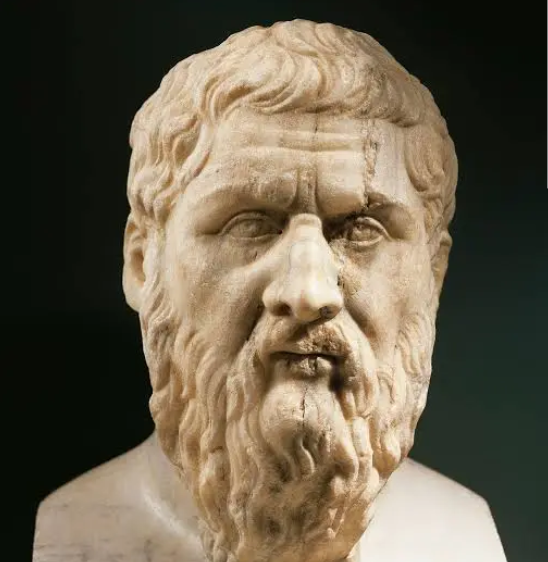
Knowledge is the food of the soul; and we must take care, my friend, that the Sophist does not deceive us when he praises what he sells, like the dealers wholesale or retail who sell the food of the body; for they praise indiscriminately all their goods, without knowing what are really beneficial or hurtful.
▼
Source
313c, Benjamin Jowett, trans.
5 months 1 week ago
In leisure — not only there, but certainly there, if anywhere — the truly human is rescued and preserved precisely because the area of the "just human" is left behind over and over again — and this is not brought about through the application of extreme efforts but rather as with a kind of "moving away" (and this "moving" is of course more difficult than the extreme, active effort; it is "more difficult" because it is less at one's own disposal; the condition of utmost exertion is more easily to be realized than the condition of relaxation and detachment, even though the latter is effortless: this is the paradox that reigns over the attainment of leisure, which is at once a human and superhuman condition). As Aristotle said of it: "man cannot live this way insofar as he is man, but only insofar as something divine dwells in him." [Nichomachean Ethics X, 7 (1177b27–28)]
▼
Source
p. 36
5 months 1 week ago
Nothing is so wearing as the possession or abuse of liberty.
5 months 1 week ago
The thoughts are to the desires, as scouts and spies, to range abroad and find the way to the thing desired.
▼
Source
Reported in Robert P. George, Conscience and Its Enemies (2013) pt. 2, ch. 8, p. 81
5 months 1 week ago
Descend where you will into the lower class, in Town or Country, by what avenue you will, by Factory Inquiries, Agricultural Inquiries, by Revenue Returns, by Mining-Labourer Committees, by opening your own eyes and looking, the same sorrowful result discloses itself: you have to admit that the working body of this rich English Nation has sunk or is fast sinking into a state, to which, all sides of it considered, there was literally never any parallel.
5 months 1 week ago
The irrationality of the "appeal to Nature" is illustrated by a simple thought-experiment. Imagine, fancifully, if starvation, disease, parasitism, disembowelling, asphyxiation and being eaten alive were not endemic to the living world - or such miseries have already been abolished and replaced by an earthly paradise. Would anyone propose there is ethical case for (re)introducing them? Even proposing such a thought-experiment can sound faintly ridiculous.
▼
Source
"[https://www.ledonline.it/index.php/Relations/article/view/881 A Welfare State For Elephants?: A Case Study of Compassionate Stewardship]", Relations: Beyond Anthropocentrism, Vol. 3, Iss. 2 (Nov. 2015), p. 162
5 months 1 week ago
Your pride has been too much for the pride of your admirers; they were numerous and high-spirited, but they have all run away, overpowered by your superior force of character; not one of them remains. And I want you to understand the reason why you have been too much for them. You think that you have no need of them or of any other man, for you have great possessions and lack nothing, beginning with the body, and ending with the soul.
▼
Source
Socrates speaking to Alcibiades
5 months 1 week ago
All just order in the world is based on this, that man give man what is his due.
▼
Source
[http://books.google.com/books?id=XjYbAAAAIAAJ&q=%22All+just+order+in+the+world+is+based+on+this+that+man+give+man+what+is+his+due%22&pg=PA10#v=onepage Justice] (1955)
5 months 1 week ago
Isn't history ultimately the result of our fear of boredom?
5 months 1 week ago
But leaving this, let us remark one thing which is very plain: That whatever be the uses and duties, real or supposed, of a Secretary in Parliament, his faculty to accomplish these is a point entirely unconnected with his ability to get elected into Parliament, and has no relation or proportion to it, and no concern with it whatever.
5 months 1 week ago
...it won't just be the quality and quantity of consciousness in the world that will be transformed in the post-Darwinian Transition. As (post-)humanity emerges from the neurochemical Dark Ages, enriched dopaminergic function in particular may sharpen the sheer intensity and meaningfulness of every moment of conscious existence. For a generation whose lifetimes span both modes of awareness, it will be as if they had just woken up. They will feel they had hitherto been sleep-walking through life in a twilit stupor. Thereafter their former mundane and minimal existence may be recalled only as some kind of zombified trance-state whose nature they were physiologically incapable of recognising...
▼
Source
The Hedonistic Imperative: Heaven on Earth?, [https://www.hedweb.com/heaven/heaven7.htm "Eden"], BLTC Research
5 months 1 week ago
The History of Electricity is a field full of pleasing objects, according to all the genuine and universal principles of taste, deduced from a knowledge of human nature. Scenes like these, in which we see a gradual rise and progress in things, always exhibit a pleasing spectacle to the human mind. Nature, in all her delightful walks, abounds with such views, and they are in a more especial manner connected with every thing that relates to human life and happiness; things, in their own nature, the most interesting to us. Hence it is, that the power of association has annexed crowds of pleasing sensations to the contemplation of every object, in which this property is apparent. This pleasure, likewise, bears a considerable resemblance to that of the sublime, which is one of the most exquisite of all those that affect the human imagination. For an object in which we see a perpetual progress and improvement is, as it were, continually rising in its magnitude; and moreover, when we see an actual increase, in a long period of time past, we cannot help forming an idea of an unlimited increase in futurity; which is a prospect really boundless, and sublime.
▼
Source
Preface, p. i.
5 months 1 week ago
Plausible as the idea of the United States of Europe as a peace arrangement may seem to some at first glance, it has on closer examination not the least thing in common with the method of thought and the standpoint of social democracy . . . At the present stage of development of the world market and of world economy, the conception of Europe as an isolated economic unit is a sterile concoction of the brain. Europe no more forms a special unit within world economy than does Asia or America.
5 months 1 week ago
An anxious man constructs his terrors, then installs himself within them: a stay-at-home in a yawning chasm.
5 months 1 week ago
The habits of study acquired at Universities are of the highest importance in after-life. At the season when you are in young years the whole mind is, as it were, fluid, and is capable of forming itself into any shape that the owner of the mind pleases to order it to form itself into. The mind is in a fluid state, but it hardens up gradually to the consistency of rock or iron, and you cannot alter the habits of an old man, but as he has begun he will proceed and go on to the last.
5 months 1 week ago
Philosophy in its very act is a process of translation!
▼
Source
Chapter 4, Philosophy As Writing: The Case Of Hegel, p. 81
5 months 1 week ago
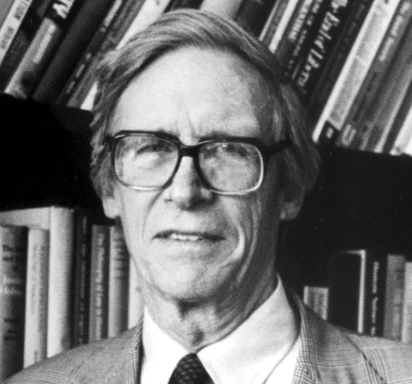
No one deserves his greater natural capacity nor merits a more favorable starting place in society.
▼
Source
Chapter II, Section 17, pg. 102
5 months 1 week ago
Too many christians have been chargeable with... confounding the Logos of Plato with that of John, and making of it a second person in the trinity, than which no two things can be more different.
▼
Source
General Conclusions, Part I : Containing Considerations addressed to Unbelievers and especially to Mr. Gibbon

5 months 1 week ago
A just city should favor justice and the just, hate tyranny and injustice, and give them both their just desserts.
▼
Source
H. Gibb et al., eds., "Mazalim", The Dictionary of Islam vol. IV (Leiden: Brill, 1991)

5 months 1 week ago
If there is anything in the world that can really be called a man’s property, it is surely that which is the result of his mental activity.
▼
Source
Unverified attribution noted in Respectfully Quoted: A Dictionary of Quotations (1993), ed. Suzy Platt, Library of Congress, p. 227
5 months 1 week ago
I am for the most part so convinced that everything is lacking in basis, consequence, justification, that if someone dared to contradict me, even the man I most admire, he would seem to me a charlatan or a fool.
5 months 1 week ago
Lord Bacon could as easily have created this planet as he could have written Hamlet.
▼
Source
According to Moncure Conway (Thomas Carlyle (1881) p. 122) Carlyle said this in reply to a Baconian enthusiast who was attempting to convert him; alternatively reported as "the planets", remark in discussion, reported in Bartlett's Familiar Quotations, 10
5 months 1 week ago
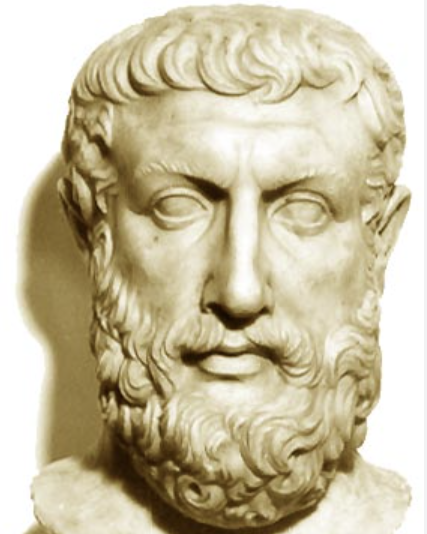
The only roads of enquiry there are to think of: one, that it is and that it is not possible for it not to be, this is the path of persuasion (for truth is its companion); the other, that it is not and that it must not be — this I say to you is a path wholly unknowable.
▼
Source
Frag. B 2.2-6, quoted by Proclus, Commentary on the Timaeus I, 345
5 months 1 week ago
Men resign themselves to their position should it ever occur to them to question it; and since all may view themselves as assigned their vocation, everyone is held to be equally fated and equally noble in the eyes of providence.
▼
Source
Chapter IX, Section 82, p. 547
5 months 1 week ago
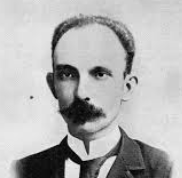
Barricades of ideas are worth more than barricades of stones. There is no prow that can cut through a cloudbank of ideas. A powerful idea, waved before the world at the proper time, can stop a squadron of iron-clad ships, like the mystical flag of the Last judgement.

5 months 1 week ago
The cinema is a place of intrinsic indiscernibility between art and non-art.
▼
Source
From Considérations sur l'état actuel du cinéma (1999), translated as Philosophy and Cinema in Infinite Thought: truth and the return of philosophy. London: Continuum, 2003. .
5 months 1 week ago
The world is idea.This truth is by no means new. It was implicitly involved in the sceptical reflections from which Descartes started. Berkeley, however, was the first who distinctly enunciated it, and by this he has rendered a permanent service to philosophy, even though the rest of his teaching should not endure. Kant's primary mistake was the neglect of this principle... How early again this truth was recognised by the wise men of India, appearing indeed as the fundamental tenet of the Vedânta philosophy ascribed to Vyasa, is pointed out by Sir William Jones in the last of his essays: "On the philosophy of the Asiatics"...
▼
Source
Arthur Schopenhauer, Die Welt als Wille und Vorstellung (1818/19) as quoted in The World as Will and Idea (1883) Tr. R. B. Haldane, J. Kemp [https://books.google.com/books?id=US0bhPS4h2UC&pg=PA4 p. 4.] Schopenhauer cites Jones in Asiatic Researches vol iv
5 months 1 week ago
When you know quite absolutely that everything is unreal, you then cannot see why you should take the trouble to prove it.
5 months 1 week ago
When he [Joseph Chamberlain] was busy on temperance and the Gothenburg system, we had one of our talks with Carlyle. The sage told him that he rejoiced that this mighty reform was being attempted; then all at once he took fire at thought of compensation for the dispossessed publican, and burst into full blaze at its iniquity. Fiercely smiting the arms of his chair, with strong voice and flashing eye, he summoned an imaginary publican before him. "Compensation!" he cried, "you dare come to me for compensation! I'll tell you where to go for compensation! Go to your father the devil, let him compensate you".
▼
Source
John Morley, Recollections, Volume I (1917), pp. 153-154
5 months 1 week ago
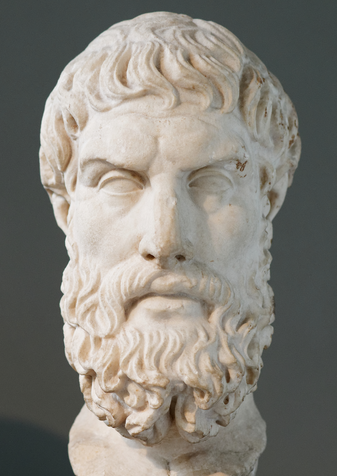
Since it is every man's interest to be happy through the whole of life, it is the wisdom of every one to employ philosophy in the search of felicity without delay; and there cannot be a greater folly, than to be always beginning to live.
5 months 1 week ago
In the First Part of his poem... Parmenides [is] chiefly interested to prove... it is; but it is not... obvious... what it is... that is. He says simply, What is, is. ...[W]e are accustomed to ...distinctions between ...kinds and degrees of reality, and we do not see which ...is meant. Such distinctions... were... unknown in those days. "That which is," with Parmenides, is primarily... matter or body; only it is not matter ...distinguished from anything else. It is... spatially extended; for it is... spoken of as a (fr. 8, 40). ...Aristotle tells us ...Parmenides believed in none but a sensible reality, which ...includes any ...perceived if the senses were more perfect ...
5 months 1 week ago
Perhaps the enemies of liberty are such only because they judge it by its loud voice. If they knew its charms, the dignity that accompanies it, how much a free man feels like a king, the perpetual inner light that is produced by decorous self-awareness and realization, perhaps there would be no greater friends of freedom than those who are its worst enemies.

5 months 1 week ago
'Party,' in the general vocabulary of world intellectuals, is basically a unified social organization with a 'world-view,' an 'Ideology,' a 'philosophy of history,' and 'ideal social order,' a 'class foundation,' a 'class orientation,' a 'social leadership,' a 'political philosophy,' a 'political orientation,' a 'tradition,' a 'slogan,' a 'strategy,' a "tactic of struggle," and … a "hope" that wants to change the "status quo" in man, society, people, or a particular class, and establish the "desired status" in its stead.
▼
Source
Ali Shariati, in: The Islamic Quarterly, Vol. 27-29, (1983), p. 215; as quoted in: Ali Mirsepassi (2000), Intellectual Discourse and the Politics of Modernization, p. 126.
5 months 1 week ago
National character is only another name for the particular form which the littleness, perversity and baseness of mankind take in every country. Every nation mocks at other nations, and all are right.
▼
Source
Variant translation: Every nation criticizes every other one — and they are all correct. | As quoted by Wolfgang Pauli in a letter to Abraham Pais (17 August 1950) published in The Genius of Science (2000) by Abraham Pais, p. 242
5 months 1 week ago
If I used to ask myself, over a coffin, "what good did it do the occupant to be born?" I now put the same question about anyone alive.
5 months 1 week ago
How will one part of the infinite be above, and another below? Or how will it have extremes or a middle? Further still, every sensible body is in place; but the species and differences of place are upward and downward, before and behind, to the right hand and to the left: and these things not only thus subsist with relation to us, and by position, but have a definite subsistence in the universe itself. But it is impossible that these things should be in the infinite: and... that there should be an infinite place. But every body is in place; and therefore it is also impossible that there should be an infinite body. ...Therefore ...there is not an infinite body in energy.
▼
Source
Book III, Ch. VII, pp. 163-164.

5 months 1 week ago
And if my friends refused to listen to me, then the walls had to hear me or the stones in the fields and the trees of the forests.
▼
Source
Quoted by Harry Slochower in "Julius Bahnsen, Philosopher of Heroic Despair, 1830-1881" (1932), The Philosophical Review, 41(4), p. 371

5 months 1 week ago
Palestine is a moral litmus test for the world
▼
Source
[https://www.aljazeera.com/program/upfront/2023/10/27/angela-davis-palestine-is-a-moral-litmus-test-for-the-world Angela Davis: 'Palestine is a moral litmus test for the world'] (27 Oct 2023)
5 months 1 week ago
Only a male intellect clouded by the sexual drive could call the stunted, narrow-shouldered, broad-hipped and short-legged sex the fair sex.
▼
Source
Vol. 2, Ch. 27, § 369
5 months 1 week ago
Fortunate those who, born before science, were privileged to die of their first disease!
CivilSimian.com created by AxiomaticPanic, CivilSimian, Kalokagathia