

5 months 2 weeks ago
Today those who peer into the future want only relief from anxiety. Unable to face the prospect that the cycles of war will continue, they are desperate to find a pattern of improvement in history. It is only natural that believers in reason, lacking any deeper faith and too feeble to tolerate doubt, should turn to the sorcery of numbers. Happily there are some who are ready to assist them. Just as the Elizabethan magus transcribed tables shown to him by angels, the modern scientific scryer deciphers numerical auguries of angels hidden in ourselves.
▼
Source
In the Puppet Theatre: Dark mirrors, Hidden Angels and an Algorithmic Prayer-Wheel (p. 99)
5 months 2 weeks ago
Ridden with conflicts and lacking the industrial base of communism and nazism, Islamism is nowhere near a danger of the magnitude of those that were faced down in the 20th century.
5 months 2 weeks ago
Tyranny offers relief from the burden of sanity and a licence to enact forbidden impulses of hatred and violence. By acting on these impulses and releasing them in their subjects tyrants give people a kind of happiness, which as individuals they may be incapable of achieving.
▼
Source
An Old Chaos: What a Tyrant Can Do For You (p. 57)
5 months 2 weeks ago
If you want to understand the beliefs that are shaping global politics, read the Book of Revelation.
▼
Source
Review: Sacred Causes by Michael Burleigh
5 months 2 weeks ago
Against the many Russian thinkers influenced by Hegel who believed that history was governed by universal laws to which one could only submit, Turgenev upheld the freedom of different societies to pursue different paths of development and of individuals to pursue, even in opposition to powerful historical forces, their own goals and values. Here Turgenev endorsed the celebrated dictum of Alexander Herzen, with whom he disagreed on other matters: that history has no libretto. Human history is a realm of contingency and unpredictability, in which each generation faces conflicts that have no ideal solution.
▼
Source
'Isaiah Berlin: The Value of Decency' (p.105)
5 months 2 weeks ago
Many people today hold to a Gnostic view of things without realizing the fact. Believing that human beings can be fully understood in the terms of scientific materialism, they reject any idea of free will. But they cannot give up hope of being masters of their destiny. So they have come to believe that science will somehow enable the human mind to escape the limitations that shape its natural condition. Throughout much of the world, and particularly in western countries, the Gnostic faith that knowledge can give humans a freedom no other creature can possess has become the predominant religion.
▼
Source
The Faith of Puppets: The Freedom of the Marionette (p. 9)
5 months 2 weeks ago
In thinking of history in this [progressive & eschatological] way Islam shares common ground with Christianity and with the secular creeds of the modern West. It is misleading to represent Islam and 'the West' as forming civilisations that have nothing in common. Christianity and Islam are integral parts of western monotheism, and as such they share a view of history that marks them off from the rest of the world. Both are militant faiths that seek to convert all humankind. Other religions have been implicated in twentieth-century violence-the state cult of Shintō in Japan during the militarist period and Hindu nationalism in contemporary India, for example. But only Christianity and Islam have engendered movements that are committed to the systematic use of force to achieve universal goals.
▼
Source
Enlightenment and Terror in the Twentieth Century: Terror and the Western Tradition
5 months 2 weeks ago
Cheating ageing by a low-calorie diet, uploading one's mind into a super-computer, migrating into outer space ... Longing for everlasting life, humans show that they remain the death-defined animal.
▼
Source
Sweet Morality (p. 235)
5 months 2 weeks ago
There is no more consensus on what justice means than there is on the character of the good. If anything, there is less. Among the virtues, justice is one of the most shaped by convention. For that reason it is among the most changeable.
▼
Source
'Modus Vivendi' (p.34)
5 months 2 weeks ago
Human knowledge increases, while human irrationality stays the same. Scientific inquiry may be an embodiment of reason, but what such inquiry demonstrates is that humans are not rational animals. The fact that humanists refuse to accept the demonstration only confirms its truth.
▼
Source
An Old Chaos: Humanism and Flying Saucers (p. 81)
5 months 2 weeks ago
The true goal of the bourgeois life, in other words, is not self-enactment, but diversion. Most people need the organised distraction of work (if they can find it). Idleness - the life of the playboy who doesn't answer the phone - is simply too demanding. "
▼
Source
A difficult business," New Statesman
5 months 2 weeks ago
The irony of scientific progress is that in solving human problems it creates problems that are not humanly soluble. Science has given humans a kind of power over the natural world achieved by no other animal. It has not given humans the ability to remodel the planet according to their wishes. The Earth is not a clock that can be wound up and stopped at will. A living system, the planet will surely rebalance itself. It will do so, however, without any regard for humans.
▼
Source
Sweet Morality (p. 212)
5 months 2 weeks ago
Not everything in religion is precious or deserving of reverence. There is an inheritance of anthropocentrism, the ugly fantasy that the Earth exists to serve humans, which most secular humanists share. There is the claim of religious authorities, also made by atheist regimes, to decide how people can express their sexuality, control their fertility and end their lives, which should be rejected categorically. Nobody should be allowed to curtail freedom in these ways, and no religion has the right to break the peace.
5 months 2 weeks ago
Ichthyophils imagine that human beings want a life in which they can make their own choices. But what if they can be fulfilled only by a life in which they follow each other? The majority who obey the fashion of the day may be acting on a secret awareness that they lack the potential for a truly individual existence. Liberalism - the ichthyophil variety, at any rate - teaches that everyone yearns to be free. Herzen's experience of the abortive European revolutions of 1848 led him to doubt that this was so. It was because of his disillusionment that he criticized Mill so sharply. But if it is true that Mill was deluded in thinking that everyone loves freedom, it may also be true that without this illusion there would be still less freedom in the world. The charm of a liberal way of life is that it enables most people to renounce their freedom unknowingly.
▼
Source
An Old Chaos: Ichthyophils and Liberals (p. 62)
5 months 2 weeks ago
Blair has been the modern man he claims to be: for him, a sense of subjective certainty is all that is needed for an action to be right. If deception is needed to realise the providential design, it cannot be truly deceitful.
▼
Source
Neoconned!: How Blair took New Labour for a ride, The Independent
5 months 2 weeks ago
The belief in unity that has fuelled so many utopian dreams is an effort to reconcile the irreconcilable that ends in repression. Berlin suggests we renounce this venerable faith, and learn how to live with intractable conflict.
▼
Source
'Isaiah Berlin: The Value of Decency' (p.106-7)
5 months 2 weeks ago
In Kleist's essay humans are caught between the graceful automatism of the puppet and the conscious freedom of a god. The jerky, stuttering quality of their actions comes from their feeling that they must determine the course of their lives. Other animals live without having to choose their path through life. Whatever uncertainty they may feel sniffing their way through the world is not a permanent condition; once they reach a place of safety, they are at rest. In contrast, human life is spent anxiously deciding how to live.
▼
Source
The Faith of Puppets: Leopardi and the Souls of Machines (p.25-6)
5 months 2 weeks ago
Darwinist thinkers such as Richard Dawkins and Daniel Dennett are militant opponents of Christianity. Yet their atheism and humanism are versions of Christian concepts. As a defender of Darwinism, Dawkins is committed to the view that humans are like other animal species in being 'gene machines' ruled by the laws of natural selection. He asserts nevertheless that humans, uniquely, can defy these natural laws: 'We, alone on earth, can rebel against the tyranny of the selfish replicators.' In affirming human uniqueness in this way, Dawkins relies on a Christian world-view.
▼
Source
Post-Apocalypse: After Secularism (pp. 265-6)
5 months 2 weeks ago
Instead of enabling humans to improve their lot, science degrades the natural environment in which humans must live. Instead of enabling death to be overcome, it produces ever more powerful technologies of mass destruction. None of this is the fault of science; what it shows is that science is not sorcery. The growth of knowledge enlarges what humans can do. It cannot reprieve them from being what they are.
▼
Source
Sweet Morality (p. 235)
5 months 2 weeks ago
To affirm that humans thrive in many different ways is not to deny that there are universal human values. Nor is it to reject the claim that there should be universal human rights. It is to deny that universal values can only be fully realized in a universal regime. Human rights can be respected in a variety of regimes, liberal and otherwise. Universal human rights are not an ideal constitution for a single regime throughout the world, but a set of minimum standards for peaceful coexistence among regimes that will always remain different.
▼
Source
Two Faces of Liberalism (New Press, 2000, ISBN 0-745-62259-3. 168 pages), ch. 1: Liberal Toleration (p. 21)
5 months 2 weeks ago
Like other human freedoms, the freedoms embodied in market institutions are justified inasmuch as they meet human needs. Insofar as they fail to do this they can reasonably be altered. This is true not only of the rights that are involved in market institutions. It is true of all human rights.
▼
Source
'Modus Vivendi' (p.36)
5 months 2 weeks ago
Through all of history and pre-history it has been accepted that there is something wrong with the human animal. Health may be the natural condition of other species, but in humans it is sickness that is normal. To be chronically unwell is part of what it means to be human. It is no accident that every culture has its own versions of therapy. Tribal shamans and modern psychotherapists answer the same needs and practise the same trade.
▼
Source
Beyond the Last Thought: Freud's cigars and the long way round to Nirvana (p. 84)
5 months 2 weeks ago
With other beliefs crumbling, many seek to return to what they piously describe as "Enlightenment values". But these values were not as unambiguously benign as is nowadays commonly supposed.
▼
Source
2015
5 months 2 weeks ago
If our universe is one of many, unlike others in containing observers like ourselves, there is no need to posit a designer. Most universes will be too chaotic to allow the emergence of life or mind. In that case, the fact that humans exist in this universe needs no special explanation.
▼
Source
Sweet Morality (p. 222)
5 months 2 weeks ago
Throughout the years in which the US was punishing countries that departed from fiscal prudence, it was borrowing on a colossal scale to finance tax cuts and fund its over-stretched military commitments. Now, with federal finances critically dependent on continuing large inflows of foreign capital, it will be the countries that spurned the American model of capitalism that will shape America's economic future.
5 months 2 weeks ago
If there is anything unique about the human animal it is that it has the ability to grow knowledge at an accelerating rate while being chronically incapable of learning from experience. Science and technology are cumulative, whereas ethics and politics deal with recurring dilemmas. Whatever they are called, torture and slavery are universal evils; but these evils cannot be consigned to the past like redundant theories in science. They return under different names: torture as enhanced interrogation techniques, slavery as human trafficking. Any reduction in universal evils is an advance in civilization. But, unlike scientific knowledge, the restraints of civilized life cannot be stored on a computer disc. They are habits of behaviour, which once broken are hard to mend. Civilization is natural for humans, but so is barbarism.
▼
Source
An Old Chaos: Humanism and Flying Saucers (p. 75)
5 months 2 weeks ago
Liberals tend to regard being subjects of the Queen as an insult to their dignity. But at least the archaic structures by which we are ruled do not force us to define ourselves by blood, soil or faith, and we are protected from the poisonous politics of identity.
▼
Source
"Monarchy is the key to our liberty,", The Observer
5 months 2 weeks ago
Much in the study of the paranormal was what we would now call pseudo-science. But the line between science and pseudo-science is smudged and shifting; where it lies seems clear only in retrospect. There is no pristine science untouched by the vagaries of faith.
▼
Source
Foreword: Two Attempts to Cheat Death (p. 5)
5 months 2 weeks ago
For Leopardi evil is integral to the way the world works; but when he talks of evil he does not mean any kind of malign agency of the sort that Gnostics imagined. Evil is the suffering that is built into the scheme of things. 'What hope is there when evil is ordinary?' he asks. 'I mean, in an order where evil is necessary?' These rhetorical questions show why Leopardi had no interest in projects of revolution and reform. No type of human action - least of all the harlequinade of politics - could fundamentally alter a world in which evil was ordinary.
▼
Source
The Faith of Puppets: Leopardi and the Souls of Machines (p.35-6)

5 months 2 weeks ago
I'll admit, I was a naive globalist. I still believe in the ideal, but, I realize that those that hated the idea so much are the authors of the problem they see in it.
Now, I understand clearly, those that author the problem that makes globalization near impossible are also the ones who insist it will never work, nevertheless, human necessity remains a monolith and universal.
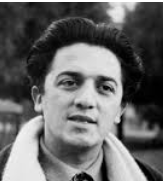
5 months 2 weeks ago
The public has lost the habit of movie-going because the cinema no longer possesses the charm, the hypnotic charisma, the authority it once commanded. The image it once held for us all - that of a dream we dreamt with our eyes open - has disappeared. Is it still possible that one thousand people might group together in the dark and experience the dream that a single individual has directed?
▼
Source
"Decline of Cinema"
5 months 2 weeks ago
What is an artist? A provincial who finds himself somewhere between a physical reality and a metaphysical one... It's this in-between that I'm calling a province, this frontier country between the tangible world and the intangible one - which is really the realm of the artist.
▼
Source
Every Time We Say Goodbye in Sight and Sound [London]
5 months 2 weeks ago
Money is everywhere but so is poetry. What we lack are the poets.
▼
Source
Poets
5 months 2 weeks ago
Experience is what you get while looking for something else.
▼
Source
"Experience"
5 months 2 weeks ago
There is no end. There is no beginning. There is only the infinite passion of life.
▼
Source
Fellini on Fellini (1976) edited by Anna Keel and Christian Strich; translated by Isabel Quigly.
5 months 2 weeks ago
A good opening and a good ending make for a good film provided they come close together.
▼
Source
Recipe for a Good Film
5 months 2 weeks ago
It's easier to be faithful to a restaurant than it is to a woman.
▼
Source
Fidelity
5 months 2 weeks ago
I don't believe in total freedom for the artist. Left on his own, free to do anything he likes, the artist ends up doing nothing at all. If there's one thing that's dangerous for an artist, it's precisely this question of total freedom, waiting for inspiration and the rest of it.
▼
Source
Artistic Freedom
5 months 2 weeks ago
The young watch television twenty-four hours a day, they don't read and they rarely listen. This incessant bombardment of images has developed a hypertrophied eye condition that's turning them into a race of mutants. They should pass a law for a total reeducation of the young, making children visit the Galleria Borghese on a daily basis.
▼
Source
"Younger Generation"
5 months 2 weeks ago
All art is autobiographical; the pearl is the oyster's autobiography.
▼
Source
On the autobiographical nature of his films, in The Atlantic
5 months 2 weeks ago
No critic writing about a film could say more than the film itself, although they do their best to make us think the opposite.
▼
Source
"Film Critics"
5 months 2 weeks ago
I discovered that what's really important for a creator isn't what we vaguely define as inspiration or even what it is we want to say, recall, regret, or rebel against. No, what's important is the way we say it. Art is all about craftsmanship. Others can interpret craftsmanship as style if they wish. Style is what unites memory or recollection, ideology, sentiment, nostalgia, presentiment, to the way we express all that. It's not what we say but how we say it that matters.
▼
Source
Craftsmanship
5 months 2 weeks ago
I think television has betrayed the meaning of democratic speech, adding visual chaos to the confusion of voices. What role does silence have in all this noise?
▼
Source
"Television"
5 months 2 weeks ago
Even if I set out to make a film about a fillet of sole, it would be about me.
▼
Source
On the autobiographical nature of his films, in The Atlantic
5 months 2 weeks ago
God may not play dice but he enjoys a good round of Trivial Pursuit every now and again.
▼
Source
"God"
5 months 2 weeks ago
A created thing is never invented and it is never true: it is always and ever itself.
▼
Source
Creation
5 months 2 weeks ago
I've always written at the top of my lungs and from some secret motives within. I have followed the advice of my good friend Federico Fellini who, when asked about his work, said, "Don't tell me what I'm doing, I don't want to know."
▼
Source
Ray Bradbury, "Author's Introduction" to 2003 Folio Society edition of Fahrenheit 452
5 months 2 weeks ago
Cinema is an old whore, like circus and variety, who knows how to give many kinds of pleasure. Besides, you can't teach old fleas new dogs.
▼
Source
As quoted in in The Atlantic
5 months 2 weeks ago
Hype is the awkward and desperate attempt to convince journalists that what you've made is worth the misery of having to review it.
▼
Source
"Hype"
5 months 2 weeks ago
Everyone knows that time is Death, that Death hides in clocks. Imposing another time powered by the Clock of the Imagination, however, can refuse his law. Here, freed of the Grim Reaper's scythe, we learn that pain is knowledge and all knowledge pain.
▼
Source
"Death"
CivilSimian.com created by AxiomaticPanic, CivilSimian, Kalokagathia