

5 months ago
Today we have arrived at a point when the three principles [of modern resistance: 1. measure of efficacy, 2. the form of political and military organization correspond to the current forms of economic and social production, 3. democracy and freedom] coincide. The distributed network structure provides the model for an absolutely democratic organization that corresponds to the dominant forms of economic and social production and is also the most powerful weapon against the ruling power structure.
▼
Source
88
5 months ago
Reality and history, however, are not dialectical, and no idealist rhetorical gymnastics can make them conform to the dialect.
▼
Source
131
5 months ago
The old form of trade union, which was born in the nineteenth century and aimed primarily at negotiating wages for a specific trade is no longer sufficient. First of all, as we have been arguing, the old trade unions are not able to represent the unemployed, the poor, or even the mobile and flexible post-Fordist workers with short term contracts, all of whom participate actively in social production and increase social wealth. Second, the old unions are divided according to the various products and tasks defined in the heyday of industrial production - a miners' union, a pipefitters' union, a machinists' union and so forth. Today, insofar as the conditions and the relations of labor are becoming common, these traditional divisions (or even newly defined divisions) no longer make sense and serve only as an obstacle. Finally the old unions have become purely economic, not political, organization.
▼
Source
136
5 months ago
The so-called communism of capital, that is, its drive toward an ever more extensive socialization of labor, points ambiguously toward the communism of the multitude.
5 months ago
Empire is emerging today as the center that supports the globalization of productive networks and casts its widely inclusive net to try to envelop all power relations within its world order - and yet at the same time it deploys a powerful police function against the new barbarians and the rebellious slaves who threaten its order.
5 months ago
We share bodies with two eyes, ten fingers, ten toes; we share life on this earth; we share capitalist regimes of production and exploitation; we share common dreams of a better future.
▼
Source
128
5 months ago
The possibility of democracy on a global scale is emerging today for the very first time.
▼
Source
(xi)
5 months ago
Just sit back and listen to some of the clamorous grievances against the contemporary global system. Our list does not pretend to be comprehensive, and the partiality of its selections will undoubtedly reveal our own blindnesses, but it should nonetheless give a sense of the range and depth of today's grievances.
▼
Source
270
5 months ago
Multitude is a class concept. ... Class is determined by class struggle. There are, of course, in infinite number of ways that humans can be grouped into classes - hair color, blood type, and so forth - but the classes that matter are those defined by the lines of collective struggle. Race is just as much a political concept as economic class is in this regard. ... Class is a political concept, in short, in that a class is and can only be a collectivity that struggles in common.
▼
Source
104
5 months ago
It is a commonplace of the classical literature on Empire, from Polybius to Montesquieu and Gibbon, that Empire is from its inception decadent and corrupt.
▼
Source
201
5 months ago
Contemporary capitalist production is characterized by a series of passages that name different faces of the same shift: from the hegemony of industrial labor to that of immaterial labor, from Fordism to post-Fordism, and from the modern to the postmodern.
5 months ago
It is no coincidence that the ABM Treaty was signed midway between the delinking of the U.S. dollar from the gold standard in 1971 and the first oil crisis in 1973. These were the years not only of monetary and economic crises but also of both the beginning of the destruction of the welfare state and the shift of the hegemony of economic production from the factory to more social and immaterial sectors. One might think of these various transformations as different faces of one common phenomenon, one grand social transformation.
▼
Source
39
5 months ago
We are by no means opposed to the globalization of relationships as such-in fact, as we said, the strongest forces of Leftist internationalism have effectively led this process. The enemy, rather, is a specific regime of global relations that we call Empire.
▼
Source
45-46
5 months ago
All of those who are "without" - without employment, without residence, without housing - are really excluded only in part.
▼
Source
129
5 months ago
When the general population no longer constitutes the armed forces, when the army is no longer the people in arms, then empires fall. Today all armies are again tending to become mercenary armies.
▼
Source
49
5 months ago
The task of a theory of class is to identify the existing conditions for potential collective struggle and express them as a political proposition.
▼
Source
104
5 months ago
The refusal of work and authority, or really the refusal of voluntary servitude, is the beginning of liberatory politics.
▼
Source
204
5 months ago
The regular rhythms of factory production and its clear divisions of work time and nonwork time tend to decline in the realm of immaterial labor. Think how at the high end of labor market companies like Microsoft try to make the office more like home, offering free meals and exercise programs to keep employees in the office as many of their waking hours as possible. At the low end of the labor market workers have to juggle several job to make ends meet. Such practices always existed, but today, with the passage from Fordism to post-Fordism, the increased flexibility and mobility imposed on workers, and the decline of the stable, long-term employment typical of factory work, this tends to become the norm. At both the high end and low ends or labor market the new paradigm undermines the division between work time and the time of life.
▼
Source
145
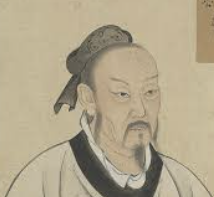
5 months ago
A questioner asks: If human nature is evil, then where do ritual and rightness come from? I reply: ritual and rightness are always created by the conscious activity of the sages.
▼
Source
Sources of Chinese Tradition (1999), vol. 1, p. 180
5 months ago
Learning proceeds until death and only then does it stop. ... Its purpose cannot be given up for even a moment. To pursue it is to be human, to give it up to be a beast.
▼
Source
Readings in Classical Chinese Philosophy (2001), p. 258
5 months ago
A person who is shallow aspires to depth; one who is ugly aspires to beauty; one who is narrow aspires to breadth; one who is poor aspires to wealth; one who is humble aspires to esteem. Whatever one lacks in oneself he must seek outside.
▼
Source
Sources of Chinese Tradition (1999), vol. 1, p. 181
5 months ago
The learning of the gentleman enters through his ears, fastens to his heart, spreads through his four limbs, and manifests itself in his actions. ... The learning of the petty person enters through his ears and passes out his mouth. From mouth to ears is only four inches-how could it be enough to improve a whole body much larger than that?
▼
Source
Readings in Classical Chinese Philosophy (2001), p. 259
5 months ago
The straightening board was created because of warped wood, and the plumb line came into being because of things that are not straight. Rulers are established and ritual and rightness are illuminated because the nature is evil.
▼
Source
Sources of Chinese Tradition (1999), vol. 1, p. 182
5 months ago
The gentleman knows that whatever is imperfect and unrefined does not deserve praise. ... He makes his eyes not want to see what is not right, makes his ears not want to hear what is not right, makes his mouth not want to speak what is not right, and makes his heart not want to deliberate over what is not right. ... For this reason, power and profit cannot sway him, the masses cannot shift him, and nothing in the world can shake him.
▼
Source
Readings in Classical Chinese Philosophy (2001), p. 260
5 months ago
One whose intentions and thoughts are cultivated will disregard wealth and nobility. One whose greatest concern is for the Way and righteousness will take lightly kings and dukes. It is simply that when one examines oneself on the inside, external goods carry little weight. A saying goes, "The gentleman makes things his servants. The petty man is servant to things.
▼
Source
Readings in Classical Chinese Philosophy (2001), p. 263
5 months ago
The person attempting to travel two roads at once will get nowhere.
▼
Source
Quoted in: Errick A. Ford (2010) Iron Sharpens Iron: Wisdom of the Ages, p. 48
5 months ago
If an action ... involves little profit but much righteousness, do it.
▼
Source
Readings in Classical Chinese Philosophy (2001), p. 263
5 months ago
In order to properly understand the big picture, everyone should fear becoming mentally clouded and obsessed with one small section of truth.
▼
Source
Quoted in: Joan Klostermann-Ketels (2011) HumaniTrees, p. 96
5 months ago
A person who is transformed by the instructions of a teacher, devotes himself to study, and abides by ritual and rightness may become a noble person, while one who follows his nature and emotions, is content to give free play to his passions, and abandons ritual and rightness is a lesser person.
▼
Source
Sources of Chinese Tradition (1999), vol. 1, p. 180
5 months ago
Human nature is evil, and goodness is caused by intentional activity.
▼
Source
Quoted in: Fayek S. Hourani (2012) Daily Bread for Your Mind and Soul, p. 336
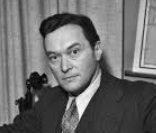
5 months ago
Many a time I have wanted to stop talking and find out what I really believed.
▼
Source
Introduction, p. x
5 months ago
It requires wisdom to understand wisdom: the music is nothing if the audience is deaf.
▼
Source
Ch. XV: "The Moralist in an Unbelieving World", §2, p. 324.
5 months ago
There can be no higher law in journalism than to tell the truth and shame the devil.
▼
Source
Journalism and the Higher Law, p. 13
5 months ago
The modern man who has ceased to believe, without ceasing to be credulous, hangs, as it were, between heaven and earth, and is at rest nowhere.
▼
Source
Ch. I: "The Problem of Unbelief", §2, p. 9.
5 months ago
There is nothing disastrous in the temporary nature of our ideas. They are always that. But there may very easily be a train of evil in the self-deception which regards them as final. I think God will forgive us our skepticism sooner than our Inquisitions.
▼
Source
Ch. VII: "The Making of Creeds", p. 236
5 months ago
The totalitarian states, whether of the fascist or the communist persuasion, are more than superficially alike as dictatorships, in the suppression of dissent, and in operating planned and directed economies. They are profoundly alike.
▼
Source
Ch. V: "The Totalitarian Regimes", §7, p. 89
5 months ago
A free press is not a privilege but an organic necessity in a great society. ...Without criticism and reliable and intelligent reporting, the government cannot govern. For there is no adequate way in which it can keep itself informed about what the people of the country are thinking and doing and wanting.
▼
Source
International Press Institute Association, London
5 months ago
With exceptions so rare they are regarded as miracles of nature, successful democratic politicians are insecure and intimidated men. They advance politically only as they placate, appease, bribe, seduce, bamboozle, or otherwise manage to manipulate the demanding and threatening elements in their constituencies. The decisive consideration is not whether the proposition is good but whether it is popular-not whether it will work well and prove itself but whether the active talking constituents like it immediately. Politicians rationalize this servitude by saying that in a democracy public men are the servants of the people.
▼
Source
p. 27
5 months ago
The newspaper is in all its literalness the bible of democracy, the book out of which a people determines its conduct.
▼
Source
What Modern Liberty Means, p. 47. Essay first published in The Atlantic (November 1919).
5 months ago
It does not matter whether the right to govern is hereditary or obtained with the consent of the governed. A State is absolute in the sense which I have in mind when it claims the right to a monopoly of all the force within the community, to make war, to make peace, to conscript life, to tax, to establish and dis-establish property, to define crime, to punish disobedience, to control education, to supervise the family, to regulate personal habits, and to censor opinions. The modern State claims all of these powers, and, in the matter of theory, there is no real difference in the size of the claim between communists, fascists, and democrats.
▼
Source
Ch. V: "The Breakdown of Authority", §5, p. 80.
5 months ago
Democracy is a meaningless word unless it signifies that differences of opinion have been expressed, represented, and even satisfied in the decision.
▼
Source
Ch. IV: "The Line of Least Resistance", pp. 47-48
5 months ago
There is only one purpose to which a whole society can be directed by a deliberate plan. That purpose is war, and there is no other.
▼
Source
Ch. V: "The Totalitarian Regimes", §7, p. 90
5 months ago
You cannot endow even the best machine with initiative; the jolliest steam-roller will not plant flowers.
▼
Source
Ch. I: "Routineer and Inventor", p. 30.
5 months ago
A large plural society cannot be governed without recognizing that, transcending its plural interests, there is a rational order with a superior common law.
▼
Source
pp. 106-107
5 months ago
There can be no liberty for a community which lacks the information by which to detect lies.
▼
Source
What Modern Liberty Means, p. 64
5 months ago
The man who says that the world is a machine has really advanced no further than to say that he is so well satisfied with the analogy that he is through with searching any further.
▼
Source
Ch. VI: "The Drama of Destiny", §5, p. 130.
5 months ago
Unless our ideas are questioned, they become part of the furniture of eternity.
▼
Source
Ch. IV: "The Line of Least Resistance", p. 51
5 months ago
In a free society the state does not administer the affairs of men. It administers justice among men who conduct their own affairs.
▼
Source
Ch. XII: "The Political Principles of Liberalism", §6, p. 267
5 months ago
All achievement should be measured in human happiness.
▼
Source
Ch. IV: "The Golden Rule and After", p. 90
5 months ago
The principles of the good society call for a concern with an order of being--which cannot be proved existentially to the sense organs--where it matters supremely that the human person is inviolable, that reason shall regulate the will, that truth shall prevail over error.
▼
Source
p. 127
CivilSimian.com created by AxiomaticPanic, CivilSimian, Kalokagathia