
3 months 3 weeks ago
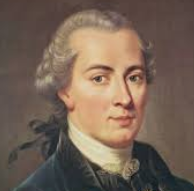
I come now to another part of my system, and because it suggests a lofty idea of the plan of creation, it appears to me as the most seductive. The sequence of ideas that led us to it is very simple and natural. They are as follows: let us imagine a system of stars gathered together in a common plane, like those of the Milky Way, but situated so far away from us that even with the telescope we cannot distinguish the stars composing it; let us assume that its distance, compared to that separating us from the stars of the Milky Way, is the same proportion as the Milky Way is to the distance from the earth to the sun; such a stellar world will appear to the observer, who contemplates it at so enormous a distance, only as a little spot feebly illumined and subtending a very small angle; its shape will be circular, if its plane is perpendicular to the line of sight, elliptical, if it is seen obliquely. The faintness of its light, its form, and its appreciable diameter will obviously distinguish such a phenomenon from the isolated stars around it.We do not need to seek far in the observations of astronomers to meet with such phenomena. They have been seen by various observers, who have wondered at their strange appearance, have speculated about them, and have suggested some times the most amazing explanations, sometimes theories which were more rational, but which had no more foundation than the former. We refer to the nebulæ, or, more precisely, to a particular kind of celestial body which M. de Maupertius describes as follows:"These are small luminous patches, only slightly more brilliant than the dark background of the sky; they have this in common, that their shapes are more or less open elipses; and their light is far more feeble than that of any other objects to be perceived in the heavens."...It is much more natural and reasonable to assume that a nebula is not a unique and solitary sun, but a system of numerous suns, which appear crowded, because of their distance, into a space so limited that their light, which would be imperceptible were each of them isolated, suffices, owing to their enormous numbers, to give a pale and uniform luster. Their analogy with our own system of stars; their form, which is precisely what it should be according to our theory; the faintness of their light, which denotes an infinite distance; all are in admirable accord and lead us to consider these elliptical spots as systems of the same order as our own—in a word, to be Milky Ways similar to the one whose constitution we have explained. And if these hypotheses, in which analogy and observation consistently lend mutual support, have the same merit as formal demonstrations, we must consider the existence of such systems as demonstrated...We see that scattered through space out to infinite distances, there exist similar systems of stars [nebulous stars, nebulæ], and that creation, in the whole extent of its infinite grandeur, is everywhere organized into systems whose members are in relation with one another.... A vast field lies open to discoveries, and observations alone will give the key.
▼
Source
Free translation, as quoted by Edwin Powell Hubble, The Realm of the Nebulae (1936)
3 months 3 weeks ago
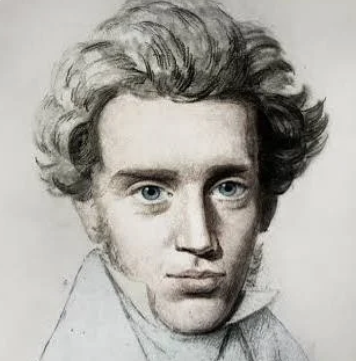
Not merely in the realm of commerce but in the world of ideas as well our age is organizing a regular clearance sale. Everything is to be had at such a bargain that it is questionable whether in the end there is anybody who will want to bid. Every speculative price-fixer who conscientiously directs attention to the significant march of modern philosophy, every Privatdocent, tutor, and student, every crofter and cottar goes further. Perhaps it would be untimely and ill-timed to ask them where they are going.
▼
Source
Preface

3 months 3 weeks ago
2) "the a of différance also recalls that spacing is temporization, the detour and postponement by means of which intuition, perception, consummation - in a word, the relationship to the present, the reference to a present reality, to a being - are always deferred. Deferred by virtue of the very principle of difference which holds that an element functions and signifies, takes on or conveys meaning, only by referring to another past or future element in an economy of traces. This economic aspect of différance, which brings into play a certain not conscious calculation in a field of forces, is inseparable from the more narrowly semiotic aspect of différance.
▼
Source
p. 28
3 months 3 weeks ago
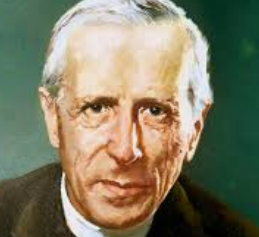
The death of the materially exhausted planet; the split of the noosphere, divided on the form to be given to its unity; and simultaneously (endowing the event with all its significance and with all its value) the liberation of that percentage of the universe which, across time, space and evil, will have succeeded in laboriously synthesising itself to the very end.Not an indefinite progress, which is an hypothesis contradicted by the convergent nature of noogenesis, but an ecstasy transcending the dimensions and the framework of the visible universe.
3 months 3 weeks ago
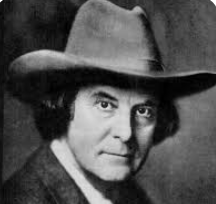
Why not be a top-notcher? A top-notcher is simply an individual who works for the institution of which he is a part, not against it.
3 months 3 weeks ago
The supremacy of thought (consciousness) also pronounces the impotence of thought in an empirical world which philosophy transcends and corrects — in thought. The rationality in the name of which philosophy passed its judgments obtained that abstract and general purity” which made it immune against the world in which one had to live. With the exception of the materialistic “heretics,” philosophic thought was rarely afflicted by the afflictions of human existence. Paradoxically, it is precisely the critical intent in philosophic thought which leads to the idealistic purifications critical intent which aims at the empirical world as a whole, and not merely at certain modes of thinking or behaving within it. Defining its concepts in terms of potentialities which are of an essentially different order of thought and existence, the philosophic critique finds itself blocked by the reality from which it dissociates itself, and proceeds to construct a realm of Reason purged from empirical contingency. The two dimensions of thought — that of the essential and that of — the apparent truths — no longer interfere with each other, and their concrete dialectical relation becomes an abstract epistemological or ontological relation. The judgments passed on the given reality are replaced by propositions defining the general forms of thought, objects of thought, and relations between thought and its objects. The subject of thought becomes the pure and universal form of subjectivity, from which all particulars are removed.
▼
Source
pp. 135-136
3 months 3 weeks ago
The guardians who have kindly undertaken the supervision will see to it that by far the largest part of mankind, including the entire "beautiful sex," should consider the step into maturity, not only as difficult but as very dangerous. After having made their domestic animals dumb and having carefully prevented these quiet creatures from daring to take any step beyond the lead-strings to which they have fastened them, these guardians then show them the danger which threatens them, should they attempt to walk alone.
3 months 3 weeks ago
Is there anything we cannot contrive to call the demands of the times, and is there anything that does not acquire a certain prestige by being the demand of the times? But for decisive religious categories to become the demand for the times is eo ipso a contradiction. “The times” is too abstract a category to be able as claimant to demand the decisive religious categories that belong specifically to individuality and particularity; loud collective demands en mass for what can be shared only by the single individual in particularity, in solitariness, in silence, cannot be made.
▼
Source
Two Ages: The Age of Revolution and the Present Age. A Literary Review. By Soren Kierkegaard, 1846 edited and translated by Howard V. Hong and Edna H. Hong 1978 Princeton University Press P. 21
3 months 3 weeks ago
Indeed, what is there that does not appear marvelous when it comes to our knowledge for the first time? How many things, too, are looked upon as quite impossible until they have actually been effected?
▼
Source
Book VII, sec. 6.

3 months 3 weeks ago
What the cinema can do better than literature or the spoken drama is to be fantastic.
▼
Source
"Where are the Movies Moving?" in Essays Old and New (1926)
3 months 3 weeks ago
One of the problems of the current Church is that the production of happiness has slipped out of its hands. But it is not Nietzsche's fault that the power of the Gospels is fading and the condition of Western man is becoming increasingly paganised.
3 months 3 weeks ago
Natural science is throughout either a pure or an applied doctrine of motion.
▼
Source
Preface, Tr. Bax (1883)
3 months 3 weeks ago
Jews hate the name of Christ and have a secret and innate rancor against the people among whom they live.
▼
Source
See [https://books.google.com.br/books?id=-bIAEAAAQBAJ&pg=PT190 Silent Truth] by Mark Edwards
3 months 3 weeks ago
What, exactly, have the errors of exegesis and philosophy done in order to confuse Christianity, and how have they confused Christianity? Quite briefly and categorically, they have simply forced back the sphere of paradox-religion into the sphere of aesthetics, and in consequence have succeeded in brings Christian terminology to such a pass that terms which, so long as they remain within their sphere, are qualitative categories, can be put to almost any use as clever expressions.
▼
Source
Of The Difference Between A Genius And An Apostle, Alexander Dru translation 1962 p. 89
3 months 3 weeks ago
Psychology, speaking for emotion and instinct, has reduced intellect to impotence over life. Metaphysics has subordinated it to will. Bergson and his followers have charged it with falsehood and issued a general warning against its misrepresentations; while with pragmatists and instrumentalists it has sunk so low that it is dressed in livery and sent to live in the servant's quarters. It is against this last indignity in particular that I wish to speak a word of protest, to the end that the intellect may be accorded full rights within the community of human activities and interests.
3 months 3 weeks ago
Who lives longer? the man who takes heroin for two years and dies, or a man who lives on roast beef, water and potatoes 'till 95? One passes his 24 months in eternity. All the years of the beefeater are lived only in time.
▼
Source
The Shortcut: 20 Stories To Get You From Here To There (2006) by Kevin A Fabiano, p. 179
3 months 3 weeks ago
I do not, in my private capacity, believe that a baby gets his best physical food by sucking his thumb; nor that a man gets his best moral food by sucking his soul, and denying its dependence on God or other good things. I would maintain that thanks are the highest form of thought; and that gratitude is happiness doubled by wonder.
▼
Source
[https://archive.org/details/shorthistoryofen0000ches/page/58/mode/2up A Short History of England] (1917), p. 59
3 months 3 weeks ago
There is needed, no doubt, a body of servants (ministerium) of the invisible church, but not officials (officiales), in other words, teachers but not dignitaries, because in the rational religion of every individual there does not yet exist a church as a universal union (omnitudo collectiva).
▼
Source
Book IV, Part 1, Section 1, “The Christian religion as a natural religion”
3 months 3 weeks ago
Touching the secrets of the heart and the successions of time, doth make a just and sound difference between the manner of the exposition of the Scriptures and all other books. For it is an excellent observation which hath been made upon the answers of our Saviour Christ to many of the questions which were propounded to Him, how that they are impertinent to the state of the question demanded: the reason whereof is, because not being like man, which knows man's thoughts by his words, but knowing man's thoughts immediately, He never answered their words, but their thoughts. Much in the like manner it is with the Scriptures, which being written to the thoughts of men, and to the succession of all ages, with a foresight of all heresies, contradictions, differing estates of the Church, yea, and particularly of the elect, are not to be interpreted only according to the latitude of the proper sense of the place, and respectively towards that present occasion whereupon the words were uttered, or in precise congruity or contexture with the words before or after, or in contemplation of the principal scope of the place; but have in themselves, not only totally or collectively, but distributively in clauses and words, infinite springs and streams of doctrine to water the Church in every part. And therefore as the literal sense is, as it were, the main stream or river, so the moral sense chiefly, and sometimes the allegorical or typical, are they whereof the Church hath most use; not that I wish men to be bold in allegories, or indulgent or light in allusions: but that I do much condemn that interpretation of the Scripture which is only after the manner as men use to interpret a profane book.
▼
Source
XXV. (17)
3 months 3 weeks ago
What if the equality between us human being, in which we completely resemble one another, were that none of us really thinks about his being loved? Preface P. 166
3 months 3 weeks ago
Every morning I have been looking at CNN to see if there is any reason for hope. I see a few large and impressive peace protests here and there around the world, but mostly I see empty robot faces monotonously reciting the magic incantations, "We must support the President" and "We must support our troops", both of which mean the killing must continue.
▼
Source
Cosmic Trigger II: Down to Earth (1991)
3 months 3 weeks ago
For in spite of language, in spite of intelligence and intuition and sympathy, one can never really communicate anything to anybody.
▼
Source
"Sermons in Cats"
3 months 3 weeks ago
Every one of the great revolutionists, from Isaiah to Shelley, have been optimists. They have been indignant, not about the badness of existence, but about the slowness of men in realizing its goodness.
▼
Source
"Introduction"
3 months 3 weeks ago
The novel, the novel proper that is, is about people's treatment of each other, and so it is about human values.
▼
Source
Ch. 10, p. 138
3 months 3 weeks ago
If you punish a child for being naughty, and reward him for being good, he will do right merely for the sake of the reward; and when he goes out into the world and finds that goodness is not always rewarded, nor wickedness always punished, he will grow into a man who only thinks about how he may get on in the world, and does right or wrong according as he finds either of advantage to himself.
3 months 3 weeks ago
There is another ground of hope that must not be omitted. Let men but think over their infinite expenditure of understanding, time, and means on matters and pursuits of far less use and value; whereof, if but a small part were directed to sound and solid studies, there is no difficulty that might not be overcome.
▼
Source
Aphorism 111
3 months 3 weeks ago
Christ calls it (O give heed!), He calls it “hypocrisy.” And not only that, but He says (now shudder!), He says that this guilt of hypocrisy is as great, precisely as great a crime as that of killing the prophets. ... This then is the judgment, Christ's judgment upon "Christendom." Shudder; for if you do not, you are implicated in it.
▼
Source
p. 122
3 months 3 weeks ago
Whatever the Thinker thinks, the Prover will prove. And if the Thinker thinks passionately enough, the Prover will prove the thought so conclusively that you will never talk a person out of such a belief, even if it is something as remarkable as the notion that there is a gaseous vertebrate of astronomical heft ("GOD") who will spend all eternity torturing people who do not believe in his religion.
▼
Source
Ch. 1 : The Thinker & The Prover, p. 28
3 months 3 weeks ago
The spark within is akin to the Divine Ground. By identifying ourselves with the first we can come to unitive knowledge of the second. These empirical facts of the spiritual life have been variously rationalized in terms of the theologies of the various religions. The Hindus categorically affirm that Thou art That — that the indwelling Atman is the same as Brahman. For orthodox Christianity there is not an identity between the spark and God. Union of the human spirit with God takes place — union so complete that the word deification is applied to it; but it is not the union of identical substances. According to Christian theology, the saint is “deified,” not because Atman is Brahman, but because God has assimilated the purified human spirit in to the divine substance by an act of grace. Islamic theology seems to make a similar distinction. The Sufi, Mansur, was executed for giving to the words “union” and “deification” the literal meaning which they bear in the Hindu tradition. For our present purposes, however, the significant fact is that these words are actually used by Christians and Mohammedans to describe the empirical facts of metaphysical realization by means of direct, super-rational intuition.
3 months 3 weeks ago
For religion all men are equal, as all pennies are equal, because the only value in any of them is that they bear the image of the King.... It has often been said, very truly, that religion is the thing that makes the ordinary man feel extraordinary; it is an equally important truth that religion is the thing that makes the extraordinary man feel ordinary.
▼
Source
Ch 1: "The Dickens Period"
3 months 3 weeks ago
From childish fear springs the desire to externalise the ego. Metaphysicians do this in thought: Kant, who, in real life, never went more than ten miles from his native city of Königsberg, maintained that the whole of space existed only in his imagination. This grandiose philosophy was merely the obverse of his practical timidity.
▼
Source
Bertrand Russell, Protecting the Ego (18 October 1934)
3 months 3 weeks ago
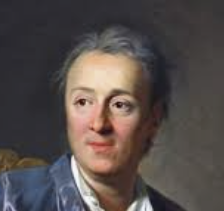
Justice is the first virtue of those who command, and stops the complaints of those who obey.
▼
Source
As quoted in The Golden Treasury of Thought : A Gathering of Quotations from the Best Ancient and Modern Authors (1873) by Theodore Taylor, p. 227

3 months 3 weeks ago
In order to determine whether or not one sentence is a consequence of another, no reference need be made to the meaning of the sentences. The mere statement of the truth-values is certainly too little; but the statement of the meaning is, on the other hand, too much. It is sufficient that the syntactical design of the sentences be given.
▼
Source
p. 258
3 months 3 weeks ago
We live together, we act on, and react to, one another; but always and in all circumstances we are by ourselves. The martyrs go hand in hand into the arena; they are crucified alone. Embraced, the lovers desperately try to fuse their insulated ecstacies into a single self-transcendence; in vain. By its very nature every embodied spirit is doomed to suffer and enjoy in solitude.
▼
Source
Page 159
3 months 3 weeks ago
Shyness is always the sign of a divided soul; a man is shy because he somehow thinks his position at once despicable and important. If he were without humility he would not care; and if he were without pride he would not care.
▼
Source
"The Philosopher"
3 months 3 weeks ago
In order to shake a hypothesis, it is sometimes not necessary to do anything more than push it as far as it will go.
▼
Source
No. 50

3 months 3 weeks ago
Meaning created links so numerous, so rich and involved that only esoteric knowledge could possibly have the necessary key. Objects became so weighed down with attributes, connections and associations that they lost their own original face. Meaning was no longer read in an immediate perception, and accordingly objects ceased to speak directly: between the knowledge that animated the figures of objects and the forms they were transformed into, a divide began to appear, opening the way for a symbolism more often associated with the world of dreams.
▼
Source
Part One: 1. Stultifera Navis
3 months 3 weeks ago
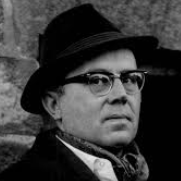
In politics we do well to abide by precedent and precept and even prejudice, for the great mysterious incorporation of the human race has acquired a prescriptive wisdom far greater than any man’s petty private rationality.
3 months 3 weeks ago
In any race between human numbers and natural resources, time is against us.
▼
Source
Chapter 12 (p. 113)
3 months 3 weeks ago
The night we went to Birmingham by way of Beachy Head.
▼
Source
Ch. XXI: "The Road to Roundabout" ("The Rolling English Road", l. 6)
3 months 3 weeks ago
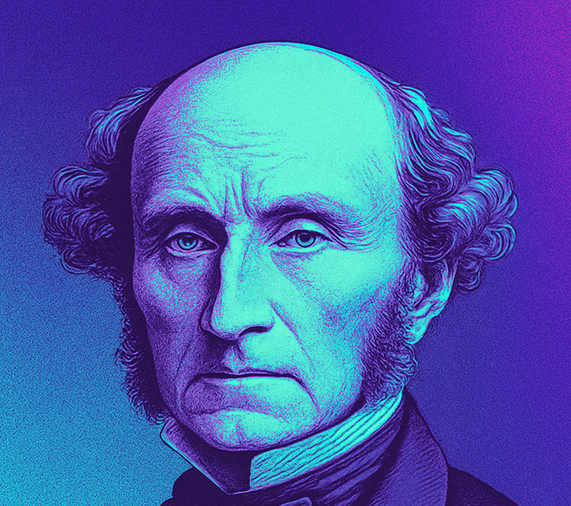
The remedies for all our diseases will be discovered long after we are dead; and the world will be made a fit place to live in, after the death of most of those by whose exertions it will have been made so. It is to be hoped that those who live in those days will look back with sympathy to their known and unknown benefactors.
▼
Source
Diary, April 15, 1854, in The Collected Works of John Stuart Mill, Toronto, 1988, vol. 27, p. 668
3 months 3 weeks ago
Gaiety — a quality of ordinary men. Genius always presupposes some disorder in the machine.
▼
Source
“Diseases"
3 months 3 weeks ago
The condemned man found himself transformed into a hero by the sheer extend of his widely advertised crimes, and sometimes the affirmation of his belated repentance. Against the law, against the rich, the powerful, the magistrates, the constabulary or the watch, against taxes and their collectors, he appeared to have waged a struggle with which one all too easily identified. The proclamation of these crimes blew up to epic proportions the tiny struggle that passed unperceived in everyday life. If the condemned man was shown to be repentant, accepting the verdict, asking both God and man for forgiveness for his crimes, it was as if he had come through some process of purification: he died, in his own way, like a saint.
▼
Source
Chapter One: The Spectacle of the scaffold, pp. 67

3 months 3 weeks ago
Insects were scurrying about in the shade cast by the grass, and the lawn was a huge monotonous forest of thousands of little green blades, all equal, all alike, hiding the world from each other. Anguished, she thought, "I don't want to be just another blade of grass."
▼
Source
Regina
3 months 3 weeks ago
Literary men are being employed to praise a big business man personally, as men used to praise a king. They not only find political reasons for the commercial schemes—that they have done for some time past—they also find moral defences for the commercial schemers. ... I do resent the whole age of patronage being revived under such absurd patrons; and all poets becoming court poets, under kings that have taken no oath.
▼
Source
pp. 15-17
3 months 3 weeks ago
No one can be a great thinker who does not recognise, that as a thinker it is his first duty to follow his intellect to whatever conclusions it may lead...Not that it is solely, or chiefly, to form great thinkers, that freedom of thinking is required. On the contrary, it is as much and even more indispensable to enable average human beings to attain the mental stature which they are capable of.
▼
Source
Ch. II: Of the Liberty of Thought and Discussion
3 months 3 weeks ago
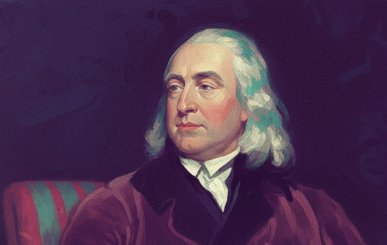
In looking over the catalogue of human actions (says a partizan of this principle) in order to determine which of them are to be marked with the seal of disapprobation, you need but to take counsel of your own feelings: whatever you find in yourself a propensity to condemn, is wrong for that very reason. For the same reason it is also meet for punishment: in what proportion it is adverse to utility, or whether it be adverse to utility at all, is a matter that makes no difference. In that same proportion also is it meet for punishment: if you hate much, punish much: if you hate little, punish little: punish as you hate. If you hate not at all, punish not at all: the fine feelings of the soul are not to be overborne and tyrannized by the harsh and rugged dictates of political utility.
▼
Source
Ch. 2: Of Principles Adverse to That of Utility
3 months 3 weeks ago
Recalling all the erroneous things that doctors have been able to say about sex or madness does us a fat lot of good. I think that what is currently politically important is to determine the regime of verediction established at a given moment ... on the basis of which you can now recognize, for example, that doctors in the nineteenth century said so many stupid things about sex. ... It is not so much the history of the true or the history of the false as the history of verediction which has a political significance.
▼
Source
Lecture 2, January 17, 1979, p. 36
3 months 3 weeks ago
To be gazed at is one danger; to be manhandled is another. Women as a rule are unfamiliar with violence, they have not been through the tussles of childhood and youth as have men; and now the girl is laid hold of, swept away in a bodily struggle in which the man is the stronger. She is no longer free to dream, to delay, to maneuver: she is in his power, at his disposal.
▼
Source
Bk. 2, Pt.. 3, Ch. 3: Sexual initiation. p. 427 (1974 Vintage edition)
3 months 3 weeks ago
Guesses about the fashions of the future are generally quite wide of the mark, because they are founded on a very obvious fallacy. They always imply that public taste will continue to progress in its present direction; which is, in truth, the only thing we know that it will not do. A thing that wanders away in great winding curves may end anywhere; but to turn each curve into a straight line striking out into the void will be wrong in any case.
▼
Source
Ch. IX: "The Philosophy of Gesture"
CivilSimian.com created by AxiomaticPanic, CivilSimian, Kalokagathia