
5 months ago
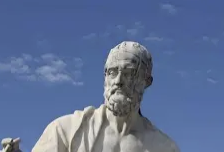
It is a course which perhaps would not have been necessary had it been possible to form a state composed of wise men, but as every multitude is fickle, full of lawless desires, unreasoned passion, and violent anger, the multitude must be held in by invisible terrors and suchlike pageantry. For this reason I think, not that the ancients acted rashly and at haphazard in introducing among the people notions concerning the gods and beliefs in the terrors of hell, but that the moderns are most rash and foolish in banishing such beliefs.
5 months ago
The only method of learning to bear with dignity the vicissitudes of fortune is to recall the catastrophes of others.
▼
Source
Polybius. The Histories of Polybius, trans. Evelyn S. Shuckburgh. London, New York: Macmillan and Co., 1889. Book I, Chapter 1
5 months ago
How highly should we honor the Macedonians, who for the greater part of their lives never cease from fighting with the barbarians for the sake of the security of Greece? For who is not aware that Greece would have constantly stood in the greater danger, had we not been fenced by the Macedonians and the honorable ambition of their kings?
▼
Source
Histories, IX, 35:2 (Loeb)
5 months ago
In the past you rivalled the Achaians and the Macedonians, peoples of your own race, and Philip, their commander, for the hegemony and glory, but now that the freedom of the Hellenes is at stake at a war against an alien people (Romans), ...And does it worth to ally with the barbarians, to take the field with them against the Epeirotans, the Achaians, the Akarnanians, the Boiotians, the Thessalians, in fact with almost all the Hellenes with the exception of the Aitolians who are a wicked nation... ...So Lakedaimonians it is good to remember your ancestors,... be afraid of the Romans... and do ally yourselves with the Achaians and Macedonians. But if some the most powerful citizens are opposed to this policy at least stay neutral and do not side with the unjust.
▼
Source
Histories, IX, 37:7-39:7 (Loeb)
5 months ago
There is no witness so dreadful, no accuser so terrible as the conscience that dwells in the heart of every man.
▼
Source
Histories, XVIII, 43 (Bartlett's Familiar Quotations)
5 months ago
For what gives my work its peculiar quality, and what is most remarkable in the present age, is this. Fortune has guided almost all the affairs of the world in one direction and has forced them to incline towards one and the same end; a historian should likewise bring before his readers under one synoptical view the operations by which she has accomplished her general purpose.
5 months ago
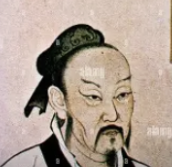
If the king loves music, there is little wrong in the land.
▼
Source
Discourses, as quoted in "I Want to Know!" by Ivan Gogol Esipoff, The Etude, Vol. LXIII, No. 9 (September 1945), p. 496
5 months ago
At forty, I had attained the unperturbed mind.
▼
Source
"Discipline and Character", no. 41
5 months ago
The way of learning is none other than finding the lost mind.
▼
Source
6A:11, as translated by Wing-tsit Chan in A Source Book in Chinese Philosophy (1963), p. 58
5 months ago
Mencius went to see King Huei of Liang. The king said, "Venerable sir, since you have not counted it far to come here, a distance of a thousand li, may I presume that you are provided with counsels to profit my kingdom?" Mencius replied, "Why must your Majesty use that word "profit"? What I am provided with, are counsels to benevolence and righteousness, and these are my only topics.
▼
Source
Book 1, part 1, as translated by James Legge in The Life and Works of Mencius (1875), p. 124
5 months ago
A real man is he whose goodness is a part of himself.
▼
Source
"Discipline and Character", no. 45
5 months ago
He who exerts his mind to the utmost knows his nature.
▼
Source
7A:1, as translated by Wing-tsit Chan in A Source Book in Chinese Philosophy (1963), p. 62
5 months ago
He who outrages benevolence is called a ruffian: he who outrages righteousness is called a villain. I have heard of the cutting off of the villain Chow, but I have not heard of the putting of a ruler to death.
▼
Source
1B:8, In relation to righteousness and the overthrow of the tyrannous King Zhou of Shang, as translated by Sir Robert Kennaway Douglas, China (1904), p. 8
5 months ago
The principles of great men illuminate the universe.
▼
Source
Discipline and Character, no. 50
5 months ago
The superior man has three things in which he delights, and to be ruler over the kingdom is not one of them. That his father and mother are both alive, and that the condition of his brothers affords no cause for anxiety;-this is one delight. That, when looking up, he has no occasion for shame before Heaven, and, below, he has no occasion to blush before men;-this is a second delight. That he can get from the whole kingdom the most talented individuals, and teach and nourish them;-this is the third delight.
▼
Source
7A:20, as translated by James Legge in The Chinese Classics, Vol. II (1861), p. 335
5 months ago
Those who are humane achieve glory. Those who are inhumane suffer disgrace.
▼
Source
2A:4
5 months ago
Never has there been one possessed of complete sincerity who did not move others. Never has there been one who had not sincerity who was able to move others.
▼
Source
Discipline and Character, no. 55
5 months ago
Most precious are the people; next come the spirits of land and grain; and last, the kings.
▼
Source
7B:14.
5 months ago
The great man is the one who does not lose his child's heart.
▼
Source
Book 4, pt. 2, v. 12
5 months ago
Benevolence is the tranquil habitation of man, and righteousness is his straight path.
▼
Source
Justice and Truth, no. 100
5 months ago
Before a man can do things there must be things he will not do.
▼
Source
Eugene H. Peterson, A Long Obedience in the Same Direction (IVP, 1980), Ch 2
5 months ago
If you let people follow their feelings, they will be able to do good. This is what is meant by saying that human nature is good.
▼
Source
Book 6, pt. 1, v. 6
5 months ago
It would be better to be without the Shu-King than to believe every word of it.
▼
Source
"Knowledge and Wisdom", no. 131 · "Celebration and Worship", no. 587
5 months ago
The virtues are not poured into us, they are natural. Seek, and you will find them: neglect, and you will lose them.
▼
Source
Uses and Sanctions, no. 22
5 months ago
The sense of mercy is found in all men; the sense of shame is found in all men; the sense of respect is found in all men; the sense of right and wrong is found in all men.
▼
Source
6A:6
5 months ago
Tsze-Kung asked Confucius, saying, "Master, are you a sage?" Confucius answered him: "A sage is what I cannot rise to. I learn without satiety, and teach without being tired." Tsze-Kung said: "You learn without satiety: that shows your wisdom. You teach without being tired: that shows your benevolence. Benevolent and wise:- Master, you are a sage."
▼
Source
"Humility", no. 139
5 months ago
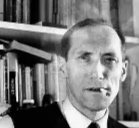
Communism was not the crazy fantasy of a few fanatics, nor the result of human stupidity and baseness; it was a real, very real part of the history of the twentieth century, and we cannot understand this history of ours without understanding communism. We cannot get rid of this specter by saying it was just "human stupidity," or "human corruptibility." The specter is stronger than the spells we cast on it. It might come back to life.
▼
Source
Introduction to My Correct Views on Everything
5 months ago
Carnap made a detailed analysis of Heidegger's statement, "Nothing nihilates," in order to show that it is purely verbal, devoid of empirical meaning. (Incidentally, this is the only sentence from existentialist philosophy the majority of contemporary positivists appear familiar with.)
▼
Source
Chapter Eight, Logical Empiricism, p. 187
5 months ago
In 1903 there appeared Problems of Idealism, a collection of essays many of whose authors had recently been Marxists, but which condemned Marxism and materialism for their moral nihilism, contempt of personality, determinism, and fanatical pursuit of social values regardless of the individuals who made up society; they also attacked Marxism for its uncritical worship of progress and sacrifice of the present to the future.
▼
Source
(pp. 420-1)
5 months ago
Far from secularization inexorably leading to the death of religion, it has instead given birth to the search for new forms of religious life. The imminent victory of the Kingdom of Reason has never materialized. As a whole, mankind can never get rid of the need for religious self-identification: who am I, where did I come from, where do I fit in, why am I responsible, what does my life mean, how will I face death? Religion is a paramount aspect of human culture. Religious need cannot be excommunicated from culture by rationalist incantation. Man does not live by reason alone.
▼
Source
Interview with Nathan Gardels
5 months ago
In this sense Marxism performs the function of a religion, and its efficacy is of a religious character. But it is a caricature and a bogus form of religion, since it presents its temporal eschatology as a scientific system, which religious mythologies do not purport to be.
▼
Source
Epilogue, p. 1208
5 months ago
When I collect my experiences, I notice that fascist is a person who holds one of the following beliefs (by way of example): 1) That people should wash themselves, rather than go dirty; 2) that freedom of the press in America is preferable to the ownership of the whole press by one ruling party; 3) that people should not be jailed for their opinions. both communist and anti-communist - 4), that racial criteria, in favour of either whites or blacks, are inadvisable in admission to Universities; 5 ) that torture is condemnable, no matter who applies it. (Roughly speaking "fascist" was the same as "liberal".) Fascist was, by definition, a person who happened to have been in jail in a communist country. The refugees from Czechoslovakia in 1968 were sometimes met in Germany by very progressive and absolutely revolutionary leftists with placards saying "fascism will not pass".
▼
Source
My Correct Views on Everything
5 months ago
While the positivists were proclaiming the end "once and for all" of unverifiable metaphysical systems and speculative philosophy in general, new doctrines in flagrant contradiction to those ideals have sprung up one after the other. Positivists see no more in this development than evidence of human stupidity, not any reflection on themselves.
▼
Source
Chapter Eight, Logical Empiricism, p. 198
5 months ago
Bukharin, like Lenin, regarded the system of basing economic life on mass terror not as a transient necessity but as a permanent principle of socialist organization. He did not shrink from justifying all means of coercion and held, like Trotsky at the same period, that the new system called essentially for the militarization of labour - i.e. the use of police and military force to compel the whole population to work in such places and conditions as the state might arbitrarily decree. Indeed, once the market is abolished there is no longer any free sale of labour or competition between workers, and police coercion is therefore the only means of allocating "human resources". If hired labour is eliminated, only compulsory labour remains. In other words, socialism - as conceived by both Trotsky and Bukharin at this time - is a permanent, nation-wide labour camp.
▼
Source
(pg. 28-9)
5 months ago
It seems to us that the past is our property. Well, on the contrary - we are its property, because we are not able to make changes in it, while it fills the whole of our existence.
▼
Source
Original: "Otóż przeciwnie - to my jesteśmy jej własnością, ponieważ nie jesteśmy w stanie dokonać w niej zmian, ona natomiast wypełnia całość naszego istnienia." Klucz niebieski albo opowieści biblijne zebrane ku pouczeniu i przestrodze
5 months ago
Karl Marx was born at Trier on 5 May 1818, the child of Jewish parents with a long rabbinical tradition on both sides. His grandfathers were rabbis; his father, a well-to-do lawyer, changed his first name from Herschel to Heinrich and adopted Protestantism, which in Prussia was a necessary condition of professional and cultural emancipation.
▼
Source
(pg. 96)
5 months ago
It would be silly, of course, to be either 'for' or 'against' modernity tout court, not only because it is pointless to try to stop the development of technology, science, and economic rationality, but because both modernity and antimodernity may be expressed in barbarous and antihuman terms.
▼
Source
"Modernity on Endless Trial"
5 months ago
A certain degree of blindness as to the absoluteness of one's own values may be indispensable to extract the valuable qualities from the world, the qualities whose value is believed to be the highest. It is possible that in order to realize one's values one must have faith in their exclusive character.
▼
Source
Chapter Eight, Logical Empiricism, p. 202-203
5 months ago
The destructive work of totalitarian machinery, whether or not this word is used, is usually supported by a special kind of primitive social philosophy. It proclaims not only that the common good of 'society' has priority over the interests of individuals, but that the very existence of individuals as persons is reducible to the existence of the social 'whole'; in other words, personal existence is, in a strange sense, unreal. This is a convenient foundation for any ideology of slavery.
▼
Source
"Totalitarianism and the Virtue of the Lie", as quoted in Is God Happy? Selected Essays (2013), Basic Books, p. 57
5 months ago
As for one-party rule, it was questioned neither by the Left Opposition nor by the Right [wing of the Communist party]. All were prisoners of their own doctrine and their own past: all had worked with a will to create the apparatus of violence that crushed them. Bukharin's hopeless attempt to form a league with Kamenev was no more than a pitiful epilogue to his career. In November 1929 the deviationists performed a public act of penance, but even this did not save them. Stalin's victory was complete; the collapse of the Bukharinite opposition meant the triumph of autocracy in the party and in the country. In December 1929 Stalin's fiftieth birthday was celebrated as a major historical event, and from this point we may date the "cult of personality". Trotsky's prophecy of 1903 had come true: party rule had become Central Committee rule, and this in turn had becorne the personal tyranny of a dictator.
▼
Source
(pp. 42-3)
5 months ago
We sometimes imagine, under the influence of Spenglerian philosophy or some other kind of "historical morphology," that we live in a similar age [to the Romans], the last witnesses of a condemned civilization. But condemned by whom? Not by God, but by some supposed "historical laws." For although we do not know any historical laws, we are in fact able of inventing them quite freely, and such laws, once invented, can then be realized in the form of self-fulfilling prophecies.
▼
Source
Looking for the Barbarians
5 months ago
Marx sees Epicurus as a destroyer of the Greek myths and as a philosopher bringing to light the break-up of a tribal community. His system destroyed the visible heaven of the ancients as a keystone of political and religious life. Marx allies himself, so to speak, with Epicurean atheism, which he regards at this stage as a challenge by the intellectual élite to the cohorts of common sense. 'As long as a single drop of blood pulses in her world-conquering and totally free heart, philosophy will continually shout at her opponents the cry of Epicurus: "Impiety does not consist in destroying the gods of the crowd but rather in ascribing to the gods the ideas of the crowd."'
▼
Source
(pp. 102-3)
5 months ago
I do not know what postmodern is and how it differs from the premodern, nor do I feel that I ought to know.
▼
Source
"Modernity on Endless Trial"
5 months ago
Marxism was a philosophical or semi-philosophical doctrine and a political ideology which was used by the communist state as the main source of legitimacy and the obligatory faith.
▼
Source
New Preface, p. v
5 months ago
A modern philosopher who has never once suspected himself of being a charlatan must be such a shallow mind that his work is probably not worth reading.
▼
Source
Metaphysical Horror
5 months ago
The cultural atmosphere of Russia in those years had an adolescent quality, common to all periods of revolution: the belief that life is just beginning, that the future is unlimited, and that mankind is no longer bound by the shackles of history.
▼
Source
(pg. 47)
5 months ago
But the philosophy that killed off truth proclaims unlimited tolerance for the "language games" (i.e., opinions, beliefs and doctrines) that people find useful. The outcome is expressed in the words of Karl Kraus: "Alles ist wahr und auch das Gegenteil." "Everything is true, and also its opposite."
▼
Source
"Our Merry Apocalypse" (1997), as quoted in Is God Happy? Selected Essays (Basic Books, 2013), p. 318
5 months ago
From the point of view of the development of Marx's theories, his early journalistic writings are important for two main reasons. In his sharp attacks on the censorship law he spoke out unequivocally for the freedom of the Press, against the levelling effect of government restriction ('You don't expect a rose to smell like a violet; why then should the human spirit, the richest thing we have, exist only in a single form?'), and also expressed views concerning the whole nature of the state and the essence of freedom. Pointing out that the vagueness and ambiguity of the Press law placed arbitrary power in the hands of officials, Marx went on to argue that censorship was contrary not only to the purposes of the Press, but to the nature of the state as such.
▼
Source
(pp. 120-1)
5 months ago
Culture, when it loses its sacred sense, loses all sense. With the disappearance of the sacred, which imposed limits to the perfection which could be attained by the profane, arises one of the most dangerous illusions of our civilization-the illusion that there are no limits to the changes that human life can undergo, that society is 'in principle' an endlessly flexible thing, and that to deny this flexibility and this perfectibility is to deny man's total autonomy and thus to deny man himself.
▼
Source
The Revenge of the Sacred in Secular Culture
5 months ago
The history of utopias is no less fascinating than the history of metallurgy or of chemical engineering.
▼
Source
New Preface, p. vi
CivilSimian.com created by AxiomaticPanic, CivilSimian, Kalokagathia