
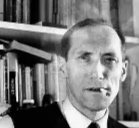
5 months ago
We learn history not in order to know how to behave or how to succeed, but to know who we are.
▼
Source
The Idolatry of Politics, U.S. Jefferson Lecture speech
5 months ago
Of the radical and iconoclastic ideals preached in the early years of the revolution, all were discarded except those which helped the state to exert absolute control over the individual. Hence the idea of collective education and reduction of parental authority to the minimum continued to hold sway, but an end was put to "progressive" educational methods designed to promote initiative and independence. Strict discipline became once more the rule, and in this respect Soviet schools differed from Tsarist ones only in the immensely increased emphasis on indoctrination. In due course, puritanical sexual ethics were restored to favour.
▼
Source
(pg. 53)
5 months ago
There is no idea so obscure that someone could not come to regard it as self-evident.
▼
Source
Chapter Seven, Pragmatism and Positivism, p. 156
5 months ago
... Marx and Bakunin were engaged in a conflict in which it is hard to distinguish political from personal animosities. Marx did his best to persuade everybody that Bakunin was only using the International for his private ends, and in March 1870 he circulated a confidential letter to this effect. He also saw the hand of Bakunin (whom he never met after 1864) on every occasion when his own policies were opposed in the International. Bakunin, for his part, not only combated Marx's political programme but, as he often wrote, regarded Marx as a disloyal, revengeful man, obsessed with power and determined to impose his own despotic authority on the whole revolutionary movement. Marx, he said, had all the merits and defects of the Jewish character; he was highly intelligent and deeply read, but an inveterate doctrinaire and fantastically vain, an intriguer and morbidly envious of all who, like Lassalle, had cut a more important figure than himself in public life.
▼
Source
(pp. 247-8)
5 months ago
The abolition of the market means not only that the consumers-that is all members of society-are robbed of virtually all choice of consumption and all influence over production; it also means that the information and communication are monopolized by the State, as they too need a vast material base in order to operate. The abolition of the market means, then, that both material and intellectual assets would be totally rationed. To say nothing of the inefficiency of production convincingly demonstrated in the history of communism, this economy requires an omnipotent police state. Briefly: the abolition of the market means a gulag society.
▼
Source
"The Self-Poisoning of the Open Society"
5 months ago
The social conditions that nourished and made use of this ideology can still revive; perhaps - who knows? - the virus is dormant, waiting for the next opportunity. Dreams about the perfect society belong to the enduring stock of civilization.
▼
Source
New Preface, p. vi
5 months ago
...shall we say that the difference between a vegetarian and a cannibal is just a matter of taste?
▼
Source
"The Idolatry of Politics", New Republic, 1986-June-16, page 31.
5 months ago
If the gist of the controversy were to be expressed in a single sentence, one might say that the mechanists represented the opposition of the natural sciences to philosophic interference, while the dialecticians stood for the supremacy of philosophy over the sciences and thus reflected the characteristic tendency of Soviet ideological development. The mechanists' outlook might be called negative, while the dialecticians ascribed immense importance to philosophy and regarded themselves as specialists. The mechanists, however, had a much better idea of what science was about. The dialecticians were ignoramuses in this sphere and confined themselves to general formulas about the philosophical need to "generalize" and unify the sciences; on the other hand, they knew more than the mechanists about the history of philosophy. (Eventually the party condemned both camps, and created a dialectical synthesis of both forms of ignorance.)
▼
Source
(pg. 64)
5 months ago
Pragmatism starts from assumptions similar to those of empiriocriticism, but differs from the latter by its striking formulations, loose aphorisms, and analytical unscrupulousness.
▼
Source
Chapter Seven, Pragmatism and Positivism, p. 166
5 months ago
Rosa Luxemburg is an outstanding example of a type of mind that is often met with in the history of Marxism and appears to be specially attracted by the Marxist outlook. It is characterized by slavish submission to authority, together with a belief that in that submission the values of scientific thought can be preserved. No doctrine was so well suited as Marxism to satisfy both these attitudes, or to provide a mystification combining extreme dogmatism with the cult of "scientific" thinking, in which the disciple could find mental and spiritual peace. Marxism thus played the part of a religion for the intelligentsia, which did not prevent some of them, like Rosa Luxemburg herself, from trying to improve the deposit of faith by reverting to first principles, thus strengthening their own belief that they were independent of dogma.
▼
Source
(pp. 94-5)
5 months ago
The concept of original sin gives us a penetrating insight into human destiny.
▼
Source
On the Dilemmas of the Christian Legacy
5 months ago
Marxism has been the greatest fantasy of our century. It was a dream offering the prospect of a society of perfect unity, in which all human aspirations would be fulfilled and all values reconciled.
▼
Source
Epilogue, p. 1206
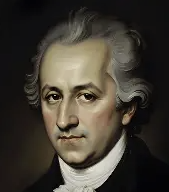
5 months ago
One lives but once in the world.
▼
Source
Clavigo, Act I, sc. i
5 months ago
One never goes so far as when one doesn't know where one is going.
▼
Source
Letter to Carl Friedrich Zelter
5 months ago
Young Schopenhauer, a zealous and thorough-going Kantian, tried to explain that light would cease to exist along with the seeing eye. "What!" he said, according to Schopenhauer's own report, "looking at him with his Jove-like eyes,"-"You should rather say that you would not exist if the light could not see you?"
▼
Source
As quoted by Friedrich Jodl, "Goethe and Kant," The Monist (1901) f. Edward C. Hegeler, ed. Paul Carus, Vol. 11, p. 264. As translated from Professor Jodl's MS. by W. H. Carruth, of the University of Kansas.
5 months ago
We can't form our children on our own concepts; we must take them and love them as God gives them to us.
▼
Source
Hermann und Dorothea
5 months ago
I have found a paper of mine among some others in which I call architecture 'petrified music.' Really there is something in this; the tone of mind produced by architecture approaches the effect of music.
▼
Source
Conversations with Eckermann (23 March 1829) - Often quoted as "Architecture is frozen music."
5 months ago
Getting along with women, Knocking around with men, Having more credit than money, Thus one goes through the world.
▼
Source
Claudine von Villa Bella
5 months ago
I have often felt a bitter sorrow at the thought of the German people, which is so estimable in the individual and so wretched in the generality. A comparison of the German people with other peoples arouses a painful feeling, which I try to overcome in every possible way.
▼
Source
Goethes Gespraeche
5 months ago
Nothing is great but truth, and the smallest truth is great. The other day I had a thought, which I put like this: Even a harmful truth is useful, for it can be harmful only for the moment and will lead to other truths, which must always become useful, very much so. Conversely, even a useful error is harmful, for it can be useful only for the moment, enticing us into other errors, which become more and more harmful.
▼
Source
Letter to Charlotte von Stein (1787) in Goethe's World View: Presented in His Reflections and Maxims (1963), Edited with an Introduction by Frederick Ungar, Translated by Heinz Norden, pp. 72-73, Frederick Ungar Publishing Company, New York.
5 months ago
The spirits that I summoned up, I now can't rid myself of.
▼
Source
Der Zauberlehrling (The Sorcerer's Apprentice)
5 months ago
If I work incessantly to the last, nature owes me another form of existence when the present one collapses.
▼
Source
Letter to Eckermann
5 months ago
When young, one is confident to be able to build palaces for mankind, but when the time comes one has one's hands full just to be able to remove their trash.
▼
Source
Letter to Johann Kaspar Lavatar
5 months ago
Patriotism ruins history.
▼
Source
Conversation with Friedrich Wilhem Riemer
5 months ago
One of the most striking signs of the decay of art is the intermixing of different genres.
▼
Source
Propylaea (1798) Introduction
5 months ago
The artist may be well advised to keep his work to himself till it is completed, because no one can readily help him or advise him with it...but the scientist is wiser not to withhold a single finding or a single conjecture from publicity.
▼
Source
Essay on Experimentation
5 months ago
In art the best is good enough.
▼
Source
Italian Journey
5 months ago
Should I not be proud, when for twenty years I have had to admit to myself that the great Newton and all the mathematicians and noble calculators along with him were involved in a decisive error with respect to the doctrine of color, and that I among millions was the only one who knew what was right in this great subject of nature?
▼
Source
Letter to Eckermann
5 months ago
The true, prescriptive artist strives after artistic truth; the lawless artist, following blind instinct, after an appearance of naturalness. The one leads to the highest peaks of art, the other to its lowest depths.
▼
Source
Propylaea (1798) Introduction
5 months ago
America, you have it better than our continent, the old one.
▼
Source
Wendts Musen-Almanach
5 months ago
A noble person attracts noble people, and knows how to hold on to them.
▼
Source
Torquato Tasso, Act I, sc. i
5 months ago
All poetry is supposed to be instructive but in an unnoticeable manner; it is supposed to make us aware of what it would be valuable to instruct ourselves in; we must deduce the lesson on our own, just as with life.
▼
Source
Letter to Carl Friedrich Zelter
5 months ago
In limitations he first shows himself the master,And the law can only bring us freedom.
▼
Source
Was Wir Bringen
5 months ago
Who is the happiest of men? He who values the merits of others, And in their pleasure takes joy, even as though 'twere his own. Not in the morning alone, not only at mid-day he charmeth; Even at setting, the sun is still the same glorious planet.
▼
Source
Distichs in The Poems of Goethe (1853) as translated in the original metres by Edgar Alfred Bowring
5 months ago
A talent is formed in stillness, a character in the world's torrent.
▼
Source
Torquato Tasso, Act I, sc. ii
5 months ago
I am more and more convinced that poetry is the universal possession of mankind, revealing itself everywhere and at all times in hundreds and hundreds of men. ... I therefore like to look about me in foreign nations, and advise everyone to do the same. National literature is now a rather unmeaning term; the epoch of world literature is at hand, and everyone must strive to hasten its approach.
▼
Source
Conversations with Eckermann
5 months ago
But among all the discoveries and corrections probably none has resulted in a deeper influence on the human spirit than the doctrine of Copernicus.... Possibly mankind has never been demanded to do more, for considering all that went up in smoke as a result of realizing this change: a second Paradise, a world of innocence, poetry and piety: the witness of the senses, the conviction of a poetical and religious faith. No wonder his contemporaries did not wish to let all this go and offered every possible resistance to a doctrine which in its converts authorized and demanded a freedom of view and greatness of thought so far unknown indeed not even dreamed of.
▼
Source
Zur Farbenlehre, Materialien zur Geschichte der Farbenlehre (1810), Frankfurt am Main, 1991, Seite 666.
5 months ago
And now the sagacious reader, who is capable of reading into these lines what does not stand written in them, but is nevertheless implied, will be able to form some conception of the serious feelings with which I then set foot in Emmendingen.
▼
Source
Autobiography: Truth and Poetry Book xviii. London 1884 p. 115 books.google.de
5 months ago
Investigate what is, and not what pleases.
▼
Source
Der Versuch als Vermittler von Objekt und Subjekt (The Attempt as Mediator of Object and Subject)
5 months ago
One must be something in order to do something.
▼
Source
Conversations with Eckermann

5 months ago
The social contract between all people around the world only has one requirement: Don't kill. From there it's those who don't agree, those that agree but have some reactive justification, and those that agree and don't kill.
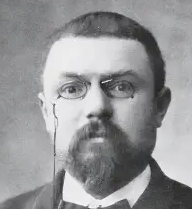
5 months ago
If we study the history of science we see happen two inverse phenomena... Sometimes simplicity hides under complex appearances; sometimes it is the simplicity which is apparent, and which disguises extremely complicated realities....No doubt, if our means of investigation should become more and more penetrating, we should discover the simple under the complex, then the complex under the simple, then again the simple under the complex, and so on, without our being able to foresee what will be the last term. We must stop somewhere, and that science may be possible, we must stop when we have found simplicity. This is the only ground on which we can rear the edifice of our generalizations.
5 months ago
Mathematics have a triple aim. They must furnish an instrument for the study of nature. But that is not all: they have a philosophic aim and, I dare maintain, an esthetic aim. They must aid the philosopher to fathom the notions of number, of space, of time. And above all, their adepts find therein delights analogous to those given by painting and music. They admire the delicate harmony of numbers and forms; they marvel when a new discovery opens to them an unexpected perspective; and has not the joy they thus feel the esthetic character, even though the senses take no part therein? Only a privileged few are called to enjoy it fully, it is true, but is not this the case for all the noblest arts?This is why I do not hesitate to say that mathematics deserve to be cultivated for their own sake, and the theories inapplicable to physics as well as the others. Even if the physical aim and the esthetic aim were not united, we ought not to sacrifice either.
▼
Source
Ch. 5: Analysis and Physics
5 months ago
It is the sidereal day, that is, the duration of the rotation of the earth, which is the constant unit of time. ...However ...many astronomers ...think that the tides act as a check on our globe, and that the rotation of the earth is becoming slower and slower. Thus would be explained the apparent acceleration of the motion of the moon...
5 months ago
Every definition implies an axiom, since it asserts the existence of the object defined. The definition then will not be justified, from the purely logical point of view, until we have proved that it involves no contradiction either in its terms or with the truths previously admitted.
▼
Source
Part II. Ch. 2 : Mathematical Definitions and Education, p. 131
5 months ago
We can not... escape the conclusion that the rule of reasoning by recurrence is irreducible to the principle of contradiction. ...Neither can this rule come to us from experience... This rule, inaccessible to analytic demonstration and to experience, is the veritable type of the synthetic a priori judgment. On the other hand, we can not think of seeing in it a convention, as in some of the postulates of geometry. ...it is only the affirmation of the power of the mind which knows itself capable of conceiving the indefinite repetition of the same act when once this act is possible. The mind has a direct intuition of this power, and experience can only give occasion for using it and thereby becoming conscious of it.
▼
Source
Ch. I. (1905) Tr. George Bruce Halstead
5 months ago
When an astronomer tells me that some stellar phenomenon, which his telescope reveals to him at this moment, happened... fifty years ago... I... ask... how he has measured the velocity of light.
5 months ago
Does the harmony the human intelligence thinks it discovers in nature exist outside of this intelligence? No, beyond doubt, a reality completely independent of the mind which conceives it, sees or feels it, is an impossibility. A world as exterior as that, even if it existed, would for us be forever inaccessible.
5 months ago
Sociology is the science which has the most methods and the least results.
▼
Source
Part I. Ch. 1 : The Selection of Facts, p. 19
5 months ago
Thought must never submit, neither to a dogma, nor to a party, nor to a passion, nor to an interest, nor to a preconceived idea, nor to whatever it may be, save to the facts themselves, because, for thought, submission would mean ceasing to be.
▼
Source
Speech, University of Brussels (19 November 1909), during the festival for the 75th anniversary of the university's foundation; published in Œuvres de Henri Poincaré (1956), p. 152
CivilSimian.com created by AxiomaticPanic, CivilSimian, Kalokagathia