
5 months 1 week ago
I do not mean to affirm that the description which I have given of the soul and her missions is exactly true—a man of sense ought hardly say that. But I do say that, inasmuch as the soul is shown to be immortal, he may venture to think, not improperly or unworthily, that something of this kind is true.
5 months 1 week ago
Modern totalitarianism can be defined as the establishment, by means of the state of exception, of a legal civil war that allows for the physical elimination not only of political adversaries but of entire categories of citizens who for some reason cannot be integrated into the political system.
▼
Source
Chapter One, p. 2.

5 months 1 week ago
My previous education had been, in a certain sense, already a course of Benthamism. The Benthamic standard of "the greatest happiness" was that which I had always been taught to apply; I was even familiar with an abstract discussion of it, forming an episode in an unpublished dialogue on Government, written by my father on the Platonic model. Yet in the first pages of Bentham it burst upon me with all the force of novelty. What thus impressed me was the chapter in which Bentham passed judgment on the common modes of reasoning in morals and legislation, deduced from phrases like "the law of nature," "right reason," "the moral sense," "natural rectitude," and the like, and characterized them as dogmatism in disguise, imposing its sentiments upon others under cover of sounding expressions which convey no reason for the sentiment, but set up the sentiment as its own reason. It had not struck me before, that Bentham's principle put an end to all this. The feeling rushed upon me, that all previous moralists were superseded, and that here indeed was the commencement of a new era in thought.
▼
Source
([https://archive.org/details/autobiography01mill/page/64/mode/1up pp. 64-65])
5 months 1 week ago
The most immediate result of this unbalanced specialisation has been that to-day, when there are more "scientists" than ever, there are much less "cultured" men than, for example, about 1750. And the worst is that with these turnspits of science not even the real progress of science itself is assured. For science needs from time to time, as a necessary regulator of its own advance, a labour of reconstitution, and, as I have said, this demands an effort towards unification, which grows more and more difficult, involving, as it does, ever-vaster regions of the world of knowledge. Newton was able to found his system of physics without knowing much philosophy, but Einstein needed to saturate himself with Kant and Mach before he could reach his own keen synthesis. Kant and Mach — the names are mere symbols of the enormous mass of philosophic and psychological thought which has influenced Einstein.
▼
Source
Chapter XII: The Barbarism Of "Specialisation"

5 months 1 week ago
Remember that man lives only in the present, in this fleeting instant; all the rest of his life is either past and gone, or not yet revealed. Short, therefore, is man's life, and narrow is the corner of the earth wherein he dwells.
▼
Source
III, 10
5 months 1 week ago
Not often in life has a human being caused me such joy by his mere presence as you did.
▼
Source
Albert Einstein in a letter to Bohr (1920)
5 months 1 week ago
The really important thing is not to live, but to live well. And to live well meant, along with more enjoyable things in life, to live according to your principles.
▼
Source
Presented as a full Socrates quote by various sources like [https://www.goodreads.com/quotes/106034-the-really-important-thing-is-not-to-live-but-to this page], the first sentence of the quote is indeed attributed to Socrates in Plato's dialogue The Apolo
5 months 1 week ago
Schizophrenia is like love: there is no specifically schizophrenic phenomenon or entity; schizophrenia is the universe of productive and reproductive desiring machines, universal primary production as "the essential reality of man and nature"
▼
Source
The Desiring Machine
5 months 1 week ago
There is a great affinity in me with the Hindu genius - that mind, vast, imaginative, loving, dreamy and speculative, but destitute of ambition, personality and will. Pantheistic disinterestedness, the effacement of the self in the great whole, womanish gentleness, a horror of slaughter, antipathy to action - these are all present in my nature, in the nature at least which has been developed by years and circumstances. Still the West has also its part in me. What I have found difficult to keep up a prejudice in favor of my form, nationality or individuality whatever. Hence my indifference to my own person, my own usefulness, interest or opinions of the moment. What does it all matter? It is not perhaps not a bad thing,' he says, 'that in the midst of the devouring activities of the Western world there should be a few Brahmanical souls.
▼
Source
Amiel, Henri-Frederic Amiel's journal: The Journal Intime of Henri-Frederic Amiel, p. 159 161,224. and 269. Quoted in Londhe, S. (2008). A tribute to Hinduism: Thoughts and wisdom spanning continents and time about India and her culture. New Delhi: Pragun
5 months 1 week ago
The writers by whom, more than by any others, a new mode of political thinking was brought home to me, were those of the St. Simonian school in France. In 1829 and 1830 I became acquainted with some of their writings. They were then only in the earlier stages of their speculations. They had not yet dressed out their philosophy as a religion, nor had they organized their scheme of Socialism. They were just beginning to question the principle of hereditary property. I was by no means prepared to go with them even this length; but I was greatly struck with the connected view which they for the first time presented to me, of the natural order of human progress; and especially with their division of all history into organic periods and critical periods.
▼
Source
([https://archive.org/details/autobiography01mill/page/163/mode/1up p. 163])
5 months 1 week ago
Torn in this way from its normal connection with contemplation, with being within one's self, pure action permits and produces only a chain of stupidities which we might better call "stupidity unchained." So we see today that an absurd attitude justifies the appearance of an opposing attitude no more reasonable; at least, reasonable enough, and so on indefinitely. Such is the extreme to which political affairs in the West have come!
▼
Source
p. 34
5 months 1 week ago
All that is harmony for you, my Universe, is in harmony with me as well. Nothing that comes at the right time for you is too early or too late for me. Everything is fruit to me that your seasons bring, Nature. All things come of you, have their being in you, and return to you.
▼
Source
Πᾶν μοι συναρμόζει ὃ σοὶ εὐάρμοστόν ἐστιν, ὦ κόσμε· οὐδέν μοι πρόωρον οὐδὲ ὄψιμον ὃ σοὶ εὔκαιρον. πᾶν μοι καρπὸς ὃ φέρουσιν αἱ σαὶ ὧραι, ὦ φύσις· ἐκ σοῦ πάντα, ἐν σοὶ πάντα, εἰς σὲ πάντα. ἐκεῖνος μέν φησιν· | IV, 23

5 months 1 week ago
neither our distance from a preventable evil nor the number of other people who, in respect to that evil, are in the same situation as we are, lessens our obligation to mitigate or prevent that evil.

5 months 1 week ago
Let nothing disturb thee; Let nothing dismay thee: All things pass; God never changes. Patience attains All that it strives for. He who has God Finds he lacks nothing: God alone suffices.
▼
Source
"Poem IX", in Complete Works St. Teresa of Avila (1963) edited by E. Allison Peers, Vol. 3, p. 288
5 months 1 week ago
The spirit of sarcasm lives and thrives in the midst of universal wreck; its balls are enchanted and itself invulnerable, and it braves retaliations and reprisals because itself is a mere flash, a bodiless and magical nothing.
▼
Source
16 February 1868
5 months 1 week ago
You must be aware of the fact, but I think can hardly appreciate the reality, that in all parts of this country (and wherever our tongue is spoken) there are thousands of earnest men and women to whom your name is as familiar as a household word, and who do not merely admire your ability and appreciate your work, but regard you with all the feeling due to that highest of all characters,—the "great, good man".
▼
Source
Henry George to Mill (22 August 1869), quoted in Michael St. John Packe, The Life of John Stuart Mill (1954), p. 479
5 months 1 week ago
It is crazy to want what is impossible. And impossible for the wicked not to do so.
▼
Source
To seek what is impossible is madness: and it is impossible that the bad should not do something of this kind. | | V, 17(Hays translation)
5 months 1 week ago
It is easy for us to criticize the prejudices of our grandfathers, from which our fathers freed themselves. It is more difficult to search for prejudices among the beliefs and values that we hold.
▼
Source
Ch. 3: Equality for Animals? (p. 49)

5 months 1 week ago
The dead bodies of their parents they cut up with their sheep, and devour at their feasts. They who have not died so as to become food for others, are thought to have died an accursed death. Their women are not by their sex softened to modesty. They uncover the breast, from which they suspend their battle-axes, and prefer warfare to marriage.
▼
Source
Book I, Chapter I.—Preface. Reason for a New Work. Pontus Lends Its Rough Character to the Heretic Marcion, a Native. His Heresy Characterized in a Brief Invective.
5 months 1 week ago
No human institution can arrive at perfection, and the most that human wisdom can do, is to procure the same or greater good, at the expence of less evil.
▼
Source
p. 45
5 months 1 week ago
We are sorely deficient in talking with each other and listening to each other. We lack mobility, criticism and self-criticism. We incline to doctrinism. What makes it worse is that so many people do not really want to think. They want only slogans and obedience. They ask no questions and they give no answers, except by repeating drilled-in phrases. They can only assert and obey, neither probe nor apprehend. Thus they cannot be convinced, either. How shall we talk with people who will not go where others probe and think, where men seek independence in insight and conviction?
5 months 1 week ago
..If you are troubled by external circumstances, it is not the circumstances that trouble you, but your own perception of them - and they are in your power to change at any time.
5 months 1 week ago
This (even) broader assertion we make: that even if the Paraclete had in this our day definitely prescribed a virginity or continence total and absolute, so as not to permit the heat of the flesh to foam itself down even in single marriage, even thus He would seem to be introducing nothing of “novelty;” seeing that the Lord Himself opens “the kingdoms of the heavens” to “eunuchs,” as being Himself, withal, a virgin; to whom looking, the apostle also—himself too for this reason abstinent—gives the preference to continence.
▼
Source
Chapter 3
5 months 1 week ago
With the signing of the Treaties of Utrecht, Bolingbroke's one great achievement in the world of action was accomplished. The rest of his political career, after a Niagara leap into rebellion, was to be lost in shallows and in miseries. But he stands in history as the man who, by courses however devious and questionable, negotiated a Peace which proved in the working more satisfactory than any other that has ended a general European conflict in modern times.
▼
Source
G. M. Trevelyan, England Under Queen Anne: The Peace and the Protestant Succession (1934), p. 230
5 months 1 week ago
The art of life is more like the wrestler's art than the dancer's, in respect of this, that it should stand ready and firm to meet onsets which are sudden and unexpected.
▼
Source
VII, 61

5 months 1 week ago
The three great elements of modern civilization, gunpowder, printing, and the Protestant religion.
▼
Source
The State of German Literature (1827).

5 months 1 week ago
They wonder much to hear that gold, which in itself is so useless a thing, should be everywhere so much esteemed, that even men for whom it was made, and by whom it has its value, should yet be thought of less value than it is.
▼
Source
Ch. 6 : Of the Travelling of the Utopians
5 months 1 week ago
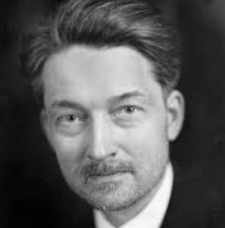
Not only does the democratic state of mind stem from the inspiration of the Gospel, but it cannot exist without it.
▼
Source
p. 49.
5 months 1 week ago
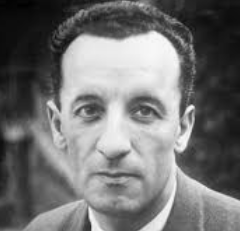
Hardness and softness, roughness and smoothness, moonlight and sunlight present themselves in our recollection not preeminently as sensory contents but as certain kinds of symbioses, certain ways outside has of invading us and certain ways we have of meets this invasion...
▼
Source
p. 317
5 months 1 week ago
No carelessness in your actions. No confusion in your words. No imprecision in your thoughts. (Hays translation)
▼
Source
Be not careless in deeds, nor confused in words, nor rambling in thought. | VIII, 51
5 months 1 week ago
The Philosopher of this age is not a Socrates, a Plato, a Hooker, or Taylor, who inculcates on men the necessity and infinite worth of moral goodness, the great truth that our happiness depends on the mind which is within us, and not on the circumstances which are without us; but a Smith, a De Lolme, a Bentham, who chiefly inculcates the reverse of this,—that our happiness depends entirely on external circumstances; nay, that the strength and dignity of the mind within us is itself the creature and consequence of these. Were the laws, the government, in good order, all were well with us; the rest would care for itself! Dissentients from this opinion, expressed or implied, are now rarely to be met with; widely and angrily as men differ in its application, the principle is admitted by all.
5 months 1 week ago
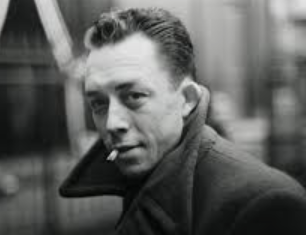
One does not decide the truth of a thought according to whether it is right-wing or left-wing.
▼
Source
Letter to Jean-Paul Sartre, 30 June 1952. | As quoted in Paris after the Liberation: 1944-1949 by Antony Beevor and Artemis Cooper.

5 months 1 week ago
It is an age wherein truth is near a miscarriage, and it is enough for me that I have appeared thus far for it, in a day of necessity.
5 months 1 week ago
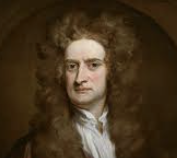
The Circle is a Geometrical Line, not because it may be express'd by an Æquation, but because its Description is a Postulate. It is not the Simplicity of the Æquation, but the Easiness of the Description, which is to determine the Choice of our Lines for the Construction of Problems. For the Æquation that expresses a Parabola, is more simple than That that expresses a Circle, and yet the Circle, by reason of its more simple Construction, is admitted before it. The Circle and the Conick Sections, if you regard the Dimension of the Æquations, are of the fame Order, and yet the Circle is not number'd with them in the Construction of Problems, but by reason of its simple Description, is depressed to a lower Order, viz. that of a right Line; so that it is not improper to express that by a Circle that may be expressed by a right Line. But it is a Fault to construct that by the Conick Sections which may be constructed by a Circle. Either therefore you must take your Law and Rule from the Dimensions of Æquations as observ'd in a Circle, and so take away the Distinction between Plane and Solid Problems; or else you must grant, that that Law is not so strictly to be observ'd in Lines of superior Kinds, but that some, by reason of their more simple Description, may be preferr'd to others of the same Order, and may be number'd with Lines of inferior Orders in the Construction of Problems.
5 months 1 week ago
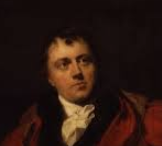
The frivolous work of polished idleness.
▼
Source
Dissertation on the Progress of Ethical Philosophy (1830), Section VI: Foundation of a More Just Theory of Ethics — "Thomas Brown", paragraph 3.
5 months 1 week ago
One man prays thus: How shall I be able to lie with that woman? Do thou pray thus: How shall I not desire to lie with her? Another prays: How shall I be released from this? Another prays: How shall I not desire to be released? Another thus: How shall I not lose my little son? Thou thus: How shall I not be afraid to lose him? In fine, turn thy prayers this way, and see what comes.
▼
Source
IX, 40

5 months 1 week ago
We are so lonely in life that we must ask ourselves if the loneliness of dying is not a symbol of our human existence.
5 months 1 week ago
What you see, yet can not see over, is as good as infinite.
▼
Source
Bk. II, ch. 1.
5 months 1 week ago
I don't know why, but something inside me snapped. I started yelling at the top of my lungs, and I insulted him and told him not to waste his prayers on me. I grabbed him by the collar of his cassock. I was pouring out on him everything that was in my heart, cries of anger and cries of joy. He seemed so certain about everything, didn't he? And yet none of his certainties was worth one hair of a woman's head. He wasn't even sure he was alive, because he was living like a dead man. Whereas it looked as if I was the one who'd come up emptyhanded. But I was sure about me, about everything, surer than he could ever be, sure of my life and sure of the death I had waiting for me. Yes, that was all I had. But at least I had as much of a hold on it as it had on me. I had been right, I was still right, I was always right. I had lived my life one way and I could just as well have lived it another. I had done this and I hadn't done that. I hadn't done this thing but I had done another. And so? It was as if I had waited all this time for this moment and for the first light of this dawn to be vindicated. Nothing, nothing mattered, and I knew why. So did he. Throughout the whole absurd life I'd lived, a dark wind had been rising toward me from somewhere deep in my future, across years that were still to come, and as it passed, this wind leveled whatever was offered to me at the time, in years no more real than the ones I was living. What did other people's deaths or a mother's love matter to me; what did his God or the lives people choose or the fate they think they elect matter to me when we're all elected by the same fate, me and billions of privileged people like him who also called themselves my brothers? Couldn't he see, couldn't he see that? Everybody was privileged. There were only privileged people. The others would all be condemned one day. And he would be condemned, too.

5 months 1 week ago
So little pains do the vulgar take in the investigation of truth, accepting readily the first story that comes to hand.
▼
Source
Variant translation: "...the search for truth strains the patience of most people, who would rather believe the first things that come to hand." Translation by Paul Woodruff. | Book I, 1.20-[3]
5 months 1 week ago
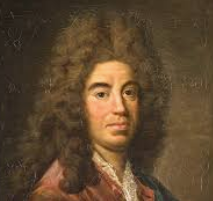
To speak and to offend is with some people but one and the same thing; they are biting and bitter; their words are steeped in gall and wormwood; sneers as well as insolent and insulting words flow from their lips. It had been well for them had they been born mute or stupid; the little vivacity and intelligence they have prejudices them more than dullness does others; they are not always satisfied with giving sharp answers, they often attack arrogantly those who are present, and damage the reputation of those who are absent; they butt all round like rams — for rams, of course, must use their horns. We therefore do not expect, by our sketch of them, to change such coarse, restless, and stubborn individuals. The best thing a man can do is to take to his heels as soon as he perceives them, without even turning round to look behind him.
▼
Source
27
5 months 1 week ago
A little time, and thou shalt close thy eyes; and him who has attended thee to thy grave, another soon will lament.
▼
Source
X, 34
5 months 1 week ago
Time is heavy sometimes; imagine how heavy eternity must be.
5 months 1 week ago
There is no heroic poem in the world but is at bottom a biography, the life of a man; also, it may be said, there is no life of a man, faithfully recorded, but is a heroic poem of its sort, rhymed or unrhymed.
5 months 1 week ago
Existence is illusory and it is eternal.
▼
Source
Kirilov
5 months 1 week ago
The fate of those of their neighbours who had already rebelled and had been subdued was no lesson to them; their own prosperity could not dissuade them from affronting danger; but blindly confident in the future, and full of hopes beyond their power though not beyond their ambition, they declared war and made their decision to prefer might to right, their attack being determined not by provocation but by the moment which seemed propitious. The truth is that great good fortune coming suddenly and unexpectedly tends to make a people insolent; in most cases it is safer for mankind to have success in reason than out of reason; and it is easier for them, one may say, to stave off adversity than to preserve prosperity.
▼
Source
Book III, 3.39-[3]
5 months 1 week ago
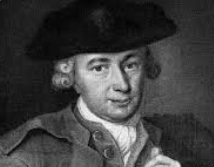
Poetry is the mother-tongue of the human race.
▼
Source
Sämtliche Werken, ed. Josef Nadler (Vienna: Verlag Herder, 1949-1957), vol. II, p. 197.
5 months 1 week ago
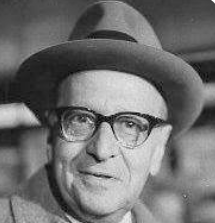
The blessing that the market does not ask about birth is paid for in the exchange society by the fact that the possibilities conferred by birth are molded to fit the production of goods that can be bought on the market.
▼
Source
E. Jephcott, trans., p. 9.
5 months 1 week ago
Never regard something as doing you good if it makes you betray a trust or lose your sense of shame or makes you show hatred, suspicion, ill-will or hypocrisy or a desire for things best done behind closed doors.
▼
Source
III. 7, trans. Gregory Hays
5 months 1 week ago
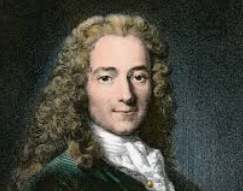
This new patriarch Fox said one day to a justice of peace, before a large assembly of people. "Friend, take care what thou dost; God will soon punish thee for persecuting his saints." This magistrate, being one who besotted himself every day with bad beer and brandy, died of apoplexy two days after; just as he had signed a mittimus for imprisoning some Quakers. The sudden death of this justice was not ascribed to his intemperance; but was universally looked upon as the effect of the holy man's predictions; so that this accident made more Quakers than a thousand sermons and as many shaking fits would have done. Cromwell, finding them increase daily, was willing to bring them over to his party, and for that purpose tried bribery; however, he found them incorruptible, which made him one day declare that this was the only religion he had ever met with that could resist the charms of gold. The Quakers suffered several persecutions under Charles II; not upon a religious account, but for refusing to pay the tithes, for "theeing" and "thouing" the magistrates, and for refusing to take the oaths enacted by the laws. At length Robert Barclay, a native of Scotland, presented to the king, in 1675, his "Apology for the Quakers"; a work as well drawn up as the subject could possibly admit. The dedication to Charles II, instead of being filled with mean, flattering encomiums, abounds with bold truths and the wisest counsels. "Thou hast tasted," says he to the king, at the close of his "Epistle Dedicatory," "of prosperity and adversity: thou hast been driven out of the country over which thou now reignest, and from the throne on which thou sittest: thou hast groaned beneath the yoke of oppression; therefore hast thou reason to know how hateful the oppressor is both to God and man. If, after all these warnings and advertisements, thou dost not turn unto the Lord, with all thy heart; but forget Him who remembered thee in thy distress, and give thyself up to follow lust and vanity, surely great will be thy guilt, and bitter thy condemnation. Instead of listening to the flatterers about thee, hearken only to the voice that is within thee, which never flatters. I am thy faithful friend and servant, Robert Barclay." The most surprising circumstance is that this letter, though written by an obscure person, was so happy in its effect as to put a stop to the persecution.
CivilSimian.com created by AxiomaticPanic, CivilSimian, Kalokagathia