
5 months 1 week ago
The appearances of multiplicity and motion, empty space and time, are illusions.
5 months 1 week ago
Knowledge of the fact differs from knowledge of the reason for the fact.
▼
Source
I.13, 78a.22
5 months 1 week ago
The merit and strength of a people are measured by their enthusiasm for freedom when the only rewards from it are anguish and martyrdom, the blood and ashes of exile, the sorrow of a house driven by the waves, and the shame of a useless life that lacks the foundation and peace of mind needed to do one's share of the common task.

5 months 1 week ago
The enlightened soul is a person who is self-conscious of his "human condition" in his time and historical and social setting, and whose awareness inevitably and necessarily gives him a sense of social responsibility.
▼
Source
p. 1; as cited in: Robert Deemer Lee, Overcoming tradition and modernity: the search for Islamic authenticity, (11997), p. 127.

5 months 1 week ago
Wealth is like sea-water; the more we drink, the thirstier we become.
▼
Source
E. Payne, trans. (1974) Vol. 1, p. 347

5 months 1 week ago
The need for novelty is the characteristic of an alienated gorilla.
5 months 1 week ago
I perfectly agree with your Lordship too, that to crush the Industry of so great and so fine a province of the empire, in order to favour the monopoly of some particular towns in Scotland or England, is equally unjust and impolitic. The general opulence and improvement of Ireland might certainly, under proper management, afford much greater resources to the Government, than can ever be drawn from a few mercantile or manufacturing towns.
▼
Source
Letter to Henry Dundas (1 November 1779), quoted in Adam Smith, The Correspondence of Adam Smith, eds. E. C. Mossner and I. S. Ross (1987), p. 241
5 months 1 week ago
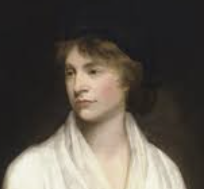
I am a strange compound of weakness and resolution! However, if I must suffer, I will endeavour to suffer in silence. There is certainly a great defect in my mind — my wayward heart creates its own misery — Why I am made thus I cannot tell; and, till I can form some idea of the whole of my existence, I must be content to weep and dance like a child — long for a toy, and be tired of it as soon as I get it.
▼
Source
Undated letter to Joseph Johnson (October? 1792), published in The Collected Letters of Mary Wollstonecraft (2004), edited by Janet Todd, p. 206.
5 months 1 week ago
It is not necessary to ask whether soul and body are one, just as it is not necessary to ask whether the wax and its shape are one, nor generally whether the matter of each thing and that of which it is the matter are one. For even if one and being are spoken of in several ways, what is properly so spoken of is the actuality.
▼
Source
De Anima ii 1, 412b6–9: About the

5 months 1 week ago
Everyone's got the same insecurities as you. Everyone's got the same insecurities as you. Believe me it is true. You are not alone. There's no need to feel blue. Everyone's got the same insecurities as you. Believe me it is true. Do not be afraid. To show people the real you.
▼
Source
In Bed with my Doona (2005).

5 months 1 week ago
In the heat of our pursuit for fundamental human rights, Black people have been continually cautioned to be patient. We are advised that as long as we remain faithful to the existing democratic order, the glorious moment will eventually arrive when we will come into our own as full-fledged human beings.
5 months 1 week ago
Talent works for money and fame; the motive which moves genius to productivity is, on the other hand, less easy to determine. It isn’t money, for genius seldom gets any. It isn’t fame: fame is too uncertain and, more closely considered, of too little worth. Nor is it strictly for its own pleasure, for the great exertion involved almost outweighs the pleasure. It is rather an instinct of a unique sort by virtue of which the individual possessed of genius is impelled to express what he has seen and felt in enduring works without being conscious of any further motivation. It takes place, by and large, with the same sort of necessity as a tree brings forth fruit, and demands of the world no more than a soil on which the individual can flourish.
▼
Source
Vol. 2 "On Philosophy and the Intellect" as translated in Essays and Aphorisms (1970), as translated by R. J. Hollingdale
5 months 1 week ago
I want to proclaim a truth that would forever exile me from among the living. I know only the conditions but not the words that would allow me to formulate it.
5 months 1 week ago
This great increase of the quantity of work which, in consequence of the division of labour, the same number of people are capable of performing, is owing to three different circumstances; first, to the increase of dexterity in every particular workman; secondly, to the saving of the time which is commonly lost in passing from one species of work to another; and lastly, to the invention of a great number of machines which facilitate and abridge labour, and enable one man to do the work of many.
▼
Source
Chapter I
5 months 1 week ago
I see not the shadow of a reason to conclude that their [the sexes'] virtues should differ in respect to their nature. In fact, how can they, if virtue has only one eternal standard? I must therefore, if I reason consequentially, as strenuously maintain that they must have the same simple direction as that there is a God.
▼
Source
(26)
5 months 1 week ago
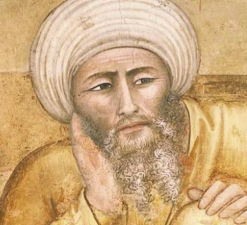
The Law teaches that the universe was invented and created by God, and that it did not come into being by chance or by itself.
▼
Source
Part 1: The Creation of the Universe; Opening sentence
5 months 1 week ago
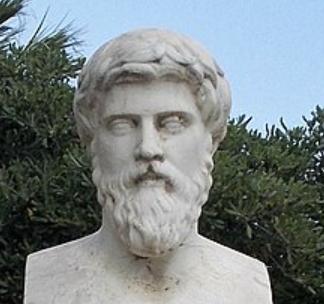
Authority and place demonstrate and try the tempers of men, by moving every passion and discovering every frailty.
▼
Source
Comparison of Demosthenes and Cicero 3 (Tr. Dryden and Clough)

5 months 1 week ago
Darwinist thinkers such as Richard Dawkins and Daniel Dennett are militant opponents of Christianity. Yet their atheism and humanism are versions of Christian concepts. As a defender of Darwinism, Dawkins is committed to the view that humans are like other animal species in being ‘gene machines’ ruled by the laws of natural selection. He asserts nevertheless that humans, uniquely, can defy these natural laws: ‘We, alone on earth, can rebel against the tyranny of the selfish replicators.’ In affirming human uniqueness in this way, Dawkins relies on a Christian world-view.
▼
Source
Post-Apocalypse: After Secularism (pp. 265-6)
5 months 1 week ago
It is the mark of an educated man to look for precision in each class of things just so far as the nature of the subject admits; it is evidently equally foolish to accept probable reasoning from a mathematician and to demand from a rhetorician scientific proofs.
▼
Source
Book I, 1094b.24

5 months 1 week ago
There is an almost universal tendency, perhaps an inborn tendency, to suspect the good faith of a man who holds opinions that differ from our own opinions. ... It obviously endangers the freedom and the objectivity of our discussion if we attack a person instead of attacking an opinion or, more precisely, a theory.
▼
Source
"The Importance of Critical Discussion" in On the Barricades: Religion and Free Inquiry in Conflict (1989) by Robert Basil

5 months 1 week ago
Every one who has a heart and eyes sees that you, working men, are obliged to pass your lives in want and in hard labor, which is useless to you, while other men, who do not work, enjoy the fruits of your labor—that you are the slaves of these men, and that this ought not to exist.
▼
Source
"To the Working People," Complete Works, trans. Leo Wiener, Vol 24, p. 129 (1905)

5 months 1 week ago
Once we realize that the principles of our actions have no other support than our blind choice, we really do not believe in them anymore... In order to live, we have to silence the easily silenced voice of reason, which tells us that our principles are in themselves as good or as bad an any other principles. The more we cultivate reason, the more we cultivate nihilism...
▼
Source
p. 6
5 months 1 week ago
It should be remembered that the ancestors of many of today's most ardent liberals could not have imagined life without slavery, life without lynching, life without segregation.
▼
Source
Chapter Two
5 months 1 week ago
In the sphere of thought, absurdity and perversity remain the masters of the world, and their dominion is suspended only for brief periods.
▼
Source
"The Art of Controversy" as translated by T. Bailey Saunders
5 months 1 week ago
The worst is not ennui nor despair but their encounter, their collision. To be crushed between the two!
5 months 1 week ago
the competition of the poor takes away from the reward of the rich.
▼
Source
Chapter X, Part II, p. 154.
5 months 1 week ago
When Eudæmonidas heard a philosopher arguing that only a wise man can be a good general, "This is a wonderful speech," said he; "but he that saith it never heard the sound of trumpets."
▼
Source
62 Eudæmonidas
5 months 1 week ago
Though it is often assumed that naturalism must be hostile to religion, the opposite is true. Enemies of religion think of it as an intellectual error, which humanity will eventually grow out of. It is hard to square this view with Darwinian science – why should religion be practically universal, if it has no evolutionary value?
▼
Source
Sweet Morality (p. 224)
5 months 1 week ago
A tragedy, then, is the imitation of an action that is serious and also, as having magnitude, complete in itself; in language ... not in a narrative form; with incidents arousing pity and fear, wherewith to accomplish its catharsis of such emotions.
▼
Source
1449b.24
5 months 1 week ago
... the fight against suffering must be considered a duty, while the right to care for the happiness of others must be considered a privilege confined to the close circle of their friends. ... Pain, suffering, injustice, and their prevention, these are the eternal problems of public morals, the 'agenda' of public policy ...
▼
Source
Vol. 2, Ch. 24 "Oracular Philosophy and the Revolt against Reason"
5 months 1 week ago
A Frenchman is self-assured because he regards himself personally, both in mind and body, as irresistibly attractive to men and women. An Englishman is self-assured, as being a citizen of the best-organized state in the world, and therefore as an Englishman always knows what he should do and knows that all he does as an Englishman is undoubtedly correct. An Italian is self-assured because he is excitable and easily forgets himself and other people. A Russian is self-assured just because he knows nothing and does not want to know anything, since he does not believe that anything can be known. The German's self-assurance is worst of all, stronger and more repulsive than any other, because he imagines that he knows the truth — science — which he himself has invented but which is for him the absolute truth.
▼
Source
Bk. IX, ch. 10
5 months 1 week ago
“Culture” means … the cultivation of the mind, the taking care and improving of the native faculties of the mind in accordance with the nature of the mind. Just as the soil needs cultivators of the soil, the mind needs teachers. But teachers are not as easy to come by as farmers. The teachers themselves are pupils and must be pupils. But there cannot be an infinite regress: ultimately there must be teachers who are not in turn pupils. Those teachers who are not in turn pupils are the great minds.
▼
Source
“What is liberal education,” p. 3

5 months 1 week ago
No man can have society upon his own terms. If he seeks it, he must serve it too.
▼
Source
1833
5 months 1 week ago
In the aftermath of the war, we find one of the most hidden eras of US history; and that is the period of radical reconstruction. It certainly remains the most radical era in the entire history of the United States of America. And this is an era that is rarely acknowledged in historical texts. ... There were progressive laws passed challenging male supremacy. This is an era that is rarely acknowledged. During that era of course we had the creation of what we now call historically black colleges and universities and there was economic development. This period didn’t last very long. From the aftermath of the abolition of slavery, we might take 1865 as that day until 1877 when a radical reconstruction was overturned—and not only was it overturned but it was erased from the historical record—and so in the 1960s we confronted issues that should have been resolved in the 1860s. One hundred years later.
5 months 1 week ago
There is always someone above you: beyond God Himself rises Nothingness.
5 months 1 week ago
The importation of gold and silver is not the principal, much less the sole benefit which a nation derives from its foreign trade.
▼
Source
Chapter I, p. 479.
5 months 1 week ago
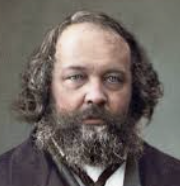
I eagerly await tomorrow's mail to have news of Russia and Poland. For now, I have to content myself with a few vague rumors which float around. I have heard about new, bloody skirmishes in Poland between the people and troops; I was told that, even in Russia, there was a conspiracy against the czar and the whole royal family. I am equally passionate about the struggle between the North and the Southern American states. Of course, my heart goes out to the North. But alas! It is the South who acted with the most force, wisdom, and solidarity, which makes them worthy of the triumph they have received in every encounter so far. It is true that the South has been preparing for war for three years now, while the North has been forced to improvise. The surprising success of the ventures of the American people, for the most part happy; the banality of the material well being, where the heart is absent; and the national vanity, altogether infantile and sustained with very little cost; all seem to have helped deprave these people, and perhaps this stubborn struggle will be beneficial to them in so much as it helps the nation regain its lost soul. This is my first impression; but it could very well be that I will change my mind upon seeing things up close. The only thing is, I will not have enough time to examine really closely.
▼
Source
[http://dwardmac.pitzer.edu/anarchist_archives/bakunin/letters/toherzenandogareff.html Letter] to Aleksandr Ivanovich Herzen and Ogareff from San Francisco (3 October 1861); published in Correspondance de Michel Bakounine (1896) edited by Michel Dragmanov
5 months 1 week ago
Excellence is an art won by training and habituation: we do not act rightly because we have virtue or excellence, but we rather have these because we have acted rightly; 'these virtues are formed in man by his doing the actions'; we are what we repeatedly do. Excellence, then, is not an act but a habit: 'the good of man is a working of the soul in the way of excellence in a complete life... for as it is not one swallow or one fine day that makes a spring, so it is not one day or a short time that makes a man blessed and happy'.
▼
Source
p. 87; the quoted phrases within the quotation are from the Nicomachean Ethics, Book II, 4; Book I, 7
5 months 1 week ago
In the writings of such "pagan" philosophers as Plutarch and Porphyry we find a humanitarian ethic of the most exalted kind, which, after undergoing a long repression during medieval churchdom, reappeared, albeit but weakly and fitfully at first, in the literature of the Renaissance, to be traced more definitely in the eighteenth century school of "sensibility."
▼
Source
Henry Stephens Salt, The Humanities of Diet (Manchester: The Vegetarian Society, 1914)
5 months 1 week ago
Today those who peer into the future want only relief from anxiety. Unable to face the prospect that the cycles of war will continue, they are desperate to find a pattern of improvement in history. It is only natural that believers in reason, lacking any deeper faith and too feeble to tolerate doubt, should turn to the sorcery of numbers. Happily there are some who are ready to assist them. Just as the Elizabethan magus transcribed tables shown to him by angels, the modern scientific scryer deciphers numerical auguries of angels hidden in ourselves.
▼
Source
In the Puppet Theatre: Dark mirrors, Hidden Angels and an Algorithmic Prayer-Wheel (p. 99)
5 months 1 week ago
The old Greek philosophy, which in Europe in the later middle ages was synonymous with the works of Aristotle, considered motion as a thing for which a cause must be found: a velocity required a force to produce and to maintain it. The great discovery of Galileo was that not velocity, but acceleration requires a force. This is the law of inertia of which the real content is: the natural phenomena are described by differential equations of the second order.
▼
Source
Willem de Sitter, The Astronomical Aspect of the Theory of Relativity (1933)
5 months 1 week ago
I am a rationalist. ...I mean ...[I] wish... to understand the world, and to learn by arguing with others. (...I do not say a rationalist holds the mistaken theory that men are... rational.)
5 months 1 week ago
Then I remembered the first lesson God had set me: "Learn what dwells in man." And I understood that in man dwells Love! I was glad that God had already begun to show me what He had promised, and I smiled for the first time.
▼
Source
Ch. XI
5 months 1 week ago
But is the latter possibility to be dismissed out of hand? An interesting alternative is available to those readers who agree with Waterfield that the Republic has little to offer as a work of political philosophy, but who at the same time find the ethical reading – especially in Waterfield’s extreme formulation – ultimately unconvincing. The thesis is most closely associated with the twentieth-century American philosopher Leo Strauss, though it has been pursued by a number of others, most prominently Allan Bloom. In essence, it agrees that the Republic is a dialogue in which an authoritarian system of government is outlined, but contends that [Plato]’s purpose in doing so is ironic: the aim is to highlight the preposterousness of the just city.
▼
Source
D. J. Sheppard, Plato's Republic: An Edinburgh Philosophical Guide (2009)
5 months 1 week ago
Our age is retrospective. It builds the sepulchres of the fathers. It writes biographies, histories, and criticism. The foregoing generation beheld God and nature face to face; we, through their eyes. Why should not we also enjoy an original relation to the universe. Why should not we have a poetry and philosophy of insight and not of tradition, and a religion by revelation to us, and not the history of theirs?
▼
Source
Introduction
5 months 1 week ago
Part of the problem with policing, prisons, and surveillance is that it's a one-size-fits-all model. Angela Davis says this perfectly-there is no one alternative. There are a million alternatives. And the issue is to figure out which alternative works for what situation. I don't like to use the word alternative, but I will in this case. It's like what works for this particular situation that we're in? What works for these people? How are we going to actually address this based on human needs? These are the things that we're interested in as PIC abolitionists. I think that makes us actually again incredibly creative. Always generative. And also not afraid, again, of failure.
▼
Source
Mariame Kaba, We Do This Til We Free Us (2021)
5 months 1 week ago
The source of an emotion is very difficult to grasp, but it comes to just that. That holds for all phenomena, for faith, etc. Why did it begin, how did it develop? and so forth—only he who has the gift of divination can perceive where it really comes from. But it is not accessible to reflection.
5 months 1 week ago
Sovereign is he who decides on the exception.
▼
Source
p.5
5 months 1 week ago
Wherever there is great property, there is great inequality.
▼
Source
Chapter I, Part II, p. 770.
5 months 1 week ago
We are firmly convinced that the most imperfect republic is a thousand times better than the most enlightened monarchy. In a republic, there are at least brief periods when the people, while continually exploited, is not oppressed; in the monarchies, oppression is constant. The democratic regime also lifts the masses up gradually to participation in public life--something the monarchy never does. Nevertheless, while we prefer the republic, we must recognise and proclaim that whatever the form of government may be, so long as human society continues to be divided into different classes as a result of the hereditary inequality of occupations, of wealth, of education, and of rights, there will always be a class-restricted government and the inevitable exploitation of the majorities by the minorities. The State is nothing but this domination and this exploitation, well regulated and systematised.
CivilSimian.com created by AxiomaticPanic, CivilSimian, Kalokagathia