
5 months 1 week ago
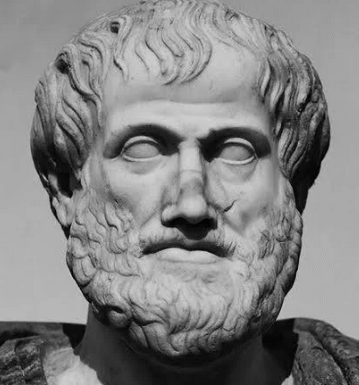
A tragedy, then, is the imitation of an action that is serious and also, as having magnitude, complete in itself; in language ... not in a narrative form; with incidents arousing pity and fear, wherewith to accomplish its catharsis of such emotions.
▼
Source
1449b.24

5 months 1 week ago
... the fight against suffering must be considered a duty, while the right to care for the happiness of others must be considered a privilege confined to the close circle of their friends. ... Pain, suffering, injustice, and their prevention, these are the eternal problems of public morals, the 'agenda' of public policy ...
▼
Source
Vol. 2, Ch. 24 "Oracular Philosophy and the Revolt against Reason"

5 months 1 week ago
A Frenchman is self-assured because he regards himself personally, both in mind and body, as irresistibly attractive to men and women. An Englishman is self-assured, as being a citizen of the best-organized state in the world, and therefore as an Englishman always knows what he should do and knows that all he does as an Englishman is undoubtedly correct. An Italian is self-assured because he is excitable and easily forgets himself and other people. A Russian is self-assured just because he knows nothing and does not want to know anything, since he does not believe that anything can be known. The German's self-assurance is worst of all, stronger and more repulsive than any other, because he imagines that he knows the truth — science — which he himself has invented but which is for him the absolute truth.
▼
Source
Bk. IX, ch. 10

5 months 1 week ago
“Culture” means … the cultivation of the mind, the taking care and improving of the native faculties of the mind in accordance with the nature of the mind. Just as the soil needs cultivators of the soil, the mind needs teachers. But teachers are not as easy to come by as farmers. The teachers themselves are pupils and must be pupils. But there cannot be an infinite regress: ultimately there must be teachers who are not in turn pupils. Those teachers who are not in turn pupils are the great minds.
▼
Source
“What is liberal education,” p. 3

5 months 1 week ago
No man can have society upon his own terms. If he seeks it, he must serve it too.
▼
Source
1833

5 months 1 week ago
In the aftermath of the war, we find one of the most hidden eras of US history; and that is the period of radical reconstruction. It certainly remains the most radical era in the entire history of the United States of America. And this is an era that is rarely acknowledged in historical texts. ... There were progressive laws passed challenging male supremacy. This is an era that is rarely acknowledged. During that era of course we had the creation of what we now call historically black colleges and universities and there was economic development. This period didn’t last very long. From the aftermath of the abolition of slavery, we might take 1865 as that day until 1877 when a radical reconstruction was overturned—and not only was it overturned but it was erased from the historical record—and so in the 1960s we confronted issues that should have been resolved in the 1860s. One hundred years later.

5 months 1 week ago
There is always someone above you: beyond God Himself rises Nothingness.
5 months 1 week ago
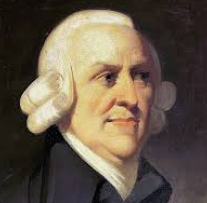
The importation of gold and silver is not the principal, much less the sole benefit which a nation derives from its foreign trade.
▼
Source
Chapter I, p. 479.
5 months 1 week ago
I eagerly await tomorrow's mail to have news of Russia and Poland. For now, I have to content myself with a few vague rumors which float around. I have heard about new, bloody skirmishes in Poland between the people and troops; I was told that, even in Russia, there was a conspiracy against the czar and the whole royal family. I am equally passionate about the struggle between the North and the Southern American states. Of course, my heart goes out to the North. But alas! It is the South who acted with the most force, wisdom, and solidarity, which makes them worthy of the triumph they have received in every encounter so far. It is true that the South has been preparing for war for three years now, while the North has been forced to improvise. The surprising success of the ventures of the American people, for the most part happy; the banality of the material well being, where the heart is absent; and the national vanity, altogether infantile and sustained with very little cost; all seem to have helped deprave these people, and perhaps this stubborn struggle will be beneficial to them in so much as it helps the nation regain its lost soul. This is my first impression; but it could very well be that I will change my mind upon seeing things up close. The only thing is, I will not have enough time to examine really closely.
▼
Source
[http://dwardmac.pitzer.edu/anarchist_archives/bakunin/letters/toherzenandogareff.html Letter] to Aleksandr Ivanovich Herzen and Ogareff from San Francisco (3 October 1861); published in Correspondance de Michel Bakounine (1896) edited by Michel Dragmanov
5 months 1 week ago
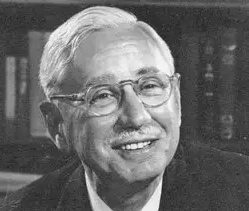
Excellence is an art won by training and habituation: we do not act rightly because we have virtue or excellence, but we rather have these because we have acted rightly; 'these virtues are formed in man by his doing the actions'; we are what we repeatedly do. Excellence, then, is not an act but a habit: 'the good of man is a working of the soul in the way of excellence in a complete life... for as it is not one swallow or one fine day that makes a spring, so it is not one day or a short time that makes a man blessed and happy'.
▼
Source
p. 87; the quoted phrases within the quotation are from the Nicomachean Ethics, Book II, 4; Book I, 7
5 months 1 week ago
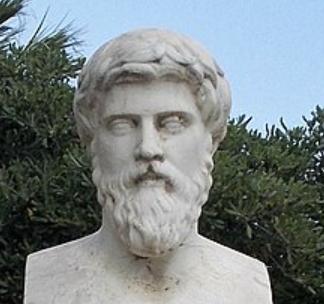
In the writings of such "pagan" philosophers as Plutarch and Porphyry we find a humanitarian ethic of the most exalted kind, which, after undergoing a long repression during medieval churchdom, reappeared, albeit but weakly and fitfully at first, in the literature of the Renaissance, to be traced more definitely in the eighteenth century school of "sensibility."
▼
Source
Henry Stephens Salt, The Humanities of Diet (Manchester: The Vegetarian Society, 1914)

5 months 1 week ago
Today those who peer into the future want only relief from anxiety. Unable to face the prospect that the cycles of war will continue, they are desperate to find a pattern of improvement in history. It is only natural that believers in reason, lacking any deeper faith and too feeble to tolerate doubt, should turn to the sorcery of numbers. Happily there are some who are ready to assist them. Just as the Elizabethan magus transcribed tables shown to him by angels, the modern scientific scryer deciphers numerical auguries of angels hidden in ourselves.
▼
Source
In the Puppet Theatre: Dark mirrors, Hidden Angels and an Algorithmic Prayer-Wheel (p. 99)
5 months 1 week ago
The old Greek philosophy, which in Europe in the later middle ages was synonymous with the works of Aristotle, considered motion as a thing for which a cause must be found: a velocity required a force to produce and to maintain it. The great discovery of Galileo was that not velocity, but acceleration requires a force. This is the law of inertia of which the real content is: the natural phenomena are described by differential equations of the second order.
▼
Source
Willem de Sitter, The Astronomical Aspect of the Theory of Relativity (1933)
5 months 1 week ago
I am a rationalist. ...I mean ...[I] wish... to understand the world, and to learn by arguing with others. (...I do not say a rationalist holds the mistaken theory that men are... rational.)
5 months 1 week ago
Then I remembered the first lesson God had set me: "Learn what dwells in man." And I understood that in man dwells Love! I was glad that God had already begun to show me what He had promised, and I smiled for the first time.
▼
Source
Ch. XI
5 months 1 week ago
But is the latter possibility to be dismissed out of hand? An interesting alternative is available to those readers who agree with Waterfield that the Republic has little to offer as a work of political philosophy, but who at the same time find the ethical reading – especially in Waterfield’s extreme formulation – ultimately unconvincing. The thesis is most closely associated with the twentieth-century American philosopher Leo Strauss, though it has been pursued by a number of others, most prominently Allan Bloom. In essence, it agrees that the Republic is a dialogue in which an authoritarian system of government is outlined, but contends that [Plato]’s purpose in doing so is ironic: the aim is to highlight the preposterousness of the just city.
▼
Source
D. J. Sheppard, Plato's Republic: An Edinburgh Philosophical Guide (2009)
5 months 1 week ago
Our age is retrospective. It builds the sepulchres of the fathers. It writes biographies, histories, and criticism. The foregoing generation beheld God and nature face to face; we, through their eyes. Why should not we also enjoy an original relation to the universe. Why should not we have a poetry and philosophy of insight and not of tradition, and a religion by revelation to us, and not the history of theirs?
▼
Source
Introduction
5 months 1 week ago
Part of the problem with policing, prisons, and surveillance is that it's a one-size-fits-all model. Angela Davis says this perfectly-there is no one alternative. There are a million alternatives. And the issue is to figure out which alternative works for what situation. I don't like to use the word alternative, but I will in this case. It's like what works for this particular situation that we're in? What works for these people? How are we going to actually address this based on human needs? These are the things that we're interested in as PIC abolitionists. I think that makes us actually again incredibly creative. Always generative. And also not afraid, again, of failure.
▼
Source
Mariame Kaba, We Do This Til We Free Us (2021)
5 months 1 week ago
The source of an emotion is very difficult to grasp, but it comes to just that. That holds for all phenomena, for faith, etc. Why did it begin, how did it develop? and so forth—only he who has the gift of divination can perceive where it really comes from. But it is not accessible to reflection.
5 months 1 week ago
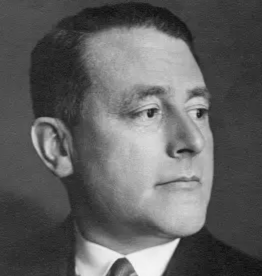
Sovereign is he who decides on the exception.
▼
Source
p.5
5 months 1 week ago
Wherever there is great property, there is great inequality.
▼
Source
Chapter I, Part II, p. 770.
5 months 1 week ago
We are firmly convinced that the most imperfect republic is a thousand times better than the most enlightened monarchy. In a republic, there are at least brief periods when the people, while continually exploited, is not oppressed; in the monarchies, oppression is constant. The democratic regime also lifts the masses up gradually to participation in public life--something the monarchy never does. Nevertheless, while we prefer the republic, we must recognise and proclaim that whatever the form of government may be, so long as human society continues to be divided into different classes as a result of the hereditary inequality of occupations, of wealth, of education, and of rights, there will always be a class-restricted government and the inevitable exploitation of the majorities by the minorities. The State is nothing but this domination and this exploitation, well regulated and systematised.
5 months 1 week ago
Happiness is the free play of the instincts, and so is youth.
▼
Source
Ch. 2 : On Youth

5 months 1 week ago
Truth is the ultimate end of the whole universe.
▼
Source
I, 1, 2
5 months 1 week ago
Popper was kind of an egocentric jerk.
▼
Source
Tim Maudlin, quoted in John Horgan, "[https://blogs.scientificamerican.com/cross-check/philosophy-has-made-plenty-of-progress/ Philosophy Has Made Plenty of Progress]" (2018)
5 months 1 week ago
I had wished to visit a slaughter-house, in order to see with my own eyes the reality of the question raised when vegetarianism is discussed. But at first I felt ashamed to do so, as one is always ashamed of going to look at suffering which one knows is about to take place, but which one cannot avert; and so I kept putting off my visit. But a little while ago I met on the road a butcher ... He is not yet an experienced butcher, and his duty is to stab with a knife. I asked him whether he did not feel sorry for the animals that he killed. He gave me the usual answer: 'Why should I feel sorry? It is necessary.' But when I told him that eating flesh is not necessary, but is only a luxury, he agreed; and then he admitted that he was sorry for the animals.
▼
Source
Ch. IX

5 months 1 week ago
A man's natural rights are his own, against the whole world; and any infringement of them is equally a crime, whether committed by one man, or by millions; whether committed by one man, calling himself a robber, (or by any other name indicating his true character,) or by millions, calling themselves a government.
▼
Source
p. 7
5 months 1 week ago
None believeth in the soul of man, but only in some man or person old and departed.
▼
Source
p. 25

5 months 1 week ago
You request my presence at the Olympic Games, and for that reason you have sent envoys. For myself, I would come for the spectacle of physical struggle, except that I would be abandoning the greater struggle for virtue.
▼
Source
Epp. Apoll. 24
5 months 1 week ago
Value has its own logic. In the constitutional state that is most clearly recognizable in the enactment of its constitution.
5 months 1 week ago
When national debts have once been accumulated to a certain degree, there is scarce, I believe, a single instance of their having been fairly and completely paid. The liberation of the public revenue, if it has ever been brought about at all, has always been brought about by bankruptcy; sometimes by an avowed one, but always by a real one, though frequently by a pretend payment.
▼
Source
Chapter III, Part V, p. 1012.
5 months 1 week ago
No contemporary philosopher possesses a more imaginative mind, broader interests, or greater dialectical abilities than Robert Nozick.
▼
Source
Review of Anarchy, State, and Utopia (1974), in Harper's magazine (as quoted on back of the softcover edition).
5 months 1 week ago
We know very well that we are only allowed to go on eating our dinner, to finish seeing the new play, or to enjoy to the end the ball, the Christmas fete, the promenade, the races or, the hunt, thanks to the policeman's revolver or the soldier's rifle, which will shoot down the famished outcast who has been robbed of his share, and who looks round the corner with covetous eyes at our pleasures, ready to interrupt them instantly, were not policeman and soldier there prepared to run up at our first call for help.
▼
Source
Chapter XII, Conclusion—Repent Ye, for the Kingdom of Heaven is at Hand

5 months 1 week ago
It is better and more satisfactory to acquit a thousand guilty persons than to put a single innocent one to death.
▼
Source
Sefer Hamitzvot [Book of the Commandments], commentary on Negative Commandment 290, as translated by Charles B. Chavel (1967); also in Defending the Human Spirit : Jewish Law's Vision for a Moral Society (2006) by Warren Goldstein, p. 269
5 months 1 week ago
Whoso walketh in solitude, And inhabiteth the wood, Choosing light, wave, rock, and bird, Before the money-loving herd, Into that forester shall pass From these companions power and grace.
▼
Source
Wood-notes, no. II, st. 4
5 months 1 week ago
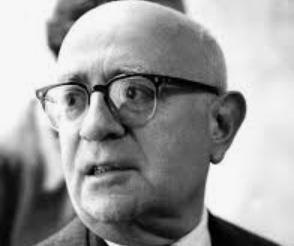
In the products of the culture industry human beings get into trouble only so that they can be rescued unharmed, usually by representatives of a benevolent collective; and then, in illusory harmony, they are reconciled with the general interest whose demands they had initially experienced as irreconcilable with their own.
▼
Source
Section 14

5 months 1 week ago
Not to know how one has become what one is, means one has a grossly inadequate idea of what one is.
▼
Source
p. 4
5 months 1 week ago
What the Wealth of Nations is all about is the difference between one kind of market system in commercial society and another. It is about the difference between, on the one hand, a market system dominated by merchants and manufacturers who are able to bend the government to their will in order to obtain legislation which makes what is in their private interest the law of the land, and, on the other, a truly open and competitive—"natural"—market system in which everyone who is industrious and/or has any capital has a fair chance. The withdrawal of the state is not, for Smith, the removal of government from its role as owner, entrepreneur, economic planner or re-distributor—roles readily conceivable to all who know of socialism but wholly inconceivable to Adam Smith—but its removal from the role of regulator of private enterprise, a role in which it had long been used to promote the interests of the merchants and the manufacturers over those of all others.
▼
Source
Heinz Lubasz, 'Adam Smith and the ‘free market’', in Stephen Copley and Kathryn Sutherland (eds.), Adam Smith's Wealth of Nations: New Interdisciplinary Essays (1995), p. 52
5 months 1 week ago
The good is the everlasting, the pinnacle of our life. ... life is striving towards the good, toward God. The good is the most basic idea ... an idea not definable by reason ... yet is the postulate from which all else follows. But the beautiful ... is just that which is pleasing. The idea of beauty is not an alignment to the good, but is its opposite, because for most part, the good aids in our victory over our predilections, while beauty is the motive of our predilections. The more we succumb to beauty, the further we are displaced from the good. ...the usual response is that there exists a moral and spiritual beauty ... we mean simply the good. Spiritual beauty or the good, generally not only does not coincide with the typical meaning of beauty, it is its opposite.
5 months 1 week ago
There are seven causes of inconsistencies and contradictions to be met with in a literary work. The first cause arises from the fact that the author collects the opinions of various men, each differing from the other, but neglects to mention the name of the author of any particular opinion. In such a work contradictions or inconsistencies must occur, since any two statements may belong to two different authors. Second cause: The author holds at first one opinion which he subsequently rejects: in his work, however, both his original and altered views are retained. Third cause: The passages in question are not all to be taken literally: some only are to be understood in their literal sense, while in others figurative language is employed, which includes another meaning besides the literal one: or, in the apparently inconsistent passages, figurative language is employed which, if taken literally, would seem to be contradictories or contraries. Fourth cause: The premises are not identical in both statements, but for certain reasons they are not fully stated in these passages: or two propositions with different subjects which are expressed by the same term without having the difference in meaning pointed out, occur in two passages. The contradiction is therefore only apparent, but there is no contradiction in reality. The fifth cause is traceable to the use of a certain method adopted in teaching and expounding profound problems. Namely, a difficult and obscure theorem must sometimes be mentioned and assumed as known, for the illustration of some elementary and intelligible subject which must be taught beforehand the commencement being always made with the easier thing. The teacher must therefore facilitate, in any manner which he can devise, the explanation of those theorems, which have to be assumed as known, and he must content himself with giving a general though somewhat inaccurate notion on the subject. It is, for the present, explained according to the capacity of the students, that they may comprehend it as far as they are required to understand the subject. Later on, the same subject is thoroughly treated and fully developed in its right place. Sixth cause: The contradiction is not apparent, and only becomes evident through a series of premises. The larger the number of premises necessary to prove the contradiction between the two conclusions, the greater is the chance that it will escape detection, and that the author will not perceive his own inconsistency. Only when from each conclusion, by means of suitable premises, an inference is made, and from the enunciation thus inferred, by means of proper arguments, other conclusions are formed, and after that process has been repeated many times, then it becomes clear that the original conclusions are contradictories or contraries. Even able writers are liable to overlook such inconsistencies. If, however, the contradiction between the original statements can at once be discovered, and the author, while writing the second, does not think of the first, he evinces a greater deficiency, and his words deserve no notice whatever. Seventh cause: It is sometimes necessary to introduce such metaphysical matter as may partly be disclosed, but must partly be concealed: while, therefore, on one occasion the object which the author has in view may demand that the metaphysical problem be treated as solved in one way, it may be convenient on another occasion to treat it as solved in the opposite way. The author must endeavour, by concealing the fact as much as possible, to prevent the uneducated reader from perceiving the contradiction.
5 months 1 week ago
In actions of enthusiasm, this drawback appears: but in those lower activities, which have no higher aim than to make us more comfortable and more cowardly, in actions of cunning, actions that steal and lie, actions that divorce the speculative from the practical faculty, and put a ban on reason and sentiment, there is nothing else but drawback and negation.
▼
Source
Goethe; or, The Writer
5 months 1 week ago
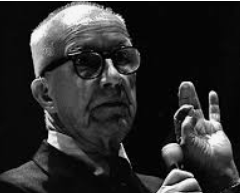
While all the foregoing seems far too formidable to be coped with by an individual or cooperative groups of individuals, operating entirely outside the great national sovereignty establishments I was able, in 1927, to realize that these great capabilities could be mounted to all humanity’s advantage if adequate economic support were mustered. What struck me profoundly at that time was that man’s greatest productive and scientifically informed capability was being focused only on war simply because all the governments in the world were convinced that Earth could not sustain the lives of the many humans that were born on the planet and, in fact, could sustain but a minority. The great sovereign powers’ world struggle game was that of “musical chairs” to decide, by warfaring at its ever most modernly lethal, who would be the fortunate ones to survive.
5 months 1 week ago
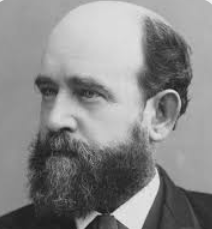
It is as to whether its services or uses are to be exchanged or not which makes a tool an article of capital or merely an article of wealth. Thus, the lathe of a manufacturer used in making things which are to be exchanged is capital, while the lathe kept by a gentleman for his own amusement is not.
▼
Source
Book I, Ch. 3
5 months 1 week ago
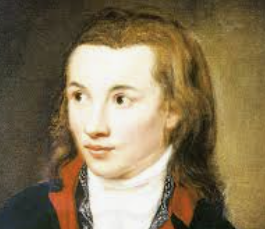
Poetry heals the wounds inflicted by reason.
▼
Source
As quoted in Quote, Unquote (1989) by Jonathan Williams, p. 136
5 months 1 week ago
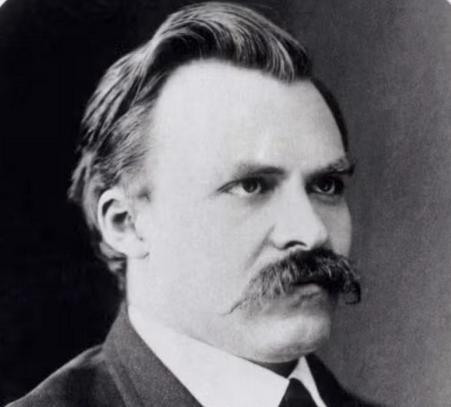
Against that positivism which stops before phenomena, saying "there are only facts," I should say: no, it is precisely facts that do not exist, only interpretations.
▼
Source
Notebooks (Late 1886 – Spring 1887) [http://www.nietzschesource.org/eKGWB/NF-1886,7[60]] | Popular usage: "There are no facts, only interpretations."
5 months 1 week ago
These new justifications are termed "scientific". But by the term "scientific" is understood just what was formerly understood by the term "religious": just as formerly everything called "religious" was held to be unquestionable simply because it was called religious, so now all that is called "scientific" is held to be unquestionable. In the present case the obsolete religious justification of violence which consisted in the recognition of the supernatural personality of the God-ordained ruler ("there is no power but of God") has been superseded by the "scientific" justification which puts forward, first, the assertion that because the coercion of man by man has existed in all ages, it follows that such coercion must continue to exist. This assertion that people should continue to live as they have done throughout past ages rather than as their reason and conscience indicate, is what "science" calls "the historic law". A further "scientific" justification lies in the statement that as among plants and wild beasts there is a constant struggle for existence which always results in the survival of the fittest, a similar struggle should be carried on among humanbeings, that is, who are gifted with intelligence and love; faculties lacking in the creatures subject to the struggle for existence and survival of the fittest. Such is the second "scientific" justification. The third, most important, and unfortunately most widespread justification is, at bottom, the age-old religious one just a little altered: that in public life the suppression of some for the protection of the majority cannot be avoided — so that coercion is unavoidable however desirable reliance on love alone might be in human intercourse. The only difference in this justification by pseudo-science consists in the fact that, to the question why such and such people and not others have the right to decide against whom violence may and must be used, pseudo-science now gives a different reply to that given by religion — which declared that the right to decide was valid because it was pronounced by persons possessed of divine power. "Science" says that these decisions represent the will of the people, which under a constitutional form of government is supposed to find expression in all the decisions and actions of those who are at the helm at the moment. Such are the scientific justifications of the principle of coercion. They are not merely weak but absolutely invalid, yet they are so much needed by those who occupy privileged positions that they believe in them as blindly as they formerly believed in the immaculate conception, and propagate them just as confidently. And the unfortunate majority of men bound to toil is so dazzled by the pomp with which these "scientific truths" are presented, that under this new influence it accepts these scientific stupidities for holy truth, just as it formerly accepted the pseudo-religious justifications; and it continues to submit to the present holders of power who are just as hard-hearted but rather more numerous than before.
▼
Source
IV
5 months 1 week ago
Even the existence of this corporeal element, low as it in reality is, because it is the source of death and all evils, is likewise good for the permanence of the Universe and the continuation of the order of things, so that one thing departs and the other succeeds.
▼
Source
Ch.10
5 months 1 week ago
The louder he talked of his honor, the faster we counted our spoons.
▼
Source
Worship
5 months 1 week ago
The physical is inherently entropic, giving off energy in ever more disorderly ways. The metaphysical is antientropic, methodically marshalling energy. Life is antientropic. It is spontaneously inquisitive. It sorts out and endeavors to understand.
5 months 1 week ago
Men must have rights before they can have equal rights. Each man has a right to use the world because he is here and wants to use the world. The equality of this right is merely a limitation arising from the presence of others with like rights. Society, in other words, does not grant, and cannot equitably withhold from any individual, the right to the use of land. That right exists before society and independently of society, belonging at birth to each individual, and ceasing only with his death. Society itself has no original right to the use of land. What right it has with regard to the use of land is simply that which is derived from and is necessary to the determination of the rights of the individuals who compose it. That is to say, the function of society with regard to the use of land only begins where individual rights clash, and is to secure equality between these clashing rights of individuals.
▼
Source
Part I : Declaration, Ch. IV : Mr. Spencer's Confusion as to Rights
CivilSimian.com created by AxiomaticPanic, CivilSimian, Kalokagathia