
4 months ago
The illusion of Sin and Guilt, the madness of our species, is the act of cursing the world under the misapprehension that one is cursing only one part of it. To curse the fig tree, as in the funniest and most misunderstood parable of Jesus, is to curse the soil in which it grew, the seed, the rains, the sun; the whole world, eventually — because no part is truly separate from the whole. The fallacy is that one can judge the part in isolation from the whole is "the Lie that all men believe."
▼
Source
The Historical Illuminatus as spoken by Sigismundo Celine

4 months ago
In recent years, many men of science have come to realize that the scientific picture of the world is a partial one — the product of their special competence in mathematics and their special incompetence to deal systematically with aesthetic and moral values, religious experiences and intuitions of significance. Unhappily, novel ideas become acceptable to the less intelligent members of society only with a very considerable time-lag. Sixty or seventy years ago the majority of scientists believed — and the belief caused them considerable distress — that the product of their special incompetence was identical with reality as a whole. Today this belief has begun to give way, in scientific circles, to a different and obviously truer conception of the relation between science and total experience. The masses on the contrary, have just reached the point where the ancestors of today's scientists were standing two generations back. They are convinced that the scientific picture of an arbitrary abstraction from reality is a picture of reality as a whole and that therefore, the world is without meaning or value. But nobody likes living in such a world. To satisfy their hunger for meaning and value, they turn to such doctrines as nationalism, fascism and revolutionary communism. Philosophically and scientifically, these doctrines are absurd; but for the masses in every community, they have this great merit: they attribute the meaning and value that have been taken away from the world as a whole to the particular part of the world in which the believers happen to be living.
▼
Source
Ch. 14, p. 311 [2012 reprint]
4 months ago
The human race, to which so many of my readers belong, has been playing at children's games from the beginning, and will probably do it till the end, which is a nuisance for the few people who grow up. And one of the games to which it is most attached is called “Keep to-morrow dark,” and which is also named (by the rustics in Shropshire, I have no doubt) “Cheat the Prophet.” The players listen very carefully and respectfully to all that the clever men have to say about what is to happen in the next generation. The players then wait until all the clever men are dead, and bury them nicely. They then go and do something else. That is all. For a race of simple tastes, however, it is great fun. For human beings, being children, have the childish wilfulness and the childish secrecy. And they never have from the beginning of the world done what the wise men have seen to be inevitable.
▼
Source
Opening lines

4 months ago
To be is to do.
▼
Source
This is usually cited as an ancient maxim, sometimes attributed to Socrates
4 months ago
Who then to frail mortality shall trust But limns the water, or but writes in dust.

4 months ago
From fanaticism to barbarism is only one step.
▼
Source
Essai sur le Mérite de la Vertu (1745); a translation and adaptation of Inquiry concerning Virtue or Merit (1699) by Anthony Ashley-Cooper, 3rd Earl of Shaftesbury

4 months ago
Nixon is no longer president, and his crimes were so grave that no one is likely now to worry very much any more about the details of his own legal philosophy. Nevertheless in what follows I shall use the name 'Nixon' to refer, not to Nixon, but to any politician holding the set of attitudes about the Supreme Court that he made explicit in his political campaigns. There was, fortunately, only one real Nixon, but there are, in the special sense in which I use the name, many Nixons.
▼
Source
Taking Rights Seriously (1978), p. 164
4 months ago
The really important facts were that spatial relationships had ceased to matter very much and that my mind was perceiving the world in terms of other than spatial categories. At ordinary times the eye concerns itself with such problems as where? — how far? — how situated in relation to what? In the mescaline experience the implied questions to which the eye responds are of another order. Place and distance cease to be of much interest. The mind does its perceiving in terms of intensity of existence, profundity of significance, relationships within a pattern."
4 months ago
It is incomprehensible to me that any thinker can calmly call himself a modernist; he might as well call himself a Thursdayite. ... The real objection to modernism is simply that it is a form of snobbishness. It is an attempt to crush a rational opponent not by reason, but by some mystery of superiority, by hinting that one is specially up to date or particularly "in the know." To flaunt the fact that we have had all the last books from Germany is simply vulgar; like flaunting the fact that we have had all the last bonnets from Paris. To introduce into philosophical discussions a sneer at a creed's antiquity is like introducing a sneer at a lady's age. It is caddish because it is irrelevant. The pure modernist is merely a snob; he cannot bear to be a month behind the fashion.
▼
Source
"The Case for the Ephemeral"
4 months ago
We are constantly railing against the passions; we ascribe to them all of man’s afflictions, and we forget that they are also the source of all his pleasures … But what provokes me is that only their adverse side is considered … and yet only passions, and great passions, can raise the soul to great things. Without them there is no sublimity, either in morals or in creativity. Art returns to infancy, and virtue becomes small-minded.
▼
Source
As translated in Diderot (1977) by Otis Fellows, p. 39 | Variant translations: | One declaims endlessly against the passions; one imputes all of man's suffering to them. One forgets that they are also the source of all his pleasures. | Only passions, grea

4 months ago
There is object proof that homosexuality is more interesting than heterosexuality. It's that one knows a considerable number of heterosexuals who would wish to become homosexuals, whereas one knows very few homosexuals who would really like to become heterosexuals.
▼
Source
As quoted in Who's Who in Contemporary Gay & Lesbian History: From World War II to the Present Day (2001) by Robert Aldrich and Gary Wotherspoon

4 months ago
Either order in the cosmos is real, or all is chaos. If we are adrift in chaos, then the fragile egalitarian doctrines and emancipating programs of the revolutionary reformers have no significance; for in a vortex of chaos, only force and appetite signify.
4 months ago
However hard they try, men cannot create a social organism, they can only create an organization. In the process of trying to create an organism they will merely create a totalitarian despotism.
▼
Source
Chapter 3 (p. 24)
4 months ago
It is a quaint comment on the notion that the English are practical and the French merely visionary, that we were rebels in arts while they were rebels in arms.
▼
Source
Ch I: The Victorian Compromise and Its Enemies (p. 8)
4 months ago
Disturbances in society are never more fearful than when those who are stirring up the trouble can use the pretext of religion to mask their true designs.
4 months ago
The guillotine takes life almost without touching the body, just as prison deprives of liberty or a fine reduces wealth. It is intended to apply the law not so to a real body capable of feeling pain as to a juridical subject, the possessor, among other rights, of the right to exist it had to have the abstraction of the law itself.
▼
Source
pp. 13, Chapter One The Body of the Condemned
4 months ago
Fears to look bad in front of other people, to say something wrong, to be laughed at - all those fears deprive us of half of our abilities. This is one of the main school problems. That teacher understands it, who can teach students to study without fear of the teacher, without fear of classmates, and, the most important, without fear of a subject.
▼
Source
Ch.20 (In Russian, Последняя книга,1999,
4 months ago
Aldous smiled; he knew what one can see in a dirty dish when the doors of perception are cleansed.
▼
Source
Laura Huxley, Timeless Moment anthologized in Sisters of the Extreme: Women Writing on the Drug Experience
4 months ago
Prince, I can hear the trumpet of Germinal, The tumbrils toiling up the terrible way; Even to-day your royal head may fall — I think I will not hang myself to-day.
▼
Source
A Ballade of Suicide, envoi

4 months ago
No longer enslaved or made dependent by force of law, the great majority are so by force of poverty; they are still chained to a place, to an occupation, and to conformity with the will of an employer, and debarred, by the accident of birth both from the enjoyments, and from the mental and moral advantages, which others inherit without exertion and independently of desert. That this is an evil equal to almost any of those against which mankind have hitherto struggled, the poor are not wrong in believing.
▼
Source
John Stuart Mill, Chapters On Socialism, London, 1879, ‘Introductory’
4 months ago
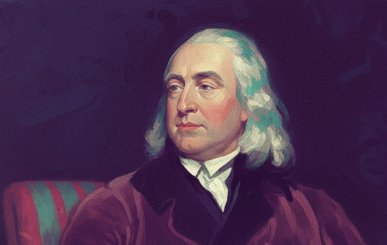
It is with government, as with medicine. They have both but a choice of evils. Every law is an evil, for every law is an infraction of liberty: And I repeat that government has but a choice of evils: In making this choice, what ought to be the object of the legislator? He ought to assure himself of two things; 1st, that in every case, the incidents which he tries to prevent are really evils; and 2ndly, that if evils, they are greater than those which he employs to prevent them. There are then two things to be regarded; the evil of the offence and the evil of the law; the evil of the malady and the evil of the remedy. An evil comes rarely alone. A lot of evil cannot well fall upon an individual without spreading itself about him, as about a common centre. In the course of its progress we see it take different shapes: we see evil of one kind issue from evil of another kind; evil proceed from good and good from evil. All these changes, it is important to know and to distinguish; in this, in fact, consists the essence of legislation.
▼
Source
Principles of Legislation (1830), Ch. X : Analysis of Political Good and Evil; How they are spread in society
4 months ago
But a punishment like forced labour or even imprisonment – mere loss of liberty – has never functioned without a certain additional element of punishment that certainly concerns the body itself: rationing of food, sexual deprivation, corporal punishment, solitary confinement ... There remains, therefore, a trace of ‘torture’ in the modern mechanisms of criminal justice – a trace that has not been entirely overcome, but which is enveloped, increasingly, by the non-corporal nature of the penal system

4 months ago
What has value in their eyes is never what is done for them; it's what they do for themselves.
▼
Source
p. 315
4 months ago
In the days of my youth the Religion of Humanity was a term commonly applied to Comtism, the theory of certain rationalists who worshipped corporate mankind as a Supreme Being. Even in the days of my youth, I remarked that there was something slightly odd about despising and dismissing the doctrine of the Trinity as a mystical and even maniacal contradiction; and then asking us to adore a deity who is a hundred million persons in one God, neither confounding the persons nor dividing the substance. p. 83
4 months ago
the ultimate end, with reference to and for the sake of which all other things are desirable...is an existence exempt as far as possible from pain, and as rich as possible in enjoyments...This, being, according to the utilitarian opinion, the end of human action, is necessarily also the standard of morality; which may accordingly be defined, the rules and precepts for human conduct, by the observance of which an existence such as has been described might be, to the greatest extent possible, secured to all mankind; and not to them only, but, so far as the nature of things admits, to the whole sentient creation.
▼
Source
Ch. 2
4 months ago
Parrhesia is... always a "game" between the one who speaks the truth and the interlocutor.
4 months ago
In itself, homosexuality is as limiting as heterosexuality: the ideal should be to be capable of loving a woman or a man; either, a human being, without feeling fear, restraint, or obligation.
▼
Source
As quoted in Bisexual Characters in Film: From Anaïs to Zee (1997) by Wayne M. Bryant, p. 143
4 months ago
He was a polemicist of rare quality, but he wrote and spoke always with such good humour that he seldom made enemies.
▼
Source
Ian McIntyre, 'The man who kept writing', The Times (29 December 1994), p. 32
4 months ago
It is also a study peculiarly adapted to an early stage in the education of philosophical students, since it does not presuppose the slow process of acquiring, by experience and reflection, valuable thoughts of their own.
▼
Source
([https://archive.org/details/autobiography01mill/page/19/mode/1up pp. 19-20])
4 months ago
This grave dissociation of past and present is the generic fact of our time and the cause of the suspicion, more or less vague, which gives rise to the confusion characteristic of our present-day existence. We feel that we actual men have suddenly been left alone on the earth; that the dead did not die in appearance only but effectively; that they can no longer help us. Any remains of the traditional spirit have evaporated. Models, norms, standards are no use to us. We have to solve our problems without any active collaboration of the past, in full actuality, be they problems of art, science, or politics. The European stands alone, without any living ghosts by his side; like Peter Schlehmil he has lost his shadow. This is what always happens when midday comes.
▼
Source
"The Dehumanisation of Art"; Ortega y Gasset later used this passage in The Revolt of the Masses (1929), quoting it in Ch. III: The Height Of The Times
4 months ago
The name ‘Foucault’ was first spoken to me in dark, conspiratorial tones, as if he were a threat to the then-alluring project of combining Althusser's ideology-centred thinking and the British culture-and-hegemony thinking. Foucault, along with Weber, Popper, Berlin, and many others (the list was a tiresomely long one) had to be rejected, or so I was told. My mind was soon changed on that score. The exciting work of Barry Hindess and Paul Hirst (see esp. Hindess and Hirst 1975, 1977), who had worked through the Althusser and British Cultural Marxist possibilities more thoroughly than anyone else I had then read (or have read since), indirectly opened up the idea that Foucault was not only not a threat to the best-alternative project I shared with hundreds of others, but was the key to that project's success.At last, here was a thinker who could treat power seriously yet undogmatically, someone who could relate power to society without making it read like the script of a prison movie. I was hooked. I tried my best to understand (or to sound like I understood) all the methodological innovations that came with the Foucault package – ‘archaeology’, ‘genealogy’, ‘discourse’, ‘episteme’, and so on. My excitement reached its peak when, using these tools, Foucault appeared to have succeeded in crafting an entirely new approach to the study of government, under a term of his own invention, ‘governmentality’. But, as so often happens in life, the peak of excitement turned out to be the moment when doubts emerged. These doubts became stronger, eventually leading me to think that Foucault's works from this period too often pronounce and too rarely argue from the historical evidence.
▼
Source
Gary Wickham, "Foucault and the Promise of Power without Dogma", in Routledge International Handbook of Contemporary Social and Political Theory (2011) edited by Gerard Delanty and Stephen P. Turner
4 months ago
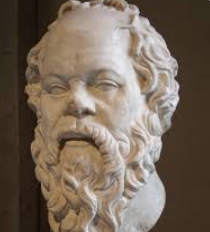
I conceive that the founders of the mysteries had a real meaning and were not mere triflers when they intimated in a figure long ago that he who passes unsanctified and uninitiated into the world below will live in a slough, but that he who arrives there after initiation and purification will dwell with the gods. For "many," as they say in the mysteries, "are the thyrsus bearers, but few are the mystics,"—meaning, as I interpret the words, the true philosophers.

4 months ago
Metaphors are the beginning of the democratic system of envy. They look for what is dissimilar and try to make it similar. Everything that is similar cuts the edge of what is unique.
4 months ago
The dissatisfaction with life and the world, felt more or less in the present state of society and intellect by every discerning and highly conscientious mind, gave in his case a rather melancholy tinge to the character, very natural to those whose passive moral susceptibilities are more than proportioned to their active energies. For it must be said, that the strength of will of which his manner seemed to give such strong assurance, expended itself principally in manner. With great zeal for human improvement, a strong sense of duty and capacities and acquirements the extent of which is proved by the writings he has left, he hardly ever completed any intellectual task of magnitude. He had so high a standard of what ought to be done, so exaggerated a sense of deficiencies in his own performances, and was so unable to content himself with the amount of elaboration sufficient for the occasion and the purpose, that he not only spoilt much of his work for ordinary use by over-labouring it, but spent so much time and exertion in superfluous study and thought, that when his task ought to have been completed, he had generally worked himself into an illness, without having half finished what he undertook. From this mental infirmity (of which he is not the sole example among the accomplished and able men whom I have known), combined with liability to frequent attacks of disabling though not dangerous ill-health, he accomplished, through life, little in comparison with what he seemed capable of...
▼
Source
([https://archive.org/details/autobiography01mill/page/74/mode/1up pp. 74-75])
4 months ago
Spontaneous social action will be broken up over and over again by State intervention; no new seed will be able to fructify. Society will have to live for the State, man for the governmental machine. And as, after all, it is only a machine whose existence and maintenance depend on the vital supports around it, the State, after sucking out the very marrow of society, will be left bloodless, a skeleton, dead with that rusty death of machinery, more gruesome than the death of a living organism. Such was the lamentable fate of ancient civilisation. … Already in the times of the Antonines (IInd Century), the State overbears society with its anti-vital supremacy. Society begins to be enslaved, to be unable to live except in the service of the State. The whole of life is bureaucratised. What results? The bureaucratisation of life brings about its absolute decay in all orders.
▼
Source
Chapter XIII: The Greatest Danger, The State
4 months ago
Absolute greatness will never be great and also small, but that greatness in us or in the concrete will never admit the small or admit of even being exceeded; instead of this, one of two things will happen—either the greater will fly and retire before the opposite, which is the less, or the advance of the less will cease to exist; but will not, if allowing or admitting smallness, be changed by that...nor can any other opposite which remains the same ever be or become its own opposite, but either passes away or perishes in the change.
4 months ago
English is a language of mass destruction. Lady Macbeth is a queen of mass destruction. Lear is a king of mass destruction. Hamlet is a prince of mass destruction. Shakespeare is a bard of mass destruction. And Moby Dick is a whale of mass destruction.
4 months ago
Mere newspaper articles on the occurrences or questions of the moment, gave no opportunity for the development of any general mode of thought; but I attempted, in the beginning of 1831, to embody in a series of articles, headed "The Spirit of the Age," some of my new opinions, and especially to point out in the character of the present age, the anomalies and evils characteristic of the transition from a system of opinions which had worn out, to another only in process of being formed. These articles were, I fancy, lumbering in style, and not lively or striking enough to be at any time, acceptable to newspaper readers; but had they been far more attractive, still, at that particular moment, when great political changes were impending, and engrossing all minds, these discussions were ill-timed, and missed fire altogether. The only effect which I know to have been produced by them, was that Carlyle, then living in a secluded part of Scotland, read them in his solitude, and saying to himself (as he afterwards told me) "here is a new Mystic," inquired on coming to London that autumn respecting their authorship; an inquiry which was the immediate cause of our becoming personally acquainted.
▼
Source
([https://archive.org/details/autobiography01mill/page/173/mode/1up pp. 173-174])
4 months ago
Every intellectual effort sets us apart from the commonplace, and leads us by hidden and difficult paths to secluded spots where we find ourselves amid unaccustomed thoughts.
▼
Source
p. 15

4 months ago
Stop telling God what to do with his dice.
▼
Source
A response to Einstein's assertion that "God doesn't play dice"; a similar statement is attributed to Enrico Fermi | Variant: Einstein, don't tell God what to do. | Variant: Don't tell God what to do with his dice. | Variant: You ought not to speak for wh

4 months ago
Speciesism—the word is not an attractive one, but I can think of no better term—is a prejudice or attitude of bias in favor of the interests of members of one's own species and against those of members of other species.
▼
Source
Ch. 1: All Animals Are Equal
4 months ago
Those who want fewest things are nearest to the Gods.
▼
Source
Variant: [H]e was nearest to the gods in that he had the fewest wants.

4 months ago
Equality is the natural foundation of industrial society
▼
Source
Syst. Indus, VI, 17, as quoted from E.Durkheim, Socialism and Saint-Simon (1958)
4 months ago
The most virtuous and truth-loving man that I at least have ever known.
▼
Source
John Morley to Andrew Carnegie (6 February 1905), quoted in D. A. Hamer, John Morley: Liberal Intellectual in Politics (1968), p. 22
4 months ago
Choose not to be harmed—and you won't feel harmed. Don't feel harmed—and you haven't been.
▼
Source
IV, 7 (Hays translation)
4 months ago
Remember Bostrom’s definition of existential risk, which refers to the annihilation not of human beings, but of “Earth-originating intelligent life.” The replacement of our species by some other form of conscious intelligent life is not in itself, impartially considered, catastrophic. Even if the intelligent machines kill all existing humans, that would be...a very small part of the loss of value that Parfit and Bostrom believe would be brought about by the extinction of Earth-originating intelligent life. The risk posed by the development of AI, therefore, is not so much whether it is friendly to us, but whether it is friendly to the idea of promoting wellbeing in general, for all sentient beings it encounters, itself included.
▼
Source
Chapter 15: Preventing Human Extinction (p. 176)

4 months ago
Water shapes its course according to the nature of the ground over which it flows; the soldier works out his victory in relation to the foe whom he is facing. Therefore, just as water retains no constant shape, so in warfare there are no constant conditions. He who can modify his tactics in relation to his opponent and thereby succeed in winning, may be called a heaven-born captain.
▼
Source
Lionel Giles translation
4 months ago
Spite is anger which is afraid to show itself, it is an impotent fury conscious of its impotence.
4 months ago
So remember this principle when something threatens to cause you pain: the thing itself was no misfortune at all; to endure it and prevail is great good fortune.
▼
Source
IV, 49a
CivilSimian.com created by AxiomaticPanic, CivilSimian, Kalokagathia