
4 months ago
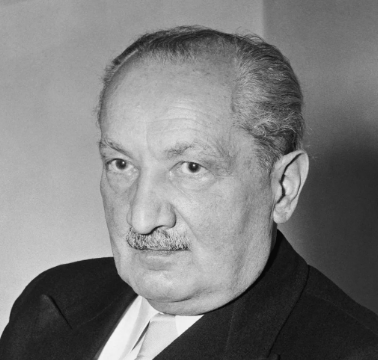
But in fact there is no circle at all in the formulation of our question. Beings can be determined in their being without the explicit concept of the meaning of being having to be already available. If this were not so there could not have been as yet any ontological knowledge. And probably no one would deny the factual existence of such knowledge. It is true that "being" is "presupposed" in all previous ontology, but not as an available concept-not as the sort of thing we are seeking.
▼
Source
Introduction: The Exposition of the Question of the Meaning of Being (Stambaugh translation)

4 months ago
Thousands of writers, of poets, of scholars, have laboured to increase knowledge, to dissipate error, and to create that atmosphere of scientific thought, without which the marvels of our century could never appeared. And these thousands of philosophers, of poets, of scholars, of inventors, have themselves been supported by the labour of past centuries. They have been upheld and nourished through life, both physically and mentally, by legions of workers and craftsmen of all sorts. They have drawn their motive force from the environment.
▼
Source
Ch. 1 : Our Riches, p. 57
4 months ago
Very late in life, when he was studying geometry, some one said to Lacydes, "Is it then a time for you to be learning now?" "If it is not," he replied, "when will it be?"
▼
Source
Lacydes, 5.
4 months ago
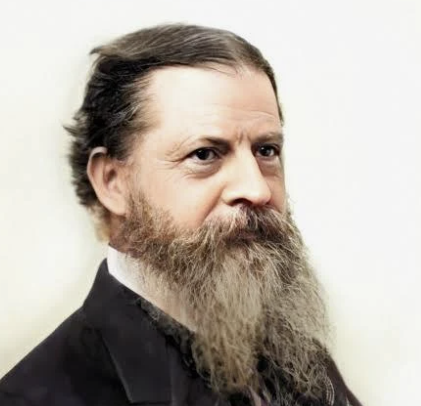
Three conceptions are perpetually turning up at every point in every theory of logic, and in the most rounded systems they occur in connection with one another. They are conceptions so very broad and consequently indefinite that they are hard to seize and may be easily overlooked. I call them the conceptions of First, Second, Third. First is the conception of being or existing independent of anything else. Second is the conception of being relative to, the conception of reaction with, something else. Third is the conception of mediation, whereby a first and second are brought into relation.
4 months ago
Enjoyment of the work consists in participation in the creative state of the artist.
▼
Source
p. 117
4 months ago
Let us not overrate the productivity of the exporting countries, and let us remember that the vinegrowers of Southern Europe drink themselves an abominable piquette; that s fabricates wine for home use out of dry raisins bought from Asia; and that the peasant who sends his apples to London, drinks real cider only on great festivities. Such a state of things will not last for ever; and the day is not far when we shall be compelled to look to our own resources for many of the things which we now import. And we shall not be the worse for that.
4 months ago
They also say that God is an animal immortal, rational, perfect, and intellectual in his happiness, unsusceptible of any kind of evil, having a foreknowledge of the universe and of all that is in the universe; however, that he has not the figure of a man; and that he is the creator of the universe, and as it were the Father of all things in common, and that a portion of him pervades everything.
▼
Source
Zeno, 72.
4 months ago
The concept of labor is not peripheral in Hegel’s system, but is the central notion through which he conceives the development of society. Driven by the insight that opened this dimension to him, Hegel describes the mode of integration prevailing in a commodity-producing society in terms that clearly fore-shadow Marx’s critical approach. P. 78

4 months ago
What was man before the invention of words and the knowledge of language? An animal..
4 months ago
In deduction the mind is under the dominion of a habit or association by virtue of which a general idea suggests in each case a corresponding reaction. This is the way the hind legs of a frog separated from the rest of the body, reason, when you pinch them. It is the lowest form of psychical manifestation.

4 months ago
To owe an obligation to a worthy friend is a happiness, and can be no disparagement.
▼
Source
p. 367 (Obligation)
4 months ago
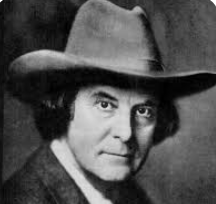
Most Authors cringe and flatter and Fish for compliments. If they fail to get Applause, they say the World is a Scurvy Place and those who dwell therein a Dirty Lot: if they succeed, they give thanks to Nobody, saying they got only what their Meritt entitles them to. But I rather like the World. The Flesh is pleasing and the Devil does not trouble me.
▼
Source
Preface to [http://books.google.com/books?id=hAiaEy_NVoEC&q="I+rather+like+the+world+The+flesh+is+pleasing+and+the+Devil+does+not+trouble+me"&pg=PA5#v=onepage Love Ballads of the Sixteenth Century (1897)]
4 months ago
By virtue of the way it has organized its technological base, contemporary industrial society tends to be totalitarian. For "totalitarian" is not only a terroristic political coordination of society, but also a non-terroristic economic-technical coordination which operates through the manipulation of needs by vested interests.
▼
Source
p. 5
4 months ago
The third argument, enclosing and defending the other two, consists in the development of those principles of logic according to which the humble argument is the first stage of a scientific inquiry into the origin of the three Universes, but of an inquiry which produces, not merely scientific belief, which is always provisional, but also a living, practical belief, logically justified in crossing the Rubicon with all the freightage of eternity.
▼
Source
V
4 months ago
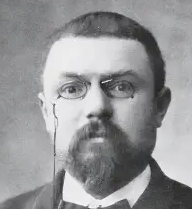
We see that experience plays an indispensable role in the genesis of geometry; but it would be an error thence to conclude that geometry is, even in part, an experimental science. If it were experimental it would be only approximative and provisional. And what rough approximation!...The object of geometry is the study of a particular 'group'; but the general group concept pre-exists... in our minds. It is imposed on us, not as form of our sense, but as form of our understanding. Only, from among all the possible groups, that must be chosen... will be... the standard to which we shall refer natural phenomena.Experience guides us in this choice without forcing it upon us; it tells us not which is the truest geometry, but which is the most convenient.Notice that I have been able to describe the fantastic worlds... imagined without ceasing to employ the language of ordinary geometry.
▼
Source
Ch. IV: Space and Geometry, Conclusions (1905) [https://books.google.com/books?id=5nQSAAAAYAAJ Tr.] George Bruce Halstead
4 months ago
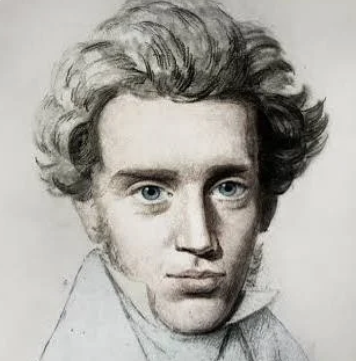
Above all do not forget your duty to love yourself; do not permit the fact that you have been set apart from life in a way, been prevented from participating actively in it, and that you are superflous in the obtruse eyes of a busy world, above all, do not permit this to deprive you of your idea of yourself, as if your life, if lived in inwardness, did not have just as much meaning and worth as that of any human being in the eyes of all-wise Governance, and considerably more than the busy, busiest haste of busy-ness - busy with wasting life and losing itself.
▼
Source
'[http://books.google.de/books?id=CUfkNXWLyboC&pg=PR21 Letter to Kierkegaard's cousin Hans Peter] (1848)

4 months ago
Research into motion was not to the liking (or perhaps not within the scope) of the ancients, so that we may consider it as a completely new science. How could the ancients have discovered the laws of moiton, given that some philosophers reduced all their speculations about motion to sophistic disputes, whereas others denied that motion existed at all?
4 months ago
And the worst part about making a soldier of a man is not that a soldier kills brown men or white men, but that the soldier loses his own soul.
▼
Source
p. 15
4 months ago
They [great works of literature] are invalidated not because of their literary obsolescence. Some of these images pertain to contemporary literature and survive in its most advanced creations. What has been invalidated is their subversive force, their destructive content—their truth. In this transformation, they find their home in everyday living. The alien and alienating oeuvres of intellectual culture become familiar goods and services. Is their massive reproduction and consumption only a change in quantity, namely, growing appreciation and understanding, democratization of culture? The truth of literature and art has always been granted (if it was granted at all) as one of a “higher” order, which should not and indeed did not disturb the order of business. What has changed in the contemporary period is the difference between the two orders and their truths. The absorbent power of society depletes the artistic dimension by assimilating its antagonistic contents. In the realm of culture, the new totalitarianism manifests itself precisely in a harmonizing pluralism, where the most contradictory works and truths peacefully coexist in indifference. Prior to the advent of this cultural reconciliation, literature and art were essentially alienation, sustaining and protecting the contradiction—the unhappy consciousness of the divided world, the defeated possibilities, the hopes unfulfilled, and the promises betrayed. They were a rational, cognitive force, revealing a dimension of man and nature which was repressed and repelled in reality.
▼
Source
pp. 60-61
4 months ago
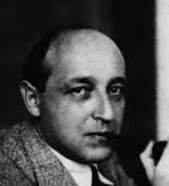
In our contemporary social and intellectual plight, it is nothing less than shocking to discover that those persons who claim to have discovered an absolute are usually the same people who also pretend to be superior to the rest. To find people in our day attempting to pass off to the world and recommending to others some nostrum of the absolute which they claim to have discovered is merely a sign of the loss of and the need for intellectual and moral certainty, felt by broad sections of the population who are unable to look life in the face.
4 months ago
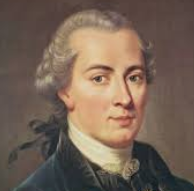
...happiness is not an ideal of reason but of imagination, resting solely on empirical grounds.
▼
Source
Fundamental Principles of the Metaphysics of Ethics (1785), Second Section.
4 months ago
Now what is science? ...it is before all a classification, a manner of bringing together facts which appearances separate, though they are bound together by some natural and hidden kinship. Science, in other words, is a system of relations. ...it is in relations alone that objectivity must be sought. ...it is relations alone which can be regarded as objective. External objects... are really objects and not fleeting and fugitive appearances, because they are not only groups of sensations, but groups cemented by a constant bond. It is this bond, and this bond alone, which is the object in itself, and this bond is a relation.
4 months ago
Irony limits, finitizes, and circumscribes and thereby yields truth, actuality, content; it disciplines and punishes and thereby yields balance and consistency.
4 months ago
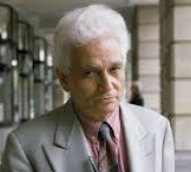
Deconstruction never had meaning or interest, at least in my eyes, than as a radicalization, that is to say, also within the tradition of a certain Marxism, in a certain spirit of Marxism.
▼
Source
Specters of Marx. Routledge, 1994. p. 115
4 months ago
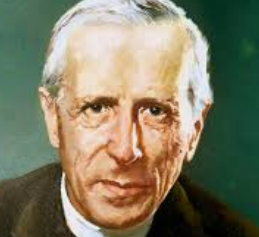
When water is heated to boiling... and one goes on heating it, the first thing that follows—without change of temperature—is a tumultuous expansion of freed and vaporised molecules. Or, taking a series of sections from the base towards the summit of a cone, their area decreases constantly; then suddenly, with another infinitesimal displacement, the surface vanishes leaving us with a point. Thus... we are able to imagine the mechanism involved in the critical threshold of reflection. ...[N]ervous systems followed pari passu the process of increased complication and concentration. Finally, with the primates, an instrument was fashioned so remarkably supple and rich that the step immediately following could not take place without the whole animal psychism being... recast and consolidated on itself. ...When the anthropoid... had been brought 'mentally' to boiling point.... Or... had almost reached the summit of the cone, a final effort took place along the axis. ...What was previously only a centred surface became a centre. By a tiny 'tangential' increase, the 'radial' was turned back on itself and... took an infinite leap forward. Outwardly, almost nothing in the organs had changed. But in depth, a great revolution... consciousness was now leaping and boiling in a space of super-sensory relationships and representations; and simultaneously... was capable of perceiving itself... for the first time.
4 months ago
Academic education is the act of memorizing things read in books, and things told by college professors who got their education mostly by memorizing things read in books.
▼
Source
p. 160
4 months ago
An autonomous electorate, free because it is free from indoctrination and manipulation, would indeed be on a “level of articulate opinion and ideology” which is not likely to be found. Therefore, the concept has to be rejected as “unrealistic”—has to be if one accepts the factually prevailing level of opinion and ideology as prescribing the valid criteria for sociological analysis. And—if indoctrination and manipulation have reached the stage where the prevailing level of opinion has become a level of falsehood, where the actual state of affairs is no longer recognized as that which it is, then an analysis which is methodologically committed to reject transitive concepts commits itself to a false consciousness. Its very empiricism is ideological.
▼
Source
p. 117
4 months ago
A whole from necessary substances is impossible. The whole, therefore, of substances is a whole of contingent things, and the world consists essentially of only contingent things.
4 months ago
Dogmatics must be designed in this way. Above all, every science must vigorously lay hold of its own beginning and not live in complicated relations with other sciences. If dogmatics begins by wanting to explain sinfulness or by wanting to prove its actuality, no dogmatics will come out of it, but the entire existence of dogmatics will become problematic and vague.
▼
Source
Note, p. 58
4 months ago
There are really only two ways, it seems to me, in which we can think about our existence here on Earth. We either agree with Macbeth that life is nothing more than a "tale told by an idiot," a purposeless emergence of life-forms including the clever, greedy, selfish, and unfortunate species that we call homo sapiens — the "evolutionary goof." Or we believe that, as Pierre Teilhard de Chardin put it, "There is something afoot in the universe, something that looks like gestation and birth." In other words, a plan, a purpose to it all.
▼
Source
Jane Goodall, Reason for Hope : A Spiritual Journey (1999), p. xi
4 months ago
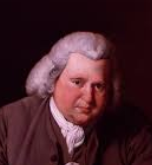
It consists of a windmill sail placed horizontally like that of a smoak-jack, surrounded by an octagon tower... Upright pillars are connected together by oblique horizontal boards... at an angle of about 45 degrees... so as to form a complete octagon including the horizontal windmill sail near the top... The wind as it strikes... from whatever quarter it comes, is bent upwards and then strikes against the horizontal wind-sail. These horizontal boards... may... be made to turn upon an axis a little below their centres of gravity, so as to close themselves on that side of the octagon tower most distant from the wind. ...It was found on many trials by Mr. Edgeworth... and by myself, that the wind by being thus reverted upwards by a fixed planed board did not seem to lose any of its power. And as the height of the tower may be made twice as great as the diameter of the sail, there is reason to conclude that the power of this horizontal wind-sail may be considerably greater, than if the same sail was placed nearly vertically...
▼
Source
Phytologia (1800) text included with [https://archive.org/details/b22014597/page/n319/mode/1up?q=windmill&view=theater Plate VII, Sect. XI.3.6 between pages 282-283].
4 months ago
Can the human appropriation of nature ever achieve the elimination of violence, cruelty, and brutality in the daily sacrifice of animal life for the physical reproduction of the human race? To treat nature "for its own sake" sounds good, but it is certainly not for the sake of the animal to be eaten, nor probably for the sake of the plant. The end of this war, the perfect peace in the animal world — this idea belongs to the Orphic myth, not to any conceivable historical reality. In the face of the suffering inflicted by man on man, it seems terribly "premature" to campaign for universal vegetarianism or synthetic foodstuffs; as the world is, priority must be on human solidarity among human beings. And yet, no free society is imaginable which does not, under its "regulative idea of reason," make the concerted effort to reduce consistently the suffering which man imposes on the animal world.
▼
Source
Chapter "Nature and Revolution," in The Essential Marcuse: Selected Writings of Philosopher and Social Critic Herbert Marcuse, edited by Andrew Feenberg and William Leiss, Beacon Press, 2007, pp. [https://books.google.it/books?id=JqoyBgAAQBAJ&pg=PA240 24
4 months ago
All wars are accordingly so many attempts (not in the intention of man, but in the intention of Nature) to establish new relations among states, and through the destruction or at least the dismemberment of all of them to create new political bodies, which, again, either internally or externally, cannot maintain themselves and which must thus suffer like revolutions; until finally, through the best possible civic constitution and common agreement and legislation in external affairs, a state is created which, like a civic commonwealth, can maintain itself automatically.
▼
Source
Seventh Thesis
4 months ago
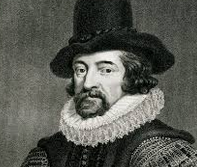
For I find that even those that have sought knowledge for itself and not for benefit, or ostentation, or any practical enablement in the course of their life, have nevertheless propounded to themselves a wrong mark, namely, satisfaction, which men call truth, and not operation. For as in the courts and services of princes and states, it is a much easier matter to give satisfaction than to do the business; so in the inquiring of causes and reasons it is much easier to find out such causes as will satisfy the mind of man, and quiet objections, than such causes as will direct him and give him light to new experiences and inventions.
▼
Source
Valerius Terminus: Of the Interpretation of Nature (ca. 1603), in Works, Vol. 1; The Works of Francis Bacon (1857), Vol. 3, [https://books.google.com/books?id=HloJAAAAQAAJ&pg=PA232 p. 232]
4 months ago
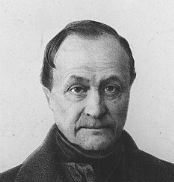
A common monetary standard will be established, with the consent of the various governments, by which industrial transactions will be greatly facilitated. Three spheres made respectively of gold, silver, and platinum, and each weighing fifty grammes, would differ sufficiently in value for the purpose. The sphere should have a small flattened base, and on the great circle parallel to it the Positivist motto would be inscribed. At the pole would be the image of the immortal Charlemagne, the founder of the Western Republic, and round the image his name would be engraved, in its Latin form, Carolus; that name, respected as it is by all nations of Europe alike, would be the common appellation of the universal monetary standard.
▼
Source
p. 430
4 months ago
I have never definitely broken with Christianity nor renounced it. To attack it has never been my thought. No, from the time when there could be any question of the employment of my powers, I was firmly determined to employ them all to defend Christianity, or in any case to present it in its true form.
▼
Source
The Point of View for My Work as An Author, Soren Kierkegaard, translated by Walter Lowrie 1939, 1962 P. 77
4 months ago
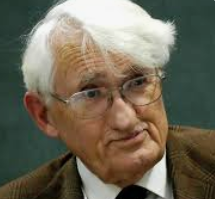
Philosophy's position with regard to science, which at one time could be designated with the name "theory of knowledge," has been undermined by the movement of philosophical thought itself. Philosophy was dislodged from this position by philosophy.
▼
Source
p. 4
4 months ago
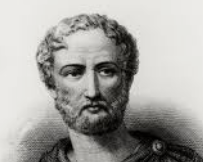
I contemplate the sort of friend, the sort of man I am now without. He completed his sixty-seventh year, a reasonable age for the sturdiest of us; I acknowledge that. He escaped from an interminable illness; I acknowledge that. He died with his dear ones surviving him, and at a time of prosperity for the state, which was dearer to him than all else; that too I acknowledge. Yet I lament his death as though he were young and in glowing health. I lament it—you can consider me a weakling in this—on my own account, for I have lost the witness, guardian and teacher of my life.
▼
Source
Letter 12, 11–13; on the death of his friend Cornelius Rufus.

4 months ago
A belief in hell and the knowledge that every ambition is doomed to frustration at the hands of a skeleton have never prevented the majority of human beings from behaving as though death were no more than an unfounded rumour, and survival a thing beyond the bounds of possibility.
▼
Source
Themes and Variations (1950)
4 months ago
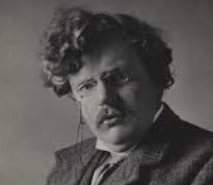
Fine weather encourages individualism. When the whole glittering landscape is cut out as clear as a map—indented by the blue sky as by a blue sea, then each one of us wishes to take his own way, to walk by himself along the roads of the world and conquer for himself the cities of the morning. In the sunlight a man asks for liberty, which is only the divine name for loneliness. But it is in black and bleak conditions that we learn that it is not well for man to be alone; and festivity was discovered in the darkness. Winter encourages that thing called comradeship which modern humanitarians so often seem unable to understand, but which Walt Whitman so wisely perceived to be the permanent foundation of democracy.
▼
Source
In The Illustrated London News (1905–1907)
4 months ago
Metaphysics has as the proper object of its enquiries three ideas only: God, freedom, and immortality.
▼
Source
B 395
4 months ago
The use of this feigned history hath been to give some shadow of satisfaction to the mind of man in those points wherein the nature of things doth deny it, the world being in proportion inferior to the soul; by reason whereof there is, agreeable to the spirit of man, a more ample greatness, a more exact goodness, and a more absolute variety, than can be found in the nature of things. Therefore, because the acts or events of true history have not that magnitude which satisfieth the mind of man, poesy feigneth acts and events greater and more heroical: because true history propoundeth the successes and issues of actions not so agreeable to the merits of virtue and vice, therefore poesy feigns them more just in retribution, and more according to revealed providence: because true history representeth actions and events more ordinary, and less interchanged, therefore poesy endueth them with more rareness, and more unexpected and alternative variations: so as it appeareth that poesy serveth and conferreth to magnanimity, morality, and to delectation. And therefore it was ever thought to have some participation of divineness, because it doth raise and erect the mind, by submitting the shows of things to the desires of the mind; whereas reason doth buckle and bow the mind into the nature of things.
▼
Source
Book II, iv, 2
4 months ago
A white spot is on the horizon. There it is. A terrible storm is brewing. But no one sees the white spot or has any inkling of what it might mean. But no (this would not be the most terrible situation either), no, there is one person who sees it and knows what it means-but he is a passenger. He has no authority on the ship, can take no action. ... The fact that in Christendom there is visible on the horizon a white speck which means that a storm is threatening-this I knew; but, alas, I was an am only a passenger.
▼
Source
Søren Kierkegaard, Journals and Papers XI3 B 109 p 178ff (quoted in Kierkegaard’s Way to the Truth by Gergor Malantschuk 1963 Augsburg Publishing House

4 months ago
The reader is therefore exhorted...to suspend his judgement concerning the final truth of things, since probably neither he nor anyone else knows what these are, and to content himself with appreciating the problems of metaphysics. This is the first and always the most difficult step. The rest of the truth, if he is ever blessed to receive any of it, will come from within him, if it ever comes at all, and not from the reading of books.
▼
Source
Metaphysics, [https://babel.hathitrust.org/cgi/pt?id=uc1.b4410806&seq=24 Introduction, p. 4]
4 months ago
Why did it occur to anyone to believe in only one God? And conversely why did it ever occur to anyone to believe in many gods? To both these questions we must return the same answer: Because that is how the human mind happens to work. For the human mind is both diverse and simple, simultaneously many and one. We have an immediate perception of our own diversity and of that of the outside world. And at the same time we have immediate perceptions of our own oneness.
▼
Source
“One and Many,” p. 12
4 months ago
The full potentialities of human fury cannot be reached until a friend of both parties tactfully intervenes.
▼
Source
"The Sceptic as a Critic", in The Forum (February 1929) [http://books.google.com/books?id=DlMeAAAAIAAJ&q=%22The+full+potentialities+of+human+fury+cannot+be+reached+until+a+friend+of+both+parties+tactfully+intervenes%22&pg=PA218#v=onepage]
4 months ago
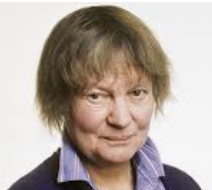
Whit Meynell was a sociologist; he had got into an intellectual muddle early on in life and never managed to get out.
▼
Source
The Philosopher's Pupil (1983) p. 165.
4 months ago
To require that a so-called layman should not use his own reason in religious matters, particularly since religion is to be appreciated as moral, but instead follow the appointed clergyman and thus someone else's reason, is an unjust demand because as to morals every man must account for all his doings. The clergyman will not and even cannot assume such a responsibility.
▼
Source
Kant, Immanuel (1996), pages 94-95
4 months ago
The human understanding is of its own nature prone to suppose the existence of more order and regularity in the world than it finds. And though there be many things in nature which are singular and unmatched, yet it devises for them parallels and conjugates and relatives which do not exist. Hence the fiction that all celestial bodies move in perfect circles, spirals and dragons being (except in name) utterly rejected.
▼
Source
Aphorism 45
4 months ago
That which distinguishes the Christian narrow way from the common human narrow way is the voluntary. Christ was not someone who coveted earthly things but had to be satisfied with poverty – no, he chose poverty.
▼
Source
Soren Kierkegaard, For Self-Examination, Hong p. 67
CivilSimian.com created by AxiomaticPanic, CivilSimian, Kalokagathia