
4 months ago
A global transition to a cruelty-free vegan diet won't just help non-human animals. The transition will also help malnourished humans who could benefit from the grain currently fed to factory-farmed animals. For factory-farming is not just cruel; it's energy-inefficient. Let's take just one example. Over the past few decades, millions of Ethiopians have died of "food shortages" while Ethiopia grew grain to sell to the West to feed cattle. Western meat-eating habits prop up the price of grain so that poor people in the developing world can't afford to buy it. In consequence, they starve by the millions.In my work, I explore futuristic, hi-tech solutions to the problem of suffering. But anybody who seriously wants to reduce human and non-human suffering alike should adopt a cruelty-free vegan lifestyle today.
▼
Source
"[https://www.hedweb.com/animals/interview.html A World Without Suffering?]", Instituto Humanitas Unisinos, Jan. 2011

4 months ago
It is on account of theology alone that any assertion whatsoever should be called catholic or heretical. For only an assertion which is consonant with theology is truly catholic, and only one which is known to be opposed to theology is known to be heretical. For if some assertion were found to be opposed to decrees of the highest pontiffs, or also of general councils or also to laws of the emperors, nevertheless, if it were not in conflict with theology, even if it could be considered false, erroneous or unjust, it should not be counted as a heresy.
▼
Source
[http://www.britac.ac.uk/pubs/dialogus/t1d1.html Vol. I, Book 1, Ch. 2], as translated by John Kilcullen and John Scott (2003).
4 months ago
In his Fragments of Science Tyndall makes the following sad confession: "If you ask me whether science has solved, or is likely in our day to solve the problem of this universe, I must shake my head in doubt." If moved by an afterthought, he corrects himself later, and assures his audience that experimental evidence has helped him to discover, in the opprobrium-covered matter, the "promise and potency of every quality of life," he only jokes. It would be as difficult for Professor Tyndall to offer any ultimate and irrefutable proofs of what he asserts, as it was for Job to insert a hook into the nose of the leviathan.
▼
Source
H.P. Blavatsky, Isis Unveiled, Part One, Before the Veil, (1877)
4 months ago
Atheism is a disease of the soul, before it becomes an error of the understanding.
▼
Source
Misattributed to Plato in Laws by [http://www.conservapedia.com/Atheism_Quotes Conservapedia]. Actual source: William Fleming, as quoted in [http://www.bartleby.com/349/authors/74.html Prose Quotations from Socrates to Macaulay by Samuel Austin Alli
4 months ago
The words "element" and "principle" are used by him as equivalent terms, and signify those primitive and simple bodies of which compounds may be said to be composed, and into which these compounds are ultimately resolvable.

4 months ago
That history just unfolds, independently of a specified direction, of a goal, no one is willing to admit.

4 months ago
A man of Intellect, of real and not sham Intellect, is by the nature of him likewise inevitably a man of nobleness, a man of courage, rectitude, pious strength; who, even because he is and has been loyal to the Laws of this Universe, is initiated into discernment of the same; to this hour a Missioned of Heaven; whom if men follow, it will be well with them; whom if men do not follow, it will not be well. Human Intellect, if you consider it well, is the exact summary of Human Worth; and the essence of all worth-ships and worships is reverence for that same.
4 months ago
True hedonic engineering, as distinct from mindless hedonism or reckless personal experimentation, can be profoundly good for our character. Character-building technologies can benefit utilitarians and non-utilitarians alike. Potentially, we can use a convergence of biotech, nanorobotics and information technology to gain control over our emotions and become better (post-)human beings, to cultivate the virtues, strength of character, decency, to become kinder, friendlier, more compassionate: to become the type of (post)human beings that we might aspire to be, but aren't, and biologically couldn't be, with the neural machinery of unenriched minds. Given our Darwinian biology, too many forms of admirable behaviour simply aren't rewarding enough for us to practise them consistently: our second-order desires to live better lives as better people are often feeble echoes of our baser passions.
▼
Source
"[https://www.superhappiness.com/ Utopian Neuroscience]", BLTC Research, 2019

4 months ago
Until now, neither the distinction between “worthy, since durable” and “vain, since transient,” nor the unbridgeable abyss separating the two, has disappeared for a moment from reflections on human happiness. Nonentity, the demeaning and humiliating insignificance of the individual bodily presence in the world by comparison with the unperturbed eternity of the world itself, has haunted philosophers (and non-philosophers, during their brief spells of falling into and staying in a philosophical mood) for more than two millennia. In the Middle Ages it was raised to the rank of the highest purpose and supreme concern of mortals, and deployed to promote spiritual values over the pleasures of the flesh—as well as to explain (and, hopefully argue away) the pain and misery of the brief earthly existence as a necessary and therefore welcome prelude to the endless bliss of the afterlife. It returned with the advent of the modern era in a new garb: that of the futility of individual interests and concerns, shown to be abominably short-lived, fleeting and vagrant when juxtaposed with the interests of “the social whole”—the nation, the state, the cause.
▼
Source
p. 31.
4 months ago
How does the philosophical question differ from the non-philosophical question? To philosophize means, we said, to direct one's view toward the totality of the world. So is that a philosophical question (and that alone) which has for its explicit and formal theme the sum-total of all existing things? No! What is peculiar and distinctive about a philosophical question is that it cannot be posed, considered, or answered (so far at least as an answer is possible) without "God and the world" also coming into consideration, that is, the whole of what exists.
▼
Source
p. 95
4 months ago
Any plea ... for institutionalized risk-assessment, beefed-up bioethics panels, academic review bodies, worse-case scenario planning, more intensive computer simulations, systematic long-term planning and the institutionalized study of existential risks is admirable. But so is urgent action to combat the global pandemic of suffering. "The easiest pain to bear is someone else's".
▼
Source
4. Objections, [https://www.hedweb.com/hedethic/hedon4.htm#headlong No 34]

4 months ago
To the eye of God there are no numbers: seeing all things at one time, he counts nothing.
▼
Source
As quoted in Physically Speaking: A Dictionary of Quotations on Physics and Astronomy (1997), p. 101.
4 months ago
This is a long book, not only in pages.
▼
Source
Preface, pg. viii
4 months ago
A friend and a prudent friend, can help to shape a friend's decision. He does so by virtue of that love which makes the friend's problem his own, the friend's ego his own (so that after all it is not entirely "from outside"). For by virtue of that oneness which love can establish he is able to visualize the concrete situation calling for decision, visualize it from, as it were, the actual center of responsibility. Therefore it is possible for a friend - only for a friend and only for a prudent friend - to help with counsel and direction to shape a friend's decision or, somewhat in the manner of a judge, help to reshape it. Such geniune and prudent loving friendship (amor amicitiae) - which has nothing in common with sentimental intimacy, and indeed is rather imperiled by such intimacy - is the sine qua non for geniune spirtual guidance. For only this empowers another to offer the kind of direction which - almost! - conforms to the concrete situation in which the decision must be made.
4 months ago
We are all deep in a hell each moment of which is a miracle.
▼
Source
variant: The fact that living is an extraordinary thing seeing things as they are, That this life is theoretically completely worthless, Seems extraordinary compared to the actual level, This means Live despite all adversities, Every moment becomes a kind
4 months ago
I purpose now, while the impression is more pure and clear within me, to mark down the main things I can recollect of my father. To myself, if I live to after-years, it may be instructive and interesting, as the past grows ever holier the farther we leave it. My mind is calm enough to do it deliberately, and to do it truly. The thought of that pale earnest face which even now lies stiffened into death in that bed at Scotsbrig, with the Infinite all of worlds looking down on it, will certainly impel me. It is good to know how a true spirit will vindicate itself with truth and freedom through what obstructions soever; how the acorn cast carelessly into the wilder-ness will make room for itself and grow to be an oak. This is one of the cases belonging to that class, "the lives of remarkable men," in which it has been said, "paper and ink should least of all be spared." I call a man remarkable who becomes a true workman in this vineyard of the Highest. Be his work that of palace-building and kingdom-founding, or only of delving and ditching, to me it is no matter, or next to none. All human work is transitory, small in itself, contemptible. Only the worker thereof, and the spirit that dwelt in him, is significant. I proceed without order, or almost any forethought, anxious only to save what I have left and mark it as it lies in me.
4 months ago
Yet it seems extraordinary that the justice of increasing the expectations of the better placed by a billion dollars, say, should turn on whether the prospects of the least favored increase or decrease by a penny.
▼
Source
Chapter III, Section 26, pg. 157
4 months ago
All hereditary Government is in its nature tyranny. An heritable crown, or an heritable throne, or by what other fanciful name such things may be called, have no other significant explanation than that mankind are heritable property. To inherit a Government, is to inherit the people, as if they were flocks and herds.
▼
Source
The Rights of Man (1791)
4 months ago
Friedrich Engels once said: “Bourgeois society stands at the crossroads, either transition to socialism or regression into barbarism.” What does “regression into barbarism” mean to our lofty European civilization? Until now, we have all probably read and repeated these words thoughtlessly, without suspecting their fearsome seriousness. A look around us at this moment shows what the regression of bourgeois society into barbarism means. This world war is a regression into barbarism. The triumph of imperialism leads to the annihilation of civilization.
▼
Source
Ch.1

4 months ago
This art is music. It stands quite apart from all the others. In it we do not recognize the copy, the repetition, of any Idea of the inner nature of the world. Yet it is such a great and exceedingly fine art, its effect on man's innermost nature is so powerful, and it is so completely and profoundly understood by him in his innermost being as an entirely universal language, whose distinctness surpasses even that of the world of perception itself, that in it we certainly have to look for more than that exercitium arithmeticae occultum nescientis se numerare animi [exercise in arithmetic in which the mind does not know it is counting] which Leibniz took it to be.
▼
Source
Vol. I, Ch. III, The World As Representation: Second Aspect, as translated by Eric F. J. Payne (1958)
4 months ago
Everything exists; nothing exists. Either formula affords a like serenity. The man of anxiety, to his misfortune, remains between them, trembling and perplexed, forever at the mercy of a nuance, incapable of gaining a foothold in the security of being or in the absence of being.
4 months ago
It was very good of God to let Carlyle and Mrs. Carlyle marry one another and so make only two people miserable instead of four.
▼
Source
Samuel Butler, Letter to Eliza Savage, 21 November 1884, in Letters between Samuel Butler and E.M.A. Savage, 1871-1885 (1935)
4 months ago
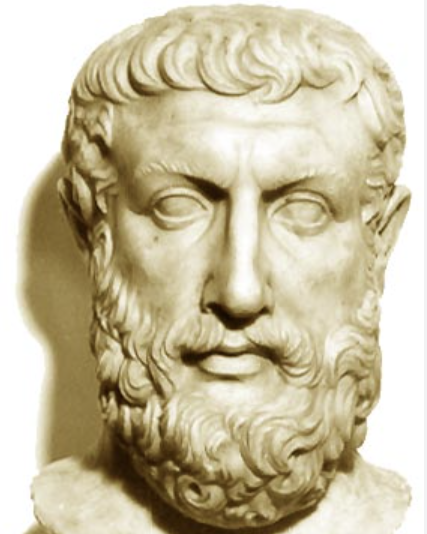
From this inheritance contemporary philosophers have continued to draw profit. Parmenides is their earliest ancestor whose work contains explicit and self-conscious argumentation. The severe conceptual difficulties posed for the first time in his verses are of perennial interest, and many of them remain in the forefront of discussion today. Recent study has thus brought his thought, in the words of another critic, "astonishingly close to some contemporary preoccupations." He should be viewed not only as "the most original and important philosopher before Socrates" but as the first extant author deserving to be called a philosopher in a present-day sense of the word.
▼
Source
David Gallop, in Parmenides of Elea : Fragments (1991), p. 3
4 months ago
The idea that seems to be presupposed by the doctrine of the veil of ignorance—namely, that one can in some way get a better grasp or understanding of the power relations in society and how they work by covering them up, ignoring them, or simply wishing them away—seems very naïve. … To think that an appropriate point of departure for understanding the political world is our intuitions of what is “just,” without reflecting on where those intuitions come from, how they are maintained, and what interests they might serve, seems to exclude from the beginning the very possibility that these intuitions might themselves be “ideological.”
▼
Source
Raymond Geuss, Philosophy and Real Politics (2008), p. 90
4 months ago
From the fame opinion of a soul distinct from the body came the practice of praying, first for the dead, and then to them with a long train of other absurd opinions, and superstitious practices.
▼
Source
General Conclusions, Part I : Containing Considerations addressed to Unbelievers and especially to Mr. Gibbon

4 months ago
If the excrement of an elephant should be smeared on skin in which lice appear and left until it dries upon the skin, the lice will not remain on it but will depart immediately. If the fat of an elephant is smeared with it, it is said to cure the pain of one who suffers a headache; it is even said that if an ounce of elephant bone is drunk with ten ounces of wild mountain mint from something which a leper first touched, it does the most for a headache.
▼
Source
Twenty-Six Books on Animals [De animalibus libri XXVI]; cited in: Plinio Prioreschi (1996) A History of Medicine: Medieval Medicine. p. 94.
4 months ago
Philosophy … is a science, and as such has no articles of faith; accordingly, in it nothing can be assumed as existing except what is either positively given empirically, or demonstrated through indubitable conclusions.
▼
Source
Vol I
4 months ago
Every thought derives from a thwarted sensation.
4 months ago
Goebbels told Schwerin von Krosigk [in April 1945 in the Führerbunker] how he had recently been reading aloud to the Fuehrer, to solace him in his universal discomfiture. He was reading from his favourite book, Carlyle's History of Frederick the Great; and the chapter he was reading described "how the great king himself no longer saw any way out of his difficulties, no longer had any plan; how all his generals and ministers were convinced that his downfall was at hand; how the enemy was already counting Prussia as destroyed; how the future hung dark before him, and in his last letter to his minister, Count Finckenstein, he gave himself one last respite: if there was no change by February 15th, he would give it up and take poison. 'Brave king!' says Carlyle, 'wait yet a little while, and the days of your suffering will be over. Already the sun of your good fortune stands behind the clouds, and soon will rise upon you.' On February 12th the Czarina died; the Miracle of the House of Brandenburg had come to pass." At this touching tale, said Goebbels, "tears stood in the Fuehrer's eyes."
▼
Source
Hugh Trevor-Roper, The Last Days of Hitler (1947), pp. 106-107
4 months ago
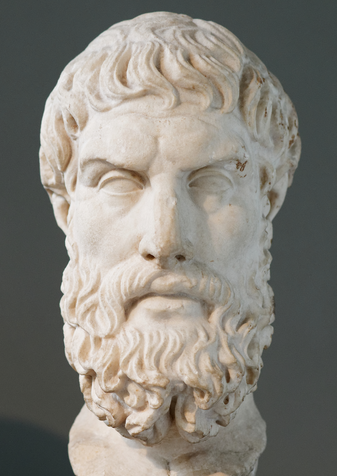
Sobriety, as opposed to inebriety and gluttony, is of admirable use in teaching men that nature is satisfied with a little, and enabling them to content themselves with simple and frugal fare.
4 months ago
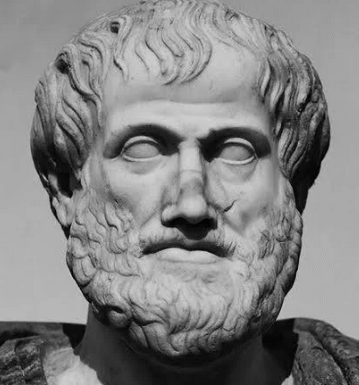
The science which has to do with nature clearly concerns itself for the most part with bodies and magnitudes and their properties and movements, but also with the principles of this sort of substance, as many as they may be.
▼
Source
On the Heavens Book I, pg. 1 (350 BCE)
4 months ago
Rights are to be taken, not requested; seized, not begged for.
▼
Source
As quoted in Inside the Monster : Writings on the United States and American Imperialism (1975) by José Martí, as translated by Elinor Randall, p. 27

4 months ago
The heart of the question concerns the presumption of a universal human Subject, capable of reducing ethical issues to matters of human rights and humanitarian actions. We have seen that ethics subordinates the identification of this subject to the universal recognition of the evil that is done to him. Ethics defines man as a victim. It will be objected: 'No! You are forgetting the active subject, the one that intervenes against barbarism!' So let us be precise: man is the being who is capable of recognizing himself as a victim.
▼
Source
Chapter One, Section III: "Man Living animal or immortal singularity?"
4 months ago
Means at our disposal should be regarded as a bulwark against the many evils and misfortunes that can occur. We should not regard such wealth as a permission or even an obligation to procure for ourselves the pleasures of the world.
▼
Source
E. Payne, trans. (1974) Vol. 1, p. 348
4 months ago
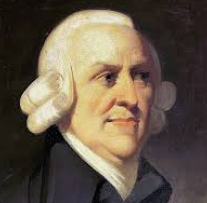
Nothing deserves to be undone, doubtless because nothing deserved to be done.
4 months ago
Society and conversation, therefore, are the most powerful remedies for restoring the mind to its tranquillity, if, at any time, it has unfortunately lost it; as well as the best preservatives of that equal and happy temper, which is so necessary to self-satisfaction and enjoyment. Men of retirement and speculation, who are apt to sit brooding at home over either grief or resentment, though they may often have more humanity, more generosity, and a nicer sense of honour, yet seldom possess that equality of temper which is so common among men of the world.
▼
Source
Section I, Chap. III.

4 months ago
The endeavor to keep alive any hoary establishment beyond its natural date is often pernicious and always useless.
▼
Source
The French Revolution, Bk. V, ch. 4 (1794)
4 months ago
The brain is not responsible for any of the sensations.. the correct view [is] that the seat and source of sensation is the region of the heart….the motions of pleasure and pain, and generally all sensation plainly have their source in the heart.
▼
Source
Book II, Part 10
4 months ago
Ostentatious men who are governed by self-interest will combine, whether white or black, and the generous and selfless will similarly unite. True men, black and white, will treat one another with loyalty and tenderness, out of a sense of merit and the pride of everyone who honors the land in which we were born, black and white alike. Negroes, who now use the word "racist" in good faith, will stop using it when they realize it is the only apparently valid argument that weak men, who honestly believe that Negroes are inferior, use to deny them the full exercise of their rights as men. White and black racists would be equally guilty of racism.

4 months ago
It is perhaps worth while saying that semantics as conceived in this paper (and in former papers of the author) is a sober and modest discipline which has no pretensions to being a universal patent-medicine for all the ills and diseases of mankind, whether imaginary or real. You will not find in semantics any remedy for decayed teeth or illusions of grandeur or class conflicts. Nor is semantics a device for establishing that everyone except the speaker and his friends is speaking nonsense.
▼
Source
p. 17; as cited in: Adam Schaff (1962). Introduction to semantics, p. 90.
4 months ago
Men are by nature merely indifferent to one another; but women are by nature enemies.
▼
Source
Vol. 2 "On Women" as translated in Essays and Aphorisms (1970), as translated by R. J. Hollingdale
4 months ago
As soon as one returns to Doubt (if it could be said that one has ever left it), undertaking anything at all seems not so much useless as extravagant. Doubt works deep within you like a disease, or even more effectively, like a faith.
4 months ago
The difference between the most dissimilar characters, between a philosopher and a common street porter, for example, seems to arise not so much from nature, as from habit, custom, and education.
▼
Source
Chapter II, p. 17.
4 months ago
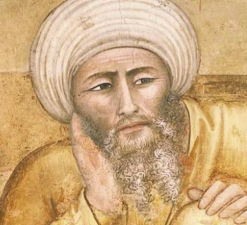
Friendship and domestic happiness are continually praised; yet how little is there of either in the world, because it requires more cultivation of mind to keep awake affection, even in our own hearts, than the common run of people suppose. Besides, few like to be seen as they really are; and a degree of simplicity, and of undisguised confidence, which, to uninterested observers, would almost border on weakness, is the charm, nay the essence of love or friendship, all the bewitching graces of childhood again appearing.
▼
Source
Letter 12
4 months ago
If we admit the existence of the prophetic mission, by putting the idea of possibility, which is in fact ignorance, in place of certainty, and make miracles a proof of the truth of man who claims to be a prophet it becomes necessary that they should not be used by a person, who says that they can be performed by others than prophets, as the Mutakallimun do.
▼
Source
Part 2: The Advent of the Prophets; Opening sentence
4 months ago
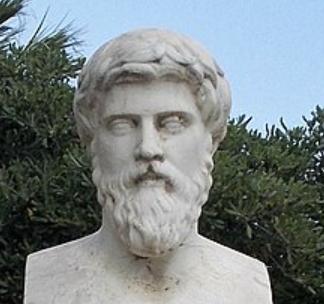
He is a fool who lets slip a bird in the hand for a bird in the bush.
▼
Source
Of Garrulity (Tr. Goodwin)
4 months ago
Might there not be a connection between the attempt to eradicate religion and the loss of freedom? It is unlikely that Mao, who launched his assault on the people and culture of Tibet with the slogan "Religion is poison," would have agreed that his atheist world-view had no bearing on his policies.
4 months ago
Life seems to be common even to plants, but we are seeking what is peculiar to man. Let us exclude, therefore, the life of nutrition and growth. Next there would be a life of perception, but it also seems to be common even to the horse, the ox, and every animal. There remains, then, an active life of the element that has a rational principle; of this, one part has such a principle in the sense of being obedient to one, the other in the sense of possessing one and exercising thought. And, as "life of the rational element" also has two meanings, we must state that life in the sense of activity is what we mean; for this seems to be the more proper sense of the term. Now if the function of man is an activity of soul which follows or implies a rational principle, and if we say "so-and-so" and "a good so-and-so" have a function which is the same in kind, e.g. a lyre, and a good lyre-player, and so without qualification in all cases, eminence in respect of goodness being added to the name of the function (for the function of a lyre-player is to play the lyre, and that of a good lyre-player is to do so well): if this is the case, and we state the function of man to be a certain kind of life, and this to be an activity or actions of the soul implying a rational principle, and the function of a good man to be the good and noble performance of these, and if any action is well performed when it is performed in accordance with the appropriate excellence: if this is the case, human good turns out to be activity of soul in accordance with virtue, and if there are more than one virtue, in accordance with the best and most complete. But we must add "in a complete life." For one swallow does not make a summer, nor does one day; and so too one day, or a short time, does not make a man blessed and happy.
▼
Source
Book I, 1098a; §7 as translated by W. D. Ross | Variants: | One swallow does not a summer make. | As quoted in A History of Ancient Philosophy: From the Beginning to Augustine (1998) by Karsten Friis Johansen, p. 382 | One swallow (they say) no Sommer dot

4 months ago
I think so badly of philosophy that I don't like to talk about it. ... I do not want to say anything bad about my dear colleagues, but the profession of teacher of philosophy is a ridiculous one. We don't need a thousand of trained, and badly trained, philosophers — it is very silly. Actually most of them have nothing to say.
▼
Source
As quoted in "At 90, and Still Dynamic : Revisiting Sir Karl Popper and Attending His Birthday Party" by Eugene Yue-Ching Ho, in Intellectus 23 (Jul-Sep 1992)

4 months ago
All violence consists in some people forcing others, under threat of suffering or death, to do what they do not want to do.
▼
Source
[http://www.calebjohnson.org/lawoflove.pdf The Law of Love and the Law of Violence (1908)]
CivilSimian.com created by AxiomaticPanic, CivilSimian, Kalokagathia