

4 months ago
The price of freedom is to decide moral and political issues.
▼
Source
Interview in Deia (1 September 2012)

4 months ago
The challenge of the twenty-first century is not to demand equal opportunity to participate in the machinery of oppression. Rather, it is to identify and dismantle those structures in which racism continues to be embedded. This is the only way the promise of freedom can be extended to masses of people.
▼
Source
From Abolition Democracy: Beyond Empire, Prisons, and Torture (2005), p. 29.

4 months ago
So that it will be found that the fundamental fault in the character of women is that they have no “sense of justice .” This arises from their deficiency in the power of reasoning already referred to, and reflection, but is also partly due to the fact that Nature has not destined them, as the weaker sex, to be dependent on strength but on cunning; this is why they are instinctively crafty, and have an ineradicable tendency to lie.
▼
Source
On Women

4 months ago
Every utopia about to be realized resembles a cynical dream.
4 months ago
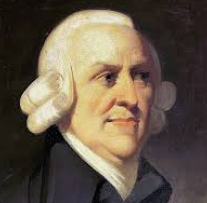
Good roads, canals, and navigable rivers, by diminishing the expence of carriage, put the remote parts of the country more nearly upon a level with those of the neighbourhood of the town. They are upon that the greatest of all improvements.
▼
Source
Chapter XI, Part I, p. 174.
4 months ago
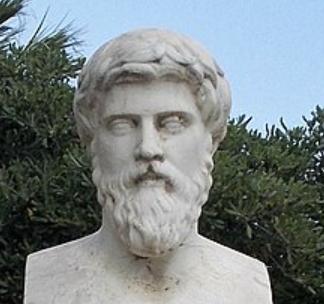
Cato instigated the magistrates to punish all offenders, saying that they that did not prevent crimes when they might, encouraged them. Of young men, he liked them that blushed better than those who looked pale.
▼
Source
Cato the Elder

4 months ago
Before Christianity suicide was not in any way troubling. Our lives were our own, and when we tired of them we were at liberty to end them. One might think that as Christianity has declined, this freedom would be reclaimed. Instead secular creeds have sprung up, in which each person’s life belongs to everyone else. To hand back the gift of life because it does not please is still condemned as a kind of blasphemy, though the offended deity is now humanity instead of God.
▼
Source
Sweet Morality (p. 231-2)
4 months ago
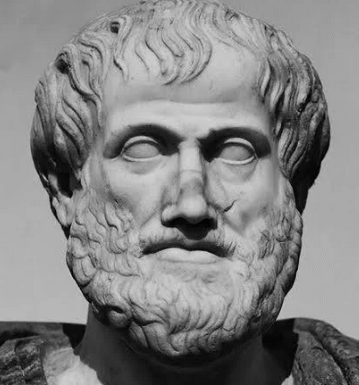
Homer has taught all other poets the art of telling lies skillfully.
▼
Source
1460a.19 | Variant: It is Homer who has chiefly taught other poets the art of telling lies skillfully.

4 months ago
A rationalist, as I use the word, is a man who attempts to reach decisions by argument and perhaps, in certain cases, by compromise, rather than by violence. He is a man who would rather be unsuccessful in convincing another man by argument than successful in crushing him by force, by intimidation and threats, or even by persuasive propaganda.

4 months ago
At the approach of danger there are always two voices that speak with equal force in the heart of man: one very reasonably tells the man to consider the nature of the danger and the means of avoiding it; the other even more reasonable says that it is too painful and harassing to think of the danger, since it is not a man's power to provide for everything and escape from the general march of events; and that it is therefore better to turn aside from the painful subject till it has come, and to think of what is pleasant. In solitude a man generally yields to the first voice; in society to the second.
▼
Source
Bk. X, ch. 17

4 months ago
We are confronted with the incompatible claims of Jerusalem and Athens to our allegiance. We are open to both and willing to listen to each. We ourselves are not wise but we wish to become wise. We are seekers for wisdom, philo-sophoi.
▼
Source
Athens and Jerusalem : Some Preliminary Reflections in Studies in Platonic Political Philosophy (1985), p. 149

4 months ago
Sometimes a scream is better than a thesis.
▼
Source
1836
4 months ago
I want to emphasize the importance of historical memory in our contemporary efforts to work together across differences. I raise the importance of historical memory not for the purpose of presenting immutable paradigms for coalition-building, but rather in order to understand historical trajectories and precisely to move beyond older conceptions of cross-racial organizing.
4 months ago
To think is to submit to the whims and commands of an uncertain health.
4 months ago
As every individual, therefore, endeavours as much as he can both to employ his capital in the support of domestic industry, and so to direct that industry that its produce may be of the greatest value; every individual necessarily labours to render the annual revenue of the society as great as he can. He generally, indeed, neither intends to promote the public interest, nor knows how much he is promoting it. By preferring the support of domestic to that of foreign industry, he intends only his own security; and by directing that industry in such a manner as its produce may be of the greatest value, he intends only his own gain, and he is in this, as in many other cases, led by an invisible hand to promote an end which was no part of his intention. Nor is it always the worse for the society that it was no part of it. By pursuing his own interest he frequently promotes that of the society more effectually than when he really intends to promote it. I have never known much good done by those who affected to trade for the public good. It is an affectation, indeed, not very common among merchants, and very few words need be employed in dissuading them from it.
▼
Source
Chapter II, p. 488-489.
4 months ago
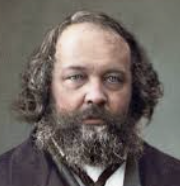
Political Freedom without economic equality is a pretense, a fraud, a lie; and the workers want no lying.
▼
Source
[http://www.marxists.org/reference/archive/bakunin/works/writings/ch05.htm "The Red Association"] (1870)
4 months ago
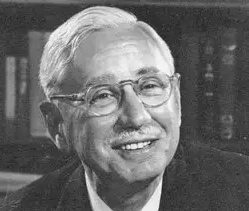
Philosophy accepts the hard and hazardous task of dealing with problems not yet open to the methods of science — problems like good and evil, beauty and ugliness, order and freedom, life and death; so soon as a field of inquiry yields knowledge susceptible of exact formulation it is called science. Every science begins as philosophy and ends as art; it arises in hypothesis and flows into achievement.
4 months ago
The belief that there is some hidden cabal directing the course of events is a type of anthropomorphism – a way of finding agency in the entropy of history.
▼
Source
In the Puppet Theatre: Puppetry, Conspiracy and Ouija Boards (p. 133)
4 months ago
As man loses touch with his 'inner being', his instinctive depths, he finds himself trapped in the world of consciousness, that is to say, in the world of other people. Any poet knows this truth; when other people sicken him, he turns to hidden resources of power inside himself, and he knows then that other people don't matter a damn. He knows the 'secret life' inside him is the reality; other people are mere shadows in comparison. but the 'shadows' themselves cling to one another. 'Man is a political animal', said Aristotle, telling one of the greatest lies in human history. Man has more in common with the hills, or with the stars, than with other men.
▼
Source
Colin Wilson in The Mind Parasites, p. 170 (1967)
4 months ago
Diversity makes critical argument fruitful. ...[P]artners in an argument must share ...the wish to know, and the readiness to learn from the other ...by severely criticizing his views... and hearing... [the] reply. ...the so-called method of science consists in this kind of criticism.
4 months ago
And the angel's body was bared, and he was clothed in light so that eye could not look on him; and his voice grew louder, as though it came not from him but from heaven above. And the angel said: I have learnt that all men live not by care for themselves, but by love. It was not given to the mother to know what her children needed for their life. Nor was it given to the rich man to know what he himself needed. Nor is it given to any man to know whether, when evening comes, he will need boots for his body or slippers for his corpse. I remained alive when I was a man, not by care of myself, but because love was present in a passer-by, and because he and his wife pitied and loved me. The orphans remained alive, not because of their mother's care, but because there was love in the heart of a woman a stranger to them, who pitied and loved them. And all men live not by the thought they spend on their own welfare, but because love exists in man. I knew before that God gave life to men and desires that they should live; now I understood more than that. I understood that God does not wish men to live apart, and therefore he does not reveal to them what each one needs for himself; but he wishes them to live united, and therefore reveals to each of them what is necessary for all. I have now understood that though it seems to men that they live by care for themselves, in truth it is love alone by which they live. He who has love, is in God, and God is in him, for God is love.
▼
Source
Ch. XII
4 months ago
Men are constantly attracted and deluded by two opposite charms: the charm of competence which is engendered by mathematics and everything akin to mathematics, and the charm of humble awe, which is engendered by meditation on the human soul and its experiences. Philosophy is characterized by the gentle, if firm, refusal to succumb to either charm. It is the highest form of the mating of courage and moderation. In spite of its highness or nobility, it could appear as Sisyphean or ugly, when one contrasts its achievement with its goal. Yet it is necessarily accompanied, sustained and elevated by eros. It is graced by nature's grace.
▼
Source
p. 40
4 months ago
The stars awaken a certain reverence, because though always present, they are inaccessible; but all natural objects make a kindred impression, when the mind is open to their influence. Nature never wears a mean appearance. Neither does the wisest man extort her secret, and lose his curiosity by finding out all her perfection. Nature never became a toy to a wise spirit. The flowers, the animals, the mountains, reflected the wisdom of his best hour, as much as they had delighted the simplicity of his childhood.
▼
Source
Nature
4 months ago
The massive prison-building project that began in the 1980s created the means of concentrating and managing what the capitalist system had implicitly declared to be a human surplus. In the meantime, elected officials and the dominant media justified the new draconian sentencing practices, sending more and more people to prison in the frenzied drive to build more and more prisons by arguing that this was the only way to make our communities safe from murderers, rapists, and robbers
4 months ago
I have a weakness for cemeteries, though they aren't so beautiful anymore, because they are simply overpopulated! When I meet friends or people I know who are going through a difficult period, I usually have this advice for them: "Go for twenty minutes in acemetery and you'll see that, though your worry won't disappear, you'll almost forget about it and you'll feel better." Just a few days ago I told a young woman who was suffering fearfully from an unhappy love, "Since you don't live far from Montparnasse, take a walk through the cemetery, just half an hour, and you will see that your misery will appear bearable." In such a situation, it is much better to do that than to go to a doctor; there is no medicine that can help. To visit a cemetery in such a situation is a lesson, a lesson in wisdom! I have always practiced such methods, or recommended them, although it may not seem altogether serious, but it has been effective in every case. What can one say that is meaningful to someone in despair? Absolutely nothing, or almost nothing. My advice shows immediate results.
4 months ago
Justice, however, never was in reality administered gratis in any country. Lawyers and attornies, at least, must always be paid by the parties; and, if they were not, they would perform their duty still worse than they actually perform it.
▼
Source
Chapter I, Part II, p. 778.
4 months ago
I bow before the authority of special men because it is imposed upon me by my own reason. I am conscious of my inability to grasp, in all its details and positive developments, any very large portion of human knowledge. The greatest intelligence would not be equal to a comprehension of the whole. Thence results, for science as well as for industry, the necessity of the division and association of labor. I receive and I give — such is human life. Each directs and is directed in his turn. Therefore there is no fixed and constant authority, but a continual exchange of mutual, temporary, and, above all, voluntary authority and subordination.
4 months ago
Let us ask the Gods not for possessions, but for things to do; happiness is in making things rather than consuming them.
▼
Source
Ch. 2 : On Youth

4 months ago
The perfection of the effect demonstrates the perfection of the cause, for a greater power brings about a more perfect effect. But God is the most perfect agent. Therefore, things created by Him obtain perfection from Him. So, to detract from the perfection of creatures is to detract from the perfection of divine power.
▼
Source
III, 69, 15
4 months ago
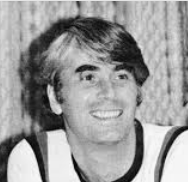
Whatever the practical origins of aesthetic discernment may have been, it has been used to create great works of art. When the very loftiest human creations are seen to derive from humble origins and functions, what needs revision is not our esteem for these creations but our notion of nobility.
▼
Source
The Nature of Rationality (1993), Ch. V : Instrumental Rationality and Its Limits; Rationality's Imagination, p. 181
4 months ago
I read Karl Popper's The Open Society and its Enemies. Popper, whose analysis in many ways complemented that of Hayek, approached Marxism from the point of view of the philosopher of the natural sciences. This meant that he was ideally equipped to expose the fraudulent claim of Marxists to have discovered immutable laws of history, social development or "progress" – laws which were comparable to the laws of natural science. It was not just that the "inevitable" course of events which Marx had prophesied had not occurred and showed no signs of occurring. Marx and Marxists had not even understood the scientific method, let alone practised it in their analysis. Unlike the Marxists – whether historians, economists or social scientists – who tried to "prove" their theories by accumulating more and more facts to sustain them, "the method of science is rather to look out for facts which may refute the theory... and the fact that all tests of the theory are attempted falsifications of predictions derived with its help furnishes the clue to scientific method". The political consequences of this basic error – perhaps more properly described as basic fraud – were summed up by Popper in the dedication of his later book The Poverty of Historicism: "In memory of the countless men, women and children of all creeds or nations or races who fell victims to the fascist and communist belief in Inexorable Laws of Historical Destiny."
▼
Source
Margaret Thatcher, The Path to Power (1995), pp. 58-59
4 months ago
We are not ostriches, and cannot believe that if we refuse to look at what we do not wish to see, it will not exist. This is especially the case when what we do not wish to see is what we wish to eat. If it were really indispensable, or, if not indispensable, at least in some way useful! But it is quite unnecessary ... And this is continually being confirmed by the fact that young, kind, undepraved people — especially women and girls — without knowing how it logically follows, feel that virtue is incompatible with beefsteaks, and, as soon as they wish to be good, give up eating flesh.
▼
Source
Ch. X
4 months ago
The Euthyphron then gives us a two-fold presentation of piety. First, a discussion of what piety is. Secondly, a presentation of the problem of Socrates' piety.
4 months ago
Explore, and explore, and explore. Be neither chided nor flattered out of your position of perpetual inquiry. Neither dogmatise yourself, nor accept another's dogmatism. Why should you renounce your right to traverse the star-lit deserts of truth, for the premature comforts of an acre, house, and barn? Truth also has its roof, and bed, and board. Make yourself necessary to the world, and mankind will give you bread, and if not store of it, yet such as shall not take away your property in all men's possessions, in all men's affections, in art, in nature, and in hope.
4 months ago
To this day, in the US it is still said there are no political prisoners. Unlike South Africa, for example, which acknowledged Nelson Mandela as a political prisoner, here we have the guise of democracy. We're supposed to be inhabiting a country in which people have the right to free speech and political affiliation. When I was fired simply for being a member of the Communist Party, I discovered that was not the case.
4 months ago
[The Wealth of Nations gave a] scientific backbone to liberal sentiment.
▼
Source
Lord Acton, private notes, quoted in G. E. Fasnacht, Acton's Political Philosophy: An Analysis (1952), p. 145
4 months ago
Nozick’s Theory, in spite of its apparent dedication to self-ownership, cannot escape the conclusion that women’s entitlement rights to those they produce must take priority of persons’ rights to themselves at birth. ... There is nothing about a woman’s production of an infant that does not easily fulfill the conditions of the principle of acquisition as Nozick specifies them.
▼
Source
Susan Moller Okin, Justice, Gender, and the Family, (USA: Basic Books, 1989), p. 82
4 months ago
There is no single speech nor article in which it is not said that the purpose of all these orgies is the peace of Europe. At a dinner given by the representatives of French literature, all breathe of peace. M. Zola, who, a short time previously, had written that war was inevitable, and even serviceable; M. de Vogue, who more than once has stated the same in print, say, neither of them, a word as to war, but speak only of peace. The sessions of Parliament open with speeches upon the past festivities; the speakers mention that such festivities are an assurance of peace to Europe. It is as if a man should come into a peaceful company, and commence energetically to assure everyone present that he has not the least intention to knock out anyone's teeth, blacken their eyes, or break their arms, but has only the most peaceful ideas for passing the evening.
▼
Source
Ch. 1

4 months ago
The class (or class alliance) in power cannot lay down the law in the ISAs as easily as it can in the )repressive) State apparatus, not only because the former ruling classes are able to retain strong positions there for a long time, but also because the resistance of the exploited classes is able to finds find means and occasions to express itself there, either by the utilization of their contradictions, or by conquering combat positions in struggle.
▼
Source
p.147
4 months ago
There are two laws discrete Not reconciled, Law for man, and law for thing.
▼
Source
Ode: Inscribed to W. H. Channing, st. 9
4 months ago
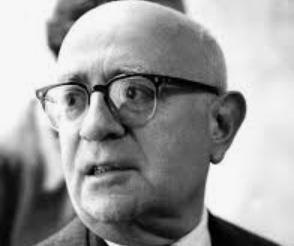
Philosophy ... should not imagine that specialized work in epistemological theory, or whatever else prides itself on being research, is actually philosophy. Yet a philosophy forswearing all of that must in the end be irreconcilably at odds with the dominant consciousness. Nothing else raises it above the suspicion of apologetics. Philosophy that satisfies its own intention, and does not childishly skip behind its own history and the real one, has its lifeblood in the resistance against the common practices of today and what they serve, against the justification of what happens to be the case.
▼
Source
p. 6

4 months ago
There is no reason why someone who is in doubt about the existence of God should not pray for help and guidance on this topic as in other matters. Some find something comic in the idea of an agnostic praying to a God whose existence he doubts. It is surely no more unreasonable than the act of a man adrift in the ocean, trapped if a cave, or stranded on a mountainside, who cries for help though he may never be heard or fires a signal which may never be seen.
▼
Source
The God of the Philosophers (1979), p. 129
4 months ago
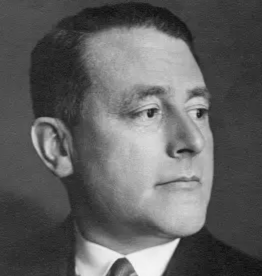
Correctly understood, the phrase “tyranny of values” may supply the key to the understanding that all thinking about values only foments and intensifies the old and endless struggle between convictions and interests. Not much is gained by what the modern philosophy of values acknowledges as the “fundamental relationship,” according to which, occasionally the lower value may be preferred to the higher value, because that is the prerequisite of the higher value. All that points only to the confusion that affects the whole argumentation about values, which continually gives rise to new relations and points of view, thereby the position is always maintained from which the opponent is reproached that he does not heed the manifest values; or, in other words, he is disqualified as value-blind. The polemical utilization of the word “blind” is adequate to the logic of values as long as it is concerned with the systems of reference that it will build up out of viewpoints, standpoints, and vantage-points.
4 months ago
While discussing what it is that makes the “pleasures of wealth and greatness ... strike the imagination as something grand and beautiful,” [Adam Smith] remarks that “in the languor of disease and the weariness of old age” we cease to be so impressed, for we then take note of the fact that the acquisition of wealth and greatness leaves their possessors “always as much, and sometimes more exposed than before, to anxiety, to fear, and to sorrow, to diseases, to danger, and to death” (The Theory of Moral Sentiments IV, chapter I). But to allow our attention to dwell on this is, on Smith’s view, misguided.To do so is to embrace a “splenetic philosophy,” the effect of “sickness or low spirits” upon an imagination “which in pain and sorrow seems to be confined,” so that we are no longer “charmed with the beauty of that accommodation which reigns in the palaces and economy of the great.” The imagination of those “in better health or in better humor” fosters what may, Smith concedes, be no more than seductive illusions about the pleasures of wealth and greatness, but they are economically beneficial illusions. “It is this deception which rouses and keeps in continual motion the industry of mankind.” So even someone as perceptive as Smith, when he does pause to recognize the perspectives of ill health and old age, finds reason at once to put them on one side. And in so doing Smith speaks for moral philosophy in general.
▼
Source
Alasdair MacIntyre, Dependent Rational Animals (1999), p. 2
4 months ago
I know that most men — not only those considered clever, but even those who are very clever and capable of understanding most difficult scientific, mathematical, or philosophic, problems — can seldom discern even the simplest and most obvious truth if it be such as obliges them to admit the falsity of conclusions they have formed, perhaps with much difficulty — conclusions of which they are proud, which they have taught to others, and on which they have built their lives.
▼
Source
Opening to Ch 14. Translation from: What Is Art and Essays on Art (Oxford University Press, 1930, trans. Aylmer Maude) | Variant: I know that most men, including those at ease with problems of the greatest complexity, can seldom accept even the simplest a

4 months ago
If there be such a principle as justice, or natural law, it is the principle, or law, that tells us what rights were given to every human being at his birth; what rights are, therefore, inherent in him as a human being, necessarily remain with him during life; and, however capable of being trampled upon, are incapable of being blotted out, extinguished, annihilated, or separated or eliminated from his nature as a human being, or deprived of their inherent authority or obligation.On the other hand, if there be no such principle as justice, or natural law, then every human being came into the world utterly destitute of rights; and coming into the world destitute of rights, he must necessarily forever remain so. For if no one brings any rights with him into the world, clearly no one can ever have any rights of his own, or give any to another. And the consequence would be that mankind could never have any rights; and for them to talk of any such things as their rights, would be to talk of things that never had, never will have, and never can have any existence.
▼
Source
Section IV, p. 12–13
4 months ago
The thing done avails, and not what is said about it. An original sentence, a step forward, is worth more than all the censures.
▼
Source
First Visit to England

4 months ago
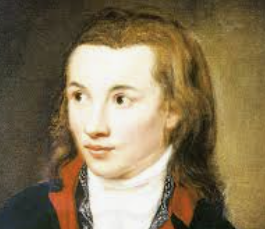
Most men are wicked.
4 months ago
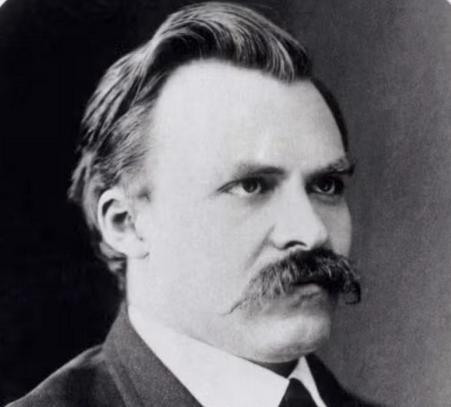
To get to know a truth properly, one must polemicize it.
▼
Source
Quoted in The Viking Book of Aphorisms by Wystan Hugh Auden (1962) p. 323
4 months ago
So far no one had had enough courage and intelligence to reveal me to my dear Germans. My problems are new, my psychological horizon frighteningly comprehensive, my language bold and clear; there may well be no books written in German which are richer in ideas and more independent than mine.
▼
Source
Letter to Carl Fuchs (14 December 1887)
CivilSimian.com created by AxiomaticPanic, CivilSimian, Kalokagathia