
5 months 1 week ago
Pyrrhus said, "If I should overcome the Romans in another fight, I were undone."
▼
Source
47 Pyrrhus

5 months 1 week ago
Against the many Russian thinkers influenced by Hegel who believed that history was governed by universal laws to which one could only submit, Turgenev upheld the freedom of different societies to pursue different paths of development and of individuals to pursue, even in opposition to powerful historical forces, their own goals and values. Here Turgenev endorsed the celebrated dictum of Alexander Herzen, with whom he disagreed on other matters: that history has no libretto. Human history is a realm of contingency and unpredictability, in which each generation faces conflicts that have no ideal solution.
▼
Source
'Isaiah Berlin: The Value of Decency' (p.105)
5 months 1 week ago
The best friend is he that, when he wishes a person's good, wishes it for that person's own sake.
▼
Source
Book IX, 1168b.1 | Variants: My best friend is the man who in wishing me well wishes it for my sake. The best friend is the man who in wishing me well wishes it for my sake.

5 months 1 week ago
I see now more clearly than ever before that even our greatest troubles spring from something that is as admirable and sound as it is dangerous — from our impatience to better the lot of our fellows. For these troubles are the by-products of what is perhaps the greatest of all moral and spiritual revolutions of history, a movement which began three centuries ago. It is the longing of uncounted unknown men to free themselves and their minds from the tutelage of authority and prejudice. It is their attempt to build up an open society which rejects the absolute authority to preserve, to develop, and to establish traditions, old or new, that measure up to their standards of freedom, of humaneness, and of rational criticism. It is their unwillingness to sit back and leave the entire responsibility for ruling the world to human or superhuman authority,and their readiness to share the burden of responsibility for avoidable suffering, and to work for its avoidance. This revolution has created powers of appalling destructiveness; but they may yet be conquered.
▼
Source
Preface to the Second Edition.

5 months 1 week ago
The vicomte was a nice-looking young man with soft features and polished manners, who evidently considered himself a celebrity but out of politeness modestly placed himself at the disposal of the circle in which he found himself. Anna Pávlovna was obviously serving him up as a treat to her guests. As a clever maître d'hôtel serves up as a specially choice delicacy a piece of meat that no one who had seen it in the kitchen would have cared to eat, so Anna Pávlovna served up to her guests, first the vicomte and then the abbé, as peculiarly choice morsels. The group about Mortemart immediately began discussing the murder of the Duc d'Enghien. The vicomte said that the Duc d'Enghien had perished by his own magnanimity, and that there were particular reasons for Buonaparte's hatred of him.
▼
Source
Bk. I, Ch. III

5 months 1 week ago
We believe that failing to call a spade a spade is not scientific.
▼
Source
p. 50

5 months 1 week ago
A mollusk is a cheap edition [of man] with a suppression of the costlier illustrations, designed for dingy circulation, for shelving in an oyster-bank or among the seaweed.
▼
Source
Power and Laws of Thought (c. 1870)

5 months 1 week ago
To reiterate, rather than try to imagine one single alternative to the existing system of incarceration, we might envision an array of alternatives that will require radical transformations of many aspects of our society. Alternatives that fail to address racism, male dominance, homophobia, class bias, and other structures of domination will not, in the final analysis, lead to decarceration and will not advance the goal of abolition.
▼
Source
Chapter Six

5 months 1 week ago
Criminal history shows us how many torturers of men, and murderers, have first been torturers of animals. The manner in which a nation in the aggregate treats animals, is one chief measure of its real civilization. The Latin races, as we know, come forth badly from this examination; we Germans, not half well enough. Buddhism has done more in this direction than Christianity, and Schopenhauer more than all ancient and modern philosophers together. The warm sympathy with sentient Nature which pervades all the writings of Schopenhauer, is one of the most pleasing aspects of his thoroughly intellectual, yet often unhealthy and unprofitable philosophy.
▼
Source
David Strauss, The Old Faith and the New (Der alte und der neue Glaube, translated from the 6th edition by M. Blind, New York: Henry Holt & Co., 1873), vol. II, part IV, ch. 71, [https://archive.org/stream/oldfaithnewconfe01stra#page/59/mode/2up pp. 59]-6

5 months 1 week ago
It is not by genius, it is by suffering, and suffering alone, that one ceases to be a marionette.
5 months 1 week ago
It seldom happens, however, that a great proprietor is a great improver.
▼
Source
Chapter IV, p. 420.
5 months 1 week ago
Surely, the time has come for the intellectuals, the liberals, and the radicals of the world to speak out about this new slavery, to call it clearly and bluntly what it is. For it can no longer be doubted that in this dictatorship of the politicians is to be found every abuse which liberals and radicals have denounced in their own society for generations. . . . the Soviet has allowed it people to starve by the thousands. . . . It has choked all competition, and made itself a monopoly of monopolies; it has restored serfdom, conscription of labor, and indentured servitude among a people that has recently liberated itself by revolution and civil war, from these feudal chains; . . . it has kept wages low and labor intense, it has made democracy in the factory only a sham; it has herded and regimented its people like cattle. It has pitilessly industrialized its women under the pretense of emancipating them; it has crowded the population into dingy quarters, and offered every discouragement to the creation of homes. . . . . It is stifled the growth of democracy, and has centralized power into dictatorship of fanatics and machines; it has waged a class war against the peasants, tradesmen, and mental workers; . . . there is no opportunity for the expression of the public will; . . . it has oppressed with unsurpassed barbarity men and women guilty of no other crime than the prosperity attendant upon enterprise, industry, intelligence, and thrift; it has refused to the rights of habeas corpus, of trial by jury, of equality before the law; it has sent it secret police into millions of homes; . . . it has terrorized the public with marching armies, secret police, merciless penalties, and a million spies. It has deported or shot hundreds of thousands of men and women solely for political heresy and non-conformance. It has subjected to censorship every drama and every book, even every opera; it has prostituted the press, the radio and the stage . . . It has suppressed all freedom of speech or assembly, and in effect has raised a thousand obstacles against the freedom of worship and belief. . . Slavery, barbarism and desolation—these fundamentally, despite a thousand minor virtues, is what Russia is today.
▼
Source
The Tragedy of Russia: Impressions from a brief visit , New York, NY, Simon and Schuster (1933) pp. 150-54
5 months 1 week ago
When one asked him what boys should learn, "That," said he, "which they shall use when men."
▼
Source
Of Agesilaus the Great
5 months 1 week ago
Through all of history and pre-history it has been accepted that there is something wrong with the human animal. Health may be the natural condition of other species, but in humans it is sickness that is normal. To be chronically unwell is part of what it means to be human. It is no accident that every culture has its own versions of therapy. Tribal shamans and modern psychotherapists answer the same needs and practise the same trade.
▼
Source
Beyond the Last Thought: Freud's cigars and the long way round to Nirvana (p. 84)
5 months 1 week ago
There is only one way to avoid criticism: do nothing, say nothing and be nothing.
▼
Source
Source: Elbert Hubbard, Little Journeys to the Homes of American Statesmen (1898), [http://hdl.handle.net/2027/osu.32435065322687?urlappend=%3Bseq=458 p. 370]: "If you would escape moral and physical assassination, do nothing, say nothing, be nothing—cour
5 months 1 week ago
In brief, it is my thesis that human misery is the most urgent problem of a rational public policy and that happiness is not such a problem.
▼
Source
p. 485
5 months 1 week ago
He stepped down, trying not to look long at her, as if she were the sun, yet he saw her, like the sun, even without looking.
▼
Source
Pt. I, ch. 9
5 months 1 week ago
For a philosophy based on faith is no longer philosophy. Perhaps it was this unresolved conflict which has prevented Western thought from ever coming to rest. Perhaps it is this conflict which is at the bottom of a kind of thought which is philosophic indeed but no longer Greek: modern philosophy. It is in trying to understand modern philosophy that we come across Machiavelli. Machiavelli is the only political thinker whose name has come into common use for designating a kind of politics, which exists and will continue to exist independently of his influence, a politics guided exclusively by considerations of 'expediency, which uses all means, fair or foul, iron or poison, for achieving its ends-its end being the aggrandizement of one's country or fatherland-but also using the father land in the service of the self-aggrandizement of the politician or statesman or one's party.
5 months 1 week ago
It is easy to live for others; everybody does. I call on you to live for yourselves.
▼
Source
May 3, 1845
5 months 1 week ago
What the civil rights movement did, it seems to me, was to create a new terrain for asking new questions and moving in new directions. It's not a betrayal that people like Colin Powell and Condoleeza Rice and the Black conservatives who are the heart of government are where they are. As a matter of fact, the civil rights movement demanded access, right? But I don't think that we can assume that what was done in the 1950s and 1960s is going to do the work of the 1980s and 1990s.
5 months 1 week ago
The reasons for persisting in Being seem less and less well founded, and our successors will find it easier than we to be rid of such obstinacy.
5 months 1 week ago
Mercantile jealousy is excited, and both inflames, and is itself inflamed, by the violence of national animosity:...
▼
Source
Chapter III, Part II, p. 534.
5 months 1 week ago
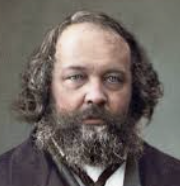
When we speak of justice we do not thereby mean the justice which is imparted to us in legal codes and by Roman law, founded for the most part on acts of force and violence consecrated by time and by the blessings of some church, Christian or pagan and, as such, accepted as an absolute, the rest being nothing but the logical consequence of the same. I speak of that justice which is based solely upon human conscience, the justice which you will rediscover deep in the conscience of every man, even in the conscience of the child, and which translates itself into simple equality. This justice, which is so universal but which nevertheless, owing to the encroachments of force and to the influence of religion, has never as yet prevailed in the world of politics, of law, or of economics, should serve as a basis for the new world. Without it there is no liberty, no republic, no prosperity, no peace! It should therefore preside at all our resolutions in order that we may effectively cooperate in establishing peace.
5 months 1 week ago
When the British came there was, throughout India, a system of communal schools, managed by the village communities. The agents of the East India Company destroyed these village communities, and took steps to replace the schools; even today, after a century of effort to restore them, they stand at only 66% of their number a hundred years ago. Hence, the 93 % illiteracy of India. (source: The Case for India - By Will Durant Simon and Schuster, New York. 1930 p.44).

5 months 1 week ago
Reason in man is rather like God in the world.
▼
Source
Opuscule II, De Regno (On Kingship, c. 1267)

5 months 1 week ago
The fleshless diet contributes to health and to a suitable endurance of hard work in philosophy.
▼
Source
1, 2, 1
5 months 1 week ago
Why do I think that we, the intellectuals, are able to help? Simply because we, the intellectuals, have done the most terrible harm for thousands of years. Mass murder in the name of an idea, a doctrine, a theory, a religion — that is all our doing, our invention: the invention of the intellectuals. If only we would stop setting man against man — often with the best intentions — much would be gained. Nobody can say that it is impossible for us to stop doing this.
5 months 1 week ago
Science has adapted itself entirely to the wealthy classes and accordingly has set itself to heal those who can afford everything, and it prescribes the same methods for those who have nothing to spare.

5 months 1 week ago
Marx compellingly proved it in Capital Volume Two, that no production is possible which does not allow for the reproduction of the material conditions of productions: the reproduction of the means of production.
▼
Source
p.128
5 months 1 week ago
Character is higher than intellect...A great soul will be strong to live, as well as strong to think.
▼
Source
par. 27

5 months 1 week ago
A Right Mind, and Generous Affection, [has] more Beauty and Charm, than all other Symmetrys in the World besides.
▼
Source
Vol. 2, p. 209; "Miscellany III".
5 months 1 week ago
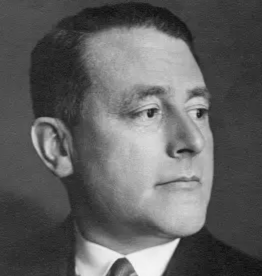
The state as the decisive political entity possesses an enormous power: the possibility of waging war and thereby publicly disposing of the lives of men. The jus belli contains such a disposition. It implies a double possibility: the right to demand from its own members the readiness to die and unhesitatingly to kill enemies.
5 months 1 week ago
III. Every tax ought to be levied at the time, or in the manner, in which it is most likely to be convenient for the contributor to pay it.
▼
Source
Chapter II Part II, p. 893.
5 months 1 week ago
Marx is a Jew and is surrounded by a crowd of little, more or less intelligent, scheming, agile, speculating Jews, just as Jews are everywhere, commercial and banking agents, writers, politicians, correspondents for newspapers of all shades; in short, literary brokers, just as they are financial brokers, with one foot in the bank and the other in the socialist movement, and their arses sitting upon the German press. They have grabbed hold of all newspapers, and you can imagine what a nauseating literature is the outcome of it. Now this entire Jewish world, which constitutes an exploiting sect, a people of leeches, a voracious parasite, Marx feels an instinctive inclination and a great respect for the Rothschilds. This may seem strange. What could there be in common between communism and high finance? Ho ho! The communism of Marx seeks a strong state centralization, and where this exists there must inevitably exist a state central bank, and where this exists, there the parasitic Jewish nation, which speculates upon the labor of the people, will always find the means for its existence.
▼
Source
Letters to the internationals of Bologna - Explanatory and supporting documents (Lettres aux internationaux de Bologne - Pièces explicatives et justificatives), December 1871. Heavily paraphrased from the original into English by in Jew Baiting On The Lef
5 months 1 week ago
These issues are very complex and are best left to a full treatment of the principle of rectification. In the absence of such a treatment applied to a particular society, one cannot use the analysis and theory presented here to condemn any particular scheme of transfer payments, unless it is clear that no considerations of rectification of injustice could apply to justify it. Although to introduce socialism as the punishment for our sins would be to go too far, past injustices might seem to be so great as to make necessary in the short run a more extensive state in order to rectify them.
▼
Source
p. [http://books.google.com/books?id=fVITAAAAQBAJ&pg=PT139 232]
5 months 1 week ago
We are all brothers—and yet every morning a brother or a sister must empty the bedroom slops for me. We are all brothers, but every morning I must have a cigar, a sweetmeat, an ice, and such things, which my brothers and sisters have been wasting their health in manufacturing, and I enjoy these things and demand them...We are all brothers, but I live on a salary paid me for prosecuting, judging, and condemning the thief or the prostitute whose existence the whole tenor of my life tends to bring about, and who I know ought not to be punished but reformed. We are all brothers, but I live on the salary I gain by collecting taxes from needy laborers to be spent on the luxuries of the rich and idle. We are all brothers, but I take a stipend for preaching a false Christian religion, which I do not myself believe in, and which only serves to hinder men from understanding true Christianity. I take a stipend as priest or bishop for deceiving men in the matter of the greatest importance to them. We are all brothers, but I will not give the poor the benefit of my educational, medical, or literary labors except for money. We are all brothers, yet I take a salary for being ready to commit murder, for teaching men to murder, or making firearms, gunpowder, or fortifications.
▼
Source
Chapter V, Contradiction Between our Life and our Christian Conscience

5 months 1 week ago
Children learn the fundamental principles of natural law at a very early age. Thus they very early understand that one child must not, without just cause, strike or otherwise hurt, another; that one child must not assume any arbitrary control or domination over another; that one child must not, either by force, deceit, or stealth, obtain possession of anything that belongs to another; that if one child commits any of these wrongs against another, it is not only the right of the injured child to resist, and, if need be, punish the wrongdoer, and compel him to make reparation, but that it is also the right, and the moral duty, of all other children, and all other persons, to assist the injured party in defending his rights, and redressing his wrongs. These are fundamental principles of natural law, which govern the most important transactions of man with man. Yet children learn them earlier than they learn that three and three are six, or five and five ten. Their childish plays, even, could not be carried on without a constant regard to them; and it is equally impossible for persons of any age to live together in peace on any other conditions.It would be no extravagance to say that, in most cases, if not in all, mankind at large, young and old, learn this natural law long before they have learned the meanings of the words by which we describe it. In truth, it would be impossible to make them understand the real meanings of the words, if they did not understand the nature of the thing itself. To make them understand the meanings of the words justice and injustice before knowing the nature of the things themselves, would be as impossible as it would be to make them understand the meanings of the words heat and cold, wet and dry, light and darkness, white and black, one and two, before knowing the nature of the things themselves. Men necessarily must know sentiments and ideas, no less than material things, before they can know the meanings of the words by which we describe them.
▼
Source
Section IV, p. 9–10
5 months 1 week ago
Each to each a looking-glass, Reflects his figure that doth pass. Every wayfarer he meets What himself declared repeats, What himself confessed records, Sentences him in his words; The form is his own corporal form, And his thought the penal worm. Yet shine forever virgin minds, Loved by stars and the purest winds, Which, o'er passion throned sedate, Have not hazarded their state; Disconcert the searching spy, Rendering to a curious eye The durance of a granite ledge To those who gaze from the sea's edge. It is there for benefit; It is there for purging light; There for purifying storms; And its depths reflect all forms; It cannot parley with the mean,— Pure by impure is not seen. For there's no sequestered grot, Lone mountain tarn, or isle forgot, But Justice, journeying in the sphere, Daily stoops to harbour there.
▼
Source
Astræa
5 months 1 week ago
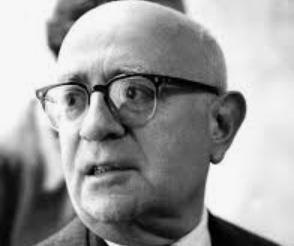
To be sure, exchange-value exerts its power in a special way in the realm of cultural goods. For in the world of commodities this realm appears to be exempted from the power of exchange, to be in an immediate relationship with the goods, and it is this appearance in turn which alone gives cultural goods their exchange-value. But they nevertheless simultaneously fall completely into the world of commodities, are produced for the market, and are aimed at the market.
▼
Source
p. 279

5 months 1 week ago
Seek to please all the citizens, even though Your house may be in an ungracious city. For such a course will favour win from all: But haughty manners oft produce destruction.
5 months 1 week ago
The Roman came into the Promised Land that had become less and less as promised. The rich got along quite well with the foreign occupation; it provided protection from desperate peasants and patriotic resistance fighters. It provided protection from prophets who could be labeled "agitators" now, without any qualms.
▼
Source
p. 121
5 months 1 week ago
The Wealth of Nations is in no sense a textbook. Adam smith is writing to his age, not to his classroom; he is expounding a doctrine that is meant to be of importance in running an empire, not an abstract treatise for academic distribution. The dragons that he slays (such as the Mercantilist philosophy, which takes over two hundred pages to die) were alive and panting, if a little tired, in his day. And finally, the book is a revolutionary one. To be sure, Smith would hardly have countenanced an upheaval that disordered the gentlemanly classes and enthroned the common poor. But the import of The Wealth of Nations is revolutionary, nonetheless.
▼
Source
Robert Heilbroner, The Worldly Philosophers 7th ed. (1999), Chapter III. The Wonderful World of Adam Smith

5 months 1 week ago
If it does not upset, it is not philosophy.
5 months 1 week ago
The activity of art is... as important as the activity of language itself, and as universal.

5 months 1 week ago
Abraham ... was sunk in Ur of the Chaldees among foolish idolaters. His father and mother and all the people worshipped the stars. ... He knew that all were mistaken and that what caused them to err was worship of the images which drove the Truth out of their minds. ... It was proper to destroy and smash the idols so that the people should not err by them like those who think there is no god save images.
▼
Source
Treatise 4: “Idolatry,” H. Russell, trans. (1983), p. 73
5 months 1 week ago
Earth proudly wears the Parthenon As the best gem upon her zone.
▼
Source
The Problem, st. 3
5 months 1 week ago
I remember well a junior seminar I gave with Paul Tillich shortly before the outbreak of the Third Reich. A participant spoke out against the idea of the meaning of existence. She said life did not seem very meaningful to her and she didn't know whether it had a meaning. The very voluble Nazi contingent became very excited by this and scraped the floor noisily with their feet. Now, I do not wish to maintain that this Nazi foot-shuffling proves or refutes anything in particular, but I do find it highly significant. I would say it is a touchstone for the relation of thinking to freedom. It raises the question whether thought can bear the idea that a given reality is meaningless and that mind is unable to orientate itself; or whether the intellect has become so enfeebled that it finds itself paralysed by the idea that all is not well with the world.
▼
Source
pp. 19-20
5 months 1 week ago
So long as mathematicians can impose up-and-down semantics upon students while trafficking personally in the non-up-and-down advantages of their concise statements, they can impose upon the ignorance of man a monopoly of access to accurate processing of information and can fool even themselves by thought habits governing the becoming behavior of professional specialists, by disclaiming the necessity of, or responsibility for, comprehensive adjustment of the a priori thought to total reality of universal principles. The everywhere-relative velocities and momentums of interactions, of energetic phenomena of universe, are central to the preoccupations and realizations of the comprehensive designer. The concept of relativity involves high frequency of re-established awareness, and progressively integrating consideration of the respective, and also integrated dynamic complexities of the moving and transforming frame of reference and of the integrated dynamic complexities of the observed, as well as of the series of integrated sub-dynamic complexities, in respect to each of the major categories of the relatively moving frames of reference, of the observer and the observed. It also involves constant reference of all the reciprocating sub-sets to the comprehensive totality of non-simultaneous universe, from which naught may be lost.
▼
Source
"The Designers and the Politicians" (1962), later published in Ideas and Integrities : A Spontaneous Autobiographical Disclosure (1969), p. 234, and The Buckminster Fuller Reader (1970), p. 305
5 months 1 week ago
One dominant view in the eighteenth century, which was particularly persuasive among French economists, was that the government should actively promote trade and industry. Advocates of this view were called mercantilists. It was partly in response to the mercantilists that Adam Smith (who is often viewed as the founder of modern economics) wrote The Wealth of Nations (1776), in which he argued for a limited role for government. Smith attempted to show how competition and the profit motive would lead individuals—in pursuing their own private interests—to serve the public interest. The profit motive would lead individuals, competing against one another, to supply the goods other individuals wanted. Only firms that produced what was wanted and at as low a price as possible would survive. Smith argued that the economy was led, as if by an invisible hand, to produce what was desired—and in the best possible way. Adam Smith’s ideas had a powerful influence both on governments and on economists.
▼
Source
Joseph E. Stiglitz and Jay K. Rosengard, Economics of the Public Sector (4th ed., 2014)
5 months 1 week ago
The relation of word to thought, and the creation of new concepts is a complex, delicate and enigmatic process unfolding in our soul.
▼
Source
Pegagogicheskie Statli (Pedagogical Writings), pg. 143.
CivilSimian.com created by AxiomaticPanic, CivilSimian, Kalokagathia