
4 months ago
He said that men ought to remember those friends who were absent as well as those who were present.
▼
Source
Thales, 9.
4 months ago
De Maistre and Edgar Poe taught me how to think.
▼
Source
Charles Baudelaire, Mon cœur mis à nu (1864), p. 131

4 months ago
God only pours out his light into the mind after having subdued the rebellion of the will by an altogether heavenly gentleness which charms and wins it.
4 months ago
If what we are discussing were a point of law or of the humanities, in which neither true nor false exists, one might trust in subtlety of mind and readiness of tongue and in the greater experience of the writers, and expect him who excelled in those things to make his reasoning most plausible, and one might judge it to be the best. But in the natural sciences, whose conclusions are true and necessary and have nothing to do with human will, one must take care not to place oneself in the defense of error; for here a thousand Demostheneses and a thousand Aristotles would be left in the lurch by every mediocre wit who happened to hit upon the truth for himself. Therefore, Simplicio, give up this idea and this hope of yours that there may be men so much more learned, erudite, and well-read than the rest of us as to be able to make that which is false become true in defiance of nature.
▼
Source
Salviati, p. 61

4 months ago
Far be it from us not to recognize the importance of the second factor, moral teaching — especially that which is unconsciously transmitted in society and results from the whole of the ideas and comments emitted by each of us on facts and events of every-day life. But this force can only act on society under one condition, that of not being crossed by a mass of contradictory immoral teachings resulting from the practice of institutions.In that case its influence is nil or baneful. Take Christian morality: what other teaching could have had more hold on minds than that spoken in the name of a crucified God, and could have acted with all its mystical force, all its poetry of martyrdom, its grandeur in forgiving executioners? And yet the institution was more powerful than the religion: soon Christianity — a revolt against imperial Rome — was conquered by that same Rome; it accepted its maxims, customs, and language. The Christian church accepted the Roman law as its own, and as such — allied to the State — it became in history the most furious enemy of all semi-communist institutions, to which Christianity appealed at Its origin.
4 months ago
Like sending owls to Athens, as the proverb goes.
▼
Source
Plato, 32.
4 months ago
Any character or proposition either concerns one subject, two subjects, or a plurality of subjects. For example, one particle has mass, two particles attract one another, a particle revolves about the line joining two others. A fact concerning two subjects is a dual character or relation; but a relation which is a mere combination of two independent facts concerning the two subjects may be called degenerate, just as two lines are called a degenerate conic. In like manner a plural character or conjoint relation is to be called degenerate if it is a mere compound of dual characters. A sign is in a conjoint relation to the thing denoted and to the mind. If this triple relation is not of a degenerate species, the sign is related to its object only in consequence of a mental association, and depends upon a habit. Such signs are always abstract and general, because habits are general rules to which the organism has become subjected. They are, for the most part, conventional or arbitrary. They include all general words, the main body of speech, and any mode of conveying a judgment. For the sake of brevity I will call them tokens.
4 months ago
Nature, which alone is good, is wholly familiar and common.
4 months ago
It is only in order to shield your ignorance that you put the Lord at every turn to the refuge of a miracle.
▼
Source
Giorgio de Santillana attributed this remark to the Dialogue in The Crime of Galileo (1955), but it does not appear there. A vaguely similar exchange appears in the Fourth Day of the Dialogue, when Salviati asks Simplicio why he resorts to a miracle to ex
4 months ago
Modern philosophy is usually considered to have begun with Descartes (1596-1650), who lived a generation after Galileo. The following is the usual image of Descartes and his philosophy: During the Middle Ages philosophy stood - if it stood independently at all - under the exclusive domination of theology and gradually degenerated into a mere analysis of concepts and elucidations of traditional opinion and propositions. It petrified into an academic knowledge which no longer concerned man and was unable to illuminate reality as a whole. Then Descartes appeared and liberated philosophy from this position. He began by doubting everything, but this doubt finally did run into something which could no longer be doubted, for, inasmuch as the skeptic doubts, he cannot doubt that he, the skeptic, is present and must be present in order to doubt at all. As I doubt I must admit that "I am." The "I," accordingly, is the indubitable. As a doubter, Descartes forced men into doubt in this way; he led them to think of themselves, as their "I." Thus the "I," human subjectivity, came to be declared the center of thought. From here originated the I-viewpoint of modern times and its subjectivism. p. 98-99
4 months ago
The mine of the future will be well ventilated, with a temperature as easily regulated as that of a library; there will be no horses doomed to die below the earth: underground traction will be carried on by means of an automatic cable put in motion at the pit's mouth.
▼
Source
Ch. 10 : Agreeable Work
4 months ago
All things are in common among friends.
▼
Source
Diogenes, 6.

4 months ago
If there is a revelation, it can not then contradict nature.
4 months ago
Suppose a surface to be part red and part blue; so that every point on it is either red or blue, and of course, no part can be both red and blue. What then, is the color of the surface in the immediate neighborhood of the point. ...it follows that the boundary is half red and half blue. In like manner, we find it necessary to hold that consciousness essentially occupies time... Thus, the present is half past and half time to come. ...Take another case: the velocity of a particle at any instant of time is its mean velocity during an infinitesimal instant in which that time is consumed. Just so, my immediate feeling is my feeling through an infinitesimal duration containing the present instant.
4 months ago
The tenor of Derridian philosophy shares with Heidegger’s a dangerous proclivity towards the bombastic translations of problems of being and knowledge into strident moral dilemmas. Like the cosmic drama of Being repressed by being in Heidegger, Derrida’s protests against phonocentrism sound more like lay sermonizing than genuine analytical argument.
▼
Source
J.G. Merquior (1986). From Paris to Prague: A Critique of Structuralist and Poststructualist Thought. London: Verso, , pp 226
4 months ago
As to the sudden industrial progress which has been achieved during our own century, and which is usually ascribed to the triumph of individualism and competition, it certainly has a much deeper origin than that. Once the great discoveries of the fifteenth century were made, especially that of the pressure of the atmosphere, supported by a series of advances in natural philosophy — and they were made under the medieval city organization, — once these discoveries were made, the invention of the steam-motor, and all the revolution which the conquest of a new power implied, had necessarily to follow... To attribute, therefore, the industrial progress of our century to the war of each against all which it has proclaimed, is to reason like the man who, knowing not the causes of rain, attributes it to the victim he has immolated before his clay idol. For industrial progress, as for each other conquest over nature, mutual aid and close intercourse certainly are, as they have been, much more advantageous than mutual struggle.
4 months ago
Epicurus laid down the doctrine that pleasure was the chief good.
▼
Source
Epicurus, 6.

4 months ago
Positive philosophy made its counter-attack against critical rationalism on two fronts. Comte fought against the French form of negative philosophy, against the heritage of Descartes and the Enlightenment. In Germany, the struggle was directed against Hegel’s system. Schelling received an express commission from Frederick William IV ‘to destroy the dragon seed’ of Hegelianism, while Stahl, another anti-Hegelian, became the philosophical spokesman of the Prussian monarchy in 1840. P. 326
4 months ago
The 'Natural History of the Soul' begins by showing that as yet no philosopher, from Aristotle down to Malebranche, had been able to account for the nature of the soul.
4 months ago
In all the works on pedagogy that ever I read — and they have been many, big, and heavy — I don't remember that any one has advocated a system of teaching by practical jokes, mostly cruel. That, however, describes the method of our great teacher, Experience. She says,
4 months ago
It is as useless for a person to want first of all to decide the externals and after that the fundamentals as it is for a cosmic body, thinking to form itself, first of all to decide the nature of its surface, to what bodies it should turn its light, which its dark side, without first letting the harmony of centrifugal and centripetal forces realize its existence and letting the rest come of itself. One must learn to know oneself before knowing anything else (gnothi seauton). Not until a person has inwardly understood himself and then sees the course he is to take does his life gain peace and meaning.
▼
Source
Journal entry, August 1, 1835

4 months ago
The ancient Greeks knew the laws that govern the propagation of light in a uniform medium and upon its reflection. However, the law governing the refraction of light as it passes from one transparent medium to another was unknown until the last century. Snell discovered it, Descartes tried to explain it and Fermat criticized his explanation. Since then, many great geometers have researched the problem, although no one has yet found a way of harmonizing the law of refraction with more fundamental laws that Nature must obey.
4 months ago
If men will not act for themselves, what will they do when the benefit of their effort is for all?
4 months ago
The radical empiricist onslaught … provides the methodological justification for the debunking of the mind by the intellectuals—a positivism which, in its denial of the transcending elements of Reason, forms the academic counterpart of the socially required behavior.
▼
Source
p. 13
4 months ago
The general form of the total conception of ideology is being used by the analyst when he has the courage to subject not just the adversary's point of view but all points of view, including his own, to the ideological analysis.At the present stage of our understanding it is hardly possible to avoid this general formulation of the total conception of ideology, according to which the thought of all parties in all epochs is of an ideological character.
4 months ago
Peirce was concerned to explicate the idea of meaning whereas James was concerned to explicate the meaning of ideas.
▼
Source
Horace Standish Thayer, in his Introduction to a 1975 edition of Pragmatism by William James
4 months ago
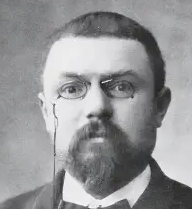
Yet when we speak of time... do we not unconsciously adopt this hypothesis... and put ourselves in the place of this imperfect god... Do not even the atheists put themselves in the place where god would be..?
4 months ago
What the age needs is not a genius — it has had geniuses enough, but a martyr, who in order to teach men to obey would himself be obedient unto death. What the age needs is awakening. And therefore someday, not only my writings but my whole life, all the intriguing mystery of the machine will be studied and studied. I never forget how God helps me and it is therefore my last wish that everything may be to his honour.
▼
Source
(20 November 1847)
4 months ago
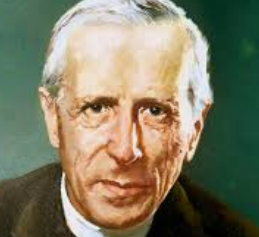
I can truly say — and this in virtue of the whole structure of my thought — that I now feel more indissolubly bound to the hierarchical Church and to the Christ of the Gospel than ever before in my life. Never has Christ seemed to me more real, more personal or more immense.
▼
Source
Letter from Cape Town to Father General, Jean-Baptiste Janssens (12 October 1951)
4 months ago
Every man is a damn fool for at least five minutes a day. Wisdom consists of not exceeding the limit.
4 months ago
The Superego, in censoring the unconscious and in implanting conscience, also censors the censor.
▼
Source
p. 76
4 months ago
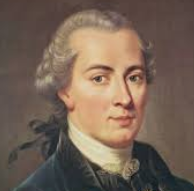
Percepts and phenomena which precedes the logical use of the intellect is called appearance, while the reflex knowledge originating from several appearances compared by the intellect is called experience.
4 months ago
One sticks one's finger into the soil to tell by the smell in what land one is: I stick my finger in existence — it smells of nothing. Where am I? Who am I? How came I here? What is this thing called the world? What does this world mean? Who is it that has lured me into the world? Why was I not consulted, why not made acquainted with its manners and customs instead of throwing me into the ranks, as if I had been bought by a kidnapper, a dealer in souls? How did I obtain an interest in this big enterprise they call reality? Why should I have an interest in it? Is it not a voluntary concern? And if I am to be compelled to take part in it, where is the director? I should like to make a remark to him. Is there no director? Whither shall I turn with my complaint?
▼
Source
Voice: Young Man

4 months ago
To live, by definition, is not something one learns. Not from oneself, it is not learned from life, taught by life. Only from the other and by death. In any case from the other at the edge of life. At the internal border or the external border, it is a heterodidactics between life and death.
▼
Source
Exordium
4 months ago
By virtue of creation, and still more the incarnation, nothing here is profane for those who know how to see.
▼
Source
The Divinisation of Our Activities, p. 66
4 months ago
I can not say specifically where your father and Mrs. Hubbard were when the torpedoes hit, but I can tell you just what happened after that. They emerged from their room, which was on the port side of the vessel, and came on to the boat-deck. Neither appeared perturbed in the least. Your father and Mrs. Hubbard linked arms — the fashion in which they always walked the deck — and stood apparently wondering what to do. I passed him with a baby which I was taking to a lifeboat when he said, "Well, Jack, they have got us. They are a damn sight worse than I ever thought they were." They did not move very far away from where they originally stood. As I moved to the other side of the ship, in preparation for a jump when the right moment came, I called to him, "What are you going to do?" and he just shook his head, while Mrs. Hubbard smiled and said, "There does not seem to be anything to do." The expression seemed to produce action on the part of your father, for then he did one of the most dramatic things I ever saw done. He simply turned with Mrs. Hubbard and entered a room on the top deck, the door of which was open, and closed it behind him. It was apparent that his idea was that they should die together, and not risk being parted on going into the water.
▼
Source
Ernest C. Cowper, a survivor of the sinking of the RMS Lusitania, in a letter to Hubbard's son Elbert Hubbard II (12 March 1916), published in Selected Writings of Elbert Hubbard : His Mintage of Wisdom, Coined from a Life of Love, Laughter and Work (1922
4 months ago
Dialectical logic undoes the abstractions of formal logic and of transcendental philosophy, but it also denies the concreteness of immediate experience. To the extent to which this experience comes to rest with the things as they appear and happen to be, it is a limited and even false experience. It attains its truth if it has freed itself from the deceptive objectivity which conceals the factors behind the facts — that is, if it understands its world as a historical universe, in which the established facts are the work of the historical practice of man.
▼
Source
p. 141
4 months ago
The public use of a man's reason must be free at all times, and this alone can bring enlightenment among men...
4 months ago
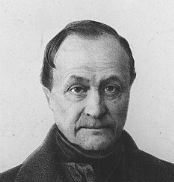
Social positivism only accepts duties, for all and towards all. Its constant social viewpoint cannot include any notion of rights, for such notion always rests on individuality. We are born under a load of obligations of every kind, to our predecessors, to our successors, to our contemporaries. These obligations then increase or accumulate, for it is some time before we can return any service. … Any human right is therefore as absurd as immoral. Since there are no divine rights anymore, this concept must therefore disappear completely as related only to the preliminary regime and totally inconsistent with the final state where there are only duties based on functions.
▼
Source
Le Catéchisme positiviste (1852)
4 months ago
The believer humanly comprehends how heavy the suffering is, but in faith’s wonder that it is beneficial to him, he devoutly says: It is light. Humanly he says: It is impossible, but he says it again in faith’s wonder that what he humanly cannot understand is beneficial to him. In other words, when sagacity is able to perceive the beneficialness, then faith cannot see God; but when in the dark night of suffering sagacity cannot see a handbreadth ahead of it, then faith can see God, since faith sees best in the dark.
▼
Source
Uplifting Discourses in Various Spirits in a section of text entitled “The Gospel of Suffering.” As quoted in: Gordon Marino (February 10, 2021): “Faith sees best in the dark”: Joe Biden, Søren Kierkegaard, and the education of suffering. In: ABC Religon
4 months ago
Bears when first born are shapeless masses of white flesh a little larger than mice, their claws alone being prominent. The mother then licks them gradually into proper shape.
▼
Source
Book VIII, sec. 126.

4 months ago
Too much consistency is as bad for the mind as it is for the body. Consistency is contrary to nature, contrary to life. The only completely consistent people are the dead. Consistent intellectualism and spirituality may be socially valuable, up to a point; but they make, gradually, for individual death.
▼
Source
"Wordsworth in the Tropics" in Do What You Will (1929)
4 months ago
The journalists would appear to be in an almost literal sense the priests of the modern world. They may not rise precisely to the tremendous responsibility which was laid upon Peter, but at least it can be said that whatever they bind on earth is bound on earth, and whatever they loose on earth is loosed on earth. They have essentially and absolutely the same functions that were employed by the old priests, but their power for deceit is even greater and their responsibility to the world even less. A comparison between the priests and the journalists would be striking in many points. [...] The priest's influence and power consisted almost entirely in the fact that he was the only man who brought news. [...] the corruption of the priesthood occurred at the precise moment in which it changed from a minority organised to impart knowledge into a minority organised to withhold it. The great danger of decadence in journalism is almost exactly the same. Journalism possesses in itself the potentiality of becoming one of the most frightful monstrosities and delusions that have ever cursed mankind. This horrible transformation will occur at the exact instant at which journalists realise that they can become an aristocracy.
▼
Source
"The New Priests", in The Speaker, vol. 4 (Mather & Crowther, 1901) [https://books.google.com/books?id=v6-RGg0qKpsC&pg=PA551&dq=%22Journalism+possesses+in+itself+the+potentiality+of+becoming+one+of+the+most+frightful+monstrosities%22&hl=en&newbks=1&newbks
4 months ago
Mathematics, from the earliest times to which the history of human reason can reach, has followed, among that wonderful people of the Greeks, the safe way of science. But it must not be supposed that it was as easy for mathematics as for logic, in which reason is concerned with itself alone, to find, or rather to make for itself that royal road. I believe, on the contrary, that there was a long period of tentative work (chiefly still among the Egyptians), and that the change is to be ascribed to a revolution, produced by the happy thought of a single man, whose experiments pointed unmistakably to the path that had to be followed, and opened and traced out for the most distant times the safe way of a science. The history of that intellectual revolution, which was far more important than the passage round the celebrated Cape of Good Hope, and the name of its fortunate author, have not been preserved to us. ... A new light flashed on the first man who demonstrated the properties of the isosceles triangle (whether his name was Thales or any other name), for he found that he had not to investigate what he saw hi the figure, or the mere concepts of that figure, and thus to learn its properties; but that he had to produce (by construction) what he had himself, according to concepts a priori, placed into that figure and represented in it, so that, in order to know anything with certainty a priori, he must not attribute to that figure anything beyond what necessarily follows from what he has himself placed into it, in accordance with the concept.
▼
Source
Preface to the Second Edition [Tr. F. Max Müller], (New York, 1900), p. 690; as cited in: Robert Edouard Moritz, [https://openlibrary.org/books/OL14022383M/Memorabilia_mathematica Memorabilia mathematica or, The philomath's quotation-book], Published 1914
4 months ago
I dare affirm in knowledge of nature, that a little natural philosophy, and the first entrance into it, doth dispose the opinion to atheism; but on the other side, much natural philosophy and wading deep into it, will bring about men's minds to religion; wherefore atheism every way seems to be combined with folly and ignorance, seeing nothing can can be more justly allotted to be the saying of fools than this, "There is no God"
▼
Source
Of Atheism
4 months ago
Let us suppose that a man believes in eternal life on Christ's word. In that case he believes without any fuss about being profound and searching and philosophical and racking his brains.
▼
Source
P. 103
4 months ago
We are taught by biology to believe that the organism carries no passengers, but only members of the crew, each with an allotted part in keeping the ship afloat and bringing it to port.
4 months ago
The proper study of mankind is books.
▼
Source
Ch. XXVIII
4 months ago
The men that worked for England They have their graves at home; * * * * And they that rule in England In stately conclave met, Alas, alas, for England, They have no graves as yet.
▼
Source
Elegy in a Country Churchyard, as printed in W. Kean Seymour (ed.) A Miscellany of Poetry (1919) p. 26

4 months ago
Love is the extremely difficult realisation that something other than oneself is real. Love, and so art and morals, is the discovery of reality.
▼
Source
"The Sublime and the Good", in the Chicago Review, Vol. 13 Issue 3 (Autumn 1959) p. 51.
CivilSimian.com created by AxiomaticPanic, CivilSimian, Kalokagathia