

3 months 4 weeks ago
The result of this mental dullness is that inner vacuity and emptiness that is stamped on innumerable faces and also betrays itself in a constant and lively attention to all events in the external world, even the most trivial. This vacuity is the real source of boredom and always craves for external excitement in order to set the mind and spirits in motion through something. Therefore in the choice thereof it is not fastidious, as is testified by the miserable and wretched pastimes to which people have recourse. … The principal result of this inner vacuity is the craze for society, diversion, amusement, and luxury of every kind which lead many to extravagance and so to misery. Nothing protects us so surely from this wrong turning as inner wealth, the wealth of the mind, for the more eminent it becomes, the less room does it leave for boredom. The inexhaustible activity of ideas, their constantly renewed play with the manifold phenomena of the inner and outer worlds, the power and urge always to make different combinations of them, all these put the eminent mind, apart from moments of relaxation, quite beyond the reach of boredom.
▼
Source
E. Payne, trans. (1974) Vol. 1, pp. 329–330

3 months 4 weeks ago
"What do you do from morning to night?" "I endure myself."
3 months 4 weeks ago
Nothing, I am sure, calls forth the faculties so much as the being obliged to struggle with the world; and this is not a woman's province in a married state. Her sphere of action is not large, and if she is not taught to look into her own heart, how trivial are her occupations and pursuits! What little arts engross and narrow her mind!
▼
Source
Thoughts on the Education of Daughters (1787), "Matrimony", p. 100
3 months 4 weeks ago
The infinite... happens to subsist in a way contrary to what is asserted by others: for the infinite is not that beyond which there is nothing, but it is that of which there is always something beyond. ...But that pertaining to which there is nothing beyond is perfect and whole. ...that of which nothing is absent pertaining to the parts ...the whole is that pertaining to which there is nothing beyond. But that pertaining to which something external is absent, that is not all ...But nothing is perfect which has not an end; and the end is a bound. On this account... Parmenides spoke better than Melissus: for the latter says that the infinite is a whole; but the former, that the whole is finite, and equally balanced from the middle: for to conjoin the infinite with the universe and the whole, is not to connect line with line.
▼
Source
Book III, Ch. IX, pp. 168-169.
3 months 4 weeks ago
My poems please the brave: My poems, short and sincere, Have the force of steel Which forges swords.
▼
Source
V

3 months 4 weeks ago
As his life and death suggest, Cicero was addicted to Roman politics; he wrote beautifully about the pleasures of a quiet life in the countryside, but hankered for the hurly-burly of the Senate and the courts. His political theory is reflective but far from dispassionate.
3 months 4 weeks ago
A man’s face as a rule says more, and more interesting things, than his mouth, for it is a compendium of everything his mouth will ever say, in that it is the monogram of all this man’s thoughts and aspirations.
▼
Source
Vol. 2, Ch. 29, § 377
3 months 4 weeks ago
Impossible to accede to truth by opinions, for each opinion is only a mad perspective of reality.
3 months 4 weeks ago
The virtue of frugality lies in a middle between avarice and profusion, of which the one consists in an excess, the other in a defect of the proper attention to the objects of self–interest.
▼
Source
Section II, Chap. I.
3 months 4 weeks ago
The preposterous distinction of rank, which render civilization a curse, by dividing the world between voluptuous tyrants and cunning envious dependents, corrupt, almost equally, every class of people, because respectability is not attached to the discharge of the relative duties of life, but to the station, and when the duties are not fulfilled, the affections cannot gain sufficient strength to fortify the virtue of which they are the natural reward. Still there are some loop-holes out of which a man may creep, and dare to think and act for himself; but for a woman it is an herculean task, because she has difficulties peculiar to her sex to overcome, which require almost super-human powers.
▼
Source
Ch. 9
3 months 4 weeks ago
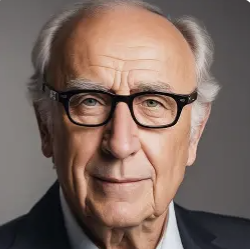
We may, to be more precise, have to relinquish the notion, explicit or implicit, that changes of paradigm carry scientists and those who learn from them closer and closer to the truth
▼
Source
p. 170

3 months 4 weeks ago
If we are to put interrogators to work in defence of liberal values, their role in the community must receive proper recognition. They will require intensive counselling to overcome the inevitable traumas that this difficult work involves. They must be enabled to see themselves as dedicated workers in the cause of progress. Psychotherapy must be available to help them avoid the negative self-image from which some torturers have suffered in the past.
3 months 4 weeks ago
The third kind of life is the life of contemplation.
▼
Source
(Bk. 1, Chapter III)

3 months 4 weeks ago
Scientists try to eliminate their false theories, they try to let them die in their stead. The believer—whether animal or man—perishes with his false beliefs.
▼
Source
Epistemology Without A Knowing Subject (1967)

3 months 4 weeks ago
Understand that all the evils from which you suffer, you yourselves cause by yielding to the suggestions by which emperors, kings, members of parliament, governors, officers, capitalists, priests, authors, artists, and all who need this fraud of patriotism in order to live upon your labour, deceive you!
▼
Source
Patriotism and Government
3 months 4 weeks ago
Man is not an image engraved on a silver dollar, with covetous eyes, licking lips and a diamond pin on a silver dickey. Man is a living duty, a depository of powers that he must not leave in a brute state. Man is a wing.

3 months 4 weeks ago
Most atheists, if they worship anything, worship something which really exists but is not worthy of worship.
▼
Source
p. 84
3 months 4 weeks ago
A man who has no mental needs, because his intellect is of the narrow and normal amount, is, in the strict sense of the word, what is called a philistine.
▼
Source
Personality; or, What a Man Is
3 months 4 weeks ago
Old age, after all, is merely the punishment for having lived.
3 months 4 weeks ago
Our merchants and master-manufacturers complain much of the bad effects of high wages in raising the price, and thereby lessening the sale of their goods both at home and abroad. They say nothing concerning the bad effects of high profits. They are silent with regard to the pernicious effects of their own gains. They complain only of those of other people.
▼
Source
Chapter IX, p. 117.
3 months 4 weeks ago
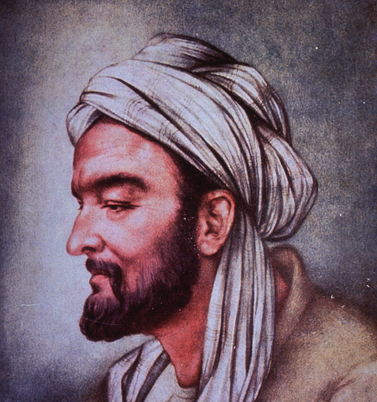
I prefer a short life with width to a narrow one with length.
▼
Source
As quoted in [http://books.google.com.bh/books?id=B8k3fsvGRyEC&lpg=PA85&dq=I%20prefer%20a%20short%20life%20with%20width%20to%20a%20narrow%20one%20with%20length&pg=PA85#v=onepage&q=I%20prefer%20a%20short%20life%20with%20width%20to%20a%20narrow%20one%20with
3 months 4 weeks ago
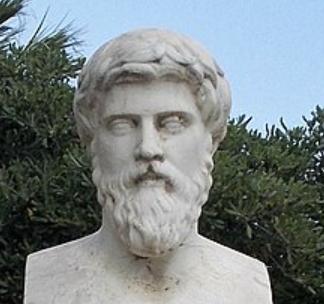
Phocion compared the speeches of Leosthenes to cypress-trees. "They are tall," said he, "and comely, but bear no fruit."
▼
Source
56 Phocion
3 months 4 weeks ago
From a Darwinian point of view, human beliefs are adaptations to our part of the world. No doubt much of what we believe must be roughly accurate, or else we would not have survived. But the beliefs we have evolved might latch on to the world only enough to help us stumble our way through it, and then only for the time being. Human belief-systems could be useful illusions, appearing and disappearing as they prove to be more or less advantageous in the random walk of natural selection. Might not evolution be one of these illusions? Scientific naturalism is the theory that human beliefs are evolutionary adaptations whose survival has nothing to do with their truth. But in that case scientific naturalism is self-defeating, since on its own premises scientific theories cannot be known to be true.
▼
Source
Cross-correspondences (p. 69)
3 months 4 weeks ago
Evils draw men together.
▼
Source
Book I, 1362b.39: quoting a proverb
3 months 4 weeks ago
I believe that there is, from the ethical point of view, no symmetry between suffering and happiness, or between pain and pleasure. Both the greatest happiness principle of the Utilitarians and Kant's principle 'Promote other people's happiness ..' seem to me (at least in their formulations) wrong on this point which, however, is not completely decidable by rational argument. (For the irrational aspect of ethical beliefs, see note 11 to the present chapter, and for the rational aspect, sections II and especially III of chapter 24). In my opinion (cp. note 6 (2) to chapter 5) human suffering makes a direct moral appeal, namely, the appeal for help, while there is no similar call to increase the happiness of a man who is doing well anyway. (A further criticism of the Utilitarian formula 'Maximize pleasure' is that it assumes, in principle, a continuous pleasure-pain scale which allows us to treat degrees of pain as negative degrees of pleasure. But, from the moral point of view, pain cannot be outweighed by pleasure, and especially not one man's pain by another man's pleasure. Instead of the greatest happiness for the greatest number, one should demand, more modestly, the least amount of avoidable suffering for all; and further, that unavoidable suffering—such as hunger in times of an unavoidable shortage of food—should be distributed as equally as possible.)
▼
Source
Vol. 1, Notes to the Chapters: Ch. 9, Note 2.
3 months 4 weeks ago
To attain this end we must secure a preponderance of virtue over vice and must endeavor to secure that the honest man may, even in this world, receive a lasting reward for his virtue. But in these great endeavors we are gravely hampered by the political institutions of today. What is to be done in these circumstances? To favor revolutions, overthrow everything, repel force by force?... No! We are very far from that. Every violent reform deserves censure, for it quite fails to remedy evil while men remain what they are, and also because wisdom needs no violence.
▼
Source
Book V, Ch. 7

3 months 4 weeks ago
I was born human. But this was an accident of fate - a condition merely of time and place. I believe it's something we have the power to change.
▼
Source
in Kevin Warwick "Cyborg 1.0", Wired, pp.145-151, February 2000.

3 months 4 weeks ago
There is a freemasonry among the dull by which they recognize and are sociable with the dull, as surely as a correspondent tact in men of genius.
▼
Source
1827

3 months 4 weeks ago
If Black people had simply accepted a status of economic and political inferiority, the mob murders would probably have subsided. But because vast numbers of ex-slaves refused to discard their dreams of progress, more than ten thousand lynchings occurred during the three decades following the war.
3 months 4 weeks ago
There exists, I grant you, a clinical depression, upon which certain remedies occasionally have effect; but there exists another kind, a melancholy underlying our very outbursts of gaiety and accompanying us everywhere, without leaving us alone for a single moment. And there is nothing that can rid us of this lethal omnipresence: the self forever confronting itself.
3 months 4 weeks ago
When the profits of trade happen to be greater than ordinary, over-trading becomes a general error both among great and small dealers.
▼
Source
Chapter I, p. 469.
3 months 4 weeks ago
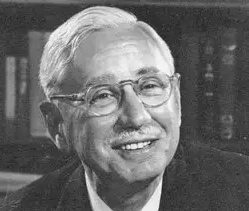
To speak ill of others is a dishonest way of praising ourselves; let us be above such transparent egotism. If you can't say good and encouraging things, say nothing. Nothing is often a good thing to do, and always a clever thing to say.
▼
Source
[https://web.archive.org/web/20130106111821/http://www.willdurant.com/youth.htm We Have a Right To Be Happy Today], commencement address at the Webb School of Claremont, California (7 June 1958)
3 months 4 weeks ago
[Plutarch's Lives are] crowded with very wise maxims and rules of life.
▼
Source
David Chytraeus in the anthology Artis Historicae Penus (Basel, 1579), II, 477, quoted in Peter Burke, 'A Survey of the Popularity of Ancient Historians, 1450–1700', History and Theory, Vol. 5, No. 2 (1966), p. 142
3 months 4 weeks ago
In Leopardi’s view, the universal claims of Christianity were a licence for universal savagery. Because it is directed to all of humanity, the Christian religion is usually praised, even by its critics, as an advance on Judaism. Leopardi – like Freud a hundred years later – did not share this view. The crimes of medieval Christendom were worse than those of antiquity, he believed, precisely because they could be defended as applying universal principles: the villainy introduced into the world by Christianity was ‘entirely new and more terrible … more horrible and more barbarous than that of antiquity’. Modern rationalism renews the central error of Christianity – the claim to have revealed the good life for all of humankind. Leopardi described the secular creeds that emerged in modern times as expressions of ‘half-philosophy’, a type of thinking with many of the defects of religion. What Leopardi called ‘the barbarism of reason’ – the project of remaking the world on a more rational model – was the militant evangelism of Christianity in a more dangerous form. Events have confirmed Leopardi’s diagnosis. As Christianity has waned, the intolerance it bequeathed to the world has only grown more destructive. From imperialism through communism and incessant wars launched to promote democracy and human rights, the most barbarous forms of violence have been promoted as means to a higher civilization.
▼
Source
The Faith of Puppets: Leopardi and the Souls of Machines (p.32-3)
3 months 4 weeks ago
He penetrated into the whole universe of things, and subjected its scattered wealth to intelligence; and to him the greater number of the philosophical sciences owe their origin and distinction.
▼
Source
Georg Wilhelm Friedrich Hegel, Vorlesungen über die Gesch. der Philos. (1833) II. 298, as quoted in Aristotle: a Chapter from the History of Science by George Henry Lewes
3 months 4 weeks ago
As a rule, begin my lectures on Scientific Method by telling my students that scientific method does not exist. ...having been ...the one and only professor of this non-existent subject within the British Commonwealth.
3 months 4 weeks ago
Reason has discovered the struggle for existence and the law that I must throttle all those who hinder the satisfaction of my desires. That is the deduction reason makes. But the law of loving others could not be discovered by reason, because it is unreasonable.
▼
Source
Pt. VIII, ch. 13

3 months 4 weeks ago
The sophist is concerned with wisdom, not for its own sake, not because he hates the lie in the soul more than anything else, but for the sake of the honor or the prestige that attends wisdom.
▼
Source
p. 116
3 months 4 weeks ago
The book written against fame and learning has the author's name on the title-page.
▼
Source
1857
3 months 4 weeks ago
The transformation of imprisoned bodies - and they are in their majority bodies of color - into sources of profit who consume and also often produce all kinds of commodities, devours public funds, which might otherwise be available for social programs such as education, housing, childcare, recreation, and drug programs.
▼
Source
Chapter Five
3 months 4 weeks ago
To think we could have spared ourselves from living all that we have lived!
3 months 4 weeks ago
To found a great empire for the sole purpose of raising up a people of customers, may at first appear a project fit only for a nation of shopkeepers. It is however, a project altogether unfit for a nation of shopkeepers; but extremely fit for a nation whose government is influenced by shopkeepers.
▼
Source
Chapter VII, Part Third, p. 667.
3 months 4 weeks ago
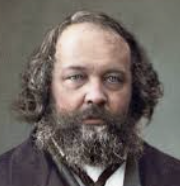
The materialistic, realistic, and collectivist conception of freedom, as opposed to the idealistic, is this: Man becomes conscious of himself and his humanity only in society and only by the collective action of the whole society. He frees himself from the yoke of external nature only by collective and social labor, which alone can transform the earth into an abode favorable to the development of humanity. Without such material emancipation the intellectual and moral emancipation of the individual is impossible. He can emancipate himself from the yoke of his own nature, i.e. subordinate his instincts and the movements of his body to the conscious direction of his mind, the development of which is fostered only by education and training. But education and training are preeminently and exclusively social … hence the isolated individual cannot possibly become conscious of his freedom. To be free … means to be acknowledged and treated as such by all his fellowmen. The liberty of every individual is only the reflection of his own humanity, or his human right through the conscience of all free men, his brothers and his equals.I can feel free only in the presence of and in relationship with other men. In the presence of an inferior species of animal I am neither free nor a man, because this animal is incapable of conceiving and consequently recognizing my humanity. I am not myself free or human until or unless I recognize the freedom and humanity of all my fellowmen. Only in respecting their human character do I respect my own. ... I am truly free only when all human beings, men and women, are equally free. The freedom of other men, far from negating or limiting my freedom, is, on the contrary, its necessary premise and confirmation.
▼
Source
Variant translations: | A natural society, in the midst of which every man is born and outside of which he could never become a rational and free being, becomes humanized only in the measure that all men comprising it become, individually and collectively
3 months 4 weeks ago
To all Christian governments Christianity was not a rule of means but a means of rule; Christ was for the people, Machiavelli was preferred by the kings. The state in some measure had civilized man, but who would civilize the state?
▼
Source
Chapter 6, p. 229
3 months 4 weeks ago
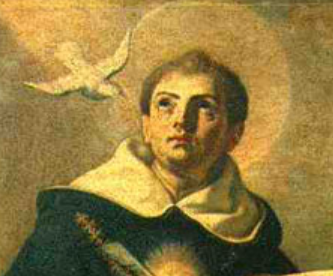
With regard to the abuse of authority, this also may come about in two ways. First, when what is ordered by an authority is opposed to the object for which that authority was constituted (if, for example, some sinful action is commanded or one which is contrary to virtue, when it is precisely for the protection and fostering of virtue that authority is instituted). In such a case, not only is there no obligation to obey the authority, but one is obliged to disobey it, as did the holy martyrs who suffered death rather than obey the impious commands of tyrants. Secondly, when those who bear such authority command things which exceed the competence of such authority; as, for example, when a master demands payment from a servant which the latter is not bound to make, and other similar cases. In this instance the subject is free to obey or disobey.
▼
Source
in Aquinas: Selected Political Writings (Basil Blackwell: 1974), p. 183

3 months 4 weeks ago
As a young man Porphyry tried to gain as broad a knowledge as he possibly could by studying many languages and religions. At that time Athens was the main centre for learning, so it was natural that someone with a thirst for knowledge as Porphyry had should travel there to continue his studies. In Athens Porphyry became a student of Longinus who: — ... was a 'living library and walking museum' and the academic's critical attention to detail, clarity of style and erudition left their permanent mark on the keen student. It was Longinus who gave Porphyry that nickname. In fact it was a clever pun since 'Porphyry' means 'purple' in Greek and he was given this name since he came from Tyre which was famous for the production of the royal purple dye and his name 'Malchus' meant 'king' = 'royal' = 'purple'.
▼
Source
J J O'Connor and E F Robertson, in [http://www-history.mcs.st-andrews.ac.uk/Biographies/Porphyry.html "Porphyry Malchus" at University of St Andrews]
3 months 4 weeks ago
The first article republished in Studies in Philosophy, Politics and Economics, "Degrees of Explanation," originally published in 1955, was largely consistent with Popper's methodology. Hayek embraced Popper's "hypothetico-deductive" approach to science: "The conception of science as a hypothetico-deductive system has been expounded by Karl Popper in a manner which brings out clearly some very important points." Here, as elsewhere in his work, Hayek distinguished between the facts of the natural and social sciences primarily on the basis of their complexity.
▼
Source
Alan Ebenstein, Hayek's Journey: The Mind of Friedrich Hayek (2003), Ch. 14. Studies in Philosophy, Politics and Economics
3 months 4 weeks ago
If the slave-owner of our times has no slave, John, whom he can send to the cesspool, he has five shillings, of which hundreds of such Johns are in such need that the slave-owner of our times may choose any one out of hundreds of Johns and be a benefactor to him by giving him the preference, and allowing him, rather than another, to climb down into the cesspool.
▼
Source
Chapter 8: Slavery Exists Among Us
3 months 4 weeks ago
Liberal education is liberation from vulgarity. The Greeks had a beautiful word for “vulgarity”; they called it apeirokalia, lack of experience in things beautiful. Liberal education supplies us with experience in things beautiful.
▼
Source
“What is liberal education,” p. 8
3 months 4 weeks ago
The world is nothing, the man is all; in yourself is the law of all nature, and you know not yet how a globule of sap ascends; in yourself slumbers the whole of Reason; it is for you to know all, it is for you to dare all.
▼
Source
par. 48
CivilSimian.com created by AxiomaticPanic, CivilSimian, Kalokagathia