

3 months 4 weeks ago
My point is not that everything is bad, but that everything is dangerous, which is not exactly the same as bad. If everything is dangerous, then we always have something to do. So my position leads not to apathy but to a hyper- and pessimistic activism. I think that the ethico-political choice we have to make every day is to determine which is the main danger.
▼
Source
“On the Genealogy of Ethics: An Overview of Work in Progress.” Afterword, in Hubert L. Dreyfus and Paul Rabinow, Michel Foucault: Beyond Structuralism and Hermeneutics, 2nd ed. Chicago: University of Chicago Press. (1983)
3 months 4 weeks ago
True conservatism rises at the antipodes from individualism. Individualism is social atomism; conservatism is community of spirit.

3 months 4 weeks ago
In regard to propaganda the early advocates of universal literacy and a free press envisaged only two possibilities: the propaganda might be true, or it might be false. They did not foresee what in fact has happened, above all in our Western capitalist democracies—the development of a vast mass communications industry, concerned in the main neither with the true nor the false, but with the unreal, the more or less totally irrelevant. In a word, they failed to take into account man's almost infinite appetite for distraction.
▼
Source
Chapter 4 (pp. 35-36)
3 months 4 weeks ago
Dogma does not mean the absence of thought, but the end of thought.
▼
Source
Ch I: The Victorian Compromise and Its Enemies ([http://books.google.com/books?id=mKs-AAAAYAAJ&q=%22Dogma+does+not+mean+the+absence+of+thought+but+the+end+of+thought%22&pg=PA43#v=onepage p. 43])
3 months 4 weeks ago
The possibility of divorce renders both marriage partners stricter in their observance of the duties they owe to each other. Divorces help to improve morals and to increase the population.
3 months 4 weeks ago
A utopia of judicial reticence: take away life, but prevent the patient from feeling it; deprive the prisoner of all rights, but do not inflict pain; impose penalties free of all pain. Recourse to psycho-pharmacology and to various physiological ‘disconnectors’, even if it is temporary, is a logical consequence of this ‘non-corporal’ penalty.
▼
Source
Chapter One, The Spectacle of the Scaffold

3 months 4 weeks ago
It was said that I refused to grant any value to the maternal instinct and to love. This was not so. I simply asked that women should experience them truthfully and freely, whereas they often use them as excuses and take refuge in them, only to find themselves imprisoned in that refuge when those emotions have dried up in their hearts. I was accused of preaching sexual promiscuity; but at no point did I ever advise anyone to sleep with just anyone at just any time; my opinion on this subject is that all choices, agreements and refusals should be made independently of institutions, conventions and motives of self-aggrandizement; if the reasons for it are not of the same order as the act itself, then the only result can be lies, distortions and mutilations.
▼
Source
Force of Circumstances Vol. III (1963) as translated by Richard Howard (1968) - [http://www.marxists.org/reference/subject/ethics/de-beauvoir/1963/interview.htm Excerpt online]
3 months 4 weeks ago
Huxley enjoyed the follies of the human mind even as he stoically stood out against them...Shock was one of the luxuries of the Twenties. But for Huxley, perhaps the most accomplished educator of his generation, to shock was to ensure the course of intellectual freedom.
▼
Source
V. S. Pritchett, "Obituary of Aldous Huxley", The New Statesman (6 December 1963)
3 months 4 weeks ago
The walls are hung with velvet that is black and soft as sin,And little dwarfs creep out of it and little dwarfs creep in.He holds a crystal phial that has colours like the moon,He touches, and it tingles, and he trembles very soon,And his face is as a fungus of a leprous white and greyLike plants in the high houses that are shuttered from the day.
▼
Source
Lepanto

3 months 4 weeks ago
[W]e may fancy that we see or feel what we in reality infer. Newton saw the truth of many propositions of geometry without reading the demonstrations, but not, we may be sure, without their flashing through his mind. A truth, or supposed truth, which is really the result of a very rapid inference, may seem to be apprehended intuitively. It has long been agreed by thinkers of the most opposite schools, that this mistake is actually made in so familiar an instance as that of the eyesight. There is nothing of which we appear to ourselves to be more directly conscious, than the distance of an object from us. Yet it has long been ascertained, that what is perceived by the eye, is at most nothing more than a variously coloured surface; that when we fancy we see distance, all we really see is certain variations of apparent size, and degrees of faintness of colour; and that our estimate of the object's distance from us is the result of a comparison (made with so much rapidity that we are unconscious of making it) between the size and colour of the object as they appear at the time, and the size and colour of the same or of similar objects as they appeared when close at hand, or when their degree of remoteness was known by other evidence. The perception of distance by the eye, which seems so like intuition, is thus, in reality, an inference grounded on experience; an inference, too, which we learn to make; and which we make with more and more correctness as our experience increases; though in familiar cases it takes place, so rapidly as to appear exactly on a par with those perceptions of sight which are really intuitive, our perceptions of colour.
▼
Source
p. 4
3 months 4 weeks ago
Secrecy is an instrument of conspiracy; it ought not, therefore, to be the system of a regular government.
▼
Source
[http://books.google.com/books?id=AusJAAAAIAAJ&q="Secresy+is+an+instrument+of+conspiracy+it+ought+not+therefore+to+be+the+system+of+a+regular+government"&pg=PA315#v=onepage On Publicity] from The Works of Jeremy Bentham volume 2, part 2 (1839)
3 months 4 weeks ago
He who is subjected to a field of visibility, and who knows it, assumes responsibility for the constraints of power; he makes them play spontaneously upon himself; he inscribes in himself the power relation in which he simultaneously plays both roles; he becomes the principle of his own subjection.
▼
Source
Part Three, Panopticism
3 months 4 weeks ago
After wars peace, after peace, another war. Every day men are born and others die.
3 months 4 weeks ago
'You have no business to be an unbeliever. You ought to stand for all the things these stupid people call superstitions. Come now, don't you think there's a lot in those old wives' tales about luck and charms and so on, silver bullets included? What do you say about them as a Catholic?' 'I say I'm an agnostic,' replied Father Brown, smiling. 'Nonsense,' said Aylmer impatiently. 'It's your business to believe things.' 'Well, I do believe some things, of course,' conceded Father Brown; 'and therefore, of course, I don't believe other things.' .
3 months 4 weeks ago
Capacity for the nobler feelings is in most natures a very tender plant, easily killed, not only by hostile influences, but by the mere want of sustenance; and in the majority of young persons it speedily dies away if the occupations to which their position in life has devoted them, and the society into which it has thrown them, are not favourable to keeping that higher capacity in existence.
▼
Source
Ch. 2
3 months 4 weeks ago
The last characteristic of parrhesia... telling the truth is regarded as a duty.
3 months 4 weeks ago
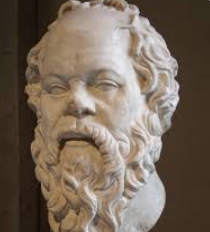
I only wish that wisdom were the kind of thing that flowed ... from the vessel that was full to the one that was empty.
▼
Source
Plato, Symposium, 175d
3 months 4 weeks ago
When the pessimist Besme says in La Ville that nothing is, he means precisely this, that there is no experience that withstands the analytical test.
3 months 4 weeks ago
If I had been by nature extremely quick of apprehension, or had possessed a very accurate and retentive memory or were of a remarkably active and energetic character, the trial would not be conclusive; but in all these natural gifts I am rather below than above par; what I could do, could assuredly be done by any boy or girl of average capacity and healthy physical constitution: and if I have accomplished anything, I owe it, among other fortunate circumstances, to the fact that through the early training bestowed on me by my father, I started, I may fairly say, with an advantage of a quarter of a century over my contemporaries.
▼
Source
([https://archive.org/details/autobiography01mill/page/30/mode/1up pp. 30–31])
3 months 4 weeks ago
The characteristic of the hour is that the commonplace mind, knowing itself to be commonplace, has the assurance to proclaim the rights of the commonplace and to impose them wherever it will. As they say in the United States: "to be different is to be indecent." The mass crushes beneath it everything that is different, everything that is excellent, individual, qualified and select. Anybody who is not like everybody, who does not think like everybody, runs the risk of being eliminated. And it is clear, of course, that this "everybody" is not "everybody." "Everybody" was normally the complex unity of the mass and the divergent, specialised minorities. Nowadays, "everybody" is the mass alone.
▼
Source
Chap.I: The Coming Of The Masses
3 months 4 weeks ago
Anti-psychiatry
3 months 4 weeks ago
We admitted that everything living is born of the dead. For if the soul existed before birth, and in coming to life and being born can be born only from death and dying, must she not after death continue to exist, since she has to be born again?

3 months 4 weeks ago
Puerto Ricans...castrate their children. As a reality check. Because they know the colonial systems will not allow their children to achieve all the things that they want in life. I saw that in my childhood. I saw this impotence that was imposed on me since my childhood. But I said, “I’m going to build an empire of uselessness. I’m going to take from the Americans the ingenuity, and I’m going to take from the Spaniards the wisdom.” And that’s what I do. I mix wisdom and ingenuity.
▼
Source
On decolonization of the self. [https://www.academia.edu/36916781/A_Graphic_Revolution_Talking_Poetry_and_Politics_with_Giannina_Braschi] (Chiricú Journal, 2018)
3 months 4 weeks ago
Malthus's population principle was quite as much a banner, and a point of union among us, as any opinion specially belonging to Bentham. This great doctrine, originally brought forward as an argument against the indefinite improvability of human affairs, we took up with ardent zeal in the contrary sense, as indicating the sole means of realizing that improvability by securing full employment at high wages to the whole labouring population through a voluntary restriction of the increase of their numbers.
▼
Source
([https://archive.org/details/autobiography01mill/page/105/mode/1up p. 105])
3 months 4 weeks ago
The man with the clear head is the man who frees himself from those fantastic "ideas" and looks life in the face, realises that everything in it is problematic, and feels himself lost. As this is the simple truth — that to live is to feel oneself lost — he who accepts it has already begun to find himself, to be on firm ground. Instinctively, as do the shipwrecked, he will look round for something to which to cling, and that tragic, ruthless glance, absolutely sincere, because it is a question of his salvation, will cause him to bring order into the chaos of his life.
▼
Source
Chapter XIV: Who Rules The World?
3 months 4 weeks ago
Even the mathematical framework helps nothing, I would first like to understand how Nature avoids the contradictions. (1927)
▼
Source
Quoted in Werner Heisenberg: Die Sprache der Atome (2010) by H. Rechenberg, p. 564.
3 months 4 weeks ago
If death had only been the end of all, the wicked would have had a good bargain in dying, for they would have been happily quit not only of their body, but of their own evil together with their souls. But now, as the soul plainly appears to be immortal, there is no release or salvation from evil except the attainment of the highest virtue and wisdom. For the soul when on her progress to the world below takes nothing with her but nurture and education...
3 months 4 weeks ago
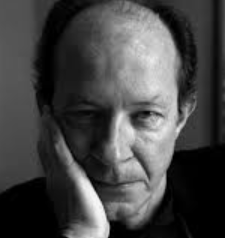
Kuhn acknowledges having used the term "paradigm" in two different meanings. In the first one, "paradigm" designates what the members of a certain scientific community have in common, that is to say, the whole of techniques, patents and values shared by the members of the community. In the second sense, the paradigm is a single element of a whole, say for instance Newton’s Principia, which, acting as a common model or an example... stands for the explicit rules and thus defines a coherent tradition of investigation. Thus the question is for Kuhn to investigate by means of the paradigm what makes possible the constitution of what he calls "normal science". That is to say, the science which can decide if a certain problem will be considered scientific or not. Normal science does not mean at all a science guided by a coherent system of rules, on the contrary, the rules can be derived from the paradigms, but the paradigms can guide the investigation also in the absence of rules. This is precisely the second meaning of the term "paradigm", which Kuhn considered the most new and profound, though it is in truth the oldest.
3 months 4 weeks ago
Alike in the highest regions of speculation and in the smaller practical concerns of daily life, her mind was the same perfect instrument, piercing to the very heart and marrow of the matter; always seizing the essential idea or principle. The same exactness and rapidity of operation, pervading as it did her sensitive as well as her mental faculties, would, with her gifts of feeling and imagination, have fitted her to be a consummate artist, as her fiery and tender soul and her vigorous eloquence would certainly have made her a great orator, and her profound knowledge of human nature and discernment and sagacity in practical life, would, in the times when such a carrière was open to women, have made her eminent among the rulers of mankind. Her intellectual gifts did but minister to a moral character at once the noblest and the best balanced which I have ever met with in life.
▼
Source
([https://archive.org/details/autobiography01mill/page/186/mode/1up pp. 186-187])
3 months 4 weeks ago
Ortega y Gasset is of the opinion that the inability of a country to produce a genuine mass movement indicates some ethnological defect. He says of his own Spain that its "ethnological intelligence has always been an atrophied function and has never had a normal development."
▼
Source
Eric Hoffer, The True Believer (1951) Ch.18 Good and Bad Mass Movements, §125 citing Ortega y Gasset's The Modern Theme (1931)

3 months 4 weeks ago
For we carry our fate with us — and it carries us. (Hays translation)
▼
Source
III, 4
3 months 4 weeks ago
If quantum theory has any philosophical importance at all, it lies in the fact that it demonstrates for a single, sharply defined science the necessity of dual aspects and complementary considerations. Niels Bohr has discussed this question with respect to many applications in physiology, psychology, and philosophy in general.
▼
Source
Max Born in [https://archive.org/stream/naturalphilosoph032159mbp#page/n137/search/sharply Natural Philosophy of Cause and Chance (1949) ch. 10, p. 127]

3 months 4 weeks ago
To protest about bullfighting in Spain, the eating of dogs in South Korea, or the slaughter of baby seals in Canada while continuing to eat eggs from hens who have spent their lives crammed into cages, or veal from calves who have been deprived of their mothers, their proper diet, and the freedom to lie down with their legs extended, is like denouncing apartheid in South Africa while asking your neighbors not to sell their houses to blacks.
▼
Source
Ch. 4: Becoming a Vegetarian
3 months 4 weeks ago
The state will only ever be a half of itself.
▼
Source
Socrates in Plato's Republic talking about women lacking rights. As quoted by Bettany Hughes: [http://www.telegraph.co.uk/women/womens-life/11785181/Feminism-started-with-the-Buddha-and-Confucius-25-centuries-ago.html "Feminism started with the Buddha and
3 months 4 weeks ago
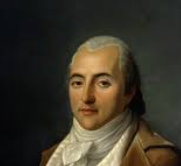
It was in America, while I was fighting for the cause of industrial liberty, that I first felt the desire to see this plant from another world flower in my own country. This desire has since dominated all my thinking. Without respite I studied the course of advancement and further assured myself that the progress of civilisation could have no other end. And I invoked this aim of true liberty, true public happiness, with my most fervent hopes. For me every event that seemed to point in that direction was a new joy, a new hope. The French Revolution broke out, and at first it seemed to be thoroughly industrial. But it soon lost that character, and the many noble efforts which ought to have produced liberty resulted only in the tyranny of the Jacobins and military despotism. A happier age has now started to dawn for us: at last a government has been established which declares its own power to be based on the power of opinion. Ever since then France has yielded to common sense, that is, to the free discussion of its common interests.
3 months 4 weeks ago
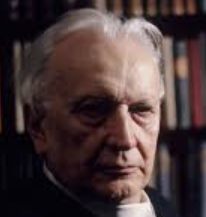
John Stuart Mill's position as the unchallenged leader in economics and in other fields in his time was due not only to the quality of his own work but also to the happenstance that people of comparable stature did not come along at that time to contest his methods and conclusions. He was like a track star running against the clock instead of against another track star. He was never pushed — either by the criticism or the competing theories of comparably able contemporaries — to reach his utmost potential. In the long run, his reputation suffered accordingly, because in the long run there are always people of comparable stature.
▼
Source
Thomas Sowell, "The Enigma of John Stuart Mill", On Classical Economics (2006)
3 months 4 weeks ago
The Greek word for philosopher (philosophos) connotes a distinction from sophos. It signifies the lover of wisdom (knowledge) as distinguished from him who considers himself wise in the possession of knowledge. This meaning of the word still endures: the essence of philosophy is not the possession of the truth but the search for truth. … Philosophy means to be on the way. Its questions are more essential than its answers, and every answer becomes a new question.
▼
Source
Way to Wisdom: An Introduction to Philosophy (1951) as translated by Ralph Mannheim, Ch. 1, What is Philosophy?, p. 12 | Variant translation: It is the search for the truth, not possession of the truth which is the way of philosophy. Its questions are mor
3 months 4 weeks ago
Death hangs over thee: whilst yet thou livest, whilst thou mayest, be good.
▼
Source
IV, 14 (trans. Meric Casaubon) | Variant: Death hangs over thee. While thou livest, while it is in thy power, be good. | τὸ χρεὼν ἐπήρτηται· ἕως ζῇς, ἕως ἔξεστιν, ἀγαθὸς γενοῦ. | IV, 17 (trans. George Long)
3 months 4 weeks ago
the fact that no one has come up with a really convincing reason for giving greater moral weight to members of our own species, simply because they are members of our species, strongly suggests that there is no such reason. Like racism and sexism, speciesism is wrong.
▼
Source
p. 343

3 months 4 weeks ago
Victory is reserved for those who are willing to pay its price.
▼
Source
Attributed to Sun Tzu in multiple books and internet sites, but this text does not appear in The Art of War and seems to be a more recent creation.
3 months 4 weeks ago
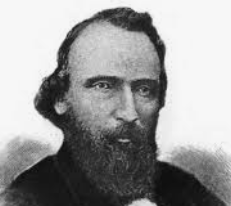
My privilege is to be spectator of my life drama, to be fully conscious of the tragi-comedy of my own destiny, and, more than that, to be in the secret of the tragi-comic itself, that is to say, to be unable to take my illusions seriously, to see myself, so to speak, from the theater on the stage, or to be like a man looking from beyond the tomb into existence. I feel myself forced to feign a particular interest in my individual part, while all the time I am living in the confidence of the poet who is playing with all these agents which seem so important, and knows all that they are ignorant of. It is a strange position, and one which becomes painful as soon as grief obliges me to betake myself once more to my own little rôle, binding me closely to it, and warning me that I am going too far in imagining myself, because of my conversations with the poet, dispensed from taking up again my modest part of valet in the piece. Shakespeare must have experienced this feeling often, and Hamlet, I think, must express it somewhere. It is a Doppelgängerei, quite German in character, and which explains the disgust with reality and the repugnance to public life, so common among the thinkers of Germany. There is, as it were, a degradation a gnostic fall, in thus folding one's wings and going back again into the vulgar shell of one's own individuality. Without grief, which is the string of this venturesome kite, man would soar too quickly and too high, and the chosen souls would be lost for the race, like balloons which, save for gravitation, would never return from the empyrean.
▼
Source
8 November 1852
3 months 4 weeks ago
You don't love yourself enough. Or you'd love your nature too, and what it demands of you. People who love what they do wear themselves down doing it, they even forget to wash or eat. Do you have less respect for your own nature than the engraver does for engraving, the dancer for the dance, the miser for money or the social climber for status? When they're really possessed by what they do, they'd rather stop eating and sleeping than give up practicing their arts. Is helping others less valuable to you? Not worth your effort?
▼
Source
V, 1(Hays translation)
3 months 4 weeks ago
Truthfulness under oath is, by now, a matter of our civic religion, our relation to our fellow citizens rather than our relation to a nonhuman power.
▼
Source
"John Searle on Realism and Relativism." Truth and Progress: Philosophical Papers, Volume 3 (1998).

3 months 4 weeks ago
You ask whether it is possible to understand the indication regarding the appearance of Christ in lesser images and in reality. Certainly. Medievalism made an inaccessible idol of Christ and deprived him of any humanity, therefore also of divinity. Thus, all the Teachings of the East proclaim that there is no god (or gods) who was not at one time a man. Such a forced separation of Christ from human essence threatened and still threatens a complete break in the communion of humanity with the Higher World. One can trace how in the Middle Ages there appeared every now and then great saints who tried to re-establish this almost lost communion, and all of them insisted precisely on the human essence of Christ. Especially strong affirmations of this can be found in the pages of the autobiography of St. Theresa, the Spanish saint of the sixteenth century, and still earlier, in the visions and writings of St. Catherine of Siena and St. Gertrude. Thus, the form and the quality of the visions and communications received through such communion always correspond with the level of the consciousness of those who see and receive them, and also with the needs of the time. As it was said, "In is precisely by following the character of the visions that the best history of the intellect may be written."
▼
Source
Helena Roerich, Letters of Helena Roerich II, (2 April 1936)
3 months 4 weeks ago
The manners of our fore-fathers were, I believe, in many respects better: they had more probity perhaps, they had certainly more show of honour, and greater industry.
▼
Source
p. 18
3 months 4 weeks ago
How many together with whom I came into the world are already gone out of it.
▼
Source
VI, 56

3 months 4 weeks ago
How does the poet speak to men with power, but by being still more a man than they?
▼
Source
Burns.

3 months 4 weeks ago
If we rejoice with the world, there is reason to fear that with the world we shall grieve too. But when the world rejoices, let us grieve; and when the world afterward grieves, we shall rejoice.
▼
Source
Chapter XIII, Of the Observance of Days Connected with Idolatry
3 months 4 weeks ago
Bullialdus wrote that all force respecting the Sun as its center & depending on matter must be reciprocally in a duplicate ratio of the distance from the center.
▼
Source
Letter to Edmund Halley (June 20, 1686) quoted in I. Bernard Cohen and George E. Smith, ed.s, The Cambridge Companion to Newton (2002) p. 204
3 months 4 weeks ago
He engaged young, and distinguished himself in business; and his penetration was almost intuition. I am old enough to have heard him speak in parliament. And I remember that, though prejudiced against him by party, I felt all the force and charms of his eloquence. Like Belial in Milton, “he made the worse appear the better cause.” All the internal and external advantages and talents of an orator are undoubtedly his. Figure, voice, elocution, knowledge, and, above all, the purest and most florid diction, with the justest metaphors and happiest images, had raised him to the post of Secretary at War, at four-and-twenty years old, an age at which others are hardly thought fit for the smallest employments.
▼
Source
Earl of Chesterfield to his son (12 December 1749) quoted in Letters Written By The Late Right Honourable Philip Dormer Stanhope, Earl Of Chesterfield, To His Son, Philip Stanhope, Esq. Late Envoy-Extraordinary At The Court Of Dresden: Together with Sever
CivilSimian.com created by AxiomaticPanic, CivilSimian, Kalokagathia