
3 months 4 weeks ago
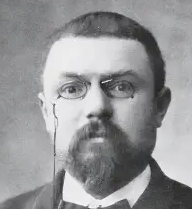
The ones who are preoccupied by logic are above all; to read their works, one is tempted to believe they have advanced only step by step, after the manner of a Vauban who pushes on his trenches against the place besieged, leaving nothing to chance. The others are guided by intuition and, at the first stroke, make quick but sometimes precarious conquests, like bold cavalrymen of the advance guard.
▼
Source
quoted in Jacques Hadamard, An essay on the psychology of invention in the mathematical field (1954), pp. 106.
3 months 4 weeks ago
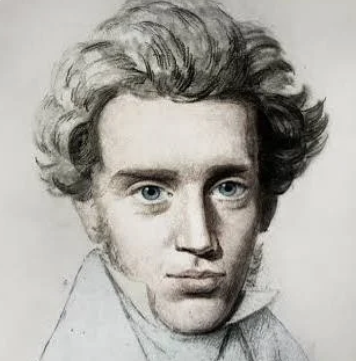
I have just now come from a party where I was its life and soul; witticisms streamed from my lips, everyone laughed and admired me, but I went away — yes, the dash should be as long as the radius of the earth's orbit ——————————— and wanted to shoot myself.
▼
Source
March 1836

3 months 4 weeks ago
Having discovered the true principle, I then derived all the laws that govern the motion of light, those concerning its direct propagation, its reflection and its refraction. I reserve for particular members of our Assembly the geometrical demonstration of my theory.I know the distaste that many mathematicians have for final causes applied to physics, a distaste that I share up to some point. I admit, it is risky to introduce such elements; their use is dangerous, as shown by the errors made by Fermat and Leibniz in following them. Nevertheless, it is perhaps not the principle that is dangerous, but rather the hastiness in taking as a basic principle that which is merely a consequence of a basic principle.
3 months 4 weeks ago
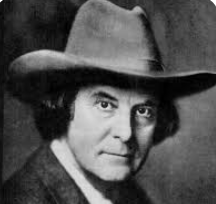
I believe that brutality tends to defeat itself. Prizefighters die young, gourmands get the gout, hate hurts worse the man who nurses it, and all selfishness robs the mind of its divine insight, and cheats the soul that would know. Mind alone is eternal. He, watching over Israel, slumbers not nor sleeps. My faith is great: out of the transient darkness of the present the shadows will flee away, and Day will yet dawn. I am an Anarchist.
3 months 4 weeks ago
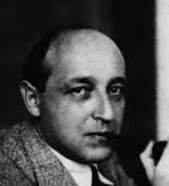
The slaves of developed industrial civilization are sublimated slaves.
▼
Source
p. 32
3 months 4 weeks ago
Once we recognize that all historical knowledge is relational knowledge, and can only be formulated with reference to the position of the observer, we are faced, once more, with the task of discriminating between what is true and what is false in such knowledge.

3 months 4 weeks ago
One of the greatest philosophers of all time.
▼
Source
Karl Popper, Objective Knowledge: An Evolutionary Approach (1972), p. 212
3 months 4 weeks ago
When an astronomer tells me that some stellar phenomenon, which his telescope reveals to him at this moment, happened... fifty years ago... I... ask... how he has measured the velocity of light.
3 months 4 weeks ago
Job endured everything — until his friends came to comfort him, then he grew impatient.
▼
Source
1849
3 months 4 weeks ago
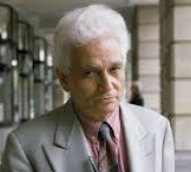
Il n'y a pas de hors-texte.
▼
Source
Of Grammatology (1967). G. Spivak translated this as "There is nothing outside the text," which Derrida opponents have characterized to mean that nothing exists but language. Later scholarship has translated it as "There is no outside-of-text" or "There i
3 months 4 weeks ago
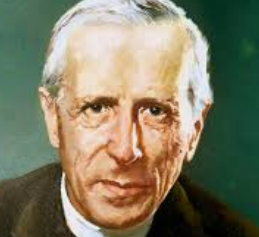
This book deals with man solely as a phenomenon; but... with the whole pheneomenon...
3 months 4 weeks ago
The great Big Black Things that have loomed against the horizon of my life, threatening to devour me, simply loomed and nothing more. The things that have really made me miss my train have always been sweet, soft, pretty, pleasant things of which I was not in the least afraid.
▼
Source
p. 61
3 months 4 weeks ago
When the whole is at stake, there is no crime except that of rejecting the whole, or not defending it. … Those who identify themselves with the whole, who are installed as the leaders and defenders of the whole can make mistakes, but they cannot do wrong—they are not guilty. They may become guilty again when this identification no longer holds, when they are gone.
▼
Source
pp. 82-83
3 months 4 weeks ago
Let the letters a b c denote the three angular points of a rectilineal triangle. If the point did move continuously over the lines ab, bc, ca, that is, over the perimeter of the figure, it would be necessary for it to move at the point b in the direction ab, and also at the same point b in the direction bc. These motions being diverse, they cannot be simultaneous. There-fore, the moment of presence of the movable point at vertex b, considered as moving in the direction ab, is different from the moment of presence of the movable point at the same vertex b, considered as moving in the same direction bc. But between two moments there is time; therefore, the movable point is present at point b for some time, that is, it rests. Therefore it does not move continuously, which is contrary to the assumption. The same demonstration is valid for motion over any right lines including an assignable angle. Hence a body does not change its direction in continuous motion except by following a line no part of which is straight, that is, a curve, as Leibnitz maintained.
3 months 4 weeks ago
And how does the God's existence emerge from the proof? Does it follow straightway, without any breach of continuity? Or have we not here an analogy to the behavior of the little Cartesian dolls? As soon as I let go of the doll it stands on its head. As soon as I let it go – I must therefore let it go. So also with the proof. As long as I keep my hold on the proof, i.e., continue to demonstrate, the existence does not come out, if for no other reason than that I am engaged in proving it; but when I let the proof go, the existence is there. But this act of letting go is surely also something; it is indeed a contribution of mine. Must not this also be taken into the account, this little moment, brief as it may be – it need not be long, for it is a leap. However brief this moment, if only an instantaneous now, this "now" must be included in the reckoning.
▼
Source
p. 32
3 months 4 weeks ago
How can one be late to the end of history? A question for today. It is serious because it obliges one to reflect again, as we have been doing since Hegel, on what happens and deserves the name of event, after history; it obliges one to wonder if the end of history is but the end of a certain concept of history.
▼
Source
Injunctions of Marx
3 months 4 weeks ago
A breeze passes in the night. When did it spring up? Whence does it come? Whither is it going? No man knows.
▼
Source
The Divine Milieu, p. 128
3 months 4 weeks ago
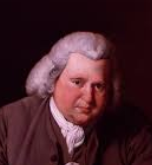
Roll on, ʏᴇ Sᴛᴀʀs! exult in youthful prime,Mark with bright curves the printless steps of Time;Near and more near your beamy cars approach,And lessening orbs on lessening orbs encroach;—Flowers of the sky! ye too to age must yield,Frail as your silken sisters of the field!Star after star from Heaven's high arch shall rush,Suns sink on suns, and systems systems crush,Headlong, extinct, to one dark centre fall,And Death and Night and Chaos mingle all!—Till o'er the wreck, emerging from the storm,Immortal Nᴀᴛᴜʀᴇ lifts her changeful form,Mounts from her funeral pyre on wings of flame,And soars and shines, another and the same.
▼
Source
[Immortal Nature], The Botanic Garden (1791), Part i, Canto iv, ll. 359-380.
3 months 4 weeks ago
The apparatus defeats its own purpose if its purpose is to create a humane existence on the basis of a humanized nature.
▼
Source
pp. 145-146
3 months 4 weeks ago
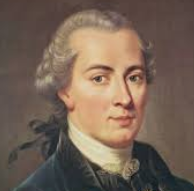
Reason in a creature is a faculty of widening the rules and purposes of the use of all its powers far beyond natural instinct; it acknowledges no limits to its projects. Reason itself does not work instinctively, but requires trial, practice, and instruction in order gradually to progress from one level of insight to another. Therefore a single man would have to live excessively long in order to learn to make full use of all his natural capacities. Since Nature has set only a short period for his life, she needs a perhaps unreckonable series of generations, each of which passes its own enlightenment to its successor in order finally to bring the seeds of enlightenment to that degree of development in our race which is completely suitable to Nature’s purpose. This point of time must be, at least as an ideal, the goal of man’s efforts, for otherwise his natural capacities would have to be counted as for the most part vain and aimless. This would destroy all practical principles, and Nature, whose wisdom must serve as the fundamental principle in judging all her other offspring, would thereby make man alone a contemptible plaything.
▼
Source
Second Thesis | Paraphrased variant: Reason does not work instinctively, but requires trial, practice, and instruction in order to gradually progress from one level of insight to another.
3 months 4 weeks ago
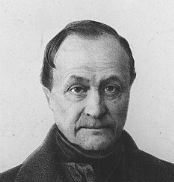
The first condition of unity is a subjective principle; and this principle in the Positive system is the subordination of the intellect to the heart: Without this the unity that we seek can never be placed on a permanent basis, whether individually or collectively. It is essential to have some influence sufficiently powerful to produce convergence amid the heterogeneous and often antagonistic tendencies of so complex an organism as ours.
▼
Source
p. 24
3 months 4 weeks ago
For as only one thing is necessary, and as the theme of the talk is the willing of only one thing: hence the consciousness before God of one's eternal responsibility to be an individual is that one thing necessary.
▼
Source
Søren Kierkegaard, Purity of Heart is to Will One Thing, 1847 p. 197-198
3 months 4 weeks ago
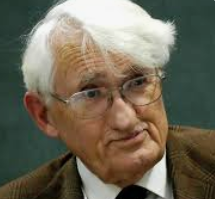
As historical and social beings we find ourselves always already in a linguistically structured lifeworld. In the forms of communication through which we reach an understanding with one another about something in the world and about ourselves, we encounter a transcending power. Language is not a kind of private property. No one possesses exclusive rights over the common medium of the communicative practices we must intersubjectively share. No single participant can control the structure, or even the course, of processes of reaching understanding and self-understanding. How speakers and hearers make use of their communicative freedom to take yes- or no-positions is not a matter of their subjective discretion. For they are free only in virtue of the binding force of the justifiable claims they raise towards one another. The logos of language embodies the power of the intersubjective, which precedes and grounds the subjectivity of speakers.
▼
Source
Habermas (2003) The Future of Human Nature. p. 10

3 months 4 weeks ago
It is a maxim universally agreed upon in agriculture, that nothing must be done too late; and again, that everything must be done at its proper season; while there is a third precept which reminds us that opportunities lost can never be regained.
▼
Source
Book XVIII, sec. 44.

3 months 4 weeks ago
History teaches us that war is not inevitable. Once again, it is for us to choose whether we use war or some other method of settling the ordinary and unavoidable conflicts between groups of men.
▼
Source
What Are You Going To Do About It? The case for constructive peace (1936)
3 months 4 weeks ago
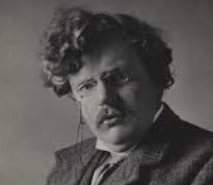
The simplification of anything is always sensational.
▼
Source
Varied Types (1903)
3 months 4 weeks ago
That all our knowledge begins with experience there can be no doubt. For how is it possible that the faculty of cognition should be awakened into exercise otherwise than by means of objects which affect our senses, and partly of them selves produce representations, partly rouse our powers of understanding into activity, to compare, to connect, or to separate these, and so to convert the raw material of our sensuous impressions into a knowledge of objects, which is called experience? In respect of time, therefore, no knowledge of ours is antecedent to experience, but begins with it. But though all our knowledge begins with experience, it by no means follows, that all arises out of experience. For, on the contrary, it is quite possible that our empirical knowledge is a compound of that which we receive through impressions, and that which the faculty of cognition supplies from itself (sensuous impressions giving merely the occasion)... It is, therefore, a question which requires close investigation, and is not to be answered at first sight,—whether there exists a knowledge altogether independent of experience, and even of all sensuous impressions? Knowledge of this kind is called à priori, in contradistinction to empirical knowledge which has its sources à posteriori, that is, in experience.
▼
Source
B 1
3 months 4 weeks ago
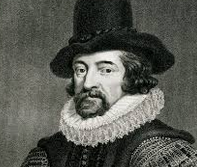
Let great authors have their due, as time, which is the author of authors, be not deprived of his due, which is, further and further to discover truth.
▼
Source
Book I, iv, 10
3 months 4 weeks ago
The greatest danger, that of losing one's own self, may pass off as quietly as if it were nothing; every other loss, that of an arm, a leg, five dollars, a wife etc., is sure to be noticed.

3 months 4 weeks ago
The man who no longer expects miraculous changes either from a revolution or from an economic plan is not obliged to resign himself to the unjustifiable. It is because he likes individual human beings, participates in communities, and respects the truth, that he refuses to surrender his soul to an abstract ideal of humanity, a tyrannical party, and an absurd scholasticism. . . . If tolerance is born of doubt, let us teach everyone to doubt all the models and utopias, to challenge all the prophets of redemption and the heralds of catastrophe. If they can abolish fanaticism, let us pray for the advent of the sceptics.
▼
Source
The Opium of Intellectuals (1955)
3 months 4 weeks ago
Defined in psychological terms, a fanatic is a man who consciously over-compensates a secret doubt.
▼
Source
"The Substitutes for Religion, The Religion of Sex"
3 months 4 weeks ago
There are two ways of dealing with nonsense in this world. One way is to put nonsense in the right place; as when people put nonsense into nursery rhymes. The other is to put nonsense in the wrong place; as when they put it into educational addresses, psychological criticisms, and complaints against nursery rhymes or other normal amusements of mankind.
▼
Source
Child Psychology and Nonsense (15 October 1921)
3 months 4 weeks ago
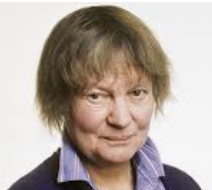
Happiness is a matter of one's most ordinary everyday mode of consciousness being busy and lively and unconcerned with self. To be damned is for one's ordinary everyday mode of consciousness to be unremitting agonising preoccupation with self.
▼
Source
The Nice and the Good (1968), ch. 22.
3 months 4 weeks ago
Even if a civil society were to be dissolved by the consent of all its members (e.g., if a people inhabiting an island decided to separate and disperse throughout the world), the last murderer remaining in prison would first have to be executed, so that each has done to him what his deeds deserve and blood guilt does not cling to the people for not having insisted upon this punishment; for otherwise the people can be regarded as collaborators in his public violation of justice.
▼
Source
Kt6:333
3 months 4 weeks ago
There are and can be only two ways of searching into and discovering truth. The one flies from the senses and particulars to the most general axioms, and from these principles, the truth of which it takes for settled and immovable, proceeds to judgment and to the discovery of middle axioms. And this way is now in fashion. The other derives axioms from the senses and particulars, rising by a gradual and unbroken ascent, so that it arrives at the most general axioms last of all. This is the true way, but as yet untried.
▼
Source
Aphorism 19
3 months 4 weeks ago
The person who is going to preach ought to live in the Christian thoughts and ideas: they ought to be his daily life. If so – this is the view of Christianity – then you, too, will have eloquence enough and precisely that which is needed when you speak extemporaneously without specific preparation. However, it is fallacious eloquence if someone, without otherwise occupying himself with, without living in these thoughts, once in a while sits down and laboriously collects such thoughts, perhaps in the field of literature, and then works them into a well-composed discourse, which is then committed to memory and delivered superbly, with respect both to voice and diction and gestures.
▼
Source
Soren Kierkegaard, For Self-Examination, Hong p. 10
3 months 4 weeks ago
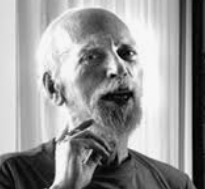
I regard the two major male archetypes in 20th Century literature as Leopold Bloom and Hannibal Lecter. M.D. Bloom, the perpetual victim, the kind and gentle fellow who finishes last, represented an astonishing breakthrough to new levels of realism in the novel, and also symbolized the view of humanity that hardly anybody could deny c. 1900-1950. History, sociology, economics, psychology et al. confirmed Joyce’s view of Everyman as victim. Bloom, exploited and downtrodden by the Brits for being Irish and rejected by many of the Irish for being Jewish, does indeed epiphanize humanity in the first half of the 20th Century. And he remains a nice guy despite everything that happens... Dr Lecter, my candidate for the male archetype of 1951-2000, will never win any Nice Guy awards, I fear, but he symbolizes our age as totally as Bloom symbolized his. Hannibal's wit, erudition, insight into others, artistic sensitivity, scientific knowledge etc. make him almost a walking one man encyclopedia of Western civilization. As for his "hobbies" as he calls them — well, according to the World Game Institute, since the end of World War II, in which 60,000,000 human beings were murdered by other human beings, 193, 000,000 more humans have been murdered by other humans in brush wars, revolutions, insurrections etc. What better symbol of our age than a serial killer? Hell, can you think of any recent U.S. President who doesn't belong in the Serial Killer Hall of Fame? And their motives make no more sense, and no less sense, than Dr Lecter's Darwinian one-man effort to rid the planet of those he finds outstandingly loutish and uncouth.
▼
Source
"Previous Thoughts" at rawilson.com
3 months 4 weeks ago
The poet is, etymologically, the maker. Like all makers, he requires a stock of raw materials — in his case, experience. Now experience is not a matter of having actually swum the Hellespont, or danced with the dervishes, or slept in a doss-house. It is a matter of sensibility and intuition, of seeing and hearing the significant things, of paying attention at the right moments, of understanding and co-ordinating. Experience is not what happens to a man; it is what a man does with what happens to him. It is a gift for dealing with the accidents of existence, not the accidents themselves. By a happy dispensation of nature, the poet generally possesses the gift of experience in conjunction with that of expression. What he says so well is therefore intrinsically of value.
▼
Source
p. 5
3 months 4 weeks ago
The one stream of poetry which is continually flowing is slang.
▼
Source
"A Defence of Slang"
3 months 4 weeks ago
In the metaphysical elements of aesthetics the various nonmoral feelings are to be made use of; in the elements of moral metaphysics the various moral feelings of men, according to the differences in sex, age, education, and government, of races and climates, are to be employed.
▼
Source
Part III : Selection on Education from Kant's other Writings, Ch. I Pedagogical Fragments, # 58
3 months 4 weeks ago
Hope is a good breakfast, but it is a bad supper.
▼
Source
No. 36
3 months 4 weeks ago
For all its critical analysis philosophy has not yet managed to root out its psychopaths. What do we have psychiatric diagnosis for? That grizzler Kierkegaard also belongs in this galere.
▼
Source
Carl Jung, Personal letter to Arnold Künzli, 28 February 1943, as included in C.G. Jung Letters, Volume I, 1906-1950 at p. 331.
3 months 4 weeks ago
"Elohim," the name for the creative power in Genesis, is a female plural, a fact that generations of learned rabbis and Christian theologians have all explained as merely grammatical convention. The King James and most other Bibles translate it as "God," but if you take the grammar literally, it seems to mean "goddesses." Al Shaddai, god of battles, appears later, and YHWH, mispronounced Jehovah, later still.
▼
Source
Genesis, p. 197
3 months 4 weeks ago
There's only one corner of the universe you can be certain of improving, and that's your own self.
3 months 4 weeks ago
Fiction means the common things as seen by the uncommon people. Fairy tales mean the uncommon things as seen by the common people.
▼
Source
Ch 4: "The Pickwick Papers"
3 months 4 weeks ago
Kantian ethics
3 months 4 weeks ago
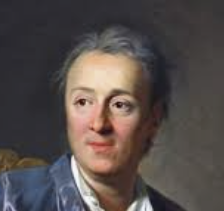
I am beginning to feel that I am growing old; soon, I shall have to eat mush like children. I shall no longer be able to speak, which will be a rather great advantage for others and but a small inconvenience for myself.... The time in which I count in years is gone; that in which I count in days is here.... I had thought that the fibers of the heart would grow callous with age, it's not at all the case. I am not sure that my sensitivity hasn't increased; everything moves me, affects me.... To fade out between a man feeling your pulse and another bothering your head; not to know where one comes from, why one came, where one is going ...
▼
Source
Letter to his sister Denise, as quoted in Diderot, Reason and Resonance (1982) by Élisabeth de Fontenay, pp. 270–271

3 months 4 weeks ago
Marxism exists in nineteenth-century thought as a fish exists in water; that is, it ceases to breathe anywhere else.
▼
Source
As quoted by , The lives of Michel Foucault (1993) p. 177. Citing 'Les Intellectuels et le Pouvoir', Le'Arc 49, 1972, pp. 3-10. Discussion with Gilles Deleuze, (4 March 1972). Reprinted, Le Nouvel Observateur, (8 May 1972) pp. 68-70. Tr. 'Intellectuals an

3 months 4 weeks ago
To be sure, we have to face at this point an important question; but it is a practical, not a theoretical question; it is the question of whether or not to accept the new linguistic forms. The acceptance cannot be judged as being either true or false because it is not an assertion. It can only be judged as being more or less expedient, fruitful, conducive to the aim for which the language is intended. Judgments of this kind supply the motivation for the decision of accepting or rejecting the kind of entities.
▼
Source
Ch. 3. What does acceptance of a kind of entities mean?
3 months 4 weeks ago
I mean, a genuinely productive society. I mean you could produce plenty of goods without much freedom, but I think the whole sort of creative life of man is ultimately impossible without a considerable measure of individual freedom, of initiative, creation, all these things which we value, and I think value properly, are impossible without a large measure of freedom.
CivilSimian.com created by AxiomaticPanic, CivilSimian, Kalokagathia