

3 months 3 weeks ago
Death,—a stopping of impressions through the senses, and of the pulling of the cords of motion, and of the ways of thought, and of service to the flesh.
▼
Source
VI, 28

3 months 3 weeks ago
The three great elements of modern civilization, gunpowder, printing, and the Protestant religion.
▼
Source
The State of German Literature (1827).

3 months 3 weeks ago
For this fact—that Gentiles are admissible to God’s Law—is enough to prevent Israel from priding himself on the notion that “the Gentiles are accounted as a little drop of a bucket,” or else as “dust out of a threshing-floor:” although we have God Himself as an adequate engager and faithful promiser, in that He promised to Abraham that “in his seed should be blest all nations of the earth;” and that out of the womb of Rebecca “two peoples and two nations were about to proceed,”—of course those of the Jews, that is, of Israel; and of the Gentiles, that is ours. Each, then, was called a people and a nation; lest, from the nuncupative appellation, any should dare to claim for himself the privilege of grace. For God ordained “two peoples and two nations” as about to proceed out of the womb of one woman: nor did grace make distinction in the nuncupative appellation, but in the order of birth; to the effect that, which ever was to be prior in proceeding from the womb, should be subjected to “the less,” that is, the posterior. For thus unto Rebecca did God speak: “Two nations are in thy womb, and two peoples shall be divided from thy bowels; and people shall overcome people, and the greater shall serve the less.” Accordingly, since the people or nation of the Jews is anterior in time, and “greater” through the grace of primary favour in the Law, whereas ours is understood to be “less” in the age of times, as having in the last era of the world attained the knowledge of divine mercy: beyond doubt, through the edict of the divine utterance, the prior and “greater” people—that is, the Jewish—must necessarily serve the “less;” and the “less” people—that is, the Christian—overcome the “greater.” For, withal, according to the memorial records of the divine Scriptures, the people of the Jews—that is, the more ancient—quite forsook God, and did degrading service to idols, and, abandoning the Divinity, was surrendered to images; while “the people” said to Aaron, “Make us gods to go before us.”
▼
Source
Chapter I.—Occasion of Writing. Relative Position of Jews and Gentiles Illustrated.

3 months 3 weeks ago
The French may improve their natural wealth and power by the improvement of trade and commerce. We can have no wealth, nor power by consequence, as Europe is now constituted, without the improvement of them, nor in any degree but proportionably to this improvement.
▼
Source
p. 186
3 months 3 weeks ago
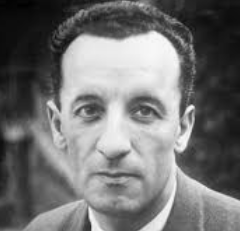
Hardness and softness, roughness and smoothness, moonlight and sunlight present themselves in our recollection not preeminently as sensory contents but as certain kinds of symbioses, certain ways outside has of invading us and certain ways we have of meets this invasion...
▼
Source
p. 317
3 months 3 weeks ago
If the gods care not for me and for my children, There is a reason for it.
▼
Source
VII, 41
3 months 3 weeks ago
The Philosopher of this age is not a Socrates, a Plato, a Hooker, or Taylor, who inculcates on men the necessity and infinite worth of moral goodness, the great truth that our happiness depends on the mind which is within us, and not on the circumstances which are without us; but a Smith, a De Lolme, a Bentham, who chiefly inculcates the reverse of this,—that our happiness depends entirely on external circumstances; nay, that the strength and dignity of the mind within us is itself the creature and consequence of these. Were the laws, the government, in good order, all were well with us; the rest would care for itself! Dissentients from this opinion, expressed or implied, are now rarely to be met with; widely and angrily as men differ in its application, the principle is admitted by all.

3 months 3 weeks ago
One does not decide the truth of a thought according to whether it is right-wing or left-wing.
▼
Source
Letter to Jean-Paul Sartre, 30 June 1952. | As quoted in Paris after the Liberation: 1944-1949 by Antony Beevor and Artemis Cooper.

3 months 3 weeks ago
Yea, marry, now it is somewhat, for now it is rhyme; before it was neither rhyme nor reason.
▼
Source
Advising an author to put his MS. into rhyme. Reported in Hoyt's (1922), p. 604 | :Rhyme nor reason. Said by Peele—Edward I. In As You Like It. Act III. Sc. 2. The Comedy of Errors. Act II. Sc. 2. The Merry Wives of Windsor. Act V. Sc. 5. Farce du Vendeur

3 months 3 weeks ago
The Circle is a Geometrical Line, not because it may be express'd by an Æquation, but because its Description is a Postulate. It is not the Simplicity of the Æquation, but the Easiness of the Description, which is to determine the Choice of our Lines for the Construction of Problems. For the Æquation that expresses a Parabola, is more simple than That that expresses a Circle, and yet the Circle, by reason of its more simple Construction, is admitted before it. The Circle and the Conick Sections, if you regard the Dimension of the Æquations, are of the fame Order, and yet the Circle is not number'd with them in the Construction of Problems, but by reason of its simple Description, is depressed to a lower Order, viz. that of a right Line; so that it is not improper to express that by a Circle that may be expressed by a right Line. But it is a Fault to construct that by the Conick Sections which may be constructed by a Circle. Either therefore you must take your Law and Rule from the Dimensions of Æquations as observ'd in a Circle, and so take away the Distinction between Plane and Solid Problems; or else you must grant, that that Law is not so strictly to be observ'd in Lines of superior Kinds, but that some, by reason of their more simple Description, may be preferr'd to others of the same Order, and may be number'd with Lines of inferior Orders in the Construction of Problems.
3 months 3 weeks ago
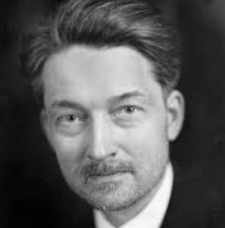
We have just seen that perfection and contemplation imply each other by reason of love which is at once the essence of perfecton and “the source, the execize and the end” of contemplation. One can also show this mutual implication by the stressing the fact that under the regime of the gifts of the Holy Spirit is the state proper to perfection and to contemplation all at once. Saint Thomas teaches that the gifts of the Holy Spirit are necessary for salvation, because we are too weak all by ourselves always to use as we should even the theological virtues and the infused moral virtues. For, as saint Bonavenure tell us, “the gifts immediately dispose one to contemplation”.
▼
Source
Liturgy and contemplation, chapter VI, p. 20
3 months 3 weeks ago
There are three relations [between thee and other things]: the one to the body which surrounds thee; the second to the divine cause from which all things come to all; and the third to those who live with thee.
▼
Source
VIII, 27

3 months 3 weeks ago
We are so lonely in life that we must ask ourselves if the loneliness of dying is not a symbol of our human existence.
3 months 3 weeks ago
What you see, yet can not see over, is as good as infinite.
▼
Source
Bk. II, ch. 1.
3 months 3 weeks ago
I don't know why, but something inside me snapped. I started yelling at the top of my lungs, and I insulted him and told him not to waste his prayers on me. I grabbed him by the collar of his cassock. I was pouring out on him everything that was in my heart, cries of anger and cries of joy. He seemed so certain about everything, didn't he? And yet none of his certainties was worth one hair of a woman's head. He wasn't even sure he was alive, because he was living like a dead man. Whereas it looked as if I was the one who'd come up emptyhanded. But I was sure about me, about everything, surer than he could ever be, sure of my life and sure of the death I had waiting for me. Yes, that was all I had. But at least I had as much of a hold on it as it had on me. I had been right, I was still right, I was always right. I had lived my life one way and I could just as well have lived it another. I had done this and I hadn't done that. I hadn't done this thing but I had done another. And so? It was as if I had waited all this time for this moment and for the first light of this dawn to be vindicated. Nothing, nothing mattered, and I knew why. So did he. Throughout the whole absurd life I'd lived, a dark wind had been rising toward me from somewhere deep in my future, across years that were still to come, and as it passed, this wind leveled whatever was offered to me at the time, in years no more real than the ones I was living. What did other people's deaths or a mother's love matter to me; what did his God or the lives people choose or the fate they think they elect matter to me when we're all elected by the same fate, me and billions of privileged people like him who also called themselves my brothers? Couldn't he see, couldn't he see that? Everybody was privileged. There were only privileged people. The others would all be condemned one day. And he would be condemned, too.

3 months 3 weeks ago
They dwell altogether in the face, their endeavors are meer titillations, & their acquaintance with Nature is not at the heart.
3 months 3 weeks ago
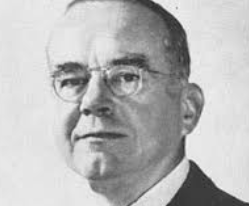
I reject, as you know, the "philosophy of Marxism," ....The general Marxian theory of "universal history," to the extent that it has any empirical content, seems to me disproved by modern historical and anthropological investigation.Marxian economics seems to me for the most part either false or obsolete or meaningless in application to contemporary economic phenomena. Those aspects of Marxian economics which retain validity do not seem to me to justify the theoretical structure of the economics.Not only do I believe it meaningless to say that "socialism is inevitable" and false that socialism is "the only alternative to capitalism"; I consider that on the basis of the evidence now available to us a new form of exploitive society (which I call "managerial society") is not only possible but is a more probable outcome of the present than socialism....On no ideological, theoretic or political ground, then, can I recognize, or do I feel, any bond or allegiance to the Workers Party (or to any other Marxist party). That is simply the case, and I can no longer pretend about it, either to myself or to others.
3 months 3 weeks ago
The happiness and unhappiness of the rational, social animal depends not on what he feels but on what he does; just as his virtue and vice consist not in feeling but in doing.
▼
Source
IX, 16
3 months 3 weeks ago
Time is heavy sometimes; imagine how heavy eternity must be.
3 months 3 weeks ago
There is no heroic poem in the world but is at bottom a biography, the life of a man; also, it may be said, there is no life of a man, faithfully recorded, but is a heroic poem of its sort, rhymed or unrhymed.
3 months 3 weeks ago
Existence is illusory and it is eternal.
▼
Source
Kirilov
3 months 3 weeks ago
Surely, So sir, this is not the Philosophers’ Stone, neither will I undertake to define it, but give me leave to speak to you in the language of Zoroaster: “Seek thou the channel of the Soule.”

3 months 3 weeks ago
Of the sixteen chapters which compose it, there are fifteen wholly employed in detecting the fallacy and ridicule to be found in the objects of human passions and inclinations, and in demolishing such obstacles as at first weaken, and afterwards extinguish, any knowledge of God in mankind ; Therefore, these chapters are merely preparatory to the sixteenth and last, wherein atheism is attacked, and perhaps routed, wherein the proofs of a God, such at least as weak man is capable of receiving, are produced ; wherein the providence of God is defended against the insults and complaints of free-thinkers.
▼
Source
On the purpose of writing Les Carácteres, Preface to La Bruyere's "Characters," p. v
3 months 3 weeks ago
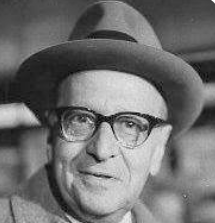
The blessing that the market does not ask about birth is paid for in the exchange society by the fact that the possibilities conferred by birth are molded to fit the production of goods that can be bought on the market.
▼
Source
E. Jephcott, trans., p. 9.
3 months 3 weeks ago
Look at everything that exists, and observe that it is already in dissolution and change, and as it were putrefaction or dispersion, or that everything is so constituted in nature as to die.
▼
Source
X, 18
3 months 3 weeks ago
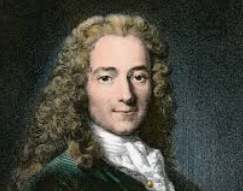
This new patriarch Fox said one day to a justice of peace, before a large assembly of people. "Friend, take care what thou dost; God will soon punish thee for persecuting his saints." This magistrate, being one who besotted himself every day with bad beer and brandy, died of apoplexy two days after; just as he had signed a mittimus for imprisoning some Quakers. The sudden death of this justice was not ascribed to his intemperance; but was universally looked upon as the effect of the holy man's predictions; so that this accident made more Quakers than a thousand sermons and as many shaking fits would have done. Cromwell, finding them increase daily, was willing to bring them over to his party, and for that purpose tried bribery; however, he found them incorruptible, which made him one day declare that this was the only religion he had ever met with that could resist the charms of gold. The Quakers suffered several persecutions under Charles II; not upon a religious account, but for refusing to pay the tithes, for "theeing" and "thouing" the magistrates, and for refusing to take the oaths enacted by the laws. At length Robert Barclay, a native of Scotland, presented to the king, in 1675, his "Apology for the Quakers"; a work as well drawn up as the subject could possibly admit. The dedication to Charles II, instead of being filled with mean, flattering encomiums, abounds with bold truths and the wisest counsels. "Thou hast tasted," says he to the king, at the close of his "Epistle Dedicatory," "of prosperity and adversity: thou hast been driven out of the country over which thou now reignest, and from the throne on which thou sittest: thou hast groaned beneath the yoke of oppression; therefore hast thou reason to know how hateful the oppressor is both to God and man. If, after all these warnings and advertisements, thou dost not turn unto the Lord, with all thy heart; but forget Him who remembered thee in thy distress, and give thyself up to follow lust and vanity, surely great will be thy guilt, and bitter thy condemnation. Instead of listening to the flatterers about thee, hearken only to the voice that is within thee, which never flatters. I am thy faithful friend and servant, Robert Barclay." The most surprising circumstance is that this letter, though written by an obscure person, was so happy in its effect as to put a stop to the persecution.
3 months 3 weeks ago
To win the guilty kiss of a saint, I'd welcome the plague as a blessing

3 months 3 weeks ago
An optimist may see a light where there is none, but why must the pessimist always run to blow it out?
▼
Source
Michel de Saint-Pierre, as quoted in Cryptograms and Spygrams (1981) by Norma Gleason, p. 106; attributed to Descartes in The Athlete's Way : Training Your Mind and Body to Experience the Joy of Exercise (2008) by Christopher Bergland, p. 271.
3 months 3 weeks ago
For the Norse people, the Man now named Odin, and Chief Norse God, we fancy, was such a man. A Teacher, and Captain of soul and of body; a Hero, of worth immeasurable; admiration for whom, transcending the known bounds, became adoration. Has he not the power of articulate Thinking; and many other powers, as yet miraculous? So, with boundless gratitude, would the rude Norse heart feel. Has he not solved for them the sphinx-enigma of this Universe; given assurance to them of their own destiny there? By him they know now what they have to do here, what to look for hereafter. Existence has become articulate, melodious by him; he first has made Life alive!—We may call this Odin, the origin of Norse Mythology: Odin, or whatever name the First Norse Thinker bore while he was a man among men. His view of the Universe once promulgated, a like view starts into being in all minds; grows, keeps ever growing, while it continues credible there. In all minds it lay written, but invisibly, as in sympathetic ink; at his word it starts into visibility in all. Nay, in every epoch of the world, the great event, parent of all others, is it not the arrival of a Thinker in the world—!
3 months 3 weeks ago
Query: How to contrive not to waste one's time? Answer: By being fully aware of it all the while. Ways in which this can be done: By spending one's days on an uneasy chair in a dentist's waiting room; by remaining on one's balcony all a Sunday afternoon; by travelling by the longest and least-convenient train routes, and of course standing all the way; by queueing at the box-office of theatres and then not booking a seat.

3 months 3 weeks ago
It must be thoroughly understood that war is a necessity, and that the more readily we accept it, the less will be the ardor of our opponents, and that out of the greatest dangers communities and individuals acquire the greatest glory.
▼
Source
Book I, 1.144-[3] | Variant translation: We must realize, too, that, both for cities and for individuals, it is from the greatest dangers that the greatest glory is to be won. | As translated by Rex Warner (1954).
3 months 3 weeks ago
What picture of American society is likely to be imprinted on the consciousness of average Europeans? Given what they read or hear every day from intellectuals and politicians, they can hardly have any choice in the unpleasant particulars, especially if they happen to be French. The picture repeatedly sketched for them is as follows: American society is entirely ruled by money. No other value, whether familial, moral, religious, civic, cultural, professional, or ethical has any potency in itself. Everything in America is a commodity, regarded and used exclusively for its material value. A person is judged solely by the worth of his bank account. Every U.S. President has been in the pockets of the oil companies, the military-industrial complex, the agricultural lobby, or the financial manipulators of Wall Street. America is the "jungle" par excellence of out-of-control, "savage" capitalism, where the rich are always becoming richer and fewer, while the poor are becoming poorer and more numerous. Poverty is the dominant social reality in America. Hordes of famished indigents are everywhere, while luxurious chauffeured limousines with darkened windows glide through the urban wilderness.
3 months 3 weeks ago
Pragmatism … reflects with almost disarming candor the spirit of the prevailing business culture, the very same attitude of ‘being practical’ as counter to which philosophical meditation as such was conceived.
▼
Source
p. 52.
3 months 3 weeks ago
All those things at which thou wishest to arrive by a circuitous road, thou canst have now, if thou dost not refuse them to thyself.
▼
Source
XII, 1
3 months 3 weeks ago
Paradise was made for tender hearts; hell, for loveless hearts.
▼
Source
p. 81
3 months 3 weeks ago
Bach: a scale of tears upon which our desires for God ascend.
3 months 3 weeks ago
From of old, a thousand thoughts, in his pilgrimings and wanderings, had been in this man: What am I? What is this unfathomable Thing I live in, which men name Universe? What is Life; what is Death? What am I to believe? What am I to do? The grim rocks of Mount Hara, of Mount Sinai, the stern sandy solitudes answered not. The great Heaven rolling silent overhead, with its blue-glancing stars, answered not. There was no answer. The man's own soul, and what of God's inspiration dwelt there, had to answer!
3 months 3 weeks ago
Whatever we may do, excess will always keep its place in the heart of man, in the place where solitude is found. We all carry within us our places of exile, our crimes and our ravages. But our task is not to unleash them on the world; it is to fight them in ourselves and in others.
3 months 3 weeks ago
Men do not rest content with parrying the attacks of a superior, but often strike the first blow to prevent the attack being made.
▼
Source
Book VI, 6.18-[2]
3 months 3 weeks ago
I once had a conversation with a famous French philosopher who's a friend of mine. And I said to him, "Why the hell do you write so badly? Pourquoi tu écris si mal?" ... And this was Michel Foucault. He was a very smart guy and wrote a lot of very good stuff but in general he just wrote badly. When you heard him give a lecture in Berkeley, it was perfectly clear, just as clear as I am. ... And he said, "Well, in France, it would be regarded as somewhat childish and naive if you wrote clearly. ... In France you've got to have 10% incomprehensible." Otherwise people won't think it's deep. They won't think you're a profound thinker.
3 months 3 weeks ago
Who makes quick use of the moment is a genius of prudence.
▼
Source
No. 91
3 months 3 weeks ago
Drama, combat, terror, numbness, and subservience – every day these things wipe out your sacred principles, whenever your mind entertains them uncritically or lets them slip in.
▼
Source
X. 9
3 months 3 weeks ago
It takes twenty years to bring man from the state of embryo, and from that of a mere animal, as he is in his first infancy, to the point when his reason begins to dawn. It has taken thirty centuries to know his structure; it would take eternity to know something of his soul: it takes but an instant to kill him.
▼
Source
p. 211
3 months 3 weeks ago
So long as man is protected by madness he functions and flourishes, but when he frees himself from the fruitful tyranny of fixed ideas, he is lost, ruined.
3 months 3 weeks ago
All this of Liberty and Equality, Electoral suffrages, Independence and so forth, we will take, therefore, to be a temporary phenomenon, by no means a final one. Though likely to last a long time, with sad enough embroilments for us all, we must welcome it, as the penalty of sins that are past, the pledge of inestimable benefits that are coming.
3 months 3 weeks ago
When the imagination sleeps, words are emptied of their meaning: a deaf population absent-mindedly registers the condemnation of a man. ... there is no other solution but to speak out and show the obscenity hidden under the verbal cloak.

3 months 3 weeks ago
Immoderate desire is the mark of a child, not a man.
▼
Source
Freeman (1948), p. 152 | Variant: It is childish, not manly, to have immoderate desires.

3 months 3 weeks ago
Not within the leaf of pity writ.
▼
Source
Timon, scene iii
3 months 3 weeks ago
The matter of jurisprudence is positive law: law, simply and strictly so called : or law set by political superiors to political inferiors.
▼
Source
p. 1; opening line
3 months 3 weeks ago
Italy had a Renaissance, and Germany had a Reformation, but France had Voltaire; he was for his country both Renaissance and Reformation, and half the Revolution. He carried on the antiseptic scepticism of Montaigne, and the healthy earthy humor of Rabelais; he fought superstition and corruption more savagely and effectively than Luther or Erasmus, Calvin or Knox or Melanchthon; he helped to make the powder with which Mirabeau and Marat, Danton and Robespierre blew up the Old Regime... No, never has a writer had in his lifetime such influence. Despite exile, imprisonment, and the suppression of almost everyone of his books by the minions of church and state, he forged fiercely a path for his truth, until at last kings, popes and emperors catered to him, thrones trembled before him, and half the world listened to catch his every word. It was an age in which many things called for a destroyer. "Laughing lions must come," said Nietzsche; well, Voltaire came, and "annihilated with laughter." He and Rousseau were the two voices of a vast process of economic and political transition from feudal aristocracy to the rule of the middle class...He was happy in his garden, planting fruit trees which he did not expect to see flourish in his lifetime. When an admirer praised the work he had done for posterity he answered, "Yes, I have planted 4000 trees." He rejects all systems, and suspects that "every chief of a sect in philosophy has been a little of a quack." "The further I go, the more I am confirmed in the idea that systems of metaphysics are for philosophers what novels are for women." "It is only charlatans who are certain. We know nothing of first principles. It is truly extravagant to define God, angels, and minds, and to know precisely why God formed the world, when we do not know why we move our arms at will. Doubt is not a very agreeable state, but certainty is a ridiculous one."
▼
Source
Will Durant, The Story of Philosophy
CivilSimian.com created by AxiomaticPanic, CivilSimian, Kalokagathia