
3 months 3 weeks ago
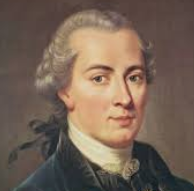
Thus our duties to animals are indirectly duties to humanity.
▼
Source
Part II, p. 213
3 months 3 weeks ago
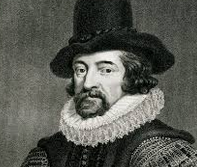
Cosmus, Duke of Florence, was wont to say of perfidious friends, that "We read that we ought to forgive our enemies; but we do not read that we ought to forgive our friends."
▼
Source
No. 206

3 months 3 weeks ago
It was in Nazi-occupied Austria that autism was coined as a diagnosis. While the term had been coined by the eugenicist and psychiatrist Eugene Bleuler in 1911, Bleuler only meant it to refer to a temporary symptom of schizophrenia. It was only under Nazi rule, in the work of Hans Asperger in the 1930s and 1940s that those who came to be called autistic were singled out as having a unique way of being. During a war where men were expected to express a 'soldier mentality' and to be part of the group, boys who failed to fit this economic requirement were singled out as pathological (it was mostly boys who got the diagnosis) and were baptized with a new name: autism. Those women who were diagnosed were also singled out if they had intellectual disabilities, since they were not seen as fit to reproduce.
▼
Source
p. 62

3 months 3 weeks ago
Art, I suppose, is only for beginners, or else for those resolute dead-enders, who have made up their minds to be content with the ersatz of Suchness, with symbols rather than with what they signify, with the elegantly composed recipe in lieu of actual dinner.
3 months 3 weeks ago
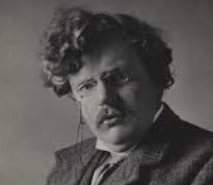
When some English moralists write about the importance of having character, they appear to mean only the importance of having a dull character.
▼
Source
Ch. 10 "The Great Dickens Characters"

3 months 3 weeks ago
To attempt the destruction of our passions is the height of folly. What a noble aim is that of the zealot who tortures himself like a madman in order to desire nothing, love nothing, feel nothing, and who, if he succeeded, would end up a complete monster!
▼
Source
Ch. 5, as quoted in Selected Writings (1966) edited by Lester G. Crocker

3 months 3 weeks ago
Well, if identity is only a game, if it is only a procedure to have relations, social and sexual-pleasure relationships that create new friendships, it is useful. But if identity becomes the problem of sexual existence, and if people think that they have to "uncover" their "own identity," and that their own identity has to become the law, the principle, the code of their existence; if the perennial question they ask is "Does this thing conform to my identity?" then, I think, they will turn back to a kind of ethics very close to the old heterosexual virility. If we are asked to relate to the question of identity, it must be an identity to our unique selves. But the relationships we have to have with ourselves are not ones of identity, rather, they must be relationships of differentiation, of creation, of innovation. To be the same is really boring. We must not exclude identity if people find their pleasure through this identity, but we must not think of this identity as an ethical universal rule.
▼
Source
"Sex, Power, and the Politics of Identity", interview in The Advocate, June 1982, as translated in Ethics, Subjectivity and Truth (1994), pp. 166
3 months 3 weeks ago
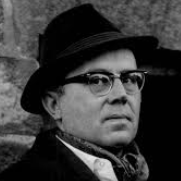
The twentieth-century conservative is concerned, first of all, for the regeneration of the spirit and character – with the perennial problem of the inner order of the soul, the restoration of the ethical understanding, and the religious sanction upon which any life worth living is founded. This is conservatism at its highest.
3 months 3 weeks ago
Societies are composed of individuals and are good only insofar as they help individuals to realize their potentialities and to lead a happy and creative life.
▼
Source
Chapter 3 (p. 20)
3 months 3 weeks ago
As for science and religion, the known and admitted facts are few and plain enough. All that the parsons say is unproved. All that the doctors say is disproved. That's the only difference between science and religion there's ever been, or will be.
▼
Source
Michael Moon in Part II, ch. I
3 months 3 weeks ago
All abstract sciences are nothing but the study of relations between signs.
▼
Source
Dr. Théophile de Bordeu, in “Conversation Between D’Alembert and Diderot”
3 months 3 weeks ago
We are observing ourselves being observed by the painter, and made visible to his eyes by the same light that enables us to see him. And just as we are about to apprehend ourselves, transcribed by his hand as though in a mirror, we find that we can in fact apprehend nothing of that mirror but its lusterless back. The other side of a psyche.
▼
Source
Las Menias
3 months 3 weeks ago
A free man - is a man who is free internally. As all other people, externally he or she depends on society. Internally he or she is independent. A society can become liberated externally - from oppression, but it can become free only when the majority of people are free internally.
▼
Source
[http://parentingforeveryone.com/freeman/ Who Is a Free Man. What Is Freedom?]
3 months 3 weeks ago
Aldous Huxley was uncannily prophetic, a more astute guide to the future than any other 20th- century novelist. Even his casual asides have a surprising relevance to our own times. During the first world war, after America's entry, he warned: "I dread the inevitable acceleration of American world domination which will be the result of it all...Europe will no longer be Europe." His sentiment is widely echoed today, though too late for us to do anything about it. The worst fate for a prophet is for his predictions to come true, when everyone resents him for being so clear-eyed.
▼
Source
J. G. Ballard, [http://www.guardian.co.uk/books/2002/apr/13/biography.aldoushuxley?INTCMP=SRCH Prophet of Our Present]. Review of Aldous Huxley: An English Intellectual by Nicholas Murray. The Guardian (13 April 2002)
3 months 3 weeks ago
The gallows in my garden, people say,Is new and neat and adequately tall.
▼
Source
A Ballade of Suicide, st. 1

3 months 3 weeks ago
How can great minds be produced in a country where the test of a great mind is agreeing in the opinions of small minds?
▼
Source
As quoted in Egoists: A Book of Supermen (1909) by James Huneker, p. 367
3 months 3 weeks ago
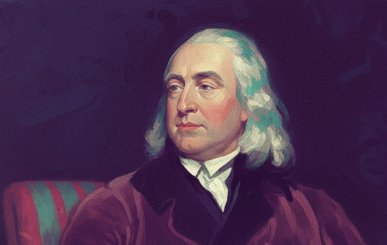
Figure to yourself the mixture of surprise and delight which has this instant been poured into my mind by the sound of my name, as uttered by you, in the speech just read to me out of the Morning Herald... By one and the same man, not only Parliamentary Reform, but Law Reform advocated. Advocated? and by what man? By one who, in the vulgar sense of profit and loss, has nothing to gain by it... Yes, only from Ireland could such self-sacrifice come; nowhere else: least of all in England, cold, selfish, priest-ridden, lawyer-ridden, lord-ridden, squire-ridden, soldier-ridden England, could any approach to it be found.
▼
Source
Letter to Daniel O'Connell (15 July 1828) after O'Connell delivered a speech in the House of Commons in which he advocated parliamentary and legal reform, and ended by calling himself "an humble disciple of the immortal Bentham", quoted in The Works of Je
3 months 3 weeks ago
The 'Enlightenment', which discovered the liberties, also invented the disciplines.

3 months 3 weeks ago
It was as though some stubborn god spent their time in an immutable and absurd balancing act between life and death, prosperity and poverty.
▼
Source
p. 81
3 months 3 weeks ago
I judged the Poles by their enemies. And I found it was an almost unfailing truth that their enemies were the enemies of magnanimity and manhood. If a man loved slavery, if he loved usury, if he loved terrorism and all the trampled mire of materialistic politics, I have always found that he added to these affections the passion of a hatred of Poland. She could be judged in the light of that hatred; and the judgment has proved to be right.
3 months 3 weeks ago
The art of music is good, for the reason, among others, that it produces pleasure; but what proof is it possible to give that pleasure is good? If, then, it is asserted that there is a comprehensive formula, including all things which are in themselves good, and that whatever else is good, is not so as an end, but as a mean, the formula may be accepted or rejected, but is not a subject of what is commonly understood by proof.
▼
Source
Ch. 1
3 months 3 weeks ago
Recognizing someone as a parrhesiastes... was... important... in Greco-Roman society, and... was explicitly raised and discussed by Plutarch, Galen, and others.
3 months 3 weeks ago
One's life has value so long as one attributes value to the life of others, by means of love, friendship, indignation and compassion.
▼
Source
Conclusion, p. 541
3 months 3 weeks ago
The insistence of the Christian doctrine on man's limited condition was somehow enough of a philosophy to allow its adherents a very deep insight into the essential inhumanity of all those modern attempts – psychological, technical, biological – to change man into the monster of superman. They realized that a pursuit of happiness which actually means to wipe away all tears will pretty quickly end by wiping out all laughter. It was again Christianity which taught them that nothing human can exist beyond tears and laughter, except the silence of despair.
▼
Source
Hannah Arendt, commenting on Chesterton and Charles Péguy in “Christianity and Revolution”, in Hannah Arendt, Essays in Understanding, 1930-1954 (1994), edited by Jerome Kohn, p. 154
3 months 3 weeks ago
In these frequent talks about the books I read, he used, as opportunity offered, to give me explanations and ideas respecting civilization, government, morality, mental cultivation, which he required me afterwards to restate to him in my own words. He also made me read, and give him a verbal account of, many books which would not have interested me sufficiently to induce me to read them of myself: among others, Millar's Historical View of the English Government, a book of great merit for its time, and which he highly valued; Mosheim's Ecclesiastical History, McCrie's Life of John Knox, and even Sewel's and Rutty's Histories of the Quakers. He was fond of putting into my hands books which exhibited men of energy and resource in unusual circumstances, struggling against difficulties and overcoming them: of such works I remember Beaver's African Memoranda, and Collins's account of the first settlement of New South Wales.
▼
Source
([https://archive.org/details/autobiography01mill/page/8/mode/1up p. 8])
3 months 3 weeks ago
The physical change in the thickness of walls since the Middle Ages could be shown in a diagram. In the fourteenth century each house was a fortress. Man spent the major portion of his day in them, in secret and well-defended solitude. That solitude, working on the soul hour after hour, forged it, like a transcendent blacksmith, into a compact and forceful character. Under its treatment, man consolidated his individual destiny and sallied forth with impunity, never yielding to the contamination from the public. It is only in isolation that we gain, almost automatically, a certain discrimination in ideas, desires, longings, that we learn which are ours, and which are anonymous, floating in the air, falling on us like dust in the street.
▼
Source
p. 168
3 months 3 weeks ago
Foucault revealed the universal truths hidden in societal extremes.
▼
Source
David Rosen, in The Brooklyn Rail, June 2012.
3 months 3 weeks ago
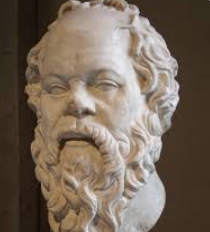
...do not courageous men endure death because they are afraid of yet greater evils? ...Then all but philosophers are courageous only from fear, and because they are afraid; and yet that a man should be courageous from fear, and because he is a coward, is surely a strange thing.

3 months 3 weeks ago
Liberty is not an option. It is a human right.
▼
Source
On the decolonization of Puerto Rico. [http://worldpolicy.org/2017/10/17/puerto-rico-i-took-liberties/] (World Policy Institute, October 17, 2017)
3 months 3 weeks ago
My previous education had been, in a certain sense, already a course of Benthamism. The Benthamic standard of "the greatest happiness" was that which I had always been taught to apply; I was even familiar with an abstract discussion of it, forming an episode in an unpublished dialogue on Government, written by my father on the Platonic model. Yet in the first pages of Bentham it burst upon me with all the force of novelty. What thus impressed me was the chapter in which Bentham passed judgment on the common modes of reasoning in morals and legislation, deduced from phrases like "the law of nature," "right reason," "the moral sense," "natural rectitude," and the like, and characterized them as dogmatism in disguise, imposing its sentiments upon others under cover of sounding expressions which convey no reason for the sentiment, but set up the sentiment as its own reason. It had not struck me before, that Bentham's principle put an end to all this. The feeling rushed upon me, that all previous moralists were superseded, and that here indeed was the commencement of a new era in thought.
▼
Source
([https://archive.org/details/autobiography01mill/page/64/mode/1up pp. 64-65])
3 months 3 weeks ago
The most immediate result of this unbalanced specialisation has been that to-day, when there are more "scientists" than ever, there are much less "cultured" men than, for example, about 1750. And the worst is that with these turnspits of science not even the real progress of science itself is assured. For science needs from time to time, as a necessary regulator of its own advance, a labour of reconstitution, and, as I have said, this demands an effort towards unification, which grows more and more difficult, involving, as it does, ever-vaster regions of the world of knowledge. Newton was able to found his system of physics without knowing much philosophy, but Einstein needed to saturate himself with Kant and Mach before he could reach his own keen synthesis. Kant and Mach — the names are mere symbols of the enormous mass of philosophic and psychological thought which has influenced Einstein.
▼
Source
Chapter XII: The Barbarism Of "Specialisation"
3 months 3 weeks ago
If there is anything beautiful other than absolute beauty, that can only be beautiful as far as it partakes of absolute beauty—and this I should say of everything. ...by beauty all things become beautiful. ...by greatness only great things become great and greater and greater, and by smallness the less becomes less.
3 months 3 weeks ago
Schizophrenia is like love: there is no specifically schizophrenic phenomenon or entity; schizophrenia is the universe of productive and reproductive desiring machines, universal primary production as "the essential reality of man and nature"
▼
Source
The Desiring Machine
3 months 3 weeks ago
I saw a torso falling--no legs--no head--just a torso. I am redundant because I can’t believe what I saw. I saw a torso falling--no legs--no head--just a torso--tumbling in the air--dressed in a bright white shirt--the shirt of the businessman--tucked in--neatly--under the belt--snugly fastened--holding up his pants that had no legs. He had hit a steel girder--and he was dead--dead for a ducat, dead--on the floor of Krispy Krème--with powdered donuts for a head--fresh out of the oven--crispy and round--hot and tasty--and this businessman--on the ground was clutching a briefcase in his hand--and on his finger, the wedding band. I suppose he thought his briefcase was his life--or his wife--or that both were one--because the briefcase was as tight in hand as the wedding band."
3 months 3 weeks ago
The writers by whom, more than by any others, a new mode of political thinking was brought home to me, were those of the St. Simonian school in France. In 1829 and 1830 I became acquainted with some of their writings. They were then only in the earlier stages of their speculations. They had not yet dressed out their philosophy as a religion, nor had they organized their scheme of Socialism. They were just beginning to question the principle of hereditary property. I was by no means prepared to go with them even this length; but I was greatly struck with the connected view which they for the first time presented to me, of the natural order of human progress; and especially with their division of all history into organic periods and critical periods.
▼
Source
([https://archive.org/details/autobiography01mill/page/163/mode/1up p. 163])
3 months 3 weeks ago
Torn in this way from its normal connection with contemplation, with being within one's self, pure action permits and produces only a chain of stupidities which we might better call "stupidity unchained." So we see today that an absurd attitude justifies the appearance of an opposing attitude no more reasonable; at least, reasonable enough, and so on indefinitely. Such is the extreme to which political affairs in the West have come!
▼
Source
p. 34

3 months 3 weeks ago
For a man can lose neither the past nor the future; for how can one take from him that which is not his? So remember these two points: first, that each thing is of like form from everlasting and comes round again in its cycle, and that it signifies not whether a man shall look upon the same things for a hundred years or two hundred, or for an infinity of time; second, that the longest lived and the shortest lived man, when they come to die, lose one and the same thing.
▼
Source
II, 14
3 months 3 weeks ago
In mathematics we can take our inner distance from the content of our statements. In the final analysis mathematics is a mental game that we can play or not play as we choose. Religion, on the other hand, deals with ourselves, with our life and death; its promises are meant to govern our actions and thus, at least indirectly, our very existence. We cannot just look at them impassively from the outside. Moreover, our attitude to religious questions cannot be separated from our attitude to society. Even if religion arose as the spiritual structure of a particular human society, it is arguable whether it has remained the strongest social molding force through history, or whether society, once formed, develops new spiritual structures and adapts them to its particular level of knowledge. Nowadays, the individual seems to be able to choose the spiritual framework of his thoughts and actions quite freely, and this freedom reflects the fact that the boundaries between the various cultures and societies are beginning to become more fluid. But even when an individual tries to attain the greatest possible degree of independence, he will still be swayed by the existing spiritual structures — consciously or unconsciously. For he, too, must be able to speak of life and death and the human condition to other members of the society in which he's chosen to live; he must educate his children according to the norms of that society, fit into its life. Epistemological sophistries cannot possibly help him attain these ends. Here, too, the relationship between critical thought about the spiritual content of a given religion and action based on the deliberate acceptance of that content is complementary. And such acceptance, if consciously arrived at, fills the individual with strength of purpose, helps him to overcome doubts and, if he has to suffer, provides him with the kind of solace that only a sense of being sheltered under an all-embracing roof can grant. In that sense, religion helps to make social life more harmonious; its most important task is to remind us, in the language of pictures and parables, of the wider framework within which our life is set.

3 months 3 weeks ago
neither our distance from a preventable evil nor the number of other people who, in respect to that evil, are in the same situation as we are, lessens our obligation to mitigate or prevent that evil.
3 months 3 weeks ago
Often when looking at a mass of things for sale, he would say to himself, "How many things I have no need of!"
▼
Source
Variant: How many things I can do without!
3 months 3 weeks ago
It is far easier to learn science first and philosophy later than the other way round!
▼
Source
Physics and Philosophy in Oxford: a prosperous example of interdisciplinarity, in
3 months 3 weeks ago
You must be aware of the fact, but I think can hardly appreciate the reality, that in all parts of this country (and wherever our tongue is spoken) there are thousands of earnest men and women to whom your name is as familiar as a household word, and who do not merely admire your ability and appreciate your work, but regard you with all the feeling due to that highest of all characters,—the "great, good man".
▼
Source
Henry George to Mill (22 August 1869), quoted in Michael St. John Packe, The Life of John Stuart Mill (1954), p. 479
3 months 3 weeks ago
Nothing can come out of nothing, any more than a thing can go back to nothing.
▼
Source
IV, 4
3 months 3 weeks ago
It is easy for us to criticize the prejudices of our grandfathers, from which our fathers freed themselves. It is more difficult to search for prejudices among the beliefs and values that we hold.
▼
Source
Ch. 3: Equality for Animals? (p. 49)
3 months 3 weeks ago
We cannot help but see Socrates as the turning-point, the vortex of world history.
▼
Source
Friedrich Nietzsche, in The Birth of Tragedy (1872), p. 73
3 months 3 weeks ago
The relation of thought to action filled my mind on waking, and I found myself carried toward a bizarre formula, which seems to have something of the night still clinging about it: Action is but coarsened thought; thought become concrete, obscure, and unconscious. It seemed to me that our most trifling actions, of eating, walking, and sleeping, were the condensation of a multitude of truths and thoughts, and that the wealth of ideas involved was in direct proportion to the commonness of the action (as our dreams are the more active, the deeper our sleep). We are hemmed round with mystery, and the greatest mysteries are contained in what we see and do every day. In all spontaneity the work of creation is reproduced in analogy. When the spontaneity is unconscious, you have simple action; when it is conscious, intelligent and moral action.
▼
Source
30 December 1850
3 months 3 weeks ago
We are sorely deficient in talking with each other and listening to each other. We lack mobility, criticism and self-criticism. We incline to doctrinism. What makes it worse is that so many people do not really want to think. They want only slogans and obedience. They ask no questions and they give no answers, except by repeating drilled-in phrases. They can only assert and obey, neither probe nor apprehend. Thus they cannot be convinced, either. How shall we talk with people who will not go where others probe and think, where men seek independence in insight and conviction?
3 months 3 weeks ago
Don't let yourself forget how many doctors have died, after furrowing their brows over how many deathbeds. How many astrologers, after pompous forecasts about others' ends. How many philosophers, after endless disquisitions on death and immortality. How many warriors, after inflicting thousands of casualties themselves. How many tyrants, after abusing the power of life and death atrociously, as if they were themselves immortal.
▼
Source
IV, 48(Hays translation)

3 months 3 weeks ago
Never affirm anything unless you are sure it is true.
▼
Source
Maxim 15, p. 256

3 months 3 weeks ago
Nations, like men, have their infancy.
▼
Source
On the Study and Use of History, letter 4 (1752)
CivilSimian.com created by AxiomaticPanic, CivilSimian, Kalokagathia