
3 months 3 weeks ago
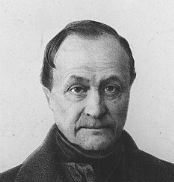
The errors of Communism must be rectified; but there is no necessity for giving up the name, which is a simple assertion of the paramount importance of Social Feeling. However, now that we have happily passed from monarchy to republicanism, the name of Communist is no longer indispensable; the word Republican expresses the meaning as well, and without the same danger. Positivism, then, has nothing to fear from Communism; on the contrary, it will probably be accepted by most Communists among the working classes, especially in France where abstractions have but little influence on minds thoroughly emancipated from theology. The people will gradually find that the solution of the great social problem which Positivism offers is better than the Communistic solution.
▼
Source
p. 169
3 months 3 weeks ago
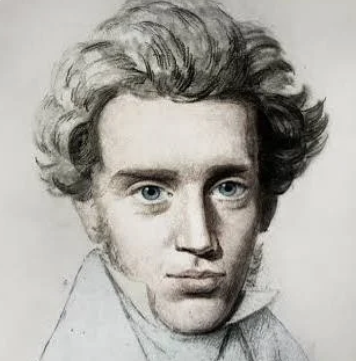
No politics has been able, no politics is able, no worldliness has been able, no worldliness has been able to think through or to actualize to the ultimate consequences this idea: human-equality, human likeness [Menneske-Lighed]. To achieve perfect equality in the medium of world-likeness [Verds-Lighed], that is, in the medium that by nature is dissimilarity, and to achieve it in a world-like [verds-ligt], that is, differentiating way, is eternally, impossible, as one can see by the categories. If perfect equality, likeness, should be achieved, then worldliness would have to be completely eradicated, and when perfect equality, likeness, is achieved worldliness ceases to be. But is it not, then, like an obsession, that worldliness has gotten the idea of wanting to force perfect equality, likeness, and to force it in a worldly way – in worldliness, world-likeness! Ultimately only the essentially religious can with the help of eternity effect human equality [Menneske-Lighed], the godly, the essential, the not-worldly, the true, the only true possible human equality; and this is also why – be it said to tis glorification – the essentially religious is the true humanity [Menneskelighed].
▼
Source
The Point of View On My Work As An Author by Soren Kierkegaard (finished 1848) published by Peter Christian Kierkegaard 1859 translated by Howard and Edna Hong 1998 Princeton University Press P. 104 (Two “Notes” Concerning My Work As An Author by S. Kierk
3 months 3 weeks ago
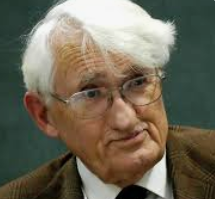
All affected can accept the consequences and the side effects that [the norm's] general observance can be anticipated to have for the satisfaction of everyone's interests, and the consequences are preferred to those of known alternative possibilities for regulation.
▼
Source
p. 65
3 months 3 weeks ago
The depth of darkness into which you can descend, and still live, is an exact measure, I believe, of the height to which you can aspire to reach.
▼
Source
Alan McGlashan, as cited in The Night of the New Moon by Laurens van der Post

3 months 3 weeks ago
The Quaestor turned back the pages until he found himself among the Pensées. “We are not satisfied,” he read, “with the life we have in ourselves and our own being; we want to live an imaginary life in other people’s idea of us. Hence all our efforts are directed to seeming what we are not. We labor incessantly to preserve and embellish this imaginary being, and neglect that which is really ours.” The Quaestor put down the book, ... and ruefully reflected that all his own troubles had arisen from this desire to seem what in fact he was not. To seem a man of action, when in fact he was a contemplative; to seem a politician, when nature had made him an introspective psychologist; to seem a wit, which God had intended him for a sage.
▼
Source
“Variations on a Philosopher” in Themes and Variations (1943), p. 2
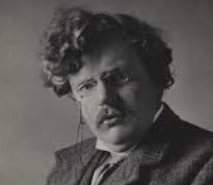
3 months 3 weeks ago
There is one creed: 'neath no world-terror's wing Apples forget to grow on apple-trees.
▼
Source
Ecclesiastes, st. 1. The Wild Knight, &c., 2nd ed. (1906)
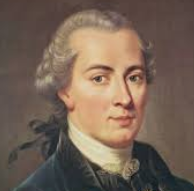
3 months 3 weeks ago
All our knowledge falls with the bounds of experience.
▼
Source
A 146, B 185
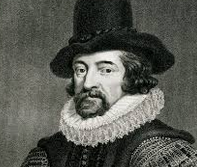
3 months 3 weeks ago
Sacred and inspired divinity, the sabaoth and port of all men's labours and peregrinations.
▼
Source
Book II
3 months 3 weeks ago
She has forgotten speech and language and the restlessness of thoughts, has forgotten what is even greater restlessness, this self, has forgotten herself-she, the lost woman, who is now lost in her Savior, who, lost in him, rests at his feet-like a picture. He speaks about her; he says: Her many sins are forgiven her, because she loved much. Although she is present, it is almost as if she were absent; it is almost as if he changed her into a picture, a parable.
▼
Source
Three Discourses at Friday Communion November 14, 1849 Hong translation 1997 P. 141

3 months 3 weeks ago
For philosophy, it is supposed by vast numbers of students and teachers of the subject, has for its goal philosophical knowledge, and indeed, even certain knowledge. It is presupposed, therefore, that there is such a thing as philosophical knowledge, and there are even men who think themselves the possessors of at least some of it.
▼
Source
The Review of Metaphysics (June, 1968) [https://www.jstor.org/stable/20124689] p. 615
3 months 3 weeks ago
To the gross senses the chair seems solid and substantial. But the gross senses and be refined by means of instruments. Closer observations are made, as the result of which we are forced to conclude that the chair is “really” a swarm of electric charges whizzing about in empty space. ... While the substantial chair is an abstraction easily made from the memories of innumerable sensations of sight and touch, the electric charge chair is a difficult and far-fetched abstraction from certain visual sensations so excessively rare (they can only come to us in the course of elaborate experiments) that not one man in a million has ever been in the position to make it for himself. The overwhelming majority of us accept the electric-charge chair on authority, as good Catholics accept transubstantiation.
▼
Source
“One and Many,” pp. 8–9
3 months 3 weeks ago
Neither reason nor faith will ever die; for men would die if deprived of either. The wildest mystic uses his reason at some stage; if it be only by reasoning against reason. The most incisive sceptic has dogmas of his own; though when he is a very incisive sceptic, he has often forgotten what they are. Faith and reason are in this sense co-eternal; but as the words are popularly used, as loose labels for particular periods, the one is now almost as remote as the other. What was called the Age of Reason has vanished as completely as what are called the Ages of Faith.
▼
Source
[http://www.cse.dmu.ac.uk/~mward/gkc/books/anti_religious_thought.txt Anti-Religious Thought In The Eighteenth Century]; first published in "An Outline of Christianity: The Story of our Civilization", Vol. IV, Christianity and Modern Thought (1926)
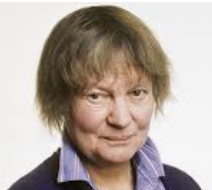
3 months 3 weeks ago
Bereavement is a darkness impenetrable to the imagination of the unbereaved.
▼
Source
The Sacred and Profane Love Machine (1974) p. 37.
3 months 3 weeks ago
Habit... makes the endurance of evil easy (which, under the name of patience, is falsely honored as a virtue), because sensations of the same type, when continued without alteration for a long time, draw our attention away from the senses so that we are scarcely conscious of them at all. On the other hand, habit also makes the consciousness and the remembrance of good that has been received more difficult, which then gradually leads to ingratitude (a real vice). [...] Acquired habit deprives good actions of their moral value because it undermines mental freedom and, moreover, it leads to thoughtless repetitions of the same acts (monotony), and thus becomes ridiculous.
▼
Source
Kant, Immanuel (1996), pages 34-35
3 months 3 weeks ago
The Idols of the Cave are the idols of the individual man. For everyone (besides the errors common to human nature in general) has a cave or den of his own, which refracts and discolors the light of nature, owing either to his own proper and peculiar nature; or to his education and conversation with others; or to the reading of books, and the authority of those whom he esteems and admires; or to the differences of impressions, accordingly as they take place in a mind preoccupied and predisposed or in a mind indifferent and settled; or the like. So that the spirit of man (according as it is meted out to different individuals) is in fact a thing variable and full of perturbation, and governed as it were by chance. Whence it was well observed by Heraclitus that men look for sciences in their own lesser worlds, and not in the greater or common world.
▼
Source
Aphorism 42
3 months 3 weeks ago
Imagine a person who has been and is addicted to a passion. There comes a moment (as it does to everyone, perhaps many times – alas, perhaps many times in vain!), a moment he seems to be brought to a halt: a good resolution is awakening. Imagine that one morning he said to himself (let us suppose him to be a gambler), “I solemnly vow that I will nevermore have anything to do with gambling, never – tonight will be the last time” – ah, my friend, he s lost! I would rather bet on the opposite, however strange that may seem. If there was a gambler who said to himself, “Well, now, you may gamble every blessed day all the rest of your life – but tonight you are going to leave it alone,” and he did – ah, my friend, he is saved for sure! The first gambler's resolution is a trick by the craving, and the second gambler's is to fool the craving.
▼
Source
Soren Kierkegaard, For Self-Examination, Hong p. 45
3 months 3 weeks ago
There is absolutely nothing that can be taken for granted in this world.
▼
Source
The Historical Illuminatus as spoken by Sigismundo Celine
3 months 3 weeks ago
So long as men worship the Caesars and Napoleons, Caesars and Napoleons will duly rise and make them miserable.
▼
Source
Ch. 8, p. 99 [2012 reprint]
3 months 3 weeks ago
The essential rectitude of our view of children lies in the fact that we feel them and their ways to be supernatural while, for some mysterious reason, we do not feel ourselves or our own ways to be supernatural. The very smallness of children makes it possible to regard them as marvels; we seem to be dealing with a new race, only to be seen through a microscope. I doubt if anyone of any tenderness or imagination can see the hand of a child and not be a little frightened of it. It is awful to think of the essential human energy moving so tiny a thing; it is like imagining that human nature could live in the wing of a butterfly or the leaf of a tree. When we look upon lives so human and yet so small, we feel as if we ourselves were enlarged to an embarrassing bigness of stature. We feel the same kind of obligation to these creatures that a deity might feel if he had created something that he could not understand.
▼
Source
"A Defence of Baby-Worship"
3 months 3 weeks ago
Thus our duties to animals are indirectly duties to humanity.
▼
Source
Part II, p. 213
3 months 3 weeks ago
Cosmus, Duke of Florence, was wont to say of perfidious friends, that "We read that we ought to forgive our enemies; but we do not read that we ought to forgive our friends."
▼
Source
No. 206

3 months 3 weeks ago
It was in Nazi-occupied Austria that autism was coined as a diagnosis. While the term had been coined by the eugenicist and psychiatrist Eugene Bleuler in 1911, Bleuler only meant it to refer to a temporary symptom of schizophrenia. It was only under Nazi rule, in the work of Hans Asperger in the 1930s and 1940s that those who came to be called autistic were singled out as having a unique way of being. During a war where men were expected to express a 'soldier mentality' and to be part of the group, boys who failed to fit this economic requirement were singled out as pathological (it was mostly boys who got the diagnosis) and were baptized with a new name: autism. Those women who were diagnosed were also singled out if they had intellectual disabilities, since they were not seen as fit to reproduce.
▼
Source
p. 62
3 months 3 weeks ago
Art, I suppose, is only for beginners, or else for those resolute dead-enders, who have made up their minds to be content with the ersatz of Suchness, with symbols rather than with what they signify, with the elegantly composed recipe in lieu of actual dinner.
3 months 3 weeks ago
When some English moralists write about the importance of having character, they appear to mean only the importance of having a dull character.
▼
Source
Ch. 10 "The Great Dickens Characters"

3 months 3 weeks ago
To attempt the destruction of our passions is the height of folly. What a noble aim is that of the zealot who tortures himself like a madman in order to desire nothing, love nothing, feel nothing, and who, if he succeeded, would end up a complete monster!
▼
Source
Ch. 5, as quoted in Selected Writings (1966) edited by Lester G. Crocker

3 months 3 weeks ago
Well, if identity is only a game, if it is only a procedure to have relations, social and sexual-pleasure relationships that create new friendships, it is useful. But if identity becomes the problem of sexual existence, and if people think that they have to "uncover" their "own identity," and that their own identity has to become the law, the principle, the code of their existence; if the perennial question they ask is "Does this thing conform to my identity?" then, I think, they will turn back to a kind of ethics very close to the old heterosexual virility. If we are asked to relate to the question of identity, it must be an identity to our unique selves. But the relationships we have to have with ourselves are not ones of identity, rather, they must be relationships of differentiation, of creation, of innovation. To be the same is really boring. We must not exclude identity if people find their pleasure through this identity, but we must not think of this identity as an ethical universal rule.
▼
Source
"Sex, Power, and the Politics of Identity", interview in The Advocate, June 1982, as translated in Ethics, Subjectivity and Truth (1994), pp. 166
3 months 3 weeks ago
The twentieth-century conservative is concerned, first of all, for the regeneration of the spirit and character – with the perennial problem of the inner order of the soul, the restoration of the ethical understanding, and the religious sanction upon which any life worth living is founded. This is conservatism at its highest.
3 months 3 weeks ago
Societies are composed of individuals and are good only insofar as they help individuals to realize their potentialities and to lead a happy and creative life.
▼
Source
Chapter 3 (p. 20)
3 months 3 weeks ago
As for science and religion, the known and admitted facts are few and plain enough. All that the parsons say is unproved. All that the doctors say is disproved. That's the only difference between science and religion there's ever been, or will be.
▼
Source
Michael Moon in Part II, ch. I
3 months 3 weeks ago
All abstract sciences are nothing but the study of relations between signs.
▼
Source
Dr. Théophile de Bordeu, in “Conversation Between D’Alembert and Diderot”
3 months 3 weeks ago
We are observing ourselves being observed by the painter, and made visible to his eyes by the same light that enables us to see him. And just as we are about to apprehend ourselves, transcribed by his hand as though in a mirror, we find that we can in fact apprehend nothing of that mirror but its lusterless back. The other side of a psyche.
▼
Source
Las Menias
3 months 3 weeks ago
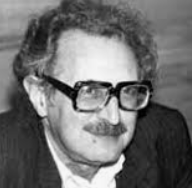
A free man - is a man who is free internally. As all other people, externally he or she depends on society. Internally he or she is independent. A society can become liberated externally - from oppression, but it can become free only when the majority of people are free internally.
▼
Source
[http://parentingforeveryone.com/freeman/ Who Is a Free Man. What Is Freedom?]
3 months 3 weeks ago
Aldous Huxley was uncannily prophetic, a more astute guide to the future than any other 20th- century novelist. Even his casual asides have a surprising relevance to our own times. During the first world war, after America's entry, he warned: "I dread the inevitable acceleration of American world domination which will be the result of it all...Europe will no longer be Europe." His sentiment is widely echoed today, though too late for us to do anything about it. The worst fate for a prophet is for his predictions to come true, when everyone resents him for being so clear-eyed.
▼
Source
J. G. Ballard, [http://www.guardian.co.uk/books/2002/apr/13/biography.aldoushuxley?INTCMP=SRCH Prophet of Our Present]. Review of Aldous Huxley: An English Intellectual by Nicholas Murray. The Guardian (13 April 2002)
3 months 3 weeks ago
The gallows in my garden, people say,Is new and neat and adequately tall.
▼
Source
A Ballade of Suicide, st. 1

3 months 3 weeks ago
How can great minds be produced in a country where the test of a great mind is agreeing in the opinions of small minds?
▼
Source
As quoted in Egoists: A Book of Supermen (1909) by James Huneker, p. 367
3 months 3 weeks ago
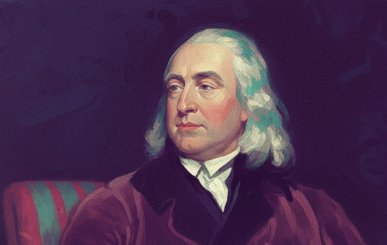
Figure to yourself the mixture of surprise and delight which has this instant been poured into my mind by the sound of my name, as uttered by you, in the speech just read to me out of the Morning Herald... By one and the same man, not only Parliamentary Reform, but Law Reform advocated. Advocated? and by what man? By one who, in the vulgar sense of profit and loss, has nothing to gain by it... Yes, only from Ireland could such self-sacrifice come; nowhere else: least of all in England, cold, selfish, priest-ridden, lawyer-ridden, lord-ridden, squire-ridden, soldier-ridden England, could any approach to it be found.
▼
Source
Letter to Daniel O'Connell (15 July 1828) after O'Connell delivered a speech in the House of Commons in which he advocated parliamentary and legal reform, and ended by calling himself "an humble disciple of the immortal Bentham", quoted in The Works of Je
3 months 3 weeks ago
The 'Enlightenment', which discovered the liberties, also invented the disciplines.

3 months 3 weeks ago
It was as though some stubborn god spent their time in an immutable and absurd balancing act between life and death, prosperity and poverty.
▼
Source
p. 81
3 months 3 weeks ago
I judged the Poles by their enemies. And I found it was an almost unfailing truth that their enemies were the enemies of magnanimity and manhood. If a man loved slavery, if he loved usury, if he loved terrorism and all the trampled mire of materialistic politics, I have always found that he added to these affections the passion of a hatred of Poland. She could be judged in the light of that hatred; and the judgment has proved to be right.
3 months 3 weeks ago
The art of music is good, for the reason, among others, that it produces pleasure; but what proof is it possible to give that pleasure is good? If, then, it is asserted that there is a comprehensive formula, including all things which are in themselves good, and that whatever else is good, is not so as an end, but as a mean, the formula may be accepted or rejected, but is not a subject of what is commonly understood by proof.
▼
Source
Ch. 1
3 months 3 weeks ago
Recognizing someone as a parrhesiastes... was... important... in Greco-Roman society, and... was explicitly raised and discussed by Plutarch, Galen, and others.
3 months 3 weeks ago
One's life has value so long as one attributes value to the life of others, by means of love, friendship, indignation and compassion.
▼
Source
Conclusion, p. 541
3 months 3 weeks ago
The insistence of the Christian doctrine on man's limited condition was somehow enough of a philosophy to allow its adherents a very deep insight into the essential inhumanity of all those modern attempts – psychological, technical, biological – to change man into the monster of superman. They realized that a pursuit of happiness which actually means to wipe away all tears will pretty quickly end by wiping out all laughter. It was again Christianity which taught them that nothing human can exist beyond tears and laughter, except the silence of despair.
▼
Source
Hannah Arendt, commenting on Chesterton and Charles Péguy in “Christianity and Revolution”, in Hannah Arendt, Essays in Understanding, 1930-1954 (1994), edited by Jerome Kohn, p. 154
3 months 3 weeks ago
In these frequent talks about the books I read, he used, as opportunity offered, to give me explanations and ideas respecting civilization, government, morality, mental cultivation, which he required me afterwards to restate to him in my own words. He also made me read, and give him a verbal account of, many books which would not have interested me sufficiently to induce me to read them of myself: among others, Millar's Historical View of the English Government, a book of great merit for its time, and which he highly valued; Mosheim's Ecclesiastical History, McCrie's Life of John Knox, and even Sewel's and Rutty's Histories of the Quakers. He was fond of putting into my hands books which exhibited men of energy and resource in unusual circumstances, struggling against difficulties and overcoming them: of such works I remember Beaver's African Memoranda, and Collins's account of the first settlement of New South Wales.
▼
Source
([https://archive.org/details/autobiography01mill/page/8/mode/1up p. 8])
3 months 3 weeks ago
The physical change in the thickness of walls since the Middle Ages could be shown in a diagram. In the fourteenth century each house was a fortress. Man spent the major portion of his day in them, in secret and well-defended solitude. That solitude, working on the soul hour after hour, forged it, like a transcendent blacksmith, into a compact and forceful character. Under its treatment, man consolidated his individual destiny and sallied forth with impunity, never yielding to the contamination from the public. It is only in isolation that we gain, almost automatically, a certain discrimination in ideas, desires, longings, that we learn which are ours, and which are anonymous, floating in the air, falling on us like dust in the street.
▼
Source
p. 168
3 months 3 weeks ago
Foucault revealed the universal truths hidden in societal extremes.
▼
Source
David Rosen, in The Brooklyn Rail, June 2012.
3 months 3 weeks ago
...do not courageous men endure death because they are afraid of yet greater evils? ...Then all but philosophers are courageous only from fear, and because they are afraid; and yet that a man should be courageous from fear, and because he is a coward, is surely a strange thing.

3 months 3 weeks ago
Liberty is not an option. It is a human right.
▼
Source
On the decolonization of Puerto Rico. [http://worldpolicy.org/2017/10/17/puerto-rico-i-took-liberties/] (World Policy Institute, October 17, 2017)
3 months 3 weeks ago
My previous education had been, in a certain sense, already a course of Benthamism. The Benthamic standard of "the greatest happiness" was that which I had always been taught to apply; I was even familiar with an abstract discussion of it, forming an episode in an unpublished dialogue on Government, written by my father on the Platonic model. Yet in the first pages of Bentham it burst upon me with all the force of novelty. What thus impressed me was the chapter in which Bentham passed judgment on the common modes of reasoning in morals and legislation, deduced from phrases like "the law of nature," "right reason," "the moral sense," "natural rectitude," and the like, and characterized them as dogmatism in disguise, imposing its sentiments upon others under cover of sounding expressions which convey no reason for the sentiment, but set up the sentiment as its own reason. It had not struck me before, that Bentham's principle put an end to all this. The feeling rushed upon me, that all previous moralists were superseded, and that here indeed was the commencement of a new era in thought.
▼
Source
([https://archive.org/details/autobiography01mill/page/64/mode/1up pp. 64-65])
3 months 3 weeks ago
The most immediate result of this unbalanced specialisation has been that to-day, when there are more "scientists" than ever, there are much less "cultured" men than, for example, about 1750. And the worst is that with these turnspits of science not even the real progress of science itself is assured. For science needs from time to time, as a necessary regulator of its own advance, a labour of reconstitution, and, as I have said, this demands an effort towards unification, which grows more and more difficult, involving, as it does, ever-vaster regions of the world of knowledge. Newton was able to found his system of physics without knowing much philosophy, but Einstein needed to saturate himself with Kant and Mach before he could reach his own keen synthesis. Kant and Mach — the names are mere symbols of the enormous mass of philosophic and psychological thought which has influenced Einstein.
▼
Source
Chapter XII: The Barbarism Of "Specialisation"
CivilSimian.com created by AxiomaticPanic, CivilSimian, Kalokagathia