
5 months 1 week ago
He illustrates this position by stating the following general principles. The phenomena afforded by trade, are (most of them) a part of the history of Nature, and therefore may both challenge the naturalist's curiosity and add to his knowledge. Nor will it, he adds, justify learned men in the neglect and contempt of this part of natural history, that the men from whom it must be learned are illiterate mechanics, and the things which are exhibited are works of Art and not of Nature.
▼
Source
Ch.2 History of Exhibitions

5 months 1 week ago
A minimum of unconsciousness is necessary if one wants to stay inside history. To act is one thing; to know one is acting is another. When lucidity invests the action, insinuates itself into it, action is undone, and with it, prejudice, whose function consists, precisely, in subordinating, in enslaving consciousness to action. The man who unmasks his fictions renounces his own resources and, in a sense, himself. Consequently, he will accept other fictions which will deny him, since they will not have cropped up from his own depths. No man concerned with his equilibrium may exceed a certain degree of lucidity and analysis.

5 months 1 week ago
So that every Crime is a sinne; but not every sinne a Crime.
▼
Source
The Second Part, Chapter 27, p. 151

5 months 1 week ago
Properly speaking, the Land belongs to these two: To the Almighty God; and to all His Children of Men that have ever worked well on it, or that shall ever work well on it. No generation of men can or could, with never such solemnity and effort, sell Land on any other principle: it is not the property of any generation, we say, but that of all the past generations that have worked on it, and of all the future ones that shall work on it.

5 months 1 week ago
It's not that there are no differences between human and non-human animals, any more than there are no differences between black people and white people, freeborn citizens and slaves, men and women, Jews and gentiles, gays or heterosexuals. The question is rather: are they morally relevant differences? This matters because morally catastrophic consequences can ensue when we latch on to a real but morally irrelevant difference between sentient beings.
▼
Source
"[https://www.abolitionist.com/ The Abolitionist Project]", Talks given at the FHI (Oxford University) and the Charity International Happiness Conference, 2007

5 months 1 week ago
Our vulnerability to ressentiment is unavoidable (and probably incurable) in a kind of society in which relative equality of political and other rights and formally acknowledged social equality go hand in hand with enormous differences in genuine power, possessions and education; a society in which everyone “has the right” to consider himself equal to everybody else, while in fact being unequal to them.
▼
Source
[paraphrasing the view of Max Scheler], p. 25.
5 months 1 week ago
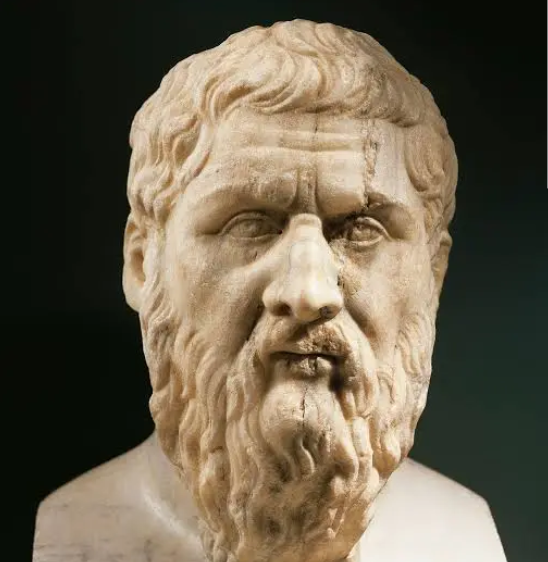
The vicious lover is the follower of earthly Love who desires the body rather than the soul; his heart is set on what is mutable and must therefore be inconstant. And as soon as the body he loves begins to pass the first flower of its beauty, he "spreads his wings and flies away," giving the lie to all his pretty speeches and dishonoring his vows, whereas the lover whose heart is touched by moral beauties is constant all his life, for he has become one with what will never fade.
▼
Source
183e, M. Joyce, trans, Collected Dialogues of Plato (1961), p. 537
5 months 1 week ago
And as for the close connection between philosophy and poetry, we can refer to a little-known statement by Thomas Aquinas in his Commentary on Aristotle's Metaphysics [I, 3]: the Philosopher is akin to the Poet in this, that both are concerned with the mirandum, the "wondrous," the astonishing, or whatever calls for astonishment or wonder. This statement is not that easy to fathom, since Thomas, like Aristotle, was a very sober thinker, completely opposed to any Romantic confusion of properly distinct realms. But on the basis of their common orientation towards the "wonderful" (the mirandum — something not to be found in the world of work!) — on this basis, then, of this common transcending-power, the philosophical act is related to the "wonderful," is in fact more closely related to it than to the exact, special sciences; to this point we shall return.
▼
Source
pp. 68–69 | The Aquinas quote cited — "The reason why the philosopher can be compared to the poet is that both are concerned with wonder" — is the epigraph of "The Philosophical Act".
5 months 1 week ago
To venture upon an undertaking of any kind, even the most insignificant, is to sacrifice to envy.
5 months 1 week ago
The Noble in the high place, the Ignoble in the low; that is, in all times and in all countries, the Almighty Maker's Law.
5 months 1 week ago
Like nonhuman animals in human factory farms, free-living nonhumans who are starving - or being disembowelled, asphyxiated or eaten alive - cannot console themselves by chanting the Four Noble Truths of Buddhism. The moral case for helping other sentient beings, regardless or race or species, does not rest on the distress their plight does (or doesn't) cause spectators.
▼
Source
Reply to [https://www.treehugger.com/natural-sciences/meet-the-people-who-want-to-turn-predators-into-vegans.html#comment-1941979247 Meet the people who want to turn predators into herbivores], TreeHugger, 2 Apr. 2015
5 months 1 week ago
Watch a man at play for an hour and you can learn more about him than in talking to him for a year.
▼
Source
Attributed to Plato in Confidence : How to Succeed at Being Yourself (1987) by Alan Loy McGinnis, this is probably a paraphrase of a statement which occurs in Letter of Advice to a Young Gentleman Leaving the University Concerning His Behaviour and Conver
5 months 1 week ago
This distinction of luminous and non-luminous heat, explains the elevation of temperature caused by transparent bodies.

5 months 1 week ago
The proletarian revolution ought now, by a little ray of kindness, to illuminate the gloomy life of prisoners, shorten Draconian sentences, abolish barbarous punishments - the use of manacles and whippings - improve, as far as possible, the medical attention, the food allowance, and the conditions of labor. That is a duty of honor.
▼
Source
Against Capital Punishment (1918), Rosa Luxemburg Speaks
5 months 1 week ago
It is difficult, it is impossible to believe that the Good Lord — "Our Father" — had a hand in the scandal of creation. Everything suggests that He took no part in it, that it proceeds from a god without scruples, a feculent god. Goodness does not create, lacking imagination; it takes imagination to put together a world, however botched. At the very least, there must be a mixture of good and evil in order to produce an action or a work.
5 months 1 week ago
The Working Man as yet sought only to know his craft; and educated himself sufficiently by ploughing and hammering, under the conditions given, and in fit relation to the persons given: a course of education, then as now and ever, really opulent in manful culture and instruction to him; teaching him many solid virtues, and most indubitably useful knowledges; developing in him valuable faculties not a few both to do and to endure,—among which the faculty of elaborate grammatical utterance, seeing he had so little of extraordinary to utter, or to learn from spoken or written utterances, was not bargained for; the grammar of Nature, which he learned from his mother, being still amply sufficient for him. This was, as it still is, the grand education of the Working Man. As for the Priest, though his trade was clearly of a reading and speaking nature, he knew also in those veracious times that grammar, if needful, was by no means the one thing needful, or the chief thing. By far the chief thing needful, and indeed the one thing then as now, was, That there should be in him the feeling and the practice of reverence to God and to men; that in his life's core there should dwell, spoken or silent, a ray of pious wisdom fit for illuminating dark human destinies;—not so much that he should possess the art of speech, as that he should have something to speak!
5 months 1 week ago
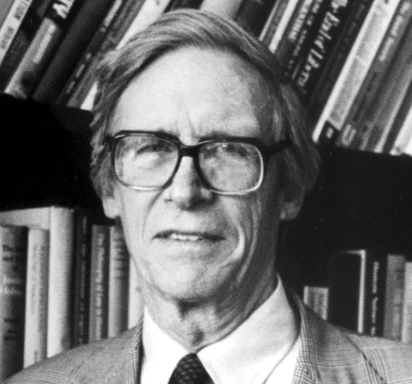
The concept of justice I take to be defined, then, by the role of its principles in assigning rights and duties and in defining the appropriate division of social advantages. A conception of justice is an interpretation of this role.
▼
Source
Chapter I, Section 2, pg. 10
5 months 1 week ago
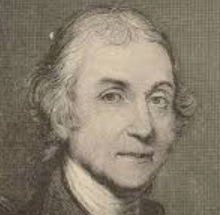
It is the earnest wish of my heart, that your minds may be well established in the sound principles of religious knowledge, because I am fully persuaded, that nothing else can be a sufficient foundation of a virtuous and truly respectable conduct in life, or of good hope in death. A mind destitute of knowledge (and, comparatively speaking, no kind of knowledge, besides that of religion, deserves the name) is like a field on which no culture has been bestowed, which, the richer it is, the ranker weeds it will produce, If nothing good be sown in it, it will be dccupied by plants that are useless or noxious.
▼
Source
Vol. I : The Dedication (March 1772)
5 months 1 week ago
For Lenin, the difference between the Social Democracy and is reduced to the observation that in place of a handful of conspirators we have a class-conscious proletariat. He forgets that this difference implies a complete revision of our ideas on organization and, therefore, an entirely different conception of centralism and the relations existing between the party and the struggle itself.
5 months 1 week ago
I am enraptured by Hindu philosophy, whose essential endeavor is to surmount the self; and everything I do, everything I think is only myself and the selfs humiliations.
5 months 1 week ago
[H]e seldom or never spoke except actually to convey an idea. Measured by quantity of words, he was a talker of fully average copiousness; by extent of meaning communicated, he was the most copious I have listened to. How in few sentences he would sketch you off an entire biography, an entire object or transaction, keen, clear, rugged, genuine, completely rounded In! His words came direct from the heart by the inspiration of the moment.
5 months 1 week ago
Justice as fairness provides what we want.
▼
Source
Chapter III, Section 30, pg. 190
5 months 1 week ago
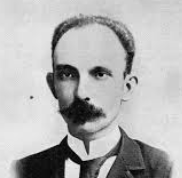
Terrible times in which priests no longer merit the praise of poets and in which poets have not yet begun to be priests.
▼
Source
On El Poema de Niágara of Pérez Bonalde (1883)

5 months 1 week ago
How sad that I returned, how sad,Instead of dying at Baghdad!I say, whene'er things fall amiss,"My coming home hath brought me this."
▼
Source
1. 303, 5

5 months 1 week ago
The composer reveals the innermost nature of the world, and expresses the profoundest wisdom in a language that his reasoning faculty does not understand, just as a magnetic somnambulist gives information about things of which she has no conception when she is awake. Therefore in the composer, more than in any other artist, the man is entirely separate and distinct from the artist.
▼
Source
Vol. I, Ch. III, The World As Representation
5 months 1 week ago
I do not forgive myself for being born. It is as if, creeping into this world, I had profaned a mystery, betrayed some momentous pledge, committed a fault of nameless gravity. Yet in a less assured mood, birth seems a calamity I would be miserable not having known.
5 months 1 week ago
His great and real work was the attack on Utilitarianism: which did real good, though there was much that was muddled and dangerous in the historical philosophy which he preached as an alternative. It is his real glory that he was the first to see clearly and say plainly the great truth of our time; that the wealth of the state is not the prosperity of the people. Macaulay and the Mills and all the regular run of the Early Victorians, took it for granted that if Manchester was getting richer, we had got hold of the key to comfort and progress. Carlyle pointed out (with stronger sagacity and humour than he showed on any other question) that it was just as true to say that Manchester was getting poorer as that it was getting richer: or, in other words, that Manchester was not getting richer at all, but only some of the less pleasing people in Manchester.
▼
Source
G. K. Chesterton in The Victorian Age in Literature.
5 months 1 week ago
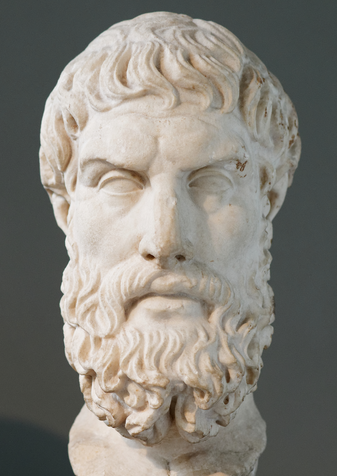
He who is not satisfied with a little, is satisfied with nothing.
▼
Source
The Essential Epicurus : Letters, Principal Doctrines, Vatican sayings, and fragments (1993) edited by Eugene Michael O'Connor, p. 99
5 months 1 week ago
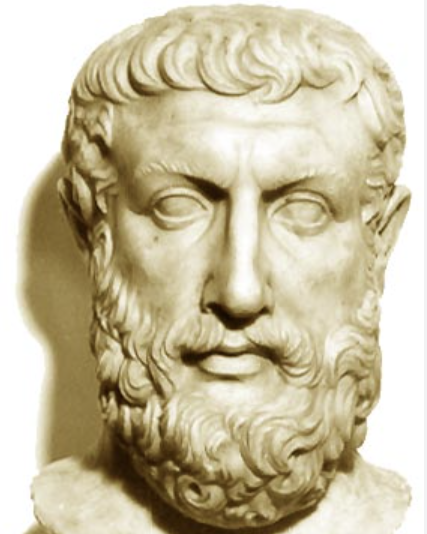
What is clear is that Parmenides is making a conscious attempt at some kind of a new start. Like Descartes, he is trying to find an unassailable starting-point on which something further can be built. This search is understandable, given the intellectual situation of the time. The principles of the Milesians had yielded no one clearly true system, but a number of rival ones — in itself a scandal. Heraclitus had made the whole of cosmology suspect by revealing deep-seated contradictions at its heart. In the background, the Pythagoreans were directly or indirectly stimulating new lines of thought and using them, perhaps, for their own mysterious purposes.
▼
Source
Edward Hussey, in The Presocratics, Classical Life and Letters (1982), p. 105.
5 months 1 week ago
There can be no racial animosity, because there are no races. The theorist and feeble thinkers string together and warm over the bookshelf races which the well-disposed observer and the fair-minded traveller vainly seek in the justice of Nature where man's universal identity springs forth from triumphant love and the turbulent hunger for life. The soul, equal and eternal, emanates from bodies of different shapes and colors. Whoever foments and spreads antagonism and hate between the races, sins against humanity.

5 months 1 week ago
Justice is a virtue, but not one that makes people lovable.
5 months 1 week ago
In a field of ripening corn I came to a place which had been trampled down by some ruthless foot; and as I glanced amongst the countless stalks, every one of them alike, standing there so erect and bearing the full weight of the ear, I saw a multitude of different flowers, red and blue and violet. How pretty they looked as they grew there so naturally with their little foliage! But, thought I, they are quite useless; they bear no fruit; they are mere weeds, suffered to remain only because there is no getting rid of them. And yet, but for these flowers, there would be nothing to charm the eye in that wilderness of stalks. They are emblematic of poetry and art, which, in civic life—so severe, but still useful and not without its fruit—play the same part as flowers in the corn.
▼
Source
“Similes, Parables and Fables” Parerga and Paralipomena, vol. 2, § 380A
5 months 1 week ago
Buddhism calls anger "corruption of the mind," Manicheism "root of the tree of death." I know this, but what good does it do me to know?
5 months 1 week ago
[U]nder no circumstances, and no matter how completely time and events disprove his lurid vaticinations, should the English-speaking world forget this man, nor fail to hold in honor his unsurpass'd conscience, his unique method, and his honest fame. Never were convictions more earnest and genuine. Never was there less of a flunkey or temporizer. Never had political progressivism a foe it could more heartily respect.
▼
Source
Walt Whitman, Specimen Days & Collect (1882–1883), p. 174
5 months 1 week ago
A wise man, who puts himself under the government of reason, will be able to receive an injury with calmness, and to treat the person who committed it with lenity; for he will rank injuries among the casual events of life, and will prudently reflect that he can no more stop the natural current of human passions, than he can curb the stormy winds.
5 months 1 week ago
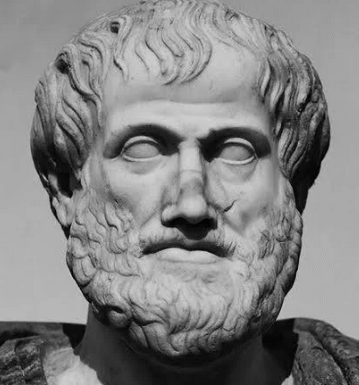
It is necessary that every thing which is harmonized, should be generated from that which is void of harmony, and that which is void of harmony from that which is harmonized. ...But there is no difference, whether this is asserted of harmony, or of order, or composition... the same reason will apply to all of these.
▼
Source
Book I, Ch. VI, p. 57.
5 months 1 week ago
Talent is a gift that brings with it an obligation to serve the world, and not ourselves, for it is not of our making. To use for our exclusive benefit what is not ours is theft. Culture, which makes talent shine, is not completely ours either, nor can we place it solely at our disposal. Rather, it belongs mainly to our country, which gave it to us, and to humanity, from which we receive it as a birthright. A selfish man is a thief.
5 months 1 week ago
Under which head do you class those who are at sea?
▼
Source
Having been asked whether the dead or the living were more numerous., as quoted in The Lives and Opinions of Eminent Philosophers by Diogenes Laërtius, as translated by C. D. Yonge, (1853), "Anacharsis" sect. 5, p. 48
5 months 1 week ago
The fundament upon which all our knowledge and learning rests is the inexplicable.
▼
Source
Vol. 2, Ch. 1, § 1
5 months 1 week ago
Not to be born is undoubtedly the best plan of all. Unfortunately, it is within no one's reach.
5 months 1 week ago
This disposition to admire, and almost to worship, the rich and powerful, and to despise or, at least, neglect persons of poor and mean conditions, though necessary both to establish and to maintain the distinction of ranks and the order of society, is, at the same time, the great and most universal cause of the corruption of our moral sentiments.
▼
Source
Section III, Chap. III.
5 months 1 week ago
Independence I have long considered as the grand blessing of life, the basis of every virtue; and independence I will ever secure by contracting my wants, though I were to live on a barren heath.
▼
Source
Dedication
5 months 1 week ago
To my complete surprise, that exposure to out-of-date scientific theory and practice radically undermined some of my basic conceptions about the nature of science and the reasons for its special success.Those conceptions were ones I had previously drawn partly from scientific training itself and partly from a long-standing avocational interest in the philosophy of science. Somehow, whatever their pedagogic utility and their abstract plausibility, those notions did not at all fit the enterprise that historical study displayed. Yet they were and are fundamental to many discussions of science, and their failures of verisimilitude therefore seemed thoroughly worth pursuing. The result was a drastic shift in my career plans, a shift from physics to history of science and then, gradually, from relatively straightforward historical problems back to the more philosophical concerns that had initially led me to history.
5 months 1 week ago
Concerning the generation of animals akin to them, as hornets and wasps, the facts in all cases are similar to a certain extent, but are devoid of the extraordinary features which characterize bees; this we should expect, for they have nothing divine about them as the bees have.
▼
Source
Book III, 761a.2

5 months 1 week ago
But yet, since He knew that it would be good, He created both angels and men free to do that which is righteous, and He appointed periods of time during which He knew it would be good for them to have the exercise of free-will; and because He likewise knew it would be good, He made general and particular judgments; each one’s freedom of will, however, being guarded.
▼
Source
Dialogue with Trypho, chapter CII. In ANF1, that is, Roberts A, Donaldson J and Coxe AC (1885) Ante-Nicene Fathers, Vol 1. [Cf chapter LXXXVIII.]

5 months 1 week ago
The vicious circle linking poverty, police, courts and prison is an integral element of ghetto existence.
5 months 1 week ago
For an author to write as he speaks is just as reprehensible as the opposite fault, to speak as he writes; for this gives a pedantic effect to what he says, and at the same time makes him hardly intelligible.
▼
Source
The Art of Literature
5 months 1 week ago
The state of health is a state of nonsensation, even of nonreality. As soon as we cease to suffer, we cease to exist.
5 months 1 week ago
For in every country of the world, I believe, the avarice and injustice of princes and sovereign states, abusing the confidence of their subjects, have by degrees diminished the real quantity of metal, which had been originally contained in their coins.
▼
Source
Chapter IV, p. 34.
5 months 1 week ago
The same energy of character which renders a man a daring villain would have rendered him useful to society, had that society been well organized.
▼
Source
Letter 19
CivilSimian.com created by AxiomaticPanic, CivilSimian, Kalokagathia