


6 months 2 weeks ago
My own sense of how to behave in a simulation has more traditional roots in the theory of perception. I've long believed that each of us lives in an egocentric simulation of the world run by the mind/brain. Since the zombies of each (waking) simulation have sentient real world counterparts, one should treat them as though they were real. Nonetheless as an angst-ridden teenager, my dawning acceptance of an inferential realist theory of perception made me feel as if I'd been condemned to solitary confinement for life. The sense of loneliness was indescribable. Naïve realism is better for one's mental health.
▼
Source
source
Origins and Theory of the World Transhumanist Association, Institute for Ethics and Emerging Technologies, 26 Dec. 2007
5 months 3 weeks ago
For a country to have a great writer ... is like having another government. That's why no régime has ever loved great writers, only minor ones.
▼
Source
source
Innokenty, in Ch. 57
9 months 1 week ago
Through the fortunate effect of my frankness, I had the rarest and surest opportunity to know a man well, which is to study him at leisure in his private life and living, so to speak, with himself. For he share himself without reservation and made me feel as much at home in his house as in mine. I had almost no other abode than his own.
▼
Source
source
Second Dialogue; translated by Judith R. Bush, Christopher Kelly, Roger D. Masters
9 months 1 week ago
There are but few points in which the English, as a people, are entitled to the moral pre-eminence with which they are accustomed to compliment themselves at the expense of other nations: but, of these points, perhaps the one of greatest importance is, that the higher classes do not lie, and the lower, though mostly habitual liars, are ashamed of lying. To run any risk of weakening this feeling, a difficult one to create, or, when once gone, to restore, would be a permanent evil too great to be incurred for so very temporary a benefit as the ballot would confer, even on the most exaggerated estimate necessity.
▼
Source
source
Thoughts on Parliamentary Reform (1859), pp. 48-49

5 months 1 week ago
Short-lived are both the praiser and the praised, and rememberer and the remembered: and all this in a nook of this part of the world; and not even here do all agree, no, not any one with himself: and the whole earth too is a point.
▼
Source
source
VIII, 21
5 months 1 week ago
Her green eyes fluttered swiftly twice or thrice, then glazed,her mouth gaped open, bleating, then her jaws hung looseand retched up all her soul in lumps of clotting blood.
▼
Source
source
Death of Phida, Book VIII, line 410

9 months 1 week ago
How we hate this solemn Ego that accompanies the learned, like a double, wherever he goes.
▼
Source
source
1839

8 months 6 days ago
They ask you for facts, proofs, works, and all you can show them are transformed tears.

9 months 1 week ago
If you would convince a man that he does wrong, do right. But do not care to convince him. Men will believe what they see.
▼
Source
source
Let them see. Pearls of Thought (1881) p. 222

6 months 1 day ago
Aesop's Fly, sitting on the axle of the chariot, has been much laughed at for exclaiming: What a dust I do raise!
8 months 3 weeks ago
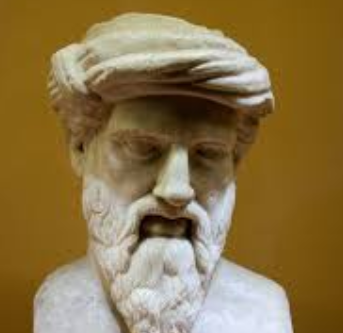
We ought so to behave to one another as to avoid making enemies of our friends, and at the same time to make friends of our enemies.
▼
Source
source
As quoted in Diogenes Laërtius, Lives and Opinions of Eminent Philosophers, "Pythagoras", Sect. 23, as translated in Dictionary of Quotations (1906) by Thomas Benfield Harbottle, p. 320

7 months 1 week ago
The alphabet, when pushed to a high degree of abstract visual intensity, became typography. The printed word with its specialist intensity burst the bonds of medieval corporate guilds and monasteries, created extreme individualist patterns of enterprise and monopoly.
▼
Source
source
(p. 23)

8 months 2 weeks ago
No protracted war can fail to endanger the freedom of a democratic country.
▼
Source
source
Book Three, Chapter XXII.


6 months 2 weeks ago
If we want eternal life, then we'll need to rewrite our bug-ridden genetic code and become god-like. "May all that have life be delivered from suffering", said Gautama Buddha. It's a wonderful sentiment. Sadly, only hi-tech solutions can ever eradicate suffering from the living world. Compassion alone is not enough.
▼
Source
source
Interview with Nick Bostrom and David Pearce, Dec. 2007
9 months 2 weeks ago
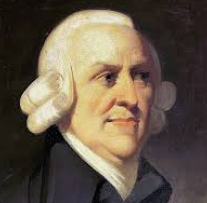
The violence and injustice of the rulers of mankind is an ancient evil, for which, I am afraid, the nature of human affairs can scarce admit a remedy.
▼
Source
source
Chapter III, Part II, p. 531.
9 months 1 week ago
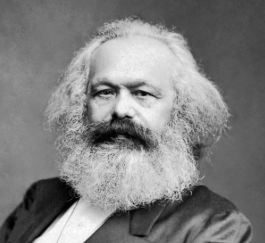
What chance has Vulcan against Roberts & Co., Jupiter against the lightning-rod and Hermes against the Credit Mobilier? All mythology overcomes and dominates and shapes the forces of nature in the imagination and by the imagination; it therefore vanishes with the advent of real mastery over them.
▼
Source
source
Introduction, p. 30.

7 months 1 week ago
The savage recognizes life only in himself and his personal desires. His interest in life is concentrated on himself alone. The highest happiness for him is the fullest satisfaction of his desires. The motive power of his life is personal enjoyment. His religion consists in propitiating his deity and in worshiping his gods, whom he imagines as persons living only for their personal aims.
▼
Source
source
Chapter IV, Christianity Misunderstood by Men of ScienceChapter IV, Christianity Misunderstood by Men of Science

8 months 1 week ago
They sang the praises of nature, of the sea, of the woods. They liked making songs about one another, and praised each other like children; they were the simplest songs, but they sprang from their hearts and went to one's heart. And not only in their songs but in all their lives they seemed to do nothing but admire one another. It was like being in love with each other, but an all-embracing, universal feeling.

9 months 1 week ago
I live in the Managerial Age, in a world of "Admin." The greatest evil is not now done in those sordid "dens of crime" that Dickens loved to paint. It is not done even in concentration camps and labour camps. In those we see its final result. But it is conceived and ordered (moved, seconded, carried, and minuted) in clean, carpeted, warmed, and well-lighted offices, by quiet men with white collars and cut fingernails and smooth-shaven cheeks who do not need to raise their voice. Hence, naturally enough, my symbol for Hell is something like the bureaucracy of a police state or the offices of a thoroughly nasty business concern.
▼
Source
source
1961 Preface

7 months 3 weeks ago
In the first place for over two centuries religion has been on the defensive, and on a weak defensive. The result of the repetition of this undignified retreat, during many generations, has at last almost entirely destroyed the intellectual authority of religious thinkers. Consider this contrast: when Darwin or Einstein proclaim theories which modify our ideas, it is a triumph for science. We do not go about saying that there is another defeat for science, because its old ideas have been abandoned. We know that another step of scientific insight has been gained. Religion will not regain its old power until it can face change in the same spirit as does science. Its principles may be eternal, but the expression of those principles requires continual development.
▼
Source
source
Ch. 12: "Religion and Science", p. 263
9 months 1 week ago
I have known only one person in my life who claimed to have seen a ghost. It was a woman; and the interesting thing is that she disbelieved in the immortality of the soul before seeing the ghost and still disbelieves after having seen it. She thinks it was a hallucination. In other words, seeing is not believing. This is the first thing to get clear in talking about miracles.
▼
Source
source
"Miracles" (1942), p. 25
8 months ago
Dialogue and monologue are silenced. Bundled together, men march without Thou and without I, those of the left who want to abolish memory, and those of the right who want to regulate it: hostile and separated hosts, they march into the common abyss.
▼
Source
source
p. 33
8 months 6 days ago
We dread the future only when we are not sure we can kill ourselves when we want to.

9 months 1 week ago
The only man for whom Hitler had "unqualified respect" was "Stalin the genius," and while in the case of Stalin and the Russian regime we do not... have the rich documentary material that is available for Germany, we nevertheless know since Khrushchev's speech before the Twentieth Party Congress that Stalin trusted only one man and that was Hitler.
▼
Source
source
Part 3, Ch. 10


9 months 4 days ago
A real subjection is born mechanically from a fictitious relation. So it is not necessary to use force to constrain the convict to good behavior, the madman to calm, the worker to work, the schoolboy to application, the patient to the observation of the regulations.
▼
Source
source
Part Four, Complete and austere institutions
7 months 3 weeks ago
A precise language awaits a completed metaphysics.
9 months 1 week ago
Not my idea of God, but God.
6 months 2 weeks ago
As well as seriously - indeed exhaustively - researching everything that could conceivably go wrong, I think we should also investigate what could go right. The world is racked by suffering. The hedonic treadmill might more aptly be called a dolorous treadmill. Hundreds of millions of people are currently depressed, pain-ridden or both. Hundreds of billions of non-human animals are suffering too. If we weren't so inured to a world of pain and misery, then the biosphere would be reckoned in the throes of a global medical emergency. Thanks to breakthroughs in biotechnology, pain-thresholds, default anxiety levels, hedonic range and hedonic set-points are all now adjustable parameters in human and non-human animals alike. We are living in the final century of life on Earth in which suffering is biologically inevitable. As a society, we need an ethical debate about how much pain and misery we want to preserve and create. How do you break the hedonic treadmill?"
▼
Source
source
, Quora, 6 Apr. 2019

7 months 1 week ago
I wish we could derive the rest of the phenomena of nature by the same kind of reasoning from mechanical principles; for I am induced by many reasons to suspect that they may all depend upon certain forces by which the particles of bodies, by some causes hitherto unknown, are either mutually impelled towards each other, and cohere in regular figures, or are repelled and recede from each other; which forces being unknown, philosophers have hitherto attempted the search of nature in vain; but I hope the principles here laid down will afford some light either to that or some truer method of philosophy.
▼
Source
source
Preface

9 months 1 week ago
The question of "unreality," which confronts us at this point, is a very important one. Misled by grammar, the great majority of those logicians who have dealt with this question have dealt with it on mistaken lines. They have regarded grammatical form as a surer guide in analysis than, in fact, it is. And they have not known what differences in grammatical form are important.
▼
Source
source
Ch. 16: Descriptions
7 months 3 days ago
In the greatest confusion there is still an open channel to the soul. It may be difficult to find because by midlife it is overgrown, and some of the wildest thickets that surround it grow out of what we describe as our education. But the channel is always there, and it is our business to keep it open, to have access to the deepest part of ourselves.
▼
Source
source
Foreword to The Closing of the American Mind by Allan Bloom
6 months 3 weeks ago
I have never had the least sympathy with the a priori reasons against orthodoxy, and I have by nature and disposition the greatest possible antipathy to all the atheistic and infidel school. Nevertheless I know that I am, in spite of myself, exactly what the Christian would call, and, so far as I can see, is justified in calling, atheist and infidel.
▼
Source
source
Letter to Charles Kingsley
5 months 3 weeks ago
If the press was to be free, nothing would be so important as precisely its liberation from every coercion that could be put on it in the name of a law. And, that it might come to that, I my own self should have to have absolved myself from obedience to the law.
▼
Source
source
Cambridge 1995, p. 249
8 months 2 days ago
Few new truths have ever won their way against the resistance of established ideas save by being overstated.
▼
Source
source
As quoted in Communications and History : Theories of Knowledge, Media and Civilization (1988) by Paul Heyer, p. 125
9 months 1 week ago
Imagine yourself as a living house. God comes in to rebuild that house. At first, perhaps, you can understand what He is doing. He is getting the drains right and stopping the leaks in the roof and so on: you knew that those jobs needed doing and so you are not surprised. But presently he starts knocking the house about in a way that hurts abominably and does not seem to make sense. What on earth is He up to? The explanation is that He is building quite a different house from the one you thought of-throwing out a new wing here, putting on an extra floor there, running up towers, making courtyards. You thought you were going to be made into a decent little cottage: but He is building a palace. He intends to come and live in it Himself.
▼
Source
source
Book IV, Chapter 9, "Counting the Cost"
7 months 3 weeks ago
The human body is an instrument for the production of art in the life of the human soul.
▼
Source
source
p. 349.

8 months 2 weeks ago
The universe comprises all being in a totality; for nothing that exists is outside or beyond infinite being, as the latter has no outside or beyond.

5 months ago
How can it be that mathematics, being, after all, a product of human thought which is independent of experience, is so admirably appropriate to the objects of reality? Is human reason, then, without experience, merely by taking thought, able to fathom the properties of real things?

5 months 1 week ago
Among the sayings and discourses imputed to him [Jesus] by his biographers, I find many passages of fine imagination, correct morality, and of the most lovely benevolence; and others again of so much ignorance, so much absurdity, so much untruth, charlatanism, and imposture, as to pronounce it impossible that such contradictions should have proceeded from the same being. I separate, therefore, the gold from the dross; restore to Him the former, and leave the latter to the stupidity of some, and roguery of others of His disciples. Of this band of dupes and impostors, Paul was the great Coryphaeus, and first corruptor of the doctrines of Jesus. These palpable interpolations and falsifications of His doctrines, led me to try to sift them apart.
▼
Source
source
Letter to William Short

8 months 2 days ago
Are ye also yet without understanding? Do not ye yet understand, that whatsoever entereth in at the mouth goeth into the belly, and is cast out into the draught? But those things which proceed out of the mouth come forth from the heart; and they defile the man. For out of the heart proceed evil thoughts, murders, adulteries, fornications, thefts, false witness, blasphemies: These are the things which defile a man: but to eat with unwashen hands defileth not a man.
▼
Source
source
15:16-20 (KJV)

7 months 3 weeks ago
Radical black feminists have never confined their vision to just the emancipation of black women or women in general, or all black people for that matter. Rather, they are the theorists and proponents of a radical humanism committed to liberating humanity and reconstructing social relations across the board. When bell hooks says "Feminism is for everybody," she is echoing what has always been a basic assumption of black feminists. We are not talking about identity politics but a constantly developing often contested, revolutionary conversation about how all of us might envision and remake the world.
▼
Source
source
Robin Kelley Freedom Dreams
5 months 1 week ago
Constantly regard the universe as one living being, having one substance and one soul; and observe how all things have reference to one perception, the perception of this one living being; and how all things act with one movement; and how all things are the cooperating causes of all things which exist; observe too the continuous spinning of the thread and the contexture of the web.
▼
Source
source
IV, 40
9 months 1 week ago
The entire process seems simple and natural, i.e., possesses the naturalness of a shallow rationalism.
▼
Source
source
Vol. II, Ch. III, p. 95.

9 months 1 week ago
We are all a sort of camelions, that still take a tincture from things near us; nor is it to be wonder'd at in children, who better understand what they see than what they hear.
▼
Source
source
Sec. 67
CivilSimian.com created by AxiomaticPanic, CivilSimian, Kalokagathia