


7 months 1 week ago
People never remember but the computer never forgets.
▼
Source
source
(p. 69)
7 months 2 weeks ago
One is rarely an impulsive innovator after the age of sixty, but one can still be a very fine orderly and inventive thinker. One rarely procreates children at that age, but one is all the more skilled at educating those who have already been procreated, and education is procreation of another kind.
▼
Source
source
K 51
7 months 1 week ago
To evoke in oneself a feeling one has once experienced, and having evoked it in oneself, then by means of movements, lines, colors, sounds, or forms expressed through words, so to convey this so that others may experience the same feeling - this is the activity of art.

9 months 3 weeks ago
Do not imagine that it is less an accident by which you find yourself master of the wealth which you possess, than that by which this man found himself king.

9 months 1 week ago
Though you give no countenance to the complaints of the querulous, yet take care to curb the insolence and ill nature of the injurious. When you observe it yourself, reprove it before the injur'd party: but if the complaint be of something really worth your notice, and prevention another time, then reprove the offender by himself alone, out of sight of him who complain'd and make him go and ask pardon, and make reparation; which ooming thus, as it were from himself, will be the more cheerfully performed, and more kindly receiv'd, the love strenghten'd between them, and a custom of civility grow familiar amongst your children.
▼
Source
source
Sec. 109
9 months 1 week ago
Whate'er we leave to God, God doesAnd blesses us.
▼
Source
source
"Inspiration", in An American Anthology, 1900
5 months 1 week ago
God, what is all this talk put out by the popes? Paradise is here, my good man. God, give me no other paradise!
▼
Source
source
Freedom and Death
7 months 3 weeks ago
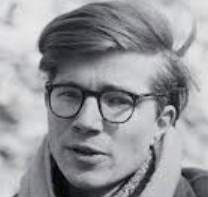
The outsider, Haller says, is a self-divided man; being self-divided, his chief desire is to be unified. He is selfish as a man with a lifelong raging toothache.
▼
Source
source
Chapter Three, The Romantic Outsider
9 months 1 week ago
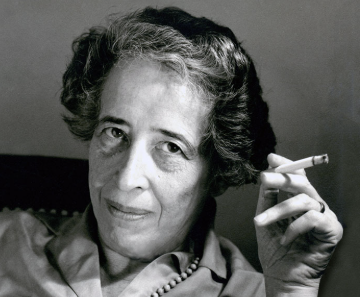
Kant was also quite aware that "the urgent need" of reason is both different from and "more than mere quest and desire for knowledge." Hence, the distinguishing of the two faculties, reason and intellect, coincides with a distinction between two altogether different mental activities, thinking and knowing.
▼
Source
source
p. 14
6 months 6 days ago
The newspaper is in all its literalness the bible of democracy, the book out of which a people determines its conduct.
▼
Source
source
What Modern Liberty Means, p. 47. Essay first published in The Atlantic (November 1919).
8 months 1 week ago
The pleasures of self-approbation, together with the right cultivation of all our pleasures, require individual independence. Without independence men cannot become either wise, or useful, or happy.
▼
Source
source
"Summary of Principles" 1.3
7 months 3 weeks ago
This, I feel, is missing a vital point: that the sceptic is often a totally honest person who, for perfectly good, sound reasons, simply cannot see a case for belief. In fact many -- like Courty Bryan -- admit that they would like to be convinced, but find it impossible.
▼
Source
source
p. 77
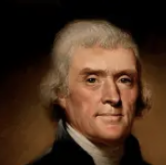
5 months 1 week ago
Whenever the people are well informed, they can be trusted with their own government; that whenever things get so far wrong as to attract their notice, they may be relied on to set them to rights.
▼
Source
source
Letter to Richard Price
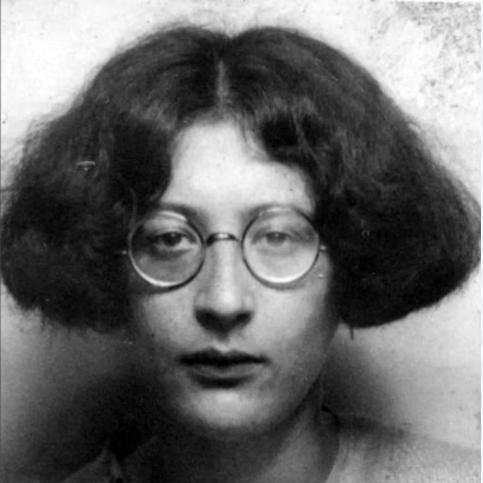
7 months 3 weeks ago
One of the most exquisite pleasures of human love - to serve the loved one without his knowing it - is only possible, as regards the love of God, through atheism.
▼
Source
source
Last Notebook (1942) p. 84
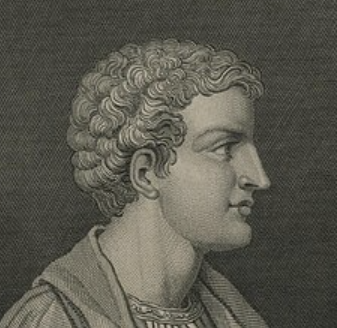
8 months 4 weeks ago
Once a word has been allowed to escape, it cannot be recalled.
▼
Source
source
Book I, epistle xviii, line 71
7 months 1 week ago
Faced with information overload, we have no alternative but pattern-recognition.
▼
Source
source
(p. 132)
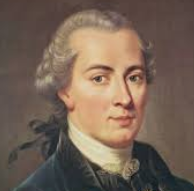
9 months 1 week ago
Percepts and phenomena which precedes the logical use of the intellect is called appearance, while the reflex knowledge originating from several appearances compared by the intellect is called experience.

9 months 1 week ago
Cure the drunkard, heal the insane, mollify the homicide, civilize the Pawnee, but what lessons can be devised for the debaucher of sentiment?
▼
Source
source
p. 236
7 months 3 days ago
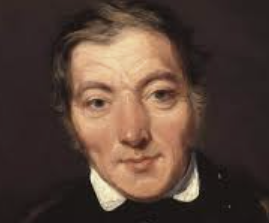
Man is the creature of circumstances.
▼
Source
source
"The Philanthropist"

8 months 5 days ago
If a man has not, by the time he is 30, yielded to the fascination of every form of extremism, I don't know if he is to be admired or scorned - a saint or a corpse.
9 months 1 week ago
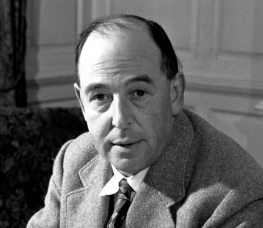
Love may forgive all infirmities and love still in spite of them: but Love cannot cease to will their removal.

5 months 2 weeks ago
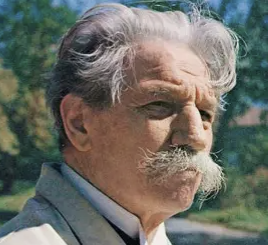
Ethics, too, are nothing but reverence for life. That is what gives me the fundamental principle of morality, namely, that good consists in maintaining, promoting, and enhancing life, and that destroying, injuring, and limiting life are evil.
8 months 4 weeks ago
Now drown care in wine.
▼
Source
source
Book I, ode vii, line 32
8 months 5 days ago
How important can it be that I suffer and think? My presence in this world will disturb a few tranquil lives and will unsettle the unconscious and pleasant naiveté of others. Although I feel that my tragedy is the greatest in history - greater than the fall of empires - I am nevertheless aware of my total insignificance. I am absolutely persuaded that I am nothing in this universe; yet I feel that mine is the only real existence.

9 months 2 weeks ago
All seed except Mary was vitiated [by original sin].
▼
Source
source
Weimar edition of Martin Luther's Works, English translation edited by J. Pelikan [Concordia: St. Louis], Vol. 11, WA, 39, II:107
9 months 1 week ago
In skating over thin ice our safety is our speed.
▼
Source
source
Prudence
7 months 3 weeks ago
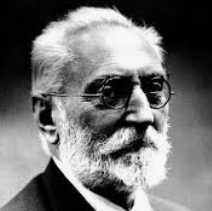
Rousseau has said in his Emile (book iv.): "Even though philosophers should be in a position to discover the truth, which of them would take any interest in it? Each one knows well that his system is not better founded than the others, but he supports it because it is his. ...The essential thing is to think differently from others. With believers he is an atheist; with atheists he is a believer." How much substantial truth there is in these gloomy confessions of this man of painful sincerity.
9 months ago
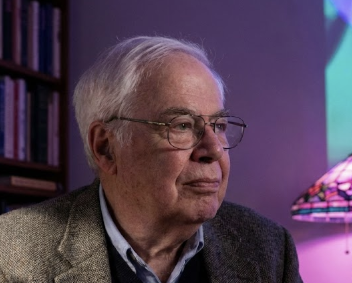
My principal motive is the belief that we can still make admirable sense of our lives even if we cease to have ... "an ambition of transcendence."
▼
Source
source
Introduction to Objectivity, Relativism, and Truth: Philosophical Papers, Volume I (1991).
5 months 2 weeks ago
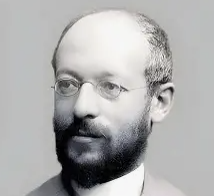
I understand the task of sociology to be description and determination of the historical-psychological origin of those forms in which interactions take place between human beings. The totality of these interactions, springing from the most diverse impulses, directed toward the most diverse objects, and aiming at the most diverse ends, constitutes "society."
▼
Source
source
p. 167
9 months 1 week ago
Then he tried to recall the lessons of Mr. Wisdom. "it is I myself, eternal Spirit, who drives this Me, the slave, along that ledge. I ought not to care whether he falls and breaks his neck or not. It is not he that is real, it is I - I - I.
▼
Source
source
Pilgrim's Regress 137
5 months 2 weeks ago
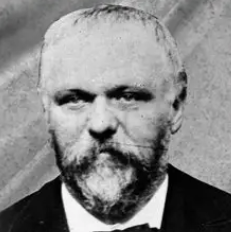
And so I am not concerned to justify the perpetrators of violence but to enquire into the function of the violence of the working classes in contemporary socialism.
▼
Source
source
p. 42
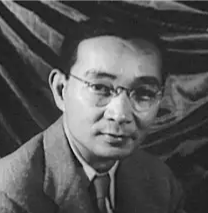
5 months 2 weeks ago
It is not so much what you believe in that matters, as the way in which you believe it and proceed to translate that belief into action.
▼
Source
source
Ch. I : The Awakening, p. 8

9 months 5 days ago
Aim at being loved without being admired.
▼
Source
source
p. 38e
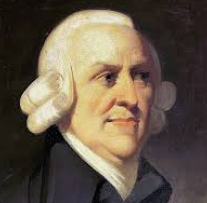
9 months 1 week ago
In England, and in all Roman Catholic countries, the lottery of the church is in reality much more advantageous than is necessary.
▼
Source
source
Chapter X, Part II, p. 155.
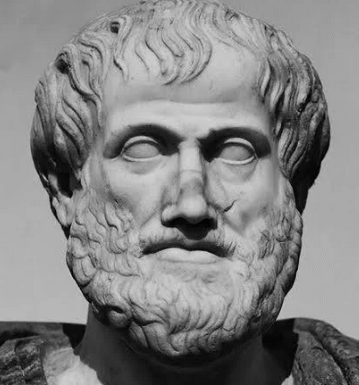
10 months 1 week ago
Again, it is possible to fail in many ways (for evil belongs to the class of the unlimited ... and good to that of the limited), while to succeed is possible only in one way (for which reason also one is easy and the other difficult—to miss the mark easy, to hit it difficult); for these reasons also, then, excess and defect are characteristic of vice, and the mean of virtue; For men are good in but one way, but bad in many.
8 months 2 days ago
The will is a unity of two different aspects or moments: first, the individual's ability to abstract from every specific condition and, by negating it, to return to the absolute liberty of the pure ego; secondly, the individual's act of freely adopting a concrete condition, freely affirming his existence as a particular, limited ego.
▼
Source
source
P. 185
7 months 5 days ago
Perpetual devotion to what a man calls his business, is only to be sustained by perpetual neglect of many other things.
▼
Source
source
An Apology for Idlers.
7 months 3 weeks ago
The liturgy of emptiness dispels the capitalist economy of the commodity.
8 months 6 days ago
Without consciousness there would, practically speaking, be no world, for the world exists as such only in so far as it is consciously reflected and considered by a psyche. Consciousness is a precondition of being.
▼
Source
source
p 48
7 months 5 days ago
If wine is to withdraw its most poetic countenance, the sun of the white dinner-cloth, a deity to be invoked by two or three, all fervent, hushing their talk, degusting tenderly, and storing reminiscences-for a bottle of good wine, like a good act, shines ever in the retrospect-if wine is to desert us, go thy ways, old Jack!
▼
Source
source
Pt. I, ch. III
9 months 1 week ago
This world is but canvas to our imaginations.
9 months 4 weeks ago
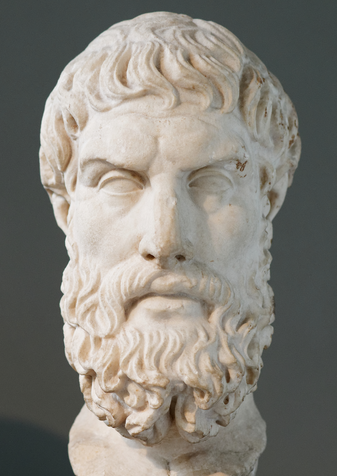
Against the diseases of the mind, philosophy provides sufficient antidotes. The instruments which it employs for this purpose are the virtues; the root of which, whence all the rest proceed, is prudence. This virtue comprehends the whole art of living discreetly, justly, and honorably, and is, in fact, the same thing with wisdom. It instructs men to free their understandings from the clouds of prejudice; to exercise temperance and fortitude in the government of themselves: and to practice justice towards others. Although pleasure, or happiness, which is the end of living, be superior to virtue, which is only the means, it is every one's interest to practice all the virtues; for in a happy life, pleasure can never be separated from virtue.
8 months 5 days ago
Ambition is a drug that makes its addicts potential madmen.
CivilSimian.com created by AxiomaticPanic, CivilSimian, Kalokagathia