


7 months 4 weeks ago
Jesus answered: "Believe me, Barnabas that I cannot weep as much as I ought. For if men had not called me God, I should have seen God here as he will be seen in paradise, and should have been safe not to fear the day of judgment. But God knows that I am innocent, because never have I harboured thought to be held more than a poor slave. No, I tell you that if I had not been called God I should have been carried into paradise when I shall depart from the world, whereas now I shall not go thither until the judgment. Now you see if I have cause to weep."
▼
Source
source
Ch. 112

8 months 6 days ago
Time: That which man is always trying to kill, but which ends in killing him.
▼
Source
source
Definitions, as quoted in The Dictionary of Essential Quotations (1983) by Kevin Goldstein-Jackson, p. 154

8 months 3 days ago
What can a man say about woman, his own opposite? I mean of course something sensible, that is outside the sexual program, free of resentment, illusion, and theory. Where is the man to be found capable of such superiority? Woman always stands just where the man's shadow falls, so that he is only too liable to confuse the two. Then, when he tries to repair this misunderstanding, he overvalues her and believes her the most desirable thing in the world.
▼
Source
source
P. 236

7 months 4 weeks ago
See ye not all these things? verily I say unto you, There shall not be left here one stone upon another, that shall not be thrown down.
▼
Source
source
24:2 (KJV)

9 months 3 weeks ago
He that in his studies wholly applies himself to labour and exercise, and neglects meditation, loses his time, and he that only applies himself to meditation, and neglects labour and exercise, only wanders and loses himself.

9 months 1 week ago
All's well that ends well; which is the epitaph I should put on my tombstone if I were the last man left alive.
▼
Source
source
Letter to Lucy Donnely, April 22, 1906

9 months 1 week ago
The career a young man should choose should be one that is most consonant with our dignity, one that is based on ideas of whose truth we are wholly convinced, one that offers us largest scope in working for humanity and approaching that general goal towards which each profession offers only one of the means: the goal of perfection ... If he works only for himself he can become a famous scholar, a great sage, an excellent imaginative writer [Dichter], but never a perfected, a truly great man.
▼
Source
source
in Karl Marx and World Literature (1976) by S. S. Prawer, p. 2.

7 months 3 weeks ago
The intellectual world is divided into two classes - dilettantes, on the one hand, and pedants, on the other.

8 months 1 week ago
He laid it down as a maxim, that monarchy was the basis of all good government and the nearer to monarchy any government approached, the more perfect it was, and vice versa; and he certainly in his wildest moments, never had so far forgotten the nature of government, as to argue that we ought to wish for a constitution that we could alter at pleasure, and change like a dirty shirt. He was by no means anxious for a monarchy with a dash of republicanism to correct it. But the French constitution was the exact opposite of the English in every thing, and nothing could be so dangerous as to set it up to the view of the English, to mislead and debauch their minds.
▼
Source
source
Speech in the House of Commons (6 May 1791), quoted in The Parliamentary History of England, From the Earliest Period to the Year 1803, Vol. XXIX (1817), column 385
7 months 2 weeks ago
From any vocabulary of ideas we can build other ideas by formal combinations of signs. But not any set of ideas will be instructive. One must have the right ideas.
▼
Source
source
Chapter 15, Inductive Logic, p. 139.
5 months 2 weeks ago
Money expresses all qualitative differences of things in terms of "how much?" Money, with all its colorlessness and indifference, becomes the common denominator of all values; irreparably it hollows out the core of things, their individuality, their specific value, and their incomparability. All things float with equal specific gravity in the constantly moving stream of money. All things lie on the same level and differ from one another only in the size of the area which they cover.
9 months 2 days ago
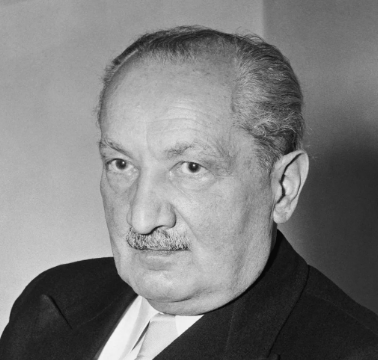
Eternity, not as a static "now," nor as a sequence of "nows" rolling off into the infinite, but as the "now" that bends back into itself. ... Thinking the most difficult thought of philosophy means thinking being as time.
▼
Source
source
p. 20

9 months 2 weeks ago
I would take to be quite a fool any man who would make a book full of laws and statutes for an apple tree telling it how to bear apples and not thorns, when the tree is able by its own nature to do this better than the man with all his books can describe and demand.
▼
Source
source
p. 89
9 months 1 week ago
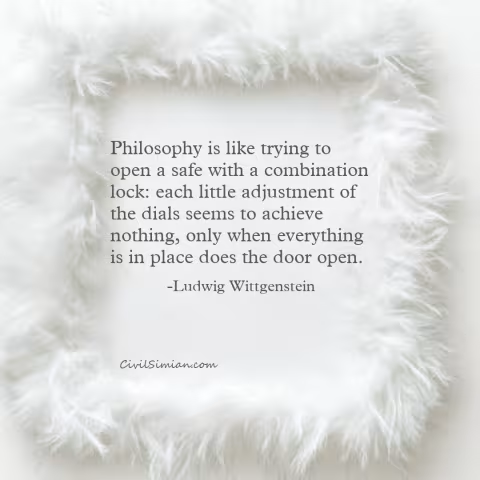
Only that position can impart dignity in which we do not appear as servile tools but rather create independently within our circle.
▼
Source
source
Writings of the Young Marx on Philosophy and Society, L. Easton, trans. (1967), p. 38
9 months 1 week ago
Superstition is to religion what astrology is to astronomy, the mad daughter of a wise mother. These daughters have too long dominated the earth.
▼
Source
source
"Whether it is useful to maintain the people in superstition," Treatise on Toleration, 1763

9 months 3 weeks ago
For no fact is so simple we believe it at first sight, And there is nothing that exists so great or marvellous That over time mankind does not admire it less and less.
▼
Source
source
Book II, lines 1026-1029 (tr. Stallings)

9 months 6 days ago
There's only one corner of the universe you can be certain of improving, and that's your own self.

7 months 2 days ago
Them that die will be the lucky ones!
▼
Source
source
Ch. 20, Silver's Embassy.
8 months 4 days ago
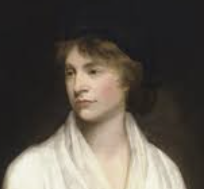
A standing army, for instance, is incompatible with freedom; because subordination and rigour are the very sinews of military discipline; and despotism is necessary to give vigour to enterprise that one will directs. A spirit inspired by romantic notions of honour, a kind of morality founded on the fashion of the age, can only be felt by a few officers, whilst the main body must be moved by command, like the waves of the sea; for the strong wind of authority pushes the crowd of subalterns forward, they scarcely know or care why, with headlong fury.
▼
Source
source
Ch. 1


9 months 6 days ago
Whoso walketh in solitude, And inhabiteth the wood, Choosing light, wave, rock, and bird, Before the money-loving herd, Into that forester shall pass From these companions power and grace.
▼
Source
source
Wood-notes, no. II, st. 4

7 months 2 weeks ago
I do not mean to deny the biologic, physiologic, or psychologic factors in creating crime; but there is hardly an advanced criminologist who will not concede that the social and economic influences are the most relentless, the most poisonous germs of crime.

5 months 6 days ago
Every difference of opinion is not a difference of principle. We have called by different names brethren of the same principle. We are all Republicans, we are all Federalists.
9 months 6 days ago
All the thoughts of a turtle are turtle.
▼
Source
source
1855

7 months 2 weeks ago
In one sense, I do believe I am "like a man," as Parthe [the writer's sister] says. But how? In having sympathy. ... Women crave for being loved, not for loving. They scream out at you for sympathy all day long, they are incapable of giving any in return, for they cannot remember your affairs long enough to do so. ... They cannot state a fact accurately to another, nor can that other attend to it accurately enough for it to become information. Now is not all this the result of want of sympathy?
▼
Source
source
Letter to Madame Mohl

9 months 5 days ago
Scientific Method... is even less existent than some other non-existent subjects.

9 months 1 week ago
Lying... is so ill a quality, and the mother of so many ill ones that spawn from it, and take shelter under it, that a child should be brought up in the greatest abhorrence of it imaginable. It should be always spoke of before him with the utmost detestation, as a quality so wholly inconsistent with the name and character of a gentleman, that no body of any credit can bear the imputation of a lie; a mark that is judg'd in utmost disgrace, which debases a man to the lowest degree of a shameful meanness, and ranks him with the most contemptible part of mankind and the abhorred rascality; and is not to be endured in any one who would converse with people of condition, or have any esteem or reputation in the world.
▼
Source
source
Sec. 131

5 months 3 weeks ago
This spirit thrusts itself forward, confident of commendation and esteem. It is superior to all, monarch of all it surveys; hence it should be subservient to nothing, finding no task too heavy, and nothing strong enough to weigh down the shoulders of a man.
7 months 2 weeks ago
The pathos of it all is that the America which is to be protected by a huge military force is not the America of the people, but that of the privileged class; the class which robs and exploits the masses, and controls their lives from the cradle to the grave. No less pathetic is it that so few people realize that preparedness never leads to peace, but that it is indeed the road to universal slaughter.
5 months 3 days ago
It has become extremely questionable whether, in the flux of life, it is a genuinely worthwhile intellectual problem to seek to discover fixed and immutable ideas or absolutes. It is a more worthy intellectual task perhaps to learn to think dynamically and relationally rather than statically.
8 months 4 days ago
How can a rational being be ennobled by anything that is not obtained by its own exertions?
▼
Source
source
Ch. 3
6 months 3 days ago
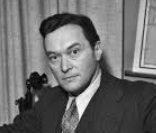
In a free society the state does not administer the affairs of men. It administers justice among men who conduct their own affairs.
▼
Source
source
Ch. XII: "The Political Principles of Liberalism", §6, p. 267

6 months 1 day ago
To be free in an age like ours, one must be in a position of authority. That in itself would be enough to make me ambitious.
▼
Source
source
Letter to his elder sister Henriette (1841).
10 months 4 days ago
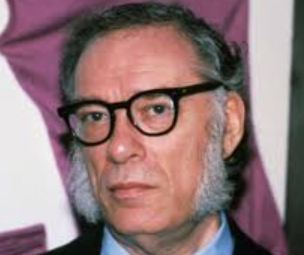
Private profit is often hidden under a careful coating of great patriotism.
9 months 1 week ago
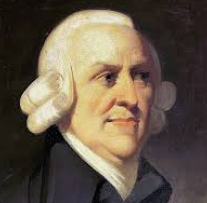
When profit diminishes, merchants are very apt to complain that trade decays; though the diminution of profit is the natural effect of its prosperity, or of a greater stock being employed in it than before.
▼
Source
source
Chapter IX
9 months 1 week ago
There is no logical impossibility in the hypothesis that the world sprang into being five minutes ago, exactly as it then was, with a population that "remembered" a wholly unreal past. There is no logically necessary connection between events at different times; therefore nothing that is happening now or will happen in the future can disprove the hypothesis that the world began five minutes ago.
▼
Source
source
The Analysis of Mind (1921), Lecture IX: Memory, p. 159

7 months 3 days ago
Every person I met believes if there is any disagreement between the Koran and science, then the Koran wins. It's just utterly deplorable. These are now British children who are having their minds stuffed with alien rubbish. Occasionally, my colleagues lecturing in universities lament having undergraduate students walk out of their classes when they talk about evolution. This is almost entirely Muslims.
▼
Source
source
Dawkins attacks 'alien rubbish' taught in Muslim faith schools, Daily Mail
10 months 4 days ago
Science doesn't purvey absolute truth. Science is a mechanism. It's a way of trying to improve your knowledge of nature. It's a system for testing your thoughts against the universe and seeing whether they match. And this works, not just for the ordinary aspects of science, but for all of life. I should think people would want to know that what they know is truly what the universe is like, or at least as close as they can get to it.

7 months 6 days ago
In order that men should embrace the truth - not in the vague way they did in childhood, nor in the one-sided and perverted way presented to them by their religious and scientific teachers, but embrace it as their highest law the complete liberation of this truth from all and every superstition (both pseudo-religious and pseudo-scientific) by which it is still obscured is essential: not a partial, timid attempt, reckoning with traditions sanctified by age and with the habits of the people - not such as was effected in the religious sphere by Guru Nanak, the founder of the sect of the Sikhs, and in the Christian world by Luther, and by similar reformers in other religions - but a fundamental cleansing of religious consciousness from all ancient religious and modern scientific superstitions.
▼
Source
source
VI

9 months 6 days ago
Real culture lives by sympathies and admirations, not by dislikes and disdain - under all misleading wrappings it pounces unerringly upon the human core.
▼
Source
source
The Social Value of the College-Bred

7 months 3 weeks ago
What, by a word lacking even in grammar, is called amorality, is a thing that does not exist. If you are unwilling to submit to any norm, you have, nolens volens, to submit to the norm of denying all morality, and this is not amoral, but immoral. It is a negative morality which preserves the empty form of the other.
▼
Source
source
Chapter XV: We Arrive At The Real Question
7 months 2 weeks ago
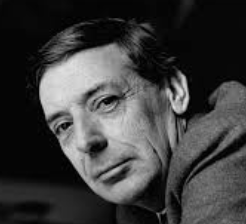
Those who say that all historical accounts are ideological constructs (which is one version of the idea that there is really no historical truth) rely on some story which must itself claim historical truth. They show that supposedly "objective" historians have tendentiously told their stories from some particular perspective; they describe, for example, the biasses that have gone into constructing various histories of the United States. Such an account, as a particular piece of history, may very well be true, but truth is a virtue that is embarrassingly unhelpful to a critic who wants not just to unmask past historians of America but to tell us that at the end of the line there is no historical truth. It is remarkable how complacent some "deconstructive" histories are about the status of the history that they deploy themselves.
▼
Source
source
p. 2
9 months 3 weeks ago
You [a disciple], shall I teach you about knowledge? What you know, you know, what you don't know, you don't know. This is true knowledge.
9 months 1 day ago
In these downbeat times, we need as much hope and courage as we do vision and analysis; we must accent the best of each other even as we point out the vicious effects of our racial divide and pernicious consequences of our maldistribution of wealth and power. We simply cannot enter the twenty-first century at each other's throats, even as we acknowledge the weighty forces of racism, patriarchy, economic inequality, homophobia, and ecological abuse on our necks. We are at a crucial crossroad in the history of this nation--and we either hang together by combating these forces that divide and degrade us or we hang separately. Do we have the intelligence, humor, imagination, courage, tolerance, love, respect, and will to meet the challenge? Time will tell. None of us alone can save the nation or world. But each of us can make a positive difference if we commit ourselves to do so.
▼
Source
source
(p 109)
CivilSimian.com created by AxiomaticPanic, CivilSimian, Kalokagathia