

5 months 2 weeks ago
Science is the knowledge of many, orderly and methodically digested and arranged, so as to become attainable by one.

8 months 2 days ago
In order to conceive, and to steep ourselves in, unreality, we must have it constantly present to our minds. The day we feel it, see it, everything becomes unreal, except that unreality which alone makes existence tolerable.
5 months 3 weeks ago
A people cannot be free otherwise than at the individual's expense; for it is not the individual that is the main point in this liberty, but the people. The freer the people, the more bound the individual; the Athenian people, precisely at its freest time, created ostracism, banished the atheists, poisoned the most honest thinker.
▼
Source
source
Cambridge 1995, p. 190
8 months 3 weeks ago
In peace, as a wise man, he should make suitable preparation for war.
▼
Source
source
Book II, satire ii, line 111

9 months 1 week ago
He that will have his son have a respect for him and his orders, must himself have a great reverence for his son.
▼
Source
source
Maxima debetur pueris reverentia [The greatest respect is owed to the children]. Sec. 71; Note: Here Locke quotes Juvenal

6 months 3 weeks ago
The consciousness of brutes would appear to be related to the mechanism of their body simply as a collateral product of its working, and to be as completely without any power of modifying that working as the steam-whistle which accompanies the work of a locomotive engine is without influence upon its machinery. Their volition, if they have any, is an emotion indicative of physical changes, not a cause of such changes.

5 months 3 days ago
No matter what anyone says or does, my task is to be good.
▼
Source
source
(Hays translation) VII, 15

9 months 2 weeks ago
The worst evil is hardness of heart. Those who do not repent, who deliberately remain in their habits of sin, have the most to fear.
▼
Source
source
p. 146

8 months 1 week ago
Is there in the whole world a being who would have the right to forgive and could forgive? I don't want harmony. From love for humanity I don't want it. I would rather be left with the unavenged suffering. I would rather remain with my unavenged suffering and unsatisfied indignation, even if I were wrong. Besides, too high a price is asked for harmony; it's beyond our means to pay so much to enter on it. And so I hasten to give back my entrance ticket, and if I am an honest man I am bound to give it back as soon as possible. And that I am doing. It's not God that I don't accept, Alyosha, only I most respectfully return him the ticket.
▼
Source
source
Book II, Chapter 4: Rebellion (trans. Constance Garnett)


9 months 1 week ago
The method of "postulating" what we want has many advantages; they are the same as the advantages of theft over honest toil.
▼
Source
source
Ch. 7: Rational, Real and Complex Numbers

5 months 3 weeks ago
As the Swiss inscription says: Sprechen ist silbern, Schweigen ist golden- "Speech is silvern, Silence is golden"; or, as I might rather express it: speech is of time, silence is of eternity.
▼
Source
source
Bk. III, ch. 3.
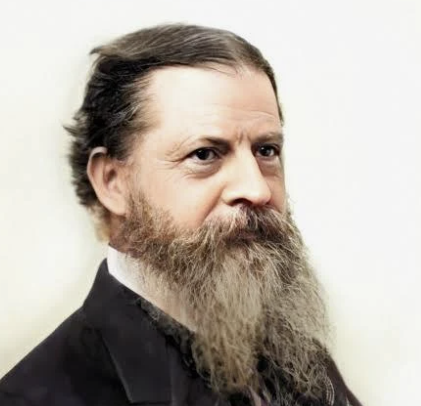
8 months 2 days ago
The old dualistic notion of mind and matter, so prominent in Cartesianism, as two radically different kinds of substance, will hardly find defenders to-day. Rejecting this, we are driven to some form of hylopathy, otherwise called monism.
7 months 2 weeks ago
We are organization watchers in our role as citizens. Increasing attention has been fixed in recent years upon the functioning of society's organizations: its large corporations and its governments. Hence this could also be described as a book for Everyman-for it proposes a way of thinking about organizational issues that concern us all.
▼
Source
source
Simon (1975, p. ix); As cited in Stefano Franchi(2006) "Herbert simon, anti-philosopher." Computing and Philosophy. p. 34.

5 months 3 weeks ago
You have, dearest Serene, things that can protect tranquility, things that restore it, things that resist creeping escapes. Be it known, however, that none of these things is sufficient for those who hold a feeble matter, unless a constant concern surrounds the slipping mind.
8 months 2 days ago
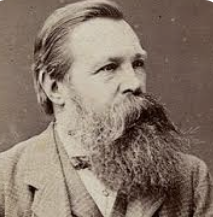
People think they have taken quite an extraordinarily bold step forward when they have rid themselves of belief in hereditary monarchy and swear by the democratic republic. In reality, however, the state is nothing but a machine for the oppression of one class by another, and indeed in the democratic republic no less than in the monarchy.
▼
Source
source
Introduction to 1891 edition of Karl Marx's, The Civil War in France

7 months 2 weeks ago
The problem is that sex is the most dangerous way of trying to achieve personal growth, because the life force has mixed it so liberally with a string sense of "magic", which, in the attempt at possession turns out to be an illusion. The attempt to possess a woman through an act of sex is as frustrating as trying to possess the scent of a rose by cooking and eating it.
▼
Source
source
p. 250

8 months 1 week ago
Men that look no further than their outsides, think health an appurtenance unto life, and quarrel with their constitutions for being sick; but I that have examined the parts of man, and know upon what tender filaments that fabric hangs, do wonder that we are not always so; and considering the thousand doors that lead to death, do thank my God that we can die but once.
▼
Source
source
Section 44 Compare: "I know death hath ten thousand several doors / For men to take their exits.", John Webster, Duchess of Malfi (1623); Act IV, scene ii.
1 year 1 month ago
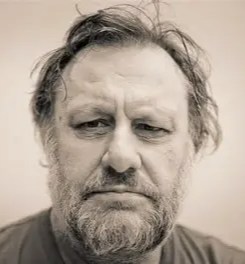
The age of philosophy in the sense again that we are confronted more and more often with philosophical problems at an everyday level. It is not that you withdraw from daily life into a world of philosophical contemplation. On the contrary, you cannot find your way around daily life itself without answering certain philosophical questions. It is a unique time when everyone is, in a way, forced to be some kind of philosopher.
9 months 5 days ago
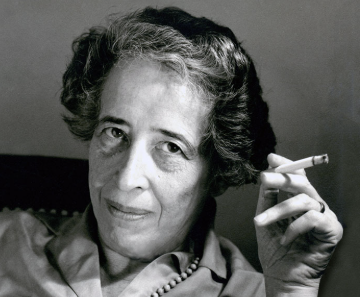
In a head-on clash between violence and power, the outcome is hardly in doubt. Nowhere is the self-defeating factor in the victory of violence over power more evident than in the use of terror to maintain domination, about whose weird successes and eventual failures we know perhaps more than any generation before us. Violence can destroy power; it is utterly incapable of creating it.
▼
Source
source
On Violence
5 months 6 days ago
A little reflection will show us that every belief, even the simplest and most fundamental, goes beyond experience when regarded as a guide to our actions. ... Even the fundamental "I am," which cannot be doubted, is no guide to action until it takes to itself "I shall be," which goes beyond experience. The question is not, therefore, "May we believe what goes beyond experience?" for this is involved in the very nature of belief; but "How far and in what manner may we add to our experience in forming our beliefs?"

7 months 3 weeks ago
At the bottom of the heart of every human being, from earliest infancy until the tomb, there is something that goes on indomitably expecting, in the teeth of all experience of crimes committed, suffered, and witnessed, that good and not evil will be done to him. It is this above all that is sacred in every human being.The good is the only source of the sacred. There is nothing sacred except the good and what pertains to it.
▼
Source
source
p. 51
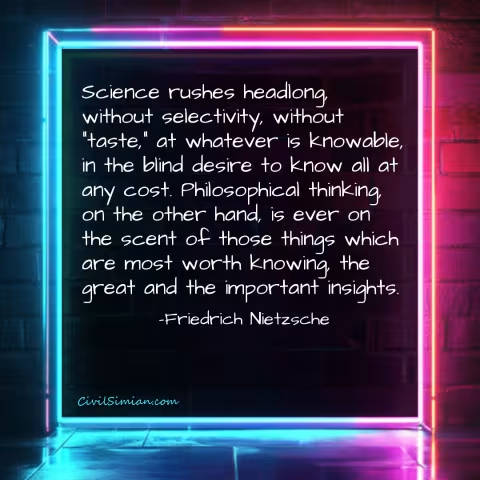
7 months 4 days ago
It is a very hard undertaking to seek to please everybody.
▼
Source
source
Maxim 675

6 months 3 weeks ago
However long Jewish, Christian and Muslim theologians struggle to find multiple meanings in this text, the dominant seems to be this: Abraham's unquestioning willingness to heed gods command to sacrifice the thing he loved most is what qualified him to become the father of what are called still the Abrahamic faiths.
5 months 3 weeks ago
What is wisdom? Always desiring the same things, and always refusing the same things.
▼
Source
source
Line 5 Here, Seneca uses the same observation that Sallust made regarding friendship (in his historical account of the Catilinarian conspiracy, Bellum Catilinae[XX.4]) to define wisdom.
5 months 3 weeks ago
Would you know what makes men greedy for the future? It is because no one has yet found himself.

8 months 6 days ago
I have no idea of a liberty unconnected with honesty and justice. Nor do I believe, that any good constitutions of government, or of freedom, can find it necessary for their security to doom any part of the people to a permanent slavery. Such a constitution of freedom, if such can be, is in effect no more than another name for the tyranny of the strongest faction; and factions in republics have been, and are, full as capable as monarchs, of the most cruel oppression and injustice.
▼
Source
source
Speech at Bristol Previous to the Election (6 September 1780), quoted in The Works of the Right Honourable Edmund Burke, Vol. II (1855), p. 163

9 months 2 weeks ago
A doubtful balance is made between truth and pleasure, and... the knowledge of one and the feeling of the other stir up a combat the success of which is very uncertain, since, in order to judge of it, it would be necessary to know all that passes in the innermost spirit of the man, of which man himself is scarcely ever conscious.
9 months 2 weeks ago
It is not the pleasure of curiosity, nor the quiet of resolution, nor the raising of the spirit, nor victory of wit, nor faculty of speech that are the true ends of knowledge, but it is a restitution and reinvesting, in great part, of man to the sovereignty and power, for whensoever he shall be able to call the creatures by their true names, he shall again command them.
▼
Source
source
Valerius Terminus: Of the Interpretation of Nature (ca. 1603), in Works, Vol. I, p. 83; The Works of Francis Bacon (1819), Vol. 2, p. 133
8 months 1 week ago
Life itself is but the shadow of death, and souls departed but the shadows of the living: All things fall under this name. The Sun itself is but the dark simulacrum, and the light but the shadow of God.
▼
Source
source
Ch. 4
5 months 3 weeks ago
He seldom or never spoke except actually to convey an idea. Measured by quantity of words, he was a talker of fully average copiousness; by extent of meaning communicated, he was the most copious I have listened to. How in few sentences he would sketch you off an entire biography, an entire object or transaction, keen, clear, rugged, genuine, completely rounded In! His words came direct from the heart by the inspiration of the moment.
7 months 2 weeks ago
The first consequence of the principle of bounded rationality is that the intended rationality of an actor requires him to construct a simplified model of the real situation in order to deal with it. He behaves rationally with respect to this model, and such behavior is not even approximately optimal with respect to the real world. To predict his behavior we must understand the way in which this simplified model is constructed, and its construction will certainly be related to his psychological properties as a perceiving, thinking, and learning animal.
▼
Source
source
p. 198; Cited in P. Slovic (1972, p. 2).

9 months 1 week ago
It is asserted that beasts have no rights; the illusion is harboured that our conduct, so far as they are concerned, has no moral significance, or, as it is put in the language of these codes, that "there are no duties to be fulfilled towards animals." Such a view is one of revolting coarseness, a barbarism of the West, whose source is Judaism. In philosophy, however, it rests on the assumption, despite all evidence to the contrary, of the radical difference between man and beast,-a doctrine which, as is well known, was proclaimed with more trenchant emphasis by Descartes than by any one else: it was indeed the necessary consequence of his mistakes.
▼
Source
source
Part III, Ch. VIII, 7, p. 218

7 months 4 days ago
Violence, whether spiritual or physical, is a quest for identity and the meaningful.
▼
Source
source
The less identity, the more violence. "Violence in the media." Canadian Forum. Volume 56, 1976, p. 9
6 months 4 weeks ago
The future of mankind, for the socialist, is simple: pull down the existing order and allow the future to emerge.
▼
Source
source
"Eliot and Conservatism" (p. 208)
9 months 1 week ago
We must therefore glean up our experiments in this science from a cautious observation of human life, and take them as they appear in the common course of the world, by men's behaviour in company, in affairs, and in their pleasures. Where experiments of this kind are judiciously collected and compared, we may hope to establish on them a science, which will not be inferior in certainty, and will be much superior in utility to any other of human comprehension.
▼
Source
source
Introduction

9 months 1 week ago
What, in unenlightened societies, colour, race, religion, or in the case of a conquered country, nationality, are to some men, sex is to all women; a peremptory exclusion from almost all honourable occupations, but either such as cannot be fulfilled by others, or such as those others do not think worthy of their acceptance.
▼
Source
source
Ch. 4
7 months 3 weeks ago
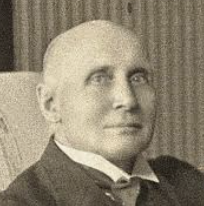
The order of nature cannot be justified by the mere observation of nature. For there is nothing in the present fact which inherently refers either to the past or to the future.... It illustrates the anti-rationalism of the scientific public that, when Hume did appear, it was only the religious implications of his philosophy which attracted attention. This was because the clergy were in principle rationalists, whereas the men of science were content with a simple faith in the order of nature.
▼
Source
source
Ch. 3: "The Century of Genius", p. 73
9 months 1 week ago
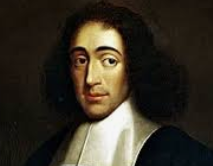
Needs must it be hard, since it is so seldom found. How would it be possible, if salvation were ready to our hand, and could without great labour be found, that it should be by almost all men neglected? But all things excellent are as difficult as they are rare.
▼
Source
source
Part V, Prop. XLII, Scholium
8 months 2 days ago
Death poses a problem which replaces all the others. What is deadly to philosophy, to the naive belief in the hierarchy of perplexities.
9 months 1 week ago
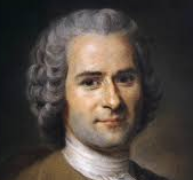
It is too difficult to think nobly when one thinks only of earning a living.
▼
Source
source
Variant translation: It is too difficult to think nobly when one only thinks to get a living.

9 months 5 days ago
Not till then did his controllers allow him to suspect that death itself might not after all cure the illusion of being a soul-nay, might prove the entry into a world where that illusion raged infinite and unchecked. Escape for the soul, if not for the body, was offered him. He became able to know (and simultaneously refused the knowledge) that he had been wrong from the beginning, that souls and personal responsibility existed. He half saw: he wholly hated. The physical torture of the burning was not fiercer than his hatred of that.
▼
Source
source
Ch. 16 : Banquet at Belbury, section 6

5 months 6 days ago
As soon as the generals and the politicos can predict the motions of your mind, lose it. Leave it as a sign to mark the false trail, the way you didn't go. Be like the fox who makes more tracks than necessary, some in the wrong direction. Practice resurrection.
▼
Source
source
"Manifesto: The Mad Farmer Liberation Front" in Farming: A Hand Book
9 months 2 days ago
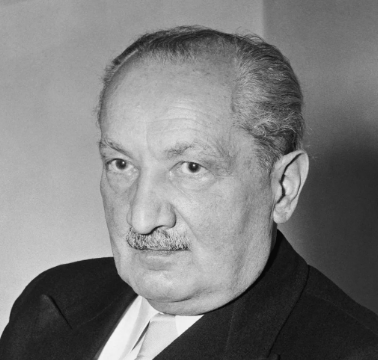
The human being is not the lord of beings, but the shepherd of Being.
▼
Source
source
Letter on Humanism
CivilSimian.com created by AxiomaticPanic, CivilSimian, Kalokagathia