

7 months 2 days ago
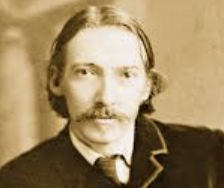
So long as we love we serve; so long as we are loved by others, I would almost say that we are indispensable; and no man is useless while he has a friend.
▼
Source
source
"Lay Morals" Ch. 4, in Lay Morals and Other Essays (1911).
6 months 3 weeks ago
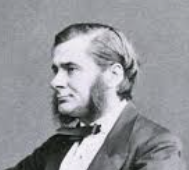
Identical in the physical processes by which he originates-identical in the early stages of his formation-identical in the mode of his nutrition before and after birth, with the animals which lie immediately below him in the scale-Man, if his adult and perfect structure be compared with theirs, exhibits, as might be expected, a marvellous likeness of organization. He resembles them as they resemble one another-he differs from them as they differ from one another.-And, though these differences and resemblances cannot be weighed and measured, their value may be readily estimated; the scale or standard of judgment, touching that value, being afforded and expressed by the system of classification of animals now current among zoologists.
▼
Source
source
Ch.2, p. 83

9 months 1 week ago
The first step to get this noble and manly steadiness, is... carefully keep children from frights of all kinds, when they are young. ...Instances of such who in a weak timorous mind, have borne, all their whole lives through, the effects of a fright when they were young, are every where to be seen, and therefore as much as may be to be prevented.
▼
Source
source
Sec. 115
9 months 1 week ago
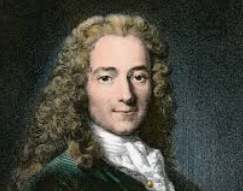
If you want good laws, burn those you have and make new ones.
▼
Source
source
"Laws", 1765

9 months 1 week ago
The presence of a thought is like the presence of a lover.
7 months 3 weeks ago
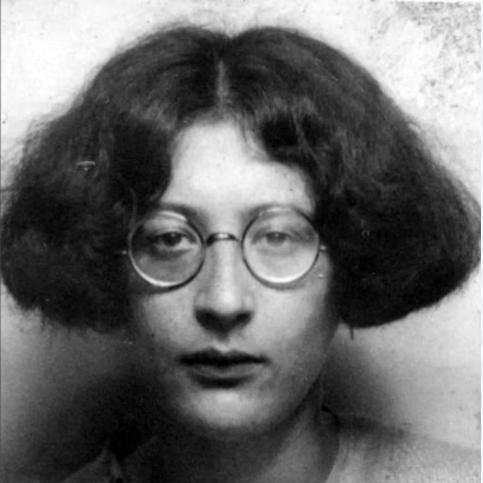
The most important part of education - to teach the meaning of to know (in the scientific sense). The last statement in her notebook
9 months 1 week ago
Methinks I am like a man, who having struck on many shoals, and having narrowly escap'd shipwreck in passing a small frith, has yet the temerity to put out to sea in the same leaky weather-beaten vessel, and even carries his ambition so far as to think of compassing the globe under these disadvantageous circumstances.
▼
Source
source
Part 4, Section 7

8 months 1 week ago
In cities men cannot be prevented from concerting together, and from awakening a mutual excitement which prompts sudden and passionate resolutions. Cities may be looked upon as large assemblies, of which all the inhabitants are members; their populace exercises a prodigious influence upon the magistrates, and frequently executes its own wishes without their intervention. Variant translation: In towns it is impossible to prevent men from assembling, getting excited together and forming sudden passionate resolves. Towns are like great meeting houses with all the inhabitants as members. In them the people wield immense influence over their magistrates and often carry their desires into execution without intermediaries.
▼
Source
source
Chapter XVII.



7 months 4 days ago
Applied knowledge in the Renaissance had to take the form of translation of the auditory into visual terms, of the plastic into retinal form.
▼
Source
source
(p. 180)
9 months 1 week ago
In this consists the difference between the character of a miser and that of a person of exact economy and assiduity. The one is anxious about small matters for their own sake; the other attends to them only in consequence of the scheme of life which he has laid down to himself.
▼
Source
source
Chap. VI.

8 months 3 weeks ago
The principles of ethics come from our own nature as social, reasoning beings.
▼
Source
source
Chapter 6, A New Understanding Of Ethics, p. 149
7 months 4 weeks ago
The repose of sleep refreshes only the body. It rarely sets the soul at rest. The repose of the night does not belong to us. It is not the possession of our being. Sleep opens within us an inn for phantoms. In the morning we must sweep out the shadows.
▼
Source
source
Ch. 2, sect. 3

9 months 2 weeks ago
The mind must not be forced; artificial and constrained manners fill it with foolish presumption, through unnatural elevation and vain and ridiculous inflation, instead of solid and vigorous nutriment.
5 months 2 weeks ago
From my youth onwards, I have felt sure that all thought which thinks itself out to an issue ends in mysticism. In the stillness of the African jungle I have been able to work out this thought and give it expression.

8 months 1 week ago
The one infinite is perfect, in simplicity, of itself, absolutely, nor can aught be greater or better, This is the one Whole, God, universal Nature, occupying all space, of whom naught but infinity can give the perfect image or semblance.
▼
Source
source
II 12 as translated by Dorothea Waley Singer


9 months 6 days ago
The man who comes back through the Door in the Wall will never be quite the same as the man who went out. He will be wiser but less cocksure, happier but less self-satisfied, humbler in acknowledging his ignorance yet better equipped to understand the relationship of words to things, of systematic reasoning to the unfathomable Mystery which it tries, forever vainly, to comprehend.
▼
Source
source
Page 191

7 months 1 week ago
Although it is commonly supposed that war making is the specific activity of nations, the blind rage that motivates war destroys the very social bonds that make nations possible. Of course, it can fortify the nationalism of a nation, producing a provisional coherence bolstered by war and enmity, but it also erodes the social relations that make politics possible. The power of destruction unleashed by war breaks social ties and produces anger, revenge, and distrust ("embitterment") such that it becomes unclear whether reparation is possible, undermining not only those relations that may have been built in the past, but also the future possibility of peaceful coexistence.
▼
Source
source
p. 154

9 months 1 week ago
You, your families, your friends and your countries are to be exterminated by the common decision of a few brutal but powerful men. To please these men, all the private affections, all the public hopes, all that has been achieved in art, and knowledge and thought and all that might be achieved hereafter is to be wiped out forever. Our ruined lifeless planet will continue for countless ages to circle aimlessly round the sun unredeemed by the joys and loves, the occasional wisdom and the power to create beauty which have given value to human life.
▼
Source
source
Leaflet issued while Russell was in Brixton Prison, 1961
7 months 2 days ago
But perhaps the rest of us could have separate classes in science appreciation, the wonder of science, scientific ways of thinking, and the history of scientific ideas, rather than laboratory experience.
7 months 2 weeks ago
Optimism is an alienated form of faith, pessimism an alienated form of despair. If one truly responds to man and his future, ie, concernedly and "responsibly." one can respond only by faith or by despair. Rational faith as well as rational despair are based on the most thorough, critical knowledge of all the factors that are relevant for the survival of man.
▼
Source
source
p. 483
9 months 1 week ago
As regards the objection that possibles are independent of the decrees of God I grant it of actual decrees (although the Cartesians do not at all agree to this), but I maintain that the possible individual concepts involve certain possible free decrees; for example, if this world was only possible, the individual concept of a particular body in this world would involve certain movements as possible, it would also involve the laws of motion, which are the free decrees of God; but these, also, only as possibilities. Because, as there are an infinity of possible worlds, there are also an infinity of laws, certain ones appropriate to one; others, to another, and each possible individual of any world involves in its concept the laws of its world.
▼
Source
source
(May, 1686) as quoted in George R. Montgomery, Tr., "Correspondence between Leibniz and Arnauld," Leibniz: Discourse on metaphysics; correspondence with Arnauld, and Monadology (1916) VIII, p. 108

9 months ago
The disappearance of public executions marks therefore the decline of the spectacle; but it also marks a slackening of the hold on the body.
▼
Source
source
Chapter One, The Spectacle of the Scaffold
9 months 6 days ago
It is only by risking our persons from one hour to another that we live at all. And often enough our faith beforehand in an uncertified result is the only thing that makes the result come true.
▼
Source
source
"Is Life Worth Living?"

8 months 1 week ago
To the Deity must be left the task of infinite perfection, while to us poor, weak, incapable mortals, there was no rule of conduct so safe as experience.
▼
Source
source
Speech in the House of Commons (6 May 1791), quoted in The Parliamentary History of England, From the Earliest Period to the Year 1803, Vol. XXIX (1817), column 388
8 months 2 weeks ago
When going to the temple to adore Divinity neither say nor do any thing in the interim pertaining to the common affairs of life.
▼
Source
source
Symbol 1

5 months 6 days ago
When we get piled upon one another in large cities, as in Europe, we shall become corrupt as in Europe.
▼
Source
source
Letter to James Madison (20 December 1787), The Writings of Thomas Jefferson (19 Vols., 1905) edited by Andrew A. Lipscomb and Albert Ellery Bergh, Vol. VI, p. 392.



5 months 3 weeks ago
Paganism we recognized as a veracious expression of the earnest awe-struck feeling of man towards the Universe; veracious, true once, and still not without worth for us. But mark here the difference of Paganism and Christianism; one great difference. Paganism emblemed chiefly the Operations of Nature; the destinies, efforts, combinations, vicissitudes of things and men in this world; Christianism emblemed the Law of Human Duty, the Moral Law of Man. One was for the sensuous nature: a rude helpless utterance of the first Thought of men,-the chief recognized virtue, Courage, Superiority to Fear. The other was not for the sensuous nature, but for the moral. What a progress is here, if in that one respect only-!

7 months 3 weeks ago
We never know, believe me, when we have succeeded best.
▼
Source
source
Essays and Soliloquies

9 months 6 days ago
Let me never fall into the vulgar mistake of dreaming that I am persecuted whenever I am contradicted.
▼
Source
source
November 8, 1838
7 months 3 days ago
Poverty is the lack of many things, but avarice is the lack of all things.
▼
Source
source
Maxim 236
7 months 2 days ago
Ignorance, to a scientist, is an itch that begs to be pleasurably scratched. Ignorance, if you are a theologian, is something to be washed away by shamelessly making something up.
▼
Source
source
The Intellectual and Moral Courage of Atheism
7 months 2 weeks ago
The two most far-reaching critical theories at the beginning of the latest phase of industrial society were those of Marx and Freud. Marx showed the moving powers and the conflicts in the social-historical process. Freud aimed at the critical uncovering of the inner conflicts. Both worked for the liberation of man, even though Marx's concept was more comprehensive and less time-bound than Freud's.
▼
Source
source
The Art of Being" Pt. 3

5 months 1 week ago
If you love me, be patient. Look at the trees. Are they in a hurry to ripen their fruit?
5 months 3 weeks ago
Thus Mr. Sale informs me, the old Arab Tribes would gather in liveliest gaudeamus, and sing, and kindle bonfires, and wreathe crowns of honour, and solemnly thank the gods that, in their Tribe too, a Poet had shewn himself. As indeed they well might; for what usefuller, I say not nobler and heavenlier thing could the gods, doing their very kindest, send to any Tribe or Nation, in any time or circumstances?
9 months 5 days ago
It is, in fact, far easier to act under conditions of tyranny than it is to think.
▼
Source
source
The Human Condition
9 months 5 days ago
Yet it seems extraordinary that the justice of increasing the expectations of the better placed by a billion dollars, say, should turn on whether the prospects of the least favored increase or decrease by a penny.
▼
Source
source
Chapter III, Section 26, pg. 157
8 months 4 days ago
No one, of a surety, wanders farther from the mark than he who fancies to himself that he already understands this marvellous Kingdom, and can, in few words, fathom its constitution, and everywhere find the right path. To no one, who has broken off, and made himself an Island, will insight rise of itself, nor even without toilsome effort. Only to children, or childlike men, who know not what they do, can this happen. Long, unwearied intercourse, free and wise Contemplation, attention to faint tokens and indications; an inward poet-life, practised senses, a simple and devout spirit: these are the essential requisites of a true Friend of Nature; without these no one can attain his wish.
9 months 2 weeks ago
The souls of emperors and cobblers are cast in the same mold...The same reason that makes us wrangle with a neighbor creates a war betwixt princes.
▼
Source
source
Ch. 12, tr. Cotton, rev. W. Carew Hazlitt, 1877

8 months 6 days ago
Morality knows nothing of geographical boundaries, or distinctions of race.
▼
Source
source
Pt. IV, Ch. 30 : General Considerations
9 months 1 week ago
If a big diamond is cut up into pieces, it immediately loses its value as a whole; or if an army is scattered or divided into small bodies, it loses all its power; and in the same way a great intellect has no more power than an ordinary one as soon as it is interrupted, disturbed, distracted, or diverted; for its superiority entails that it concentrates all its strength on one point and object, just as a concave mirror concentrates all the rays of light thrown upon it. Noisy interruption prevents this concentration. This is why the most eminent intellects have always been strongly averse to any kind of disturbance, interruption and distraction, and above everything to that violent interruption which is caused by noise; other people do not take any particular notice of this sort of thing.
▼
Source
source
On Noise
9 months 1 week ago
The happiness which forms the utilitarian standard of what is right in conduct, is not the agent's own happiness, but that of all concerned. As between his own happiness and that of others, utilitarianism requires him to be as strictly impartial as a disinterested and benevolent spectator. In the golden rule of Jesus of Nazareth, we read the complete spirit of the ethics of utility. To do as one would be done by, and to love one's neighbour as oneself, constitute the ideal perfection of utilitarian morality.
▼
Source
source
Ch. 2
5 months 2 weeks ago
What really matters is that we should all of us realize that we are guilty of inhumanity. The horror of this realization should shake us out of our lethargy so that we can direct our hopes and our intentions to the coming of an era in which war will have no place.
CivilSimian.com created by AxiomaticPanic, CivilSimian, Kalokagathia