

7 months 4 weeks ago
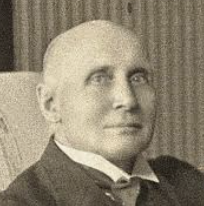
Every intellectual revolution which has ever stirred humanity into greatness has been a passionate protest against inert ideas. Then, alas, with pathetic ignorance of human psychology, it has proceeded by some educational scheme to bind humanity afresh with inert ideas of its own fashioning.
7 months 3 weeks ago
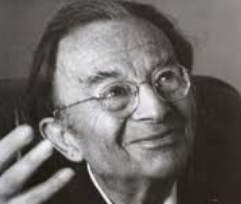
The revolutionary and critical thinker is in a certain way always outside of his society while of course he is at the same time also in it. That he is in it is obvious, but why is he outside it? First, because he is not brainwashed by the ruling ideology, that is to say, he has an extraordinary kind of independence of thought and feeling; hence he can have a greater objectivity than the average person has. There are many emotional factors too. And certainly I do not mean to enter here into the complex problem of the revolutionary thinker. But it seems to me essential that in a certain sense he transcends his society. You may say he transcends it because of the new historical developments and possibilities he is aware of, while the majority still think in traditional terms.

8 months 2 weeks ago
It is manifest that every soul has a certain continuity with the soul of the Universe, so that it must be understood to exist and to be included not only there where it liveth and feeleth, but it is also by its essence and substance diffused throughout immensity. The power of each soul is itself somehow present afar in the Universe. It is not mixed, yet is there in some presence.
8 months 1 week ago
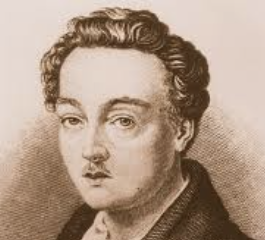
We are always on stage, even when we are stabbed in earnest at the end.
▼
Source
source
Act II.
6 months 4 weeks ago
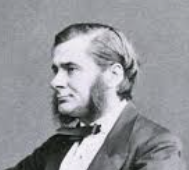
Sound knowledge respecting the habits and mode of life of the man-like Apes has been even more difficult of attainment than correct information regarding their structure.
▼
Source
source
Ch.1, p. 36

9 months 4 days ago
Human social institutions can effect the course of human evolution. Just as climate-change, food supply, predators, and other natural forces of selection have molded our nature, so too can our culture.
▼
Source
source
Chapter 6, A New Understanding Of Ethics, p. 172
7 months 2 days ago
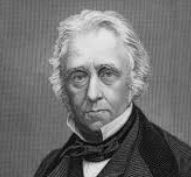
If it is the moral right we are to look at, I say, that on every principle of moral obligation, I hold that the Jew has a right to political power.
▼
Source
source
Speech in the House of Commons (5 April 1830) in favour of Robert Grant's Jewish Disabilities Bill


5 months 3 weeks ago
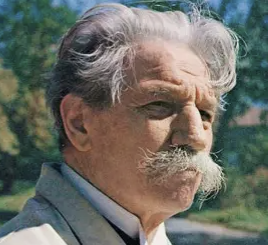
I do not want to frighten you by telling you about the temptations life will bring. Anyone who is healthy in spirit will overcome them. But there is something I want you to realize. It does not matter so much what you do. What matters is whether your soul is harmed by what you do. If your soul is harmed, something irreparable happens, the extent of which you won't realize until it will be too late.

8 months ago
Progress usually comes from the barbarian, and there is nothing more stagnant than the philosophy of the philosophers and the theology of the theologians.

8 months 1 week ago
I would like to go mad on one condition, namely, that I would become a happy madman, lively and always in a good mood, without any troubles and obsessions, laughing senselessly from morning to night.
8 months 1 week ago
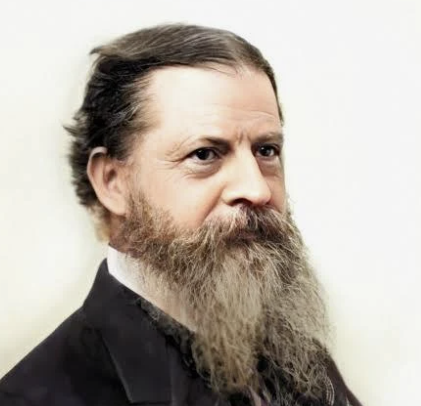
Thus far, gentlemen, I have been insisting very strenuously upon what the most vulgar common sense has every disposition to assent to and only ingenious philosophers have been able to deceive themselves about. But now I come to a category which only a more refined form of common sense is prepared willingly to allow, the category which of the three is the chief burden of Hegel's song, a category toward which the studies of the new logico-mathematicians, Georg Cantor and the like, are steadily pointing, but to which no modern writer of any stripe, unless it be some obscure student like myself, has ever done anything approaching to justice.
▼
Source
source
Lecture II : The Universal Categories, §3. Laws: Nominalism, CP 5.59

9 months 1 week ago
All the thoughts of a turtle are turtle.
▼
Source
source
1855
5 months 4 weeks ago
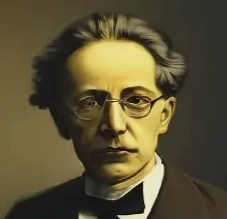
Atheists keep up their scoffing at the higher being, which was also honoured under the name of the 'highest' or être suprême, and trample in the dust one 'proof of his existence' after another, without noticing that they themselves, out of need for a higher being, only annihilate the old to make room for a new.
▼
Source
source
Cambridge 1995, p. 38-39
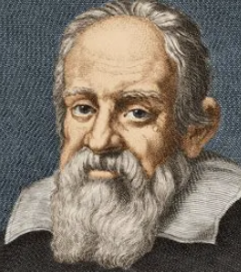
6 months 1 week ago
The sun, with all those planets revolving around it and dependent on it, can still ripen a bunch of grapes as if it had nothing else in the universe to do.
▼
Source
source
Loose paraphrase of Salviati on Day 3

5 months 1 week ago
Descartes, a genius made to blaze new paths and to go astray in them, supposed with some other philosophers that God is the only efficient cause of motion, and that every instant He communicates motion to all bodies. But this opinion is but an hypothesis which he tried to adjust to the light of faith; and in so doing he was no longer attempting to speak as a philosopher or to philosophers. Above all he was not addressing those who can be convinced only by the force of evidence.
▼
Source
source
Ch. V Concerning the Moving Force of Matter

7 months 3 weeks ago
What would become of the rich, if not for the poor? What would become of these idle, parasitic ladies, who squander more in a week than their victims earn in a year, if not for the eighty million wage-workers? Equality, who ever heard of such a thing?

9 months 2 weeks ago
Each pursues his private interest and only his private interest; and thereby serves the private interests of all, the general interest, without willing it or knowing it. The real point is not that each individual's pursuit of his private interest promotes the totality of private interests, the general interest. One could just as well deduce from this abstract phrase that each individual reciprocally blocks the assertion of the others' interests, so that, instead of a general affirmation, this war of all against all produces a general negation.
▼
Source
source
Notebook I, The Chapter on Money, p. 76.
6 months 1 week ago
My dear Kepler, what would you say of the learned here, who, replete with the pertinacity of the asp, have steadfastly refused to cast a glance through the telescope? What shall we make of this? Shall we laugh, or shall we cry?
▼
Source
source
Letter to Johannes Kepler (1610), as quoted in The Crime of Galileo (1955) by Giorgio De Santillana

7 months 1 week ago
A Frenchman is self-assured because he regards himself personally, both in mind and body, as irresistibly attractive to men and women. An Englishman is self-assured, as being a citizen of the best-organized state in the world, and therefore as an Englishman always knows what he should do and knows that all he does as an Englishman is undoubtedly correct. An Italian is self-assured because he is excitable and easily forgets himself and other people. A Russian is self-assured just because he knows nothing and does not want to know anything, since he does not believe that anything can be known. The German's self-assurance is worst of all, stronger and more repulsive than any other, because he imagines that he knows the truth - science - which he himself has invented but which is for him the absolute truth.
▼
Source
source
Bk. IX, ch. 10
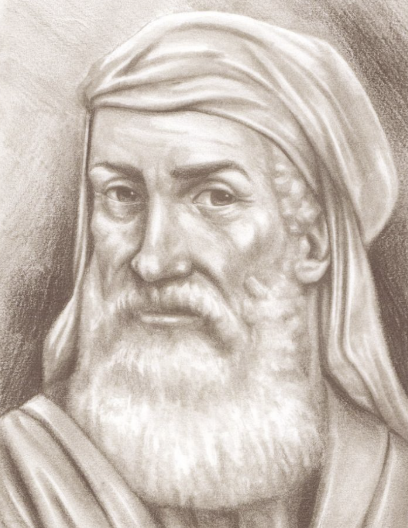
9 months 3 days ago
But what is lawful for all extends across wide-ruling aether and, without cease, through endless sunshine.
▼
Source
source
fr. 135, as quoted in Aristotle's Rhetoric, 1373 b16

9 months 2 weeks ago
Most people would sooner die than think; in fact, they do so.

5 months 1 week ago
Faith and patriotism are the two great thaumaturges of this world. Both are divine; all their actions are prodigies. Do not go to them talking of examination, choice, or discussion; they will say that you blaspheme. They know only two words: submission and belief; with these two levers they raise the world. Even their errors are sublime. These two children of Heaven prove their origin to all eyes by creating and conserving; but if they unite, join their forces, and together take possession of a nation, they exalt it, they divinize it, and they increase its forces a hundred-fold.
▼
Source
source
p. 88

9 months 1 week ago
If things are ever to move upward, some one must take the first step, and assume the risk of it. No one who is not willing to try charity, to try non-resistance as the saint is always willing, can tell whether these methods will or will not succeed.
▼
Source
source
Lectures XIV and XV, "The Value of Saintliness"

9 months 2 weeks ago
The progress from an absolute to a limited monarchy, from a limited monarchy to a democracy, is a progress toward a true respect for the individual.

7 months 4 weeks ago
Liberty, taking the word in its concrete sense, consists in the ability to choose.
▼
Source
source
Ch. 3, Liberty

8 months 1 week ago
We too often forget that not only is there "a soul of goodness in things evil," but very generally also, a soul of truth in things erroneous.
▼
Source
source
Pt. I, The Unknowable; Ch. I, Religion and Science; quoting from "There is some soul of goodness in things evil / Would men observingly distil it out", William Shakespeare, Henry V, act iv. sc. i
9 months 1 week ago
Romeo wants Juliet as the filings want the magnet; and if no obstacles intervene he moves towards her by as straight a line as they. But Romeo and Juliet, if a wall be built between them, do not remain idiotically pressing their faces against its opposite sides like the magnet and the filings with the card. Romeo soon finds a circuitous way, by scaling the wall or otherwise, of touching Juliet's lips directly. With the filings the path is fixed; whether it reaches the end depends on accidents. With the lover it is the end which is fixed, the path may be modified indefinitely.
▼
Source
source
Ch. 1 : The Scope of Psychology
8 months 1 week ago
Equity knows no difference of sex. In its vocabulary the word man must be understood in a generic, and not in a specific sense.
▼
Source
source
Pt. II, Ch. 16 : The Rights of Women



8 months 3 weeks ago
Animals are rational; in most of them logos is imperfect, but it is certainly not wholly lacking. So if, as our opponents say, justice applies to rational beings, why should not justice, for us, also apply to animals?
▼
Source
source
3, 18, 1

7 months 4 weeks ago
Tactically, conceptualism is no doubt the strongest position of the three; for the tired nominalist can lapse into conceptualism and still allay his puritanic conscience with the reflection that he has not quite taken to eating lotus with the Platonists.
▼
Source
source
"Logic and the Reification of Universals"
7 months 4 weeks ago
We used to pay too little attention to utopias, or even disregard them altogether, saying with regret they were impossible of realisation. Now indeed they seem to be able to be brought about far more easily than we supposed, and we are actually faced by an agonising problem of quite another kind: how can we prevent their final realisation? ... Utopias are more realisable than those 'realist politics' that are only the carefully calculated policies of office-holders, and towards utopias we are moving. But it is possible that a new age is already beginning, in which cultured and intelligent people will dream of ways to avoid ideal states and to get back to a society that is less 'perfect' and more free.
▼
Source
source
pp. 187-188. Aldous Huxley used this passage (in French translation) as the epigraph to Brave New World.
9 months 2 weeks ago
Have patience awhile; slanders are not long-lived. Truth is the child of time; erelong she shall appear to vindicate thee.
▼
Source
source
As quoted in Gems of Thought (1888) edited by Charles Northend

8 months 2 weeks ago
They (the emperors) frequently abused their power arbitrarily to deprive their subjects of property or of life: their tyranny was extremely onerous to the few, but it did not reach the greater number; .. But it would seem that if despotism were to be established amongst the democratic nations of our days it might assume a different character; it would be more extensive and more mild, it would degrade men without tormenting them.
▼
Source
source
Book Four, Chapter VI.

5 months 1 week ago
Before making a decision the first thing to do - don't get worked up. For everything happens according to the nature of all things, and in a short time you'll be nobody and nowhere even as the great emperors Hadrian and Augustus are now. The next thing to do - consider carefully the task at hand for what it is, while remembering that your purpose is to be a good human being. Get straight to doing what nature requires of you, and speak as you see most just and fitting - with kindness, modesty, and sincerity.
▼
Source
source
VIII. 5:162
5 months 1 week ago
The solution is, that we do not see the image on the retina at all, we only see by means of it.

9 months 2 weeks ago
My education, which was wholly his work, had been conducted without any regard to the possibility of its ending in this result; and I saw no use in giving him the pain of thinking that his plans had failed, when the failure was probably irremediable, and, at all events, beyond the power of his remedies. Of other friends, I had at that time none to whom I had any hope of making my condition intelligible. It was however abundantly intelligible to myself; and the more I dwelt upon it, the more hopeless it appeared.
▼
Source
source
(p. 135)


6 months 3 weeks ago
corporate globalization is really about an aggressive privatization of the water, biodiversity, and food systems of the Earth, when these communities declare sovereignty and act on that sovereignty, they have developed a powerful response to globalization. Living democracy then is the democracy that is custodian of the living wealth on which people depend.
7 months 1 week ago
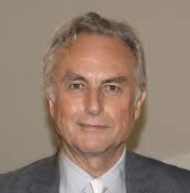
But if you can breed cattle for milk yield, horses for running speed, and dogs for herding skill, why on Earth should it be impossible to breed humans for mathematical, musical or athletic ability? Objections such as "these are not one-dimensional abilities" apply equally to cows, horses and dogs and never stopped anybody in practice. I wonder whether, some 60 years after Hitler's death, we might at least venture to ask what the moral difference is between breeding for musical ability and forcing a child to take music lessons. Or why it is acceptable to train fast runners and high jumpers but not to breed them. I can think of some answers, and they are good ones, which would probably end up persuading me. But hasn't the time come when we should stop being frightened even to put the question?
▼
Source
source
From the Afterword, The Herald, Glasgow, Scotland, 20 November 2006

8 months 2 weeks ago
Pain and suffering are always inevitable for a large intelligence and a deep heart. The really great men must, I think, have great sadness on Earth.
8 months 1 week ago
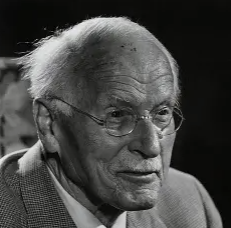
Our psychology is ... a science of mere phenomena without any metaphysical implications. [It] Treats all metaphysical claims and assertions as mental phenomena, and regards them as statements about the mind and its structure.
▼
Source
source
Psychology and Religion: West and East (1958), p. 476, as cited in Psychotherapy East and West (1961), p. 14
10 months 2 weeks ago
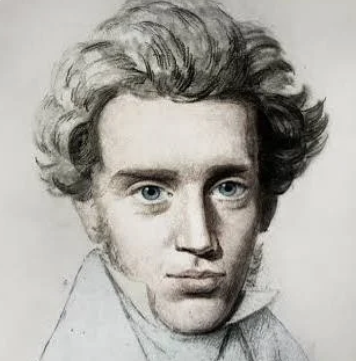
Be attentive therefore, according to the instruction of the Gospel, to learn obedience from the lily and the bird. Be not affrighted, do no despair, when thou comparest thy life with these teachers. There is nothing to despair about, for indeed thou shalt learn from them; and the Gospel first comforts thee by telling thee that God is the God of patience, and then it adds: 'Thou shalt learn from the lilies and the birds, learn to be absolutely obedient like the lilies and the birds, learn not to serve two masters; for no man can serve two masters, he must either ... or.
6 months 4 days ago
Philosophers of science have repeatedly demonstrated that more than one theoretical construction can always be placed upon a given collection of data. History of science indicates that, particularly in the early developmental stages of a new paradigm, it is not even very difficult to invent such alternates. But that invention of alternates is just what scientists seldom undertake except during the pre-paradigm stage of their science's development and at very special occasions during its subsequent evolution. So long as the tools a paradigm supplies continue to prove capable of solving the problems it defines, science moves fastest and penetrates most deeply through confident employment of those tools. The reason is clear. As in manufacture so in science-retooling is an extravagance to be reserved for the occasion that demands it. The significance of crises is the indication they provide that an occasion for retooling has arrived.
▼
Source
source
p. 76
CivilSimian.com created by AxiomaticPanic, CivilSimian, Kalokagathia