


8 months 1 week ago
Limiting the liberty of each by the like liberty of all, excludes a wide range of improper actions, but does not exclude certain other improper ones.
▼
Source
source
Pt. II, Ch. 4 : Derivation of a First Principle, § 4



6 months 3 weeks ago
Whoever imposes severe punishment becomes repulsive to the people; while he who awards mild punishment becomes contemptible. But whoever imposes punishment as deserved becomes respectable. For punishment when awarded with due consideration, makes the people devoted to righteousness and to works productive of wealth and enjoyment; while punishment, when ill-awarded under the influence of greed and anger or owing to ignorance, excites fury even among hermits and ascetics dwelling in forests, not to speak of householders.
▼
Source
source
Book I : "Concerning Discipline" Chapter 4 "Determination of the Place of Varta and of Dandaniti"
9 months 3 weeks ago
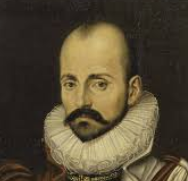
God's justice and His power are inseparable; 'tis in vain we invoke His power in an unjust cause. We are to have our souls pure and clean, at that moment at least wherein we pray to Him, and purified from all vicious passions; otherwise we ourselves present Him the rods wherewith to chastise us; instead of repairing anything we have done amiss, we double the wickedness and the offence when we offer to Him, to whom we are to sue for pardon, an affection full of irreverence and hatred. Which makes me not very apt to applaud those whom I observe to be so frequent on their knees, if the actions nearest to the prayer do not give me some evidence of amendment and reformation
▼
Source
source
Ch. 56. Of Prayers, tr. Cotton, rev. W. Carew Hazlitt, 1877

5 months 1 week ago
After all, it is my principle that the will of the Majority should always prevail.

9 months 2 weeks ago
Granted that any practice causes more pain to animals than it gives pleasure to man; is that practice moral or immoral? And if, exactly in proportion as human beings raise their heads out of the slough of selfishness, they do not with one voice answer 'immoral,' let the morality of the principle of utility be for ever condemned.
▼
Source
source
Dr. Whewell on Moral Philosophy (1852), in Dissertations and Discussions: Political, Philosophical, and Historical, vol. 2, London: John W. Parker and son, 1859, p. 485

9 months 2 weeks ago
To be without some of the things you want is an indispensable part of happiness.
5 months 1 week ago
Ridicule is the only weapon which can be used against unintelligible propositions. Ideas must be distinct before reason can act upon them; and no man ever had a distinct idea of the trinity. It is the mere Abracadabra of the mountebanks calling themselves the priests of Jesus.
▼
Source
source
Letter to Francis Adrian Van der Kemp (30 July 1816), denouncing the doctrine of the Trinity.
9 months 2 weeks ago
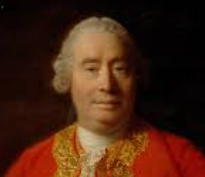
This avidity alone, of acquiring goods and possessions for ourselves and our nearest friends, is insatiable, perpetual, universal, and directly destructive of society.
▼
Source
source
Part 2, Section 2
9 months 2 weeks ago
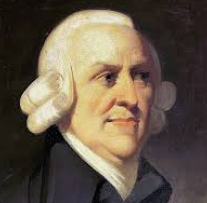
It may indeed be doubted, whether butcher's meat is any where a necessary of life. Grain and other vegetables, with the help of milk, cheese, and butter, or oil, where butter is not to be had, it is known from experience, can, without any butcher's meat, afford the most plentiful, the most wholesome, the most nourishing, and the most invigorating diet.
▼
Source
source
Chapter II, Part II, Appendix to Articles I and II.

6 months 4 days ago
Behold therefore, this England of the Year 1200 was no chimerical vacuity or dreamland, peopled with mere vaporous Fantasms, Rymer's Foedera, and Doctrines of the Constitution, but a green solid place, that grew corn and several other things. The Sun shone on it; the vicissitude of seasons and human fortunes. Cloth was woven and worn; ditches were dug, furrowfields ploughed, and houses built. Day by day all men and cattle rose to labour, and night by night returned home weary to their several lairs. In wondrous Dualism, then as now, lived nations of breathing men; alternating, in all ways, between Light and Dark; between joy and sorrow, between rest and toil, between hope, hope reaching high as Heaven, and fear deep as very Hell. Not vapour Fantasms, Rymer's Foedera at all!

6 months 1 week ago
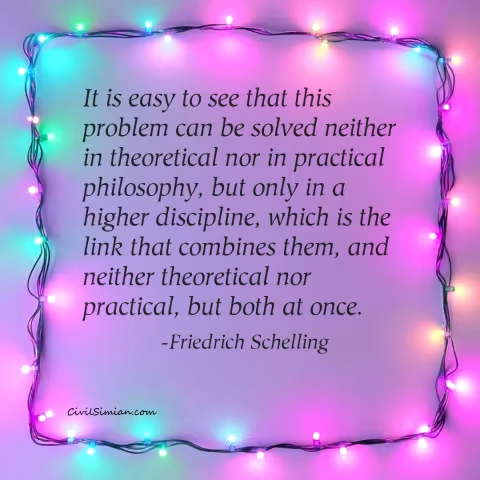
The possibility of democracy on a global scale is emerging today for the very first time.
▼
Source
source
(xi)

7 months 3 weeks ago
In fact, the real problem with the thesis of A Genealogy of Morals is that the noble and the aristocrat are just as likely to be stupid as the plebeian. I had noted in my teens that major writers are usually those who have had to struggle against the odds -- to "pull their cart out of the mud," as I put it -- while writers who have had an easy start in life are usually second rate -- or at least, not quite first-rate. Dickens, Balzac, Dostoevsky, Shaw, H. G. Wells, are examples of the first kind; in the twentieth century, John Galsworthy, Graham Greene, Evelyn Waugh, and Samuel Beckett are examples of the second kind. They are far from being mediocre writers; yet they tend to be tinged with a certain pessimism that arises from never having achieved a certain resistance against problems.
▼
Source
source
p. 188
9 months 3 days ago
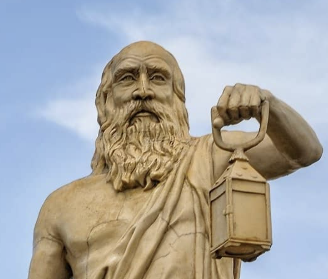
When the slave auctioneer asked in what he was proficient, he replied, "In ruling people."
▼
Source
source
Diogenes Laërtius, vi. 74


9 months 4 weeks ago
Although life is a matter of indifference, the use which you make of it is not a matter of indifference.
▼
Source
source
Book II, ch. 6, 1.

9 months 2 weeks ago
The finest manners in the world are awkwardness and fatuity, when contrasted with a finer intelligence.
▼
Source
source
p. 493

9 months 1 week ago
The louder he talked of his honor, the faster we counted our spoons.
▼
Source
source
Worship
6 months 1 week ago
A multitude is irreducible multiplicity; the singular social differences that constitute the multitude must always be expressed and can never be flattened into sameness, unity, identity, or indifference. ... the compact identities of factory workers in the dominant countries have been undermined with the rise of short-term contracts and forced mobility of new forms of work; how migration has challenged traditional notions of national identity; how family identity has changed and so forth.
▼
Source
source
105
7 months 3 weeks ago
Rationality requires a complete knowledge and anticipation of the consequences that will follow on each choice. In fact, knowledge of consequences is always fragmentary.

7 months 1 week ago
Environments are not just containers, but are processes that change the content totally.
▼
Source
source
American scholar, Volume 35, 1965, p. 200

7 months 4 weeks ago
The Reformation was a popular uprising, and for a century and a half drenched Europe in blood. The beginnings of the Scientific movement were confined to a minority among the intellectual elite.... The worst that happened to men of science was that Galileo suffered an honorable detention and a mild reproof, before dying peacefully in his bed. The way in which the persecution of Galileo has been remembered is a tribute to the quiet commencement of the most intimate change in outlook which the human race had yet encountered. Since a babe was born in a manger, it may be doubted whether so great a thing has happened with so little stir.
▼
Source
source
Ch. 1: "The Origins of Modern Science", pp. 2-3

9 months 3 weeks ago
Those who read and rightly understand my teaching will not start an insurrection; they have not learned that from me.
▼
Source
source
p. 65

5 months 1 week ago
A teacher's major contribution may pop out anonymously in the life of some ex-student's grandchild. A teacher, finally, has nothing to go on but faith, a student nothing to offer in return but testimony.
▼
Source
source
"Wallace Stegner and the Great Community"

5 months 4 weeks ago
Lay hold of today's task, and you will not need to depend so much upon tomorrow's. While we are postponing, life speeds by.

9 months 1 week ago
For it was my master who taught me not only how very little I knew but also that any wisdom to which I might ever aspire could consist only in realizing more fully the infinity of my ignorance.
5 months 4 weeks ago
A sword by itself does not slay; it is merely the weapon used by the slayer.
▼
Source
source
Line 30 Seneca is here describing arguments used by 'certain men,' not stating his own opinion.

9 months 1 week ago
I can't imagine a man really enjoying a book and reading it only once.
▼
Source
source
Letter to Arthur Greeves (February 1932) - in They Stand Together: The Letters of C. S. Lewis to Arthur Greeves (1914-1963) (1979), p. 439
7 months 1 week ago
It's misleading to suppose there's any basic difference between education & entertainment. This distinction merely relieves people of the responsibility of looking into the matter.
▼
Source
source
(1957) from "Classroom Without Walls", Explorations Vol. 7, 1957; reprinted in Explorations in Communication ed. E. Carpenter & M. McLuhan, (Boston: Beacon, 1960); and again in McLuhan: Hot and Cool ed. G. E. Stearn (NY: Dial, 1967).
7 months 1 week ago
The newspaper is a corporate symbolist poem, environmental and invisible, as poem.

8 months 2 weeks ago
I cleave the heavens and soar to the infinite. And while I rise from my own globe to others And penetrate ever further through the eternal field, That which others saw from afar, I leave far behind me. Variant translation: While I venture out beyond this tiny globe Into reaches past the bounds of starry night I leave behind what others strain to see afar.

8 months 5 days ago
Being good is just a matter of temperament in the end.
▼
Source
source
The Nice and the Good (1968), ch. 14, p. 127. Murdoch attributed this opinion to her character Kate Gray. It was not her own.

8 months 6 days ago
I cannot escape the objection that there is no state of mind, however simple, that does not change every moment.
▼
Source
source
An Introduction to Metaphysics (1903), translated by T. E. Hulme. New York: G. P. Putnam's Sons, 1912, p. 44

8 months 6 days ago
We have reached the point where the Objective Logic turns into the Subjective Logic, or, where subjectivity emerges as the true form of objectivity. We may sum up Hegel's analysis in the following schema: The true form of reality requires freedom. Freedom requires self-consciousness and knowledge of the truth. Self-consciousness and knowledge of the truth are the essentials of the subject. The form of reality must be conceived as subject.
▼
Source
source
P. 154-155
9 months 2 weeks ago
The good life is one inspired by love and guided by knowledge.
8 months 6 days ago
Hegel's philosophy revolved about the universality of reason; it was a rational system with its every part (the subjective as well as the objective spheres) integrated into a comprehensive whole. Marx shows that capitalist society first put such a universality into practice.
▼
Source
source
P. 286-287
5 months 1 week ago
I come into the presence of still water. And I feel above me the day-blind stars waiting with their light. For a time I rest in the grace of the world, and am free.
▼
Source
source
The Peace of Wild Things in Green River Review, No. 1
9 months 3 weeks ago
Never any good came out of female domination. God created Adam master and lord of living creatures, but Eve spoiled it all.
▼
Source
source
-- Table Talk, quoted in Luther On "Woman"

8 months 1 week ago
I have never taken myself for a being. A non-citizen, a marginal type, a nothing who exists only by the excess, by the superabundance of his nothingness.
7 months 4 weeks ago
For successful education there must always be a certain freshness in the knowledge dealt with. It must be either new in itself or invested with some novelty of application to the new world of new times. Knowledge does not keep any better than fish. You may be dealing with knowledge of the old species, with some old truth; but somehow it must come to the students, as it were, just drawn out of the sea and with the freshness of its immediate importance.

9 months 2 weeks ago
There cannot be a greater rudeness, than to interrupt another in the current of his discourse... To which, if there be added, as is usual, a correcting of any mistake, or a contradiction of what has been said, it is a mark of yet greater pride and self-conceitedness, when we thus intrude our selves for teachers, and take upon us either to set another right in his story, or shew the mistakes of his judgement.
▼
Source
source
Sec. 145

9 months 1 week ago
The real discovery is the one which enables me to stop doing philosophy when I want to. The one that gives philosophy peace, so that it is no longer tormented by questions which bring itself into question.
▼
Source
source
§ 133
9 months 2 weeks ago
The next thing is by gentle degrees to accustom children to those things they are too much afraid of. But here great caution is to be used, that you do not make too much haste, nor attempt this cure too early, for fear lest you increase the mischief instead of remedying it.
▼
Source
source
Sec. 115

5 months 1 week ago
Men do not lead the revolution; it is the Revolution that uses men. They are right when they say it goes all alone. This phrase means that never has the Divinity shown itself so clearly in any human event. If the vilest instruments are employed, punishment is for the sake of regeneration.
▼
Source
source
Chapter I, p. 8
6 months 4 days ago
The inventive genius of great England will not forever sit patient with mere wheels and pinions, bobbins, straps and billy-rollers whirring in the head of it. The inventive genius of England is not a Beaver's, or a Spinner's or Spider's genius: it is a Man's genius, I hope, with a God over him!
CivilSimian.com created by AxiomaticPanic, CivilSimian, Kalokagathia