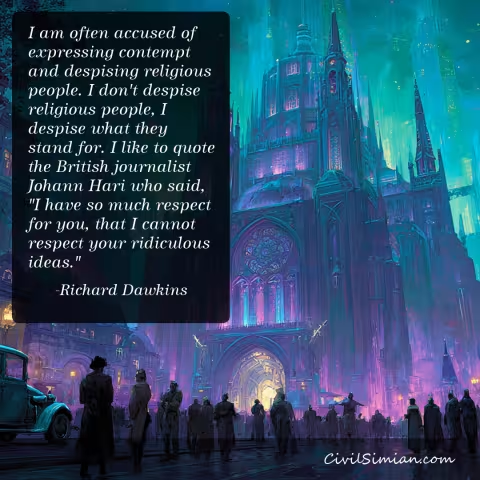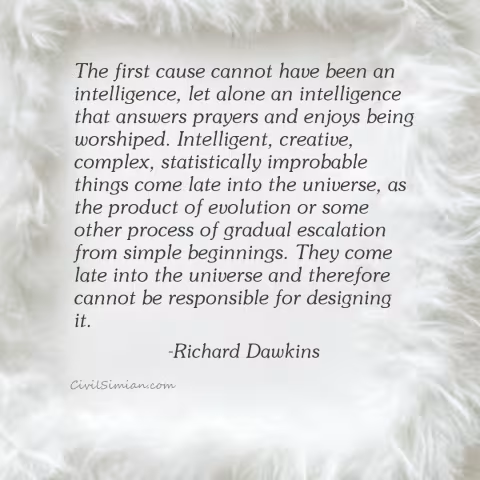
For sure religion's creator is a cartoon character, but, I wouldn't do what Dawkins does here either....if there was a first cause it could just be a force of some kind, or maybe we're being "first caused" every moment....



Live as on a mountain. ...Let men see, let them know a real man who lives according to nature. If they cannot endure him, let them kill him. For that is better than to live thus.

Irons and the unbreathable air of this world strip us of everything, except the freedom to kill ourselves; and this freedom grants us a strength and pride to triumph over the loads which overwhelm us.

By committing a crime, a man places himself, of his own accord, outside the chain of eternal obligations which bind every human being to every other one. Punishment alone can weld him back again; fully so, if accompanied by consent on his part; otherwise only partially so. Just as the only way of showing respect for somebody suffering from hunger is to give him something to eat, so the only way of showing respect for somebody who has placed himself outside the law is to reinstate him inside the law by subjecting him to the punishment ordained by law.The need for punishment is not satisfied where, as is generally the case, the penal code is merely a method of exercising pressure through fear.

Our laws, language, religion, politics, & manners are so deeply laid in English foundations, that we shall never cease to consider their history as a part of ours, and to study ours in that as it's origin.
Melancholy redeems this universe, and yet it is melancholy that separates us from it.
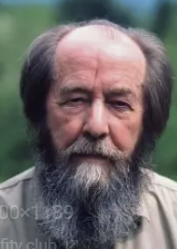
Justice is conscience, not a personal conscience but the conscience of the whole of humanity. Those who clearly recognize the voice of their own conscience usually recognize also the voice of justice.
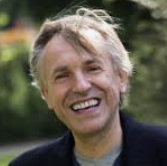
If we want eternal life, then we'll need to rewrite our bug-ridden genetic code and become god-like. "May all that have life be delivered from suffering", said Gautama Buddha. It's a wonderful sentiment. Sadly, only hi-tech solutions can ever eradicate suffering from the living world. Compassion alone is not enough.

But the wise man knows that all things are in store for him. Whatever happens, he says: "I knew it."
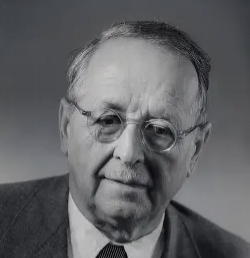
The scene of action of reality is not a three-dimensional Euclidean space but rather a four-dimensional world, in which space and time are linked together indissolubly. However deep the chasm may be that separates the intuitive nature of space from that of time in our experience, nothing of this qualitative difference enters into the objective world which physics endeavors to crystallize out of direct experience. It is a four-dimensional continuum, which is neither "time" nor "space". Only the consciousness that passes on in one portion of this world experiences the detached piece which comes to meet it and passes behind it as history, that is, as a process that is going forward in time and takes place in space.
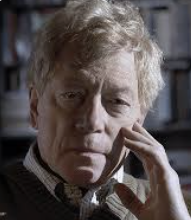
The modern world gives proof at every point that it is far easier to destroy institutions than to create them. Nevertheless, few people seem to understand this truth.
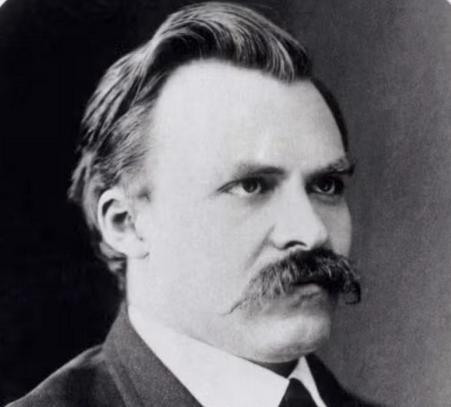

If you punish him for what he sees you practise yourself, he... will be apt to interpret it the peevishness and arbitrary imperiousness of a father, who, without any ground for it, would deny his son the liberty and pleasure he takes himself.
The first characteristic of the human species is man's ability, as a rational being, to establish character for himself, as well as for the society into which nature has placed him. This ability, however, presupposes an already favorable natural predisposition and an inclination to the good in man, because the evil is really without character (since it is at odds with itself, and since it does not tolerate any lasting principle within itself)

We term sleep a death, and yet it is waking that kills us, and destroys those spirits that are the house of life.
At the end of Being and Nothingness, ... Being in-itself and Being for-itself were of Being; and this totality of beings, in which they were effected, itself was linked up to itself, relating and appearing to itself, by means of the essential project of human-reality. What was named in this way, in an allegedly neutral and undetermined way, was nothing other than the metaphysical unity of man and God, the relation of man to God, the project of becoming God as the project constituting human-reality. Atheism changes nothing in this fundamental structure.
You want praise from people who kick themselves every fifteen minutes, the approval of people who despise themselves. (Is it a sign of self-respect to regret nearly everything you do?)

Nothing is rich but the inexhaustible wealth of Nature. She shows us only surfaces, but she is million fathoms deep.

For what is specific in the Catholic religion is immortalization and not justification, in the Protestant sense. Rather is this latter ethical. It is from Kant, in spite of what orthodox Protestants may think of him, that Protestantism derived its penultimate conclusions - namely, that religion rests upon morality, and not morality upon religion, as in Catholicism.
To reckon on anything at all, here or elsewhere, is to afford proofs that we are still burdened with chains. The reprobate aspires to paradise; this aspiration disparages, compromises him. To be free is to rid yourself forever of the notion of reward, it is to expect nothing of men or gods, it is to renounce not only this world and all worlds but salvation itself-it is to destroy even the notion of it, that chain among chains.
Religion is a subject on which I have ever been most scrupulously reserved. I have considered it as a matter between every man and his Maker in which no other, and far less the public, had a right to intermeddle.

Is that to say we are against Free Trade? No, we are for Free Trade, because by Free Trade all economical laws, with their most astounding contradictions, will act upon a larger scale, upon the territory of the whole earth; and because from the uniting of all these contradictions in a single group, where they will stand face to face, will result the struggle which will itself eventuate in the emancipation of the proletariat.
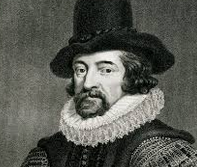
Credulity in arts and opinions is likewise of two kinds viz., when men give too much belief to arts themselves, or to certain authors in any art. The sciences that sway the imagination more than the reason are principally three viz., astrology, natural magic, and alchemy. Alchemy may be compared to the man who told his sons that he had left them gold, buried somewhere in his vineyard; while they by digging found no gold, but by turning up the mould about the roots of the vines procured a plentiful vintage. So the search and endeavours to make gold have brought many useful inventions to light.

A million blockheads looking authoritatively into one man of what you call genius, or noble sense, will make nothing but nonsense out of him and his qualities, and his virtues and defects, if they look till the end of time. He understands them, sees what they are; but that they should understand him, and see with rounded outline what his limits are,-this, which would mean that they are bigger than he, is forever denied them. Their one good understanding of him is that they at last should loyally say, "We do not quite understand thee; we perceive thee to be nobler and wiser and bigger than we, and will loyally follow thee."
All characteristics of material things as they are presented to us in the acts of external perception (e.g. colour) are endowed with the separateness of spatial extension, but it is only when we build up a single connected real world out of all our experiences that the spatial extension, which is a constituent of every perception, becomes a part of one and the same all-inclusive space. ... every material thing can, without changing content, equally well occupy a position in Space different from its present one. This immediately gives us the property of the homogeneity of space which is the root of the conception, Congruence.

He sees as well as you do that courage is not simply one of the virtues, but the form of every virtue at the testing point, which means, at the point of highest reality. A chastity or honesty, or mercy, which yields to danger will be chaste or honest or merciful only on conditions.

The progress of human knowledge depends on maintaining that touch of scepticism even about the most "unquestionable" truths. A century ago, Darwin's theory of evolution by natural selection was regarded as scientifically unshakeable; today, most biologists have their reservations about it. Fifty years ago, Freud's sexual theory of neurosis was accepted by most psychiatrists; today, it is widely recognized that his methods were highly questionable. At the turn of this century, a scientist who questioned Newton's theory of gravity would have been regarded as insane; twenty years later, it had been supplanted by Einstein's theory, although, significantly, few people actually understood it. It seems perfectly conceivable that our descendants of the twenty-second century will wonder how any of us could have been stupid enough to have been taken in by Darwin, Freud or Einstein.

The regime which is destroyed by a revolution is almost always an improvement on its immediate predecessor, and experience teaches that the most critical moment for bad governments is the one which witnesses their first steps toward reform.

Our inventions are wont to be pretty toys, which distract our attention from serious things. They are but improved means to an unimproved end, an end which it was already but too easy to arrive at.

The ideal of human kinship that would brook no injustice or social wrong agave the only meaning and purpose to my life. This ideal I found in anarchism. Not, to be sure, in the distorted image of anarchism presented in the Press and by pseudo-social economists or hounded and persecuted by the powers that be. I found anarchism the moving spirit of beauty-of social harmony-of a free and untrammeled growth of the individual. This became my inspiration and my highest goal.

Bad times, hard times, this is what people keep saying; but let us live well, and times shall be good. We are the times: Such as we are, such are the times.
Following Foucault, we may define the art of life as a practice of suicide, of giving oneself to death, of depsychologizing oneself, of playing.
Militarism, the destroyer of youth, the raper of women, the annihilator of the best in the race, the very mower of life.
A handful of soldiers is always better than a mouthful of arguments.
Wherever a man is, there will be a lie.
There are plenty of good reasons for fighting," I said, "but no good reason ever to hate without reservation, to imagine that God Almighty Himself hates with you, too. Where's evil? It's that large part of every man that wants to hate without limit, that wants to hate with God on its side. It's that part of every man that finds all kinds of ugliness so attractive.
If the gist of the controversy were to be expressed in a single sentence, one might say that the mechanists represented the opposition of the natural sciences to philosophic interference, while the dialecticians stood for the supremacy of philosophy over the sciences and thus reflected the characteristic tendency of Soviet ideological development. The mechanists' outlook might be called negative, while the dialecticians ascribed immense importance to philosophy and regarded themselves as specialists. The mechanists, however, had a much better idea of what science was about. The dialecticians were ignoramuses in this sphere and confined themselves to general formulas about the philosophical need to "generalize" and unify the sciences; on the other hand, they knew more than the mechanists about the history of philosophy. (Eventually the party condemned both camps, and created a dialectical synthesis of both forms of ignorance.)

When the rich make war, it's the poor that die.

To the Deity must be left the task of infinite perfection, while to us poor, weak, incapable mortals, there was no rule of conduct so safe as experience.
The work we desire and prize is not the courage to die decently, but to live manfully.

We believe that the very beginning and end of salvation, and the sum of Christianity, consists of faith in Christ, who by His blood alone, and not by any works of ours, has put away sin, and destroyed the power of death.
Man has ever expressed some symbolical Philosophy of his Being in his Works and Conduct; he announces himself and his Gospel of Nature; he is the Messiah of Nature.
The retinue of a grandee in China or Indostan accordingly is, by all accounts, much more numerous and splendid than that of the richest subjects of Europe.
When superstition is allowed to perform the task of old age in dulling the human temperament, we can say goodbye to all excellence in poetry, in painting, and in music.
Too much straightforwardness is foolish against a shameless person.
Glorious is the risk! - καλος γαρ ο κινδυνος, glorious is the risk that we are able to run of our souls never dying ... Faced with this risk, I am presented with arguments designed to eliminate it, arguments demonstrating the absurdity of the belief in the immortality of the soul; but these arguments fail to make any impression on me, for they are reasons and nothing more than reasons, and it is not with reasons that the heart is appeased. I do not want to die - no; I neither want to die nor do I want to want to die; I want to live for ever and ever and ever. I want this "I" to live - this poor "I" that I am and that I feel myself to be here and now, and therefore the problem of the duration of my soul, of my own soul, tortures me.
CivilSimian.com created by AxiomaticPanic, CivilSimian, Kalokagathia