


9 months 1 week ago
The militarily-patriotic and the romantic-minded everywhere, and especially the professional military class, refuse to admit for a moment that war may be a transitory phenomenon in social evolution. The notion of a sheep's paradise like that revolts, they say, our higher imagination. Where then would be the steeps of life? If war had ever stopped, we should have to re-invent it, on this view, to redeem life from flat degeneration. Reflective apologists for war at the present day all take it religiously. It is a sort of sacrament. It's profits are to the vanquished as well as to the victor; and quite apart from any question of profit, it is an absolute good, we are told, for it is human nature at its highest dynamic.
8 months 3 days ago
Everyone knows what made Berkeley notorious. He said that there were no material objects. He said the external world was in some sense immaterial, that nothing existed save ideas - ideas and their authors. His contemporaries thought him very ingenious and a little mad.
8 months 3 weeks ago
Be not hasty to speak; nor slow to hear!
5 months 1 week ago
To sum up: it is wrong always, everywhere, and for anyone, to believe anything upon insufficient evidence. If a man, holding a belief which he was taught in childhood or persuaded of afterwards, keeps down and pushes away any doubts which arise about it in his mind, purposely avoids the reading of books and the company of men that call into question or discuss it, and regards as impious those questions which cannot easily be asked without disturbing it--the life of that man is one long sin against mankind.

7 months 1 week ago
More generally it is completely unrealistic to claim, as Gould and many others do, that religion keeps itself away from science's turf, restricting itself to morals and values. A universe with a supernatural presence would be a fundamentally and qualitatively different kind of universe from one without. The difference is, inescapably, a scientific difference. Religions make existence claims, and this means scientific claims.
▼
Source
source
When Religion Steps on Science's Turf, Free Inquiry

7 months 3 weeks ago
Its first ethical precept is the identity of means used and aims sought. The ultimate end of all revolutionary social change is to establish the sanctity of human life, the dignity of man, the right of every human being to liberty and wellbeing. Unless this be the essential aim of revolution, violent social changes would have no justification. For external social alterations can be, and have been, accomplished by the normal processes of evolution. Revolution, on the contrary, signifies not mere external change, but internal, basic, fundamental change. That internal change of concepts and ideas, permeating ever-larger social strata, finally culminates in the violent upheaval known as revolution.
10 months 1 week ago
In the course of my fight with the school, I couldn't help but notice that I became a pariah. [...] Once, however, a fellow faculty member, making sure we were unobserved, said to me, "Isaac, the faculty is proud of you for your courage in fighting the administration for academic freedom."I said, "There's no courage involved in it. Don't you know my definition of academic freedom?""No. What's your definition of academic freedom?"I said, "Independent income."

9 months 2 weeks ago
Faith is born and preserved in us by preaching why Christ came, what he brought and gave to us, and the benefits we obtain when we receive him. This happens when Christian liberty - which he gives to us - is rightly taught and we are told in what way as Christians we are all kings and priests and therefore lords of all.
▼
Source
source
p. 70

7 months 3 weeks ago
Nature gets credit which should in truth be reserved for ourselves: the rose for its scent: the nightingale for his song: and the sun for his radiance. The poets are entirely mistaken. They should address their lyrics to themselves, and should turn them into odes of self-congratulation on the excellency of the human mind.
▼
Source
source
Ch. 3: "The Century of Genius", p. 77

5 months 1 week ago
You want praise from people who kick themselves every fifteen minutes, the approval of people who despise themselves. (Is it a sign of self-respect to regret nearly everything you do?)
▼
Source
source
(Hays translation) VIII, 53

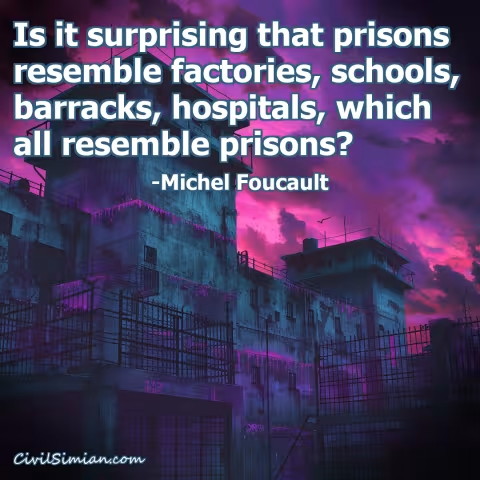

5 months 3 weeks ago
Our feeling about every obligation depends in each case upon the spirit in which the benefit is conferred; we weigh not the bulk of the gift, but the quality of the good-will which prompted it.
▼
Source
source
Line 6
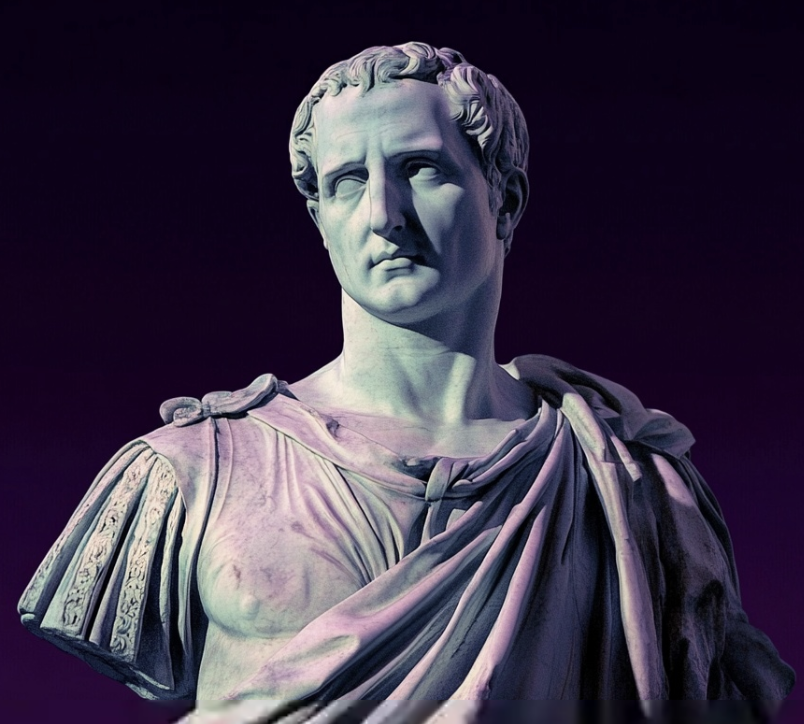
9 months 4 weeks ago
They are such fools that they seem to expect that, though the Republic is lost, their fish-ponds will be safe.
▼
Source
source
Letters to Atticus, Book I, 18.
5 months 1 week ago
How does the light of a star set out and plunge into black eternity in its immortal course? The star dies, but the light never dies; such also is the cry of freedom. Out of the transient encounter of contrary forces which constitute your existence, strive to create whatever immortal thing a mortal may create in this world - a Cry. And this Cry, abandoning to the earth the body which gave it birth, proceeds and labors eternally.

9 months 1 week ago
To discover the various use of things is the work of history.
▼
Source
source
Vol. I, Ch. 1, Section 1, pg. 42.
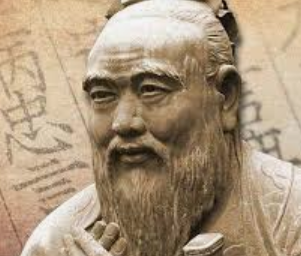
10 months 1 day ago
The Path is not far from man. When men try to pursue a course, which is far from the common indications of consciousness, this course cannot be considered The Path.
10 months 1 week ago
To stand on one leg and prove God's existence is a very different thing from going on one's knees and thanking Him.
5 months 1 day ago
I lie on the beach like a crocodile and let myself be roasted by the sun. I never see a newspaper and don't give a damn for what is called the world.

9 months 1 week ago
Men remain in their present low and primitive condition; but if they should feel the influence of the spring of springs arousing them, they would of necessity rise to a higher and more ethereal life.
▼
Source
source
p. 49
6 months 1 week ago
When we see civilization elated with this declining and decrepit phase of its career, we are reminded of a faded belle who, boasting of her attractions in her fiftieth year, excites at once the remark that she was fairer at twenty-five. So it is with civilization, which, dreaming of perfection and progress, is constantly deteriorating, and which will find but too soon in its industrial achievements new sources of political oppression, crimes and commotions.

9 months 3 weeks ago
If the public thought elevates you above the generality of men, let the other humble you, and hold you in a perfect equality with all mankind, for this is your natural condition.

5 months 3 weeks ago
Psychotherapists ... are dealing with people whose distress arises from what may be termed maya, to use the Hindu-Buddhist word whose exact meaning is not merely 'illusion' but the entire world-conception of a culture, considered as illusion in the strict etymological sense of a play (Latin, ludere). The aim of a way of liberation is not the destruction of maya but seeing it for what it is, or seeing through it. Play is not to be taken seriously, or, in other words, ideas of the world and of oneself which are social conventions and institutions are not to be confused with reality.
▼
Source
source
p. 9
7 months 1 week ago
Even sticking to the higher plane of love, is it so very obvious that you can't love more than one person? We seem to manage it with parental love (parents are reproached if they don't at least pretend to love all their children equally), love of books, of food, of wine (love of Chateau Margaux does not preclude love of a fine Hock, and we don't feel unfaithful to the red when we dally with the white), love of composers, poets, holiday beaches, friends . . . why is erotic love the one exception that everybody instantly acknowledges without even thinking about it?
▼
Source
source
Banishing the Green-Eyed Monster, November 2007.

6 months 2 weeks ago
The irrationality of the "appeal to Nature" is illustrated by a simple thought-experiment. Imagine, fancifully, if starvation, disease, parasitism, disembowelling, asphyxiation and being eaten alive were not endemic to the living world - or such miseries have already been abolished and replaced by an earthly paradise. Would anyone propose there is ethical case for (re)introducing them? Even proposing such a thought-experiment can sound faintly ridiculous.
▼
Source
source
"A Welfare State For Elephants?: A Case Study of Compassionate Stewardship", Relations: Beyond Anthropocentrism, Vol. 3, Iss. 2 (Nov. 2015), p. 162

5 months 1 week ago
For Lenin, the difference between the Social Democracy and Blanquism is reduced to the observation that in place of a handful of conspirators we have a class-conscious proletariat. He forgets that this difference implies a complete revision of our ideas on organization and, therefore, an entirely different conception of centralism and the relations existing between the party and the struggle itself.
5 months 3 weeks ago
Just as the schoolmen philosophized only inside the belief of the church, ... without ever throwing a doubt upon this belief; as authors fill whole folios on the State without calling in question the fixed idea of the State itself; as our newspapers are crammed with politics because they are conjured into the fancy that man was created to be a zoon politicon,-so also subjects vegetate in subjection, virtuous people in virtue, liberals in humanity, etc., without ever putting to these fixed ideas of theirs the searching knife of criticism. Undislodgeable, like a madman's delusion, those thoughts stand on a firm footing, and he who doubts them-lays hands on the sacred!
▼
Source
source
Cambridge 1995, p. 44
6 months 2 weeks ago
I predict we will abolish suffering throughout the living world. Our descendants will be animated by gradients of genetically pre-programmed well-being that are orders of magnitude richer than today's peak experiences.
▼
Source
source
Quoted in Ethics Matters (2012) by Peter and Charlotte Vardy, p. 114 ISBN 978-0334043911

8 months 2 weeks ago
I should have loved freedom, I believe, at all times, but in the time in which we live I am ready to worship it.
▼
Source
source
Book Four, Chapter VII.


10 months 1 week ago
Maman used to say that you can always find something to be happy about.
5 months 1 week ago
It is only after prolonged, and often painful, self-examination that any of us can realise the extent to which our minds are in bondage to words, to phrases, to formulae. We are the children of an age which spends the best energies of its life in the discussion of life, in an atmosphere of deferred fulfillment, continually postponing the act of living to the work of mentally preparing to live. Preoccupied with these preparations, we become skeptical as to all that lies beyond; and if for a moment we pass the boundary which separates the area of discussion from the fact discussed, our minds become troubled and amazed, and we conclude, strangely enough, that we are in a land of moonshine and of dreams.
9 months 1 week ago
Justice as fairness provides what we want.
▼
Source
source
Chapter III, Section 30, pg. 190

9 months 1 week ago
I became my own only when I gave myself to Another.
▼
Source
source
Letters of C. S. Lewis (17 July 1953), para. 2, p. 251 - as reported in The Quotable Lewis (1989), p. 334

9 months 3 weeks ago
Why dost thou not retire like a guest sated with the banquet of life, and with calm mind embrace, thou fool, a rest that knows no care?
▼
Source
source
Book III, lines 938-939 (tr. Bailey)
6 months 3 weeks ago
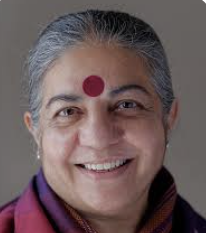
Many conflicts within Third World countries are related to the practice of exploiting resources faster than nature can renew them or diverting them away from where people need them. Dams in every society have become major sources of conflict. As water scarcity grows, neighbors, families turn against each other.

8 months 1 week ago
The zealous never fail to draw political inferences from religious tenets, by which they interest the magistrate in the dispute; and then to the heat of a religious fervour is added the fury of a party zeal. All intercourse is cut off between the parties. They lose all knowledge of each other, tho' countrymen and neighbours, and are therefore easily imposed upon with the most absurd stories concerning each other's opinions and practices. They judge of the hatred of the adverse side by their own. Then fear is added to their hatred; and preventive injuries arise from their fear. The remembrance of the past, the dread of the future, the present ill, will join together to urge them forward to the most violent courses.Such is the manner of proceeding of religious parties towards each other.
▼
Source
source
Volume II, p. 147

9 months 2 weeks ago
I suppose the body to be nothing but a statue or machine made of earth, which God forms with the explicit intention of making it as much as possible like us.
▼
Source
source
Descartes, René (1662). Le Homme (The Treatise on Man), XI:119, CSM I:99 in The Stanford Encyclopedia of Philosophy: "Descartes and the Pineal Gland - 2.1 "The Treatise of Man".
8 months 2 days ago
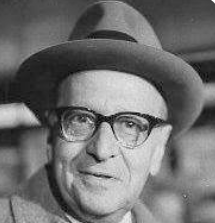
Pragmatism ... reflects with almost disarming candor the spirit of the prevailing business culture, the very same attitude of 'being practical' as counter to which philosophical meditation as such was conceived.
▼
Source
source
p. 52.

6 months 6 days ago
The other big issue is an emotional one. We tend to feel the greatest bonds of solidarity with people that are close to us. There are very few true citizens of the world. We're citizens of individual countries and we really feel the closest bonds to people that live within our nation, and therefore... the nation becomes a kind of social glue. But if you're going to make a national identity compatible with liberalism, it has to be the right kind of national identity. It has to be one that is open to all of the citizens that actually live in the territory of the nation. It can't exclude certain groups by race, by ethnicity, by religious belief and the like, and therefore it needs to be an open identity that is based on essentially liberal ideas.
▼
Source
source
24:46:00

7 months 1 week ago
The future masters of technology will have to be lighthearted and intelligent. The machine easily masters the grim and the dumb.
▼
Source
source
(p. 55)

8 months 1 week ago
Whoever finishes a revolution only halfway, digs his own grave.
▼
Source
source
Act I.
7 months 3 weeks ago
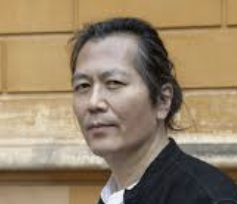
The erotic is never free of secrecy.
9 months 2 weeks ago
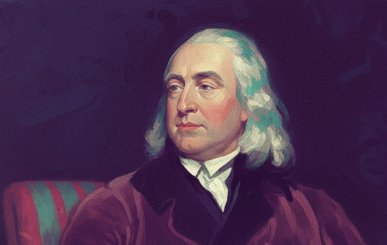
Nature has placed mankind under the governance of two sovereign masters, pain and pleasure. It is for them alone to point out what we ought to do, as well as to determine what we shall do. On the one hand the standard of right and wrong, on the other the chain of causes and effects, are fastened to their throne. They govern us in all we do, in all we say, in all we think: every effort we can make to throw off our subjection, will serve but to demonstrate and confirm it. In words a man may pretend to abjure their empire: but in reality he will remain subject to it all the while. The principle of utility recognizes this subjection, and assumes it for the foundation of that system, the object of which is to rear the fabric of felicity by the hands of reason and of law. Systems which attempt to question it, deal in sounds instead of sense, in caprice instead of reason, in darkness instead of light.
▼
Source
source
Ch. 1: Of the Principle of Utility
7 months 3 weeks ago
The custom of procuring abortions has reached such appalling proportions in America as to be beyond belief... So great is the misery of the working classes that seventeen abortions are committed in every one hundred pregnancies.
▼
Source
source
Mother Earth
6 months 3 weeks ago
I've learned from the Bhagavad Gita and other teachings of our culture to detach myself from the results of what I do, because those are not in my hands. The context is not in your control, but your commitment is yours to make, and you can make the deepest commitment with a total detachment about where it will take you. You want it to lead to a better world, and you shape your actions and take full responsibility for them, but then you have detachment. And that combination of deep passion and deep detachment allows me always to take on the next challenge because I don't cripple myself, I don't tie myself in knots. I function like a free being. I think getting that freedom is a social duty because I think we owe it to each other not to burden each other with prescription and demands. I think what we owe each other is a celebration of life and to replace fear and hopelessness with fearlessness and joy.
9 months 2 weeks ago
Leave the ass burdened with laws behind in the valley. But your conscience, let it ascend with Isaac into the mountain.
▼
Source
source
Chapter 2, Verse 14

5 months 1 week ago
You will next read the new testament. It is the history of a personage called Jesus. Keep in your eye the opposite pretensions 1. of those who say he was begotten by God, born of a virgin, suspended & reversed the laws of nature at will, & ascended bodily into heaven: and 2. of those who say he was a man of illegitimate birth, of a benevolent heart, enthusiastic mind, who set out without pretensions to divinity, ended in believing them, & was Punished capitally for sedition by being gibbeted according to the Roman law which punished the first commission of that offence by whipping, & the second by exile or death in furcâ.
CivilSimian.com created by AxiomaticPanic, CivilSimian, Kalokagathia