


6 months 2 days ago
The Public is an old woman. Let her maunder and mumble.
▼
Source
source
Journal (1835).
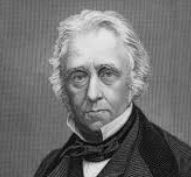
7 months ago
It will hardly be disputed, I suppose, that the department of literature in which the Eastern writers stand highest is poetry. And I certainly never met with any orientalist who ventured to maintain that the Arabic and Sanscrit poetry could be compared to that of the great European nations. But when we pass from works of imagination to works in which facts are recorded and general principles investigated, the superiority of the Europeans becomes absolutely immeasurable. It is, I believe, no exaggeration to say that all the historical information which has been collected from all the books written in the Sanscrit language is less valuable than what may be found in the most paltry abridgments used at preparatory schools in England. In every branch of physical or moral philosophy, the relative position of the two nations is nearly the same.
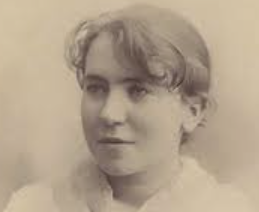
7 months 3 weeks ago
As of old, the most enlightened, even, hope for a miracle from the twentieth-century deity, - suffrage. Life, happiness, joy, freedom, independence, - all that, and more, is to spring from suffrage. In her blind devotion woman does not see what people of intellect perceived fifty years ago: that suffrage is an evil, that it has only helped to enslave people, that it has but closed their eyes that they may not see how craftily they were made to submit.

9 months 1 week ago
Man is a useless passion.
▼
Source
source
Part 4, Chapter 2, III

9 months 3 weeks ago
"For I am holy." When I hear these words I recognize the voice of the Saviour. But shall I take away my own? Certainly when He speaks thus He speaks in inseparable union with His body. But can I say, "I am holy"? If I mean a holiness that I have not received, I should be proud and a liar; but if I mean a holiness that I have received - as it is written: "Be ye holy because I the Lord your God am holy" (Lev. 19:2) - then let the body of Christ say these words. And let this one man, who cries from the ends of the earth, say with his Head and united with his Head: "I am holy." … That is not foolish pride, but an expression of gratitude. If you were to say that you are holy of yourselves, that would be pride; but if, as one of Christ's faithful and as a member of Christ, you say that you are not holy, you are ungrateful.
▼
Source
source
p.428


9 months 1 week ago
Courtship is the time for sowing those seeds which will grow up ten years into domestic hatred.
▼
Source
source
Letter XXVI
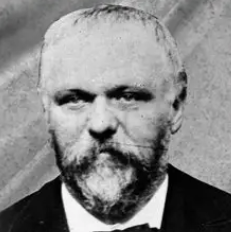
5 months 3 weeks ago
Lenin may be proud of what his comrades are doing; the Russian workers are acquiring immortal glory in attempting the realization of what hitherto had been only an abstract idea.....
▼
Source
source
"For Lenin," Soviet Russia, Official Organ of The Russian Soviet Government Bureau, Vol. II, New York: NY, January-June 1920 (April 10, 1920), p. 356

8 months 1 week ago
"Where do you get those superior airs of yours?" "I've managed to survive, you see, all those nights when I wondered: am I going to kill myself at dawn?"
8 months 1 week ago
We must live, you used to say, as if we were never going to die. - Didn't you know that's how everyone lives, including those obsessed with Death?
9 months 2 weeks ago
The natural philosophy of Democritus and some others, who did not suppose a mind or reason in the frame of things, but attributed the form thereof able to maintain itself to infinite essays or proofs of nature, which they term fortune, seemeth to me... in particularities of physical causes more real and better inquired than that of Aristotle and Plato; whereof both intermingled final causes, the one as a part of theology, and the other as a part of logic, which were the favourite studies respectively of both those persons. Not because those final causes are not true, and worthy to be inquired, being kept within their own province; but because their excursions into the limits of physical causes hath bred a vastness and solitude in that tract.
▼
Source
source
Book VII, 7

8 months 1 week ago
Circumstances (which with some gentlemen pass for nothing) give in reality to every political principle its distinguishing colour, and discriminating effect. The circumstances are what render every civil and political scheme beneficial or noxious to mankind.
9 months 2 weeks ago
If the importation of foreign cattle, for example, were made ever so free, so few could be imported, that the grazing trade of Great Britain could be little affected by it. Live cattle are, perhaps, the only commodity of which the transportation is more expensive by sea than by land.
▼
Source
source
Chapter II
5 months 3 weeks ago
The habit of the religious way of thinking has biased our mind so grievously that we are - terrified at ourselves in our nakedness and naturalness; it has degraded us so that we deem ourselves depraved by nature, born devils.
▼
Source
source
Dover 2005, p. 162
6 months 2 days ago
And yet I will venture to believe that in no time, since the beginnings of Society, was the lot of those same dumb millions of toilers so entirely unbearable as it is even in the days now passing over us. It is not to die, or even to die of hunger, that makes a man wretched; many men have died; all men must die,-the last exit of us all is in a Fire-Chariot of Pain. But it is to live miserable we know not why; to work sore and yet gain nothing; to be heart-worn, weary, yet isolated, unrelated, girt in with a cold universal Laissez-faire: it is to die slowly all our life long, imprisoned in a deaf, dead, Infinite Injustice, as in the accursed iron belly of a Phalaris' Bull! This is and remains forever intolerable to all men whom God has made. Do we wonder at French Revolutions, Chartisms, Revolts of Three Days? The times, if we will consider them, are really unexampled.

8 months 3 weeks ago
Animals are rational; in most of them logos is imperfect, but it is certainly not wholly lacking. So if, as our opponents say, justice applies to rational beings, why should not justice, for us, also apply to animals?
▼
Source
source
3, 18, 1
8 months 4 days ago
All his life he [the American] jumps into the train after it has started and jumps out before it has stopped; and he never once gets left behind, or breaks a leg.
▼
Source
source
"Materialism and Idealism" p. 175 (Hathi Trust)
9 months 2 days ago
To abjure the notion of the "truly human" is to abjure the attempt to divinize the self as a replacement for a divinized world.
▼
Source
source
Contingency, Irony, and Solidarity (1989), p. 35
5 months 1 week ago
The Bank of the United States... is one of the most deadly hostility existing, against the principles and form of our Constitution... An institution like this, penetrating by its branches every part of the Union, acting by command and in phalanx, may, in a critical moment, upset the government. I deem no government safe which is under the vassalage of any self-constituted authorities, or any other authority than that of the nation, or its regular functionaries. What an obstruction could not this bank of the United States, with all its branch banks, be in time of war! It might dictate to us the peace we should accept, or withdraw its aids. Ought we then to give further growth to an institution so powerful, so hostile?
▼
Source
source
Letter to Albert Gallatin, 1803. ME 10:437
9 months 2 weeks ago
A man must be perfectly crazy who, where there is tolerable security, does not employ all the stock which he commands…
▼
Source
source
Chapter I, p. 313 (see opportunity cost).
9 months 2 weeks ago
It is, therefore, a just political maxim, that every man must be supposed a knave: Though at the same time, it appears somewhat strange, that a maxim should be true in politics, which is false in fact. But to satisfy us on this head, we may consider, that men are generally more honest in their private than in their public capacity, and will go greater lengths to serve a party, than when their own private interest is alone concerned. Honour is a great check upon mankind: But where a considerable body of men act together, this check is, in a great measure, removed; since a man is sure to be approved of by his own party, for what promotes the common interest; and he soon learns to despise the clamours of adversaries.
▼
Source
source
Part I, Essay 6: Of The Independency of Parliament; first line often paraphrased as "It is a just political maxim, that every man must be supposed a knave."

8 months 2 weeks ago
The last thing abandoned by a party is its phraseology, because among political parties, as elsewhere, the vulgar make the language, and the vulgar abandon more easily the ideas that have been instilled into it than the words that it has learnt. France Before The Consulate, Chapter I: "How the Republic was ready to accept a master", in Memoir, Letters, and Remains, Vol I (1862), p. 266 Variant translation: The last thing a political party gives up is its vocabulary. This is because, in party politics as in other matters, it is the crowd who dictates the language, and the crowd relinquishes the ideas it has been given more readily than the words it has learned.
▼
Source
source
As quoted in The Viking book of Aphorisms : A Personal Selection (1962) by W. H. Auden, and Louis Kronenberger, p. 306. Variant translation: The last thing that a party abandons is its language.
9 months 3 weeks ago
Yet God hath not only granted these faculties, by which we may bear every event without being depressed or broken by it, but like a good prince and a true father, hath placed their exercise above restraint, compulsion, or hindrance, and wholly within our own control.
▼
Source
source
Book I, ch. 6, 40.

7 months 3 weeks ago
No period of history has ever been great or ever can be that does not act on some sort of high, idealistic motives, and idealism in our time has been shoved aside, and we are paying the penalty for it.
▼
Source
source
Ch. 32, January 13, 1944.
10 months 1 day ago
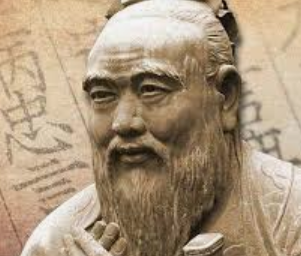
Let the superior man never fail reverentially to order his own conduct, and let him be respectful to others and observant of propriety: then all within the four seas, all men are brothers. What has the superior man to do with being distressed because he has no brothers?
8 months 3 days ago
The revolution in scientific ideas just mentioned is primarily logical. It is due to recognition that the very method of physical science, with its primary standard units of mass, space, and time, is concerned with measurements of relations of change, not with individuals as such.
8 months 1 week ago
Anarchy, in its own nature, is an evil of short duration. The more horrible are the mischiefs it inflicts, the more does it hasten to a close.
▼
Source
source
Book 7, Ch. 5
8 months 4 weeks ago
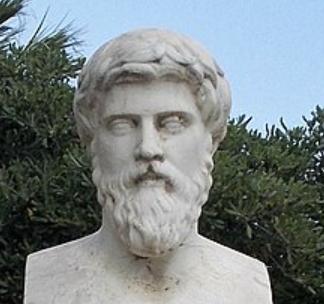
Cato instigated the magistrates to punish all offenders, saying that they that did not prevent crimes when they might, encouraged them. Of young men, he liked them that blushed better than those who looked pale.
▼
Source
source
Cato the Elder
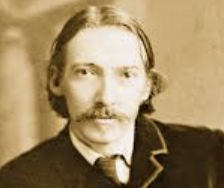
7 months 1 week ago
Decisive actions are often taken in a moment and without any conscious deliverance from the rational parts of man.
▼
Source
source
The Rajah's Diamond, Story of the Young Man in Holy Orders.
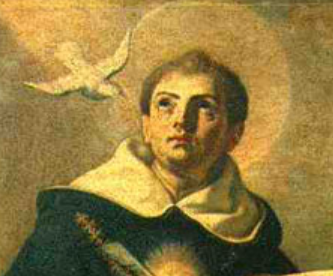
9 months 4 weeks ago
Reason in man is rather like God in the world.
▼
Source
source
Opuscule II, De Regno On Kingship, c. 1267
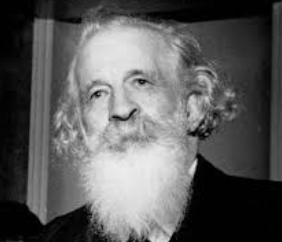
8 months 4 days ago
The mollusk's motto would be: one must live to build one's house, and not build one's house to live in.
8 months 1 week ago
Only those are happy who never think or, rather, who only think about life's bare necessities, and to think about such things means not to think at all. True thinking resembles a demon who muddies the spring of life or a sickness which corrupts its roots. To think all the time, to raise questions, to doubt your own destiny, to feel the weariness of living, to be worn out to the point of exhaustion by thoughts and life, to leave behind you, as symbols of your life's drama, a trail of smoke and blood - all this means you are so unhappy that reflection and thinking appear as a curse causing a violent revulsion in you.
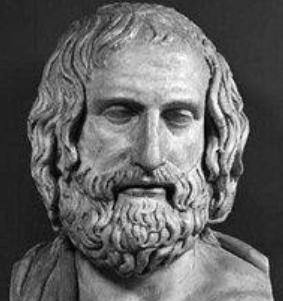
9 months 1 day ago
And since these things are so, we must suppose that there are contained many things and of all sorts in the things that are uniting, seeds of all things, with all sorts of shapes and colours and savours.
▼
Source
source
Frag. B 4, quoted in John Burnet's Early Greek Philosophy, (1920), Chapter 6.
6 months 3 weeks ago
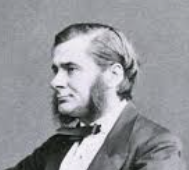
M. Comte's philosophy, in practice, might be compendiously described as Catholicism minus Christianity.
▼
Source
source
On the Physical Basis of Life
9 months 1 week ago
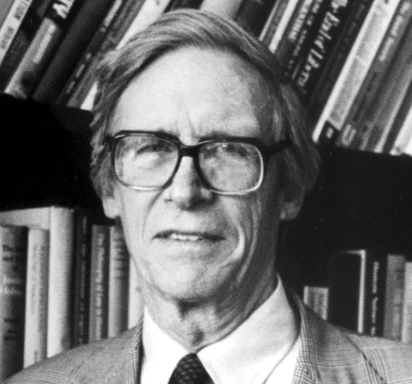
The hazards of the generalized prisoner's dilemma are removed by the match between the right and the good.
▼
Source
source
Chapter IX, Section 86, p. 577
7 months 5 days ago
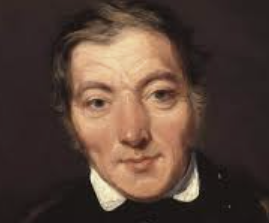
Is it not the interest of the human race, that every one should be so taught and placed, that he would find his highest enjoyment to arise from the continued practice of doing all in his power to promote the well-being, and happiness, of every man, woman, and child, without regard to their class, sect, party, country or colour?
▼
Source
source
Paper Dedicated to the Governments of Great Britain, Austria, Russia, France, Prussia and the United States of America (1841) 17th of "20 Questions to the Human Race"

9 months 3 weeks ago
Nothing is more common than good things: the point in question is only to discriminate them; and it is certain that they are all natural and within our reach and even known to all mankind.
5 months 3 weeks ago
From time immemorial man has been made in such a way that his vision of the world, so long as it has not been instilled under hypnosis, his motivations and scale of values, his actions and intentions are determined by his personal and group experience of life.

9 months 1 week ago
The state is primarily an organization for killing foreigners.
▼
Source
source
Bertrand Russell Speaks His Mind (1960), p. 83
5 months 1 week ago
We must understand well that we do not proceed from a unity of God to the same unity of God again. We do not proceed from one chaos to another chaos, neither from one light to another light, nor from one darkness to another darkness. What would be the value of our life then? What would be the value of all life? But we set out from an almighty chaos, from a thick abyss of light and darkness tangled. And we struggle - plants, animals, men, ideas - in this momentary passage of individual life, to put in order the Chaos within us, to cleanse the abyss, to work upon as much darkness as we can within our bodies and to transmute it into light.
7 months 3 weeks ago
The pornographic body lacks any symbolism. The ritualized body, by contrast, is a splendid stage, with secrets and deities written into it.

7 months 1 week ago
For a good cause, wrongdoing is virtuous.
▼
Source
source
Maxim 207

6 months 2 weeks ago
Not everything in religion is precious or deserving of reverence. There is an inheritance of anthropocentrism, the ugly fantasy that the Earth exists to serve humans, which most secular humanists share. There is the claim of religious authorities, also made by atheist regimes, to decide how people can express their sexuality, control their fertility and end their lives, which should be rejected categorically. Nobody should be allowed to curtail freedom in these ways, and no religion has the right to break the peace.

9 months 1 week ago
I find the Englishman to be him of all men who stands firmest in his shoes. They have in themselves what they value in their horses, - mettle and bottom.
▼
Source
source
Manners

9 months 1 week ago
The process is so complicated that it offers ever so many occasions for running abnormally.
▼
Source
source
Vol. II, Ch. XXI, p. 500.
CivilSimian.com created by AxiomaticPanic, CivilSimian, Kalokagathia