


5 months 1 week ago
We shall divert through our own Country a branch of commerce which the European States have thought worthy of the most important struggles and sacrifices, and in the event of peace... we shall form to the American union a barrier against the dangerous extension of the British Province of Canada and add to the Empire of liberty an extensive and fertile Country thereby converting dangerous Enemies into valuable friends.

9 months 2 weeks ago
For truth itself does not have the privilege to be employed at any time and in every way; its use, noble as it is, has its circumscriptions and limits.
▼
Source
source
Ch. 13


9 months 3 weeks ago
She is the sum of nature's universe.To her perfection all of beauty tends.
▼
Source
source
Chapter XIV, lines 49-50 (tr. Barbara Reynolds)

7 months 4 weeks ago
Use harms and even destroys beauty. The noblest function of an object is to be contemplated.
▼
Source
source
Niebla [Mist]

9 months 1 week ago
The church is in its major part an opponent still of progress and improvement in all the ways that diminish suffering in the world, because it has chosen to label as morality a certain narrow set of rules of conduct which have nothing to do with human happiness; and when you say that this or that ought to be done because it would make for human happiness, they think that has nothing to do with the matter at all. "What has human happiness to do with morals? The object of morals is not to make people happy."
▼
Source
source
"How The Churches Have Retarded Progress"

9 months 2 weeks ago
I would advise no one to send his child where the Holy Scriptures are not supreme. Every institution that does not unceasingly pursue the study of God's word becomes corrupt. Because of this we can see what kind of people they become in the universities and what they are like now. Nobody is to blame for this except the pope, the bishops, and the prelates, who are all charged with training young people. The universities only ought to turn out men who are experts in the Holy Scriptures, men who can become bishops and priests, and stand in the front line against heretics, the devil, and all the world. But where do you find that? I greatly fear that the universities, unless they teach the Holy Scriptures diligently and impress them on the young students, are wide gates to hell.
▼
Source
source
To the Christian Nobility of the German States (1520), translated by Charles M. Jacobs, reported in rev. James Atkinson, The Christian in Society, I (Luther's Works, ed. James Atkinson, vol. 44), p. 207

9 months 1 week ago
The Guide sang: The new age, the new art, the new ethic and thought, And fools crying, Because it has begun It will continue as it has begun! The wheel runs fast, therefore the wheel will run Faster for ever. The old age is done, We have new lights and see without the sun. (Though they lay flat the mountains and dry up the sea, Wilt thou yet change, as though God were a god?)
▼
Source
source
Pilgrim's Regress 186-187

9 months 1 week ago
... the fight against suffering must be considered a duty, while the right to care for the happiness of others must be considered a privilege confined to the close circle of their friends. ... Pain, suffering, injustice, and their prevention, these are the eternal problems of public morals, the 'agenda' of public policy ...
▼
Source
source
Vol. 2, Ch. 24 "Oracular Philosophy and the Revolt against Reason"
6 months 5 days ago
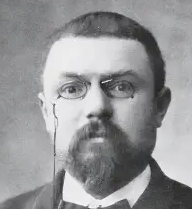
The mathematician is born, not made.
8 months 3 days ago
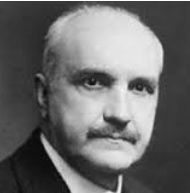
Experience has repeatedly confirmed that well-known maxim of Bacon's that "a little philosophy inclineth a man's mind to atheism, but depth in philosophy bringeth men's minds about to religion." At the same time, when Bacon penned that sage epigram... he forgot to add that the God to whom depth in philosophy brings back men's minds is far from being the same from whom a little philosophy estranges them.
▼
Source
source
Ch. I

7 months 3 weeks ago
The Outsider is always unhappy, but he is an agent that ensures the happiness for millions of 'Insiders'.
▼
Source
source
Chapter Seven, The Great Synthesis…

6 months 3 weeks ago
Now who are the individuals who are the greatest benefactors of the living generation of mankind? I should say: Confucius and Lao-Tse; the Buddha; the Prophets of Israel and Judah; Zoroaster, Jesus, Muhammad; and Socrates.
▼
Source
source
Ch. 8: Civilization on Trial
8 months 2 days ago
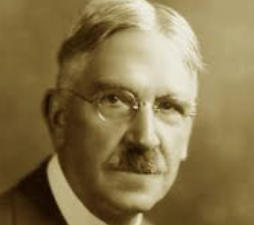
There are in our minds in solution a vast number of emotional attitudes, feelings ready to be re-excited when the proper stimulus arrives, and more than anything else it is these forms, this residue of experience, which, fuller and richer than in the mind if the ordinary man, constitute the artist's capital. What is called the magic of the artist resides in his ability to transfer these values from one field of experience to another, to attach them to objects of our common life, and by his imaginative insight make these objects poignant and momentous. Not colors, not sense qualities as such, are either matter or form, but these qualities as thoroughly imbued, impregnated, with transferred value. And then they are either matter or form according to the direction of our interest.
▼
Source
source
p. 123
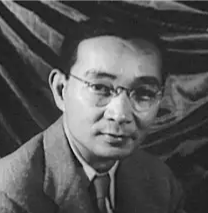
5 months 2 weeks ago
A reasonable naturalist then settles down to this life with a sort of animal satisfaction. As Chinese illiterate women put it, "Others gave birth to us and we give birth to others. What else are we to do?".... Life becomes a biological procession and the very question of immortality is sidetracked. For that is the exact feeling of a Chinese grandfather holding his grandchild by the hand and going to the shops to buy some candy, with the thought that in five or ten years he will be returning to his grave or to his ancestors. The best that we can hope for in this life is that we shall not have sons and grandsons of whom we need to be ashamed.
▼
Source
source
p. 23

7 months 3 weeks ago
The materialists say, it is by means of a series of straight lines more or less perfect that one imagines the perfect straight line as an ideal limit. That is right, but the progression in itself necessarily contains what is infinite; it is in relation to the perfect straight line that one can say that such and such a straight line is less twisted than some other. ... Either one conceives the infinite or one does not conceive at all.
▼
Source
source
p. 87
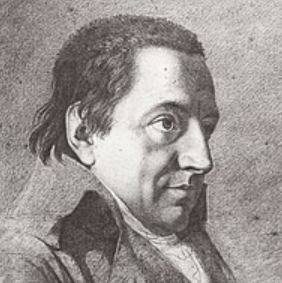
8 months 1 week ago
Am I a free agent, or am I merely the manifestation of a foreign power? Neither appear sufficiently well founded.By the most courageous resolve of my life am I reduced to this! what Power can save me from it, from myself?
▼
Source
source
Jane Sinnett, trans 1846 p. 24
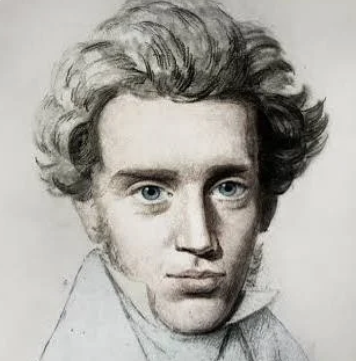
10 months 1 week ago
The similarity between Christ and Socrates consists essentially in their dissimilarity. Just as philosophy begins with doubt, so also a life that may be called human begins with irony.

9 months 1 week ago
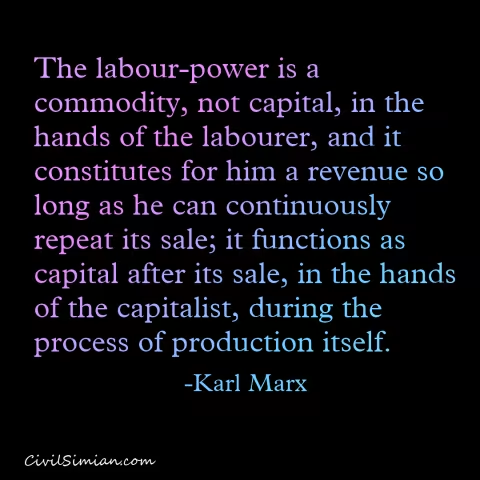
The executive of the modern State is but a committee for managing the common affairs of the whole bourgeoisie.
▼
Source
source
As quoted in the Communist Manifesto (1848) p. 7

9 months 1 week ago
There have been men before ... who got so interested in proving the existence of God that they came to care nothing for God himself... as if the good Lord had nothing to do but to exist. There have been some who were so preoccupied with spreading Christianity that they never gave a thought to Christ.
▼
Source
source
Ch. 9
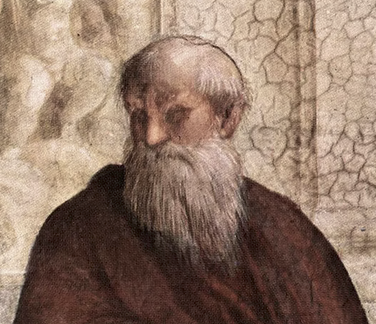
9 months 4 weeks ago
Pleasure and distress, fear and courage, desire and aversion, where have these affections and experiences their seat? Clearly, either in the Soul alone, or in the Soul as employing the body, or in some third entity deriving from both. And for this third entity, again, there are two possible modes: it might be either a blend or a distinct form due to the blending.
8 months 2 days ago
I think that the philosopher must, for his own purposes, carry methodological strictness to an extreme when he is investigating and pursuing his truths, but when he is ready to enunciate them and give them out, he ought to avoid the cynical skill with which some scientists, like a Hercules at the fair, amuse themselves by displaying to the public the biceps of their technique.
▼
Source
source
pp. 19-20
9 months 1 week ago
Imagine yourself as a living house. God comes in to rebuild that house. At first, perhaps, you can understand what He is doing. He is getting the drains right and stopping the leaks in the roof and so on: you knew that those jobs needed doing and so you are not surprised. But presently he starts knocking the house about in a way that hurts abominably and does not seem to make sense. What on earth is He up to? The explanation is that He is building quite a different house from the one you thought of-throwing out a new wing here, putting on an extra floor there, running up towers, making courtyards. You thought you were going to be made into a decent little cottage: but He is building a palace. He intends to come and live in it Himself.
▼
Source
source
Book IV, Chapter 9, "Counting the Cost"
9 months 1 week ago
When communist workmen associate with one another, theory, propaganda, etc., is their first end. But at the same time, as a result of this association, they acquire a new need - the need for society - and what appears as a means becomes an end. You can observe this practical processing its most splendid results whenever you see French socialist workers together. Such things as smoking, drinking, eating, etc., are no longer means of contact or means that bring together. Company, association, and conversation, which again has society as its end, are enough for them; the brotherhood of man is on mere phase with them, but a fact of life, and the nobility of man shines upon us from their work-hardened bodies.
▼
Source
source
"The Meaning of Human Requirements" p.99-100,The Marx-Engels Reader

6 months 6 days ago
The End of History was never linked to a specifically American model of social or political organisation. Following Alexandre Kojève, the Russian-French philosopher who inspired my original argument, I believe that the European Union more accurately reflects what the world will look like at the end of history than the contemporary United States. The EU's attempt to transcend sovereignty and traditional power politics by establishing a transnational rule of law is much more in line with a "post-historical" world than the Americans' continuing belief in God, national sovereignty, and their military.
▼
Source
source
In "The history at the end of history", The Guardian
8 months 3 days ago
The way in which a society organizes the life of its members ... is one "project" of realization among others. But once the project has become operative in the basic institutions and relations, it tends to become exclusive and to determine the development of the society as a whole.
▼
Source
source
p. xlviii

9 months 3 weeks ago
Why dost thou not retire like a guest sated with the banquet of life, and with calm mind embrace, thou fool, a rest that knows no care?
▼
Source
source
Book III, lines 938-939 (tr. Bailey)
8 months 3 days ago
Domination has its own aesthetics, and democratic domination has its democratic aesthetics.
▼
Source
source
p. 65

9 months 1 week ago
No man can have society upon his own terms. If he seeks it, he must serve it too.
▼
Source
source
1833


9 months 6 days ago
A philosopher is a man who has to cure many intellectual diseases in himself before he can arrive at the notions of common sense.
▼
Source
source
p. 44e
8 months 1 week ago
I shall in no time forget that moment. We felt as if we had had in our souls a clear passing glimpse into this wondrous World.
9 months 1 week ago
God made us: invented us as a man invents an engine. A car is made to run on petrol, and it would not run properly on anything else. Now God designed the human machine to run on Himself.
▼
Source
source
Book II, Chapter 3, "The Shocking Alternative"
6 months 2 weeks ago
The mass political movements of the 20th century were vehicles for myths inherited from religion, and it is no accident that religion is reviving now that these movements have collapsed.
9 months 2 weeks ago
As far as physicians go, chance is more valuable than knowledge.
▼
Source
source
Ch. 37

9 months 1 day ago
At one level, this movement on behalf of oppressed farm animals is emotional...Yet the movement is also the product of a deep intellectual ferment pioneered by the Princeton scholar Peter Singer...This idea popularized by Professor Singer - that we have ethical obligations that transcend our species - is one whose time appears to have come...What we're seeing now is an interesting moral moment: a grass-roots effort by members of one species to promote the welfare of others...animal rights are now firmly on the mainstream ethical agenda.
▼
Source
source
Nicholas Kristof, "Humanity Even for Nonhumans," in The New York Times (8 April 2009).

1 year 1 month ago
A common goal...
Issue:
Because of subgrouping, physical separation, different types of genetics and other cultural factors, as well as limited isolation people subjectively deviate from their universal human necessity. They become aware of it when they are exposed to difference regularly.
Solution:
With controlled information delivery, as well as a clear ideological goal like universality, we can clear away the noise of chaos to understand deterministic goals directly.
7 months 3 weeks ago
Exploitation and manipulation produce boredom and triviality; they cripple man, and all factors that make man into a psychic cripple turn him also into a sadist or a destroyer. This position will be characterized by some as "overoptimistic," "utopian," or "unrealistic." In order to appreciate the merits of such criticism a discussion of the ambiguity of hope and the nature of optimism and pessimism seems called for.
▼
Source
source
p. 483
9 months 2 weeks ago
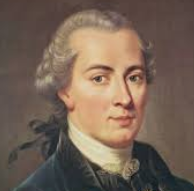
I freely admit that the remembrance of David Hume was the very thing that many years ago first interrupted my dogmatic slumber and gave a completely different direction to my researches in the field of speculative philosophy.
5 months 1 week ago
The Pythagoreans called the monad "intellect" because they thought that intellect was akin to the One; for among the virtues, they likened the monad to moral wisdom; for what is correct is one. And they called it "being," "cause of truth," "simple," "paradigm," "order," "concord," "what is equal among the greater and the lesser," "the mean between intensity and slackness," "moderation in plurality," "the instant now in time," and moreover they call it "ship," "chariot," "friend," "life," "happiness."
▼
Source
source
On the Monad
9 months 1 week ago
Give all to love; Obey thy heart; Friends, kindred, days, Estate, good fame, Plans, credit, and the muse; Nothing refuse.
▼
Source
source
Give All to Love, st. 1

9 months 1 week ago
Whenever I have read any part of the Vedas, I have felt that some unearthly and unknown light illuminated me. In the great teaching of the Vedas, there is no touch of sectarianism. It is of all ages, climes and nationalities and is the royal road for the attainment of the Great Knowledge. When I am at it, I feel that I am under the spangled heavens of a summer night.
▼
Source
source
Quoted in Bansi Pandit, The Hindu Mind (B & V Enterprises, 1996) p. 307

7 months 1 week ago
The new science of communication is percept, not concept.
▼
Source
source
(p. 259)
5 months 1 day ago
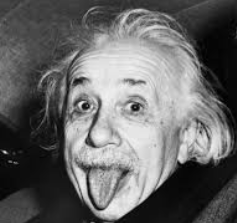
I see a clock, but I cannot envision the clockmaker. The human mind is unable to conceive of the four dimensions, so how can it conceive of a God, before whom a thousand years and a thousand dimensions are as one?
▼
Source
source
From Cosmic Religion: with Other Opinions and Aphorisms (1931), Albert Einstein, pub. Covici-Friede. Quoted in The Expanded Quotable Einstein, Princeton University Press; 2nd edition (May 30, 2000); Page 208,
7 months 2 weeks ago
Probability fractions arise from our knowledge and from our ignorance.
▼
Source
source
Chapter 14, Equipossibility, p. 132.

9 months 1 day ago
Men have made an idol of luck as an excuse for their own thoughtlessness. Luck seldom measures swords with wisdom. Most things in life quick wit and sharp vision can set right.
CivilSimian.com created by AxiomaticPanic, CivilSimian, Kalokagathia