


9 months 1 week ago
The doctrine of the Second Coming teaches us that we do not and cannot know when the world drama will end. The curtain may be rung down at any moment: say, before you have finished reading this paragraph.

8 months 1 day ago
To-day the Enlightenment ideal has been changed into a reality; not only in legislation, which is the mere framework of public life, but in the heart of every individual, whatever his ideas may be, and even if he be a reactionary in his ideas, that is to say, even when he attacks and castigates institutions by which those rights are sanctioned.... The sovereignty of the unqualified individual, of the human being as such, generically, has now passed from being a juridical idea or ideal to be a psychological state inherent in the average man. And note this, that when what was before an ideal becomes a component part of reality, it inevitably ceases to be an ideal. The prestige and the magic that are attributes of the ideal are volatilised.
▼
Source
source
Chap.II: The Rise Of The Historic Level

9 months 5 days ago
The most defenseless tenderness and the bloodiest of powers have a similar need of confession. Western man has become a confessing animal.
▼
Source
source
Vol. I, p. 59

7 months 2 weeks ago
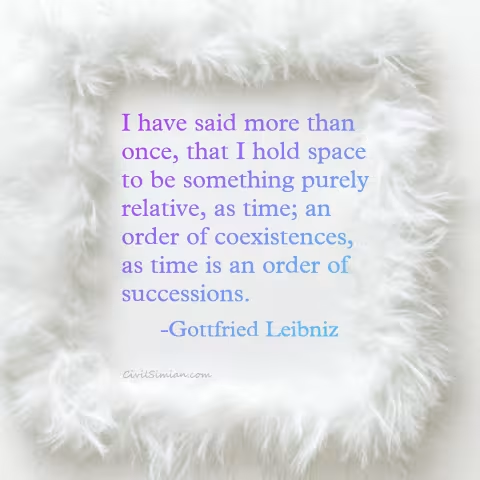
I do not define time, space, place, and motion, as being well known to all. Only I must observe, that the common people conceive those quantities under no other notions but from the relation they bear to sensible objects. And thence arise certain prejudices, for the removing of which it will be convenient to distinguish them into absolute and relative, true and apparent, mathematical and common.
▼
Source
source
Definitions - Scholium

5 months 1 week ago
I advance with obedience to the work, ready to retire from it whenever you become sensible how much better choice it is in your power to make.
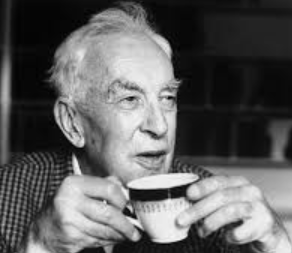
6 months 3 weeks ago
I don't believe a committee can write a book. ... It can, oh, govern a country, perhaps. But I don't believe it can write a book.
▼
Source
source
Interviewed by Christopher Wright (1955). Printed in James Nelson (ed.) Wisdom: Conversations with the Elder Wise Men of Our Day (New York: Norton, 1958) p. 208
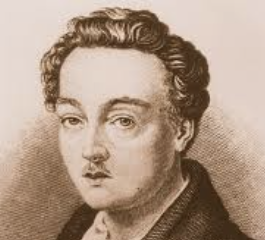
8 months 1 week ago
Revolution is like the daughters of Pelias: it cuts humanity to pieces in order to rejuvenate it.
▼
Source
source
Act II.
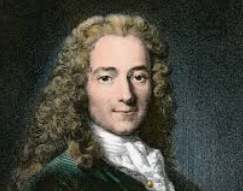
9 months 1 week ago
The best government is a benevolent tyranny tempered by an occasional assassination.
▼
Source
source
Attributed to Voltaire in Likharev, K.K. (2021). On Government and Politics. In: Likharev, K.K. (eds) Essential Quotes for Scientists and Engineers.
6 months 2 weeks ago
In a free system any large, popular, revolutionary movement should be able to bring about its ends by such a voluntary process. As more and more people see how it works more and more will wish to participate in or support it. And so it will grow, without being necessary to force everyone or a majority or anyone into the pattern.
▼
Source
source
Ch. 10 : A Framework for Utopia; Utopian Means and Ends, p. 327

8 months 1 week ago
I am aware that the age is not what we all wish. But I am sure, that the only means of checking its precipitate degeneracy, is heartily to concur with whatever is the best in our time; and to have some more correct standard of judging what that best is, than the transient and uncertain favour of a court. If once we are able to find, and can prevail on ourselves to strengthen an union of such men, whatever accidentally becomes indisposed to ill-exercised power, even by the ordinary operation of human passions, must join with that society, and cannot long be joined, without in some degree assimilating to it. Virtue will catch as well as vice by contact; and the public stock of honest manly principle will daily accumulate. We are not too nicely to scrutinize motives as long as action is irreproachable. It is enough, (and for a worthy man perhaps too much,) to deal out its infamy to convicted guilt and declared apostacy.
9 months ago
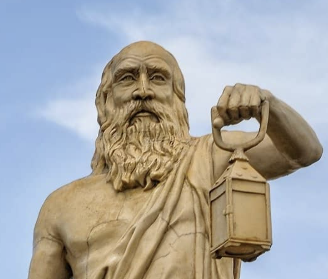
When asked why people give to beggars but not to philosophers, he replied, 'Because they expect they may become lame and blind, but never that they will become philosophers.'
▼
Source
source
Diogenes Laërtius, vi. 56, as reported in Diogenes the Cynic: Sayings and Anecdotes as translated by Robin Hard (Oxford: 2012), p. 18

9 months 3 weeks ago
My mother spoke of Christ to my father, by her feminine and childlike virtues, and, after having borne his violence without a murmur or complaint, gained him at the close of his life to Christ.
▼
Source
source
Reported in Josiah Hotchkiss Gilbert, Dictionary of Burning Words of Brilliant Writers (1895), p. 351

9 months 1 week ago
The advance of liberalism, so-called, in Christianity, during the past fifty years, may fairly be called a victory of healthy-mindedness within the church over the morbidness with which the old hell-fire theology was more harmoniously related. We have now whole congregations whose preachers, far from magnifying our consciousness of sin, seem devoted rather to making little of it. They ignore, or even deny, eternal punishment, and insist on the dignity rather than on the depravity of man. They look at the continual preoccupation of the old-fashioned Christian with the salvation of his soul as something sickly and reprehensible rather than admirable; and a sanguine and 'muscular' attitude, which to our forefathers would have seemed purely heathen, has become in their eyes an ideal element of Christian character. I am not asking whether or not they are right, I am only pointing out the change.
▼
Source
source
Lectures IV and V, "The Religion of Healthy-Mindedness"
7 months 3 days ago
For the first time in history, the human species as a whole has gone into politics. Everyone is in the act, and there is no telling what may come of it.
▼
Source
source
To Jerusalem and Back: A Personal Account (1976), p. 38
10 months 1 week ago
Throughout history there have been peasant rebellions which have followed always the same course. Blindly, the peasants sacked and destroyed, and when members of the "upper classes" fell into their hands, they killed ruthlessly and cruelly, for never in their lives had they been taught gentleness and mercy by those now in their power.

9 months 1 week ago
Scientific theories are distinguished from myths... in being criticizable, and... open to modifications... They can be neither verified nor probabilified.

7 months 1 day ago
Far less import than your belief of whether god exists is what you think your belief entails. Does it direct your behaviour by rules and commandments that are set out before you or does it require you to think them through yourself? Does it require you to try to make sense of the world, or does it give up on sense itself? And I think these are the crucial distinctions. Not whether you add belief in a god to them.

7 months 1 week ago
To be good and lead a good life means to give to others more than one takes from them.
▼
Source
source
Ch. VII

6 months 2 weeks ago
Unlike positive utilitarianism or so-called preference utilitarianism - neither of which can ever be wholly fulfilled - negative utilitarianism seems achievable in full.
▼
Source
source
The Pinprick Argument, BLTC Research, 2005

7 months 1 week ago
Man works when he is partially involved. When he is totally involved he is at play or leisure.

8 months 3 weeks ago
I think that when friendship and perception of kinship ruled everything, no one killed any creature, because people thought the other animals were related to them.
▼
Source
source
2, 22, 1
7 months 3 weeks ago
Language is a skin: I rub my language against the other. It is as if I had words instead of fingers, or fingers at the tip of my words. My language trembles with desire.
▼
Source
source
Talking, in A Lover's Discourse

9 months 1 week ago
The very cannibalism of the counterrevolution will convince the nations that there is only one way in which the murderous death agonies of the old society and the bloody birth throes of the new society can be shortened, simplified and concentrated, and that way is revolutionary terror.
▼
Source
source
"The Victory of the Counter-Revolution in Vienna," Neue Rheinische Zeitung, 7 November 1848.

9 months 1 week ago
Every natural fact is a symbol of some spiritual fact.
▼
Source
source
Language
7 months 3 days ago
The idea that the citizen owes loyalty to a country, a territory, a jurisdiction and all those who reside within it - the root assumption of democratic politics, and one that depends upon the nation as its moral foundation - that idea has no place in the minds and hearts of many who now call themselves citizens of European states.
8 months 1 week ago
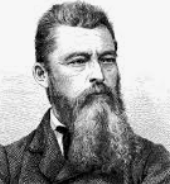
The recognition of the light of reality within the darkness of abstraction is a contradiction - both the affirmation and the negation of the real at one and the same time. The new philosophy, which thinks the concrete not in an abstract but a concrete way, which acknowledges the real in its reality - that is, in a way corresponding to the being of the real as true, which elevates it into the principle and object of philosophy - is consequently the truth of the Hegelian philosophy, indeed of modern philosophy as a whole.
▼
Source
source
Part III, Section 31

9 months 6 days ago
We must plow through the whole of language.
▼
Source
source
Ch. 7 : Remarks on Frazer's Golden Bough, p. 131

7 months 1 week ago
The popularity of the paranormal, oddly enough, might even be grounds for encouragement. I think that the appetite for mystery, the enthusiasm for that which we do not understand, is healthy and to be fostered. It is the same appetite which drives the best of true science, and it is an appetite which true science is best qualified to satisfy.
5 months 1 week ago
And even should the cloud of barbarism and despotism again obscure the science and libraries of Europe, this country remains to preserve and restore light and liberty to them. In short, the flames kindled on the fourth of July, 1776, have spread over too much of the globe to be extinguished by the feeble engines of despotism; on the contrary, they will consume these engines and all who work them.
▼
Source
source
Letter to John Adams, 12 September 1821
9 months 2 weeks ago
The ceaseless labour of your life is to build the house of death.
▼
Source
source
Book I, Ch. 20
7 months 1 week ago
It is often better for a person to recognize a sin than to do a good deed. Recognizing a sin makes a person humble. Doing a good deed often can feed a person's pride.
▼
Source
source
p. 108
6 months 2 weeks ago
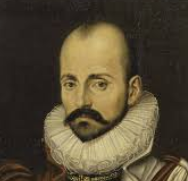
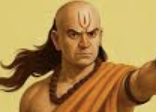
We should always speak what would please the man of whom we expect a favour, like the hunter who sings sweetly when he desires to shoot a deer.

7 months 2 days ago
While the intellectual space does contain universal ideas, definitions, those definitions are detailed a posteriori. Truth corresponds with reality at a minimum.
9 months 1 week ago
Beauty is the main positive form of the aesthetic assimilation of reality, in which aesthetic ideal finds its direct expression...
▼
Source
source
About Beauty
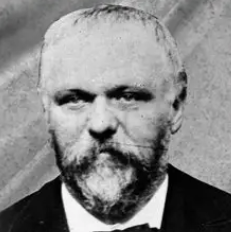
5 months 3 weeks ago
I have no reason to suppose that Lenin gained his ideas from my books; but if that were true, I should be not a little proud of having contribute to the intellectual development of a man who seems to me to be at once the greatest theoretician of socialism since Marx and a statesman whose genius recalls that of Peter the Great.
▼
Source
source
For Lenin, Soviet Russia, Official Organ of The Russian Soviet Government Bureau, Vol. II, New York: NY, January-June 1920 (April 10, 1920), p. 356

7 months 3 weeks ago
In most men, the conscious and the unconscious being hardly ever make contact; consequently the conscious aim is to make himself as comfortable as possible with as little effort as possible. But there are other men, whom we have been calling, for convenience, 'Outsiders', whose conscious and unconscious being keep in closer contact, and the conscious mind is forever aware of the urge to care about 'more abundant life', and care less about comfort and stability and the rest of the notions that are so dear to the bourgeois.
▼
Source
source
Chapter Nine, Breaking the Circuit

7 months 3 weeks ago
There is a quality of life which lies always beyond the mere fact of life; and when we include the quality in the fact, there is still omitted the quality of the quality.
▼
Source
source
Religion in the Making (February 1926), Lecture II: "Religion and Dogma".
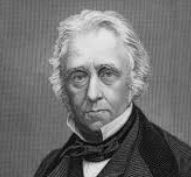
6 months 4 weeks ago
I say that where the public morality is concerned it may be the duty of the State to interfere with the contracts of individuals... It must then, I think, be admitted that, where health is concerned, and where morality is concerned, the State is justified in interfering with the contracts of individuals.
▼
Source
source
Speech in the House of Commons (22 May 1846), quoted in Speeches of the Right Honourable T. B. Macaulay, M.P. (1854), p. 442
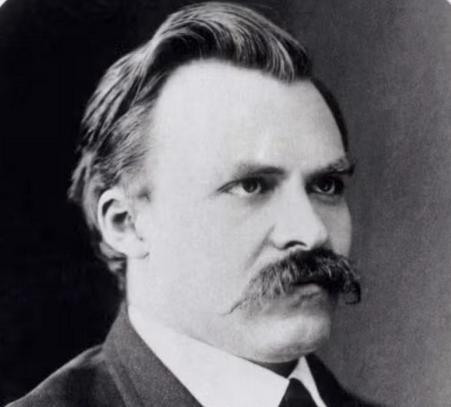
10 months 1 week ago
The liar is a person who uses the valid designations, the words, in order to make something which is unreal appear to be real. He says, for example, "I am rich," when the proper designation for his condition would be "poor." He misuses fixed conventions by means of arbitrary substitutions or even reversals of names. If he does this in a selfish and moreover harmful manner, society will cease to trust him and will thereby exclude him. What men avoid by excluding the liar is not so much being defrauded as it is being harmed by means of fraud. Thus, even at this stage, what they hate is basically not deception itself, but rather the unpleasant, hated consequences of certain sorts of deception. It is in a similarly restricted sense that man now wants nothing but truth: he desires the pleasant, life-preserving consequences of truth. He is indifferent toward pure knowledge which has no consequences; toward those truths which are possibly harmful and destructive he is even hostilely inclined.

8 months 1 week ago
And now once again I asked myself the question: do I love her? And once more I could not answer, that is to say, again, for the hundredth time, I answered that I hated her.
6 months 2 weeks ago
All moral tradeoffs are messy. However, on some fairly modest ethical assumptions, when a severe and irreconcilable conflict of interests occurs, then the interests of the more sentient take precedence over the less sentient. This rule of thumb holds regardless of the age, race or species of the victim. Reply to "Why is David Pearce a vegan and a negative utilitarian given industrial agriculture's decimation of insect populations and, therefore, suffering the greater number of insects than farm animals? Shouldn't insects outweigh farm animals?
▼
Source
source
, Quora, 3 Sept. 2019

CivilSimian.com created by AxiomaticPanic, CivilSimian, Kalokagathia