


10 months 1 week ago
He tried to recall what he had read about the disease. Figures floated across his memory, and he recalled that some thirty or so great plagues known to history had accounted for nearly a hundred million deaths. But what are a hundred million deaths? When one has served in a war, one hardly knows what a dead man is, after a while. And since a dead man has no substance unless one actually sees him dead, a hundred million corpses broadcast through history are no more than a puff of smoke in the imagination.

7 months 2 weeks ago
I have written a good number of drafts and small reflections. They are not waiting for the last touch but for the sunlight to wake them up.
▼
Source
source
B 29
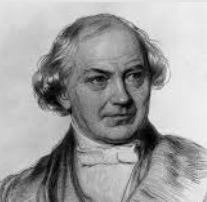
5 months 1 week ago
The Sight cannot decompose a compound colour into simple colours, or distinguish a compound from a simple colour

9 months 3 weeks ago
What then is time? If no one asks me, I know what it is. If I wish to explain it to him who asks, I do not know.
▼
Source
source
XI, 14

9 months 1 week ago
We boil at different degrees.
▼
Source
source
Eloquence
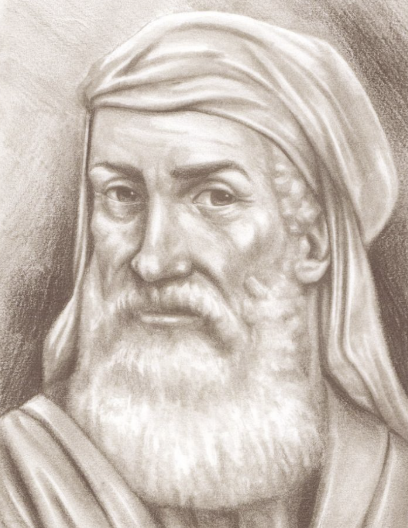
9 months ago
A law there is, an oracle of Doom, Of old enacted by the assembled gods, That if a Daemon-such as live for ages- Defile himself with foul and sinful murder, He must for seasons thrice ten thousand roam Far from the Blest; such is the path I tread, I too a wanderer and exile from heaven.
▼
Source
source
tr. Phillip H. De Lacy and Benedict Einarson. Cf. full quotation at Leonard p. 54-55 fr. 115, as paraphrased in Plutarch's Moralia
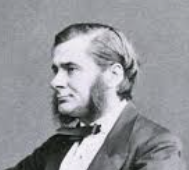
6 months 3 weeks ago
The whole analogy of natural operations furnishes so complete and crushing an argument against the intervention of any but what are termed secondary causes, in the production of all the phenomena of the universe; that, in view of the intimate relations between Man and the rest of the living world; and between the forces exerted by the latter and all other forces, I can see no excuse for doubting that all are co-ordinated terms of Nature's great progression, from the formless to the formed-from the inorganic to the organic-from blind force to conscious intellect and will.
▼
Source
source
Ch.2, p. 128

9 months ago
Let hopes and sorrows, fears and angers be, and think each day that dawns the last you'll see; For so the hour that greets you unforeseen, will bring with it enjoyment twice as keen.
▼
Source
source
Book I, epistle iv, line 12 (translated by John Conington)

10 months 1 week ago
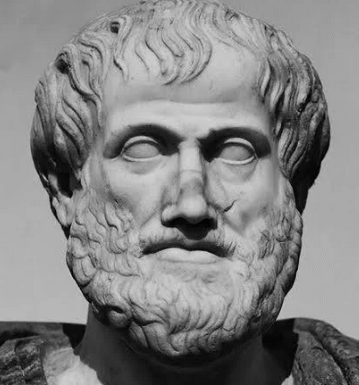
We may assume the superiority ceteris paribus [all things being equal] of the demonstration which derives from fewer postulates or hypotheses—in short from fewer premisses; for... given that all these are equally well known, where they are fewer knowledge will be more speedily acquired, and that is a desideratum. The argument implied in our contention that demonstration from fewer assumptions is superior may be set out in universal form...

9 months 2 weeks ago
Among the celestial bodies that are revolving over our heads, though the motions are not the same, and though the force is not equal, yet they move, and ever have moved, without clashing, and in perfect harmony.
7 months 3 days ago
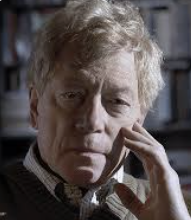
For we are social beings, who can exist and behave as autonomous agents only because we are supported in our ventures by that feeling of primal safety that the bond of society brings. We can envisage no project and no satisfaction on which the eyes of others do not shine. We are joined to those others, and even when they are strangers to us, they are also part of us. It is the indispensable need for membership that brings the national idea to our minds; and there is no rational argument that will expel it, once it is there. Without it, we are homeless; and even if our attitude to home is one of sour disaffection, home is no less necessary to our sense of who we are.
▼
Source
source
'The First Person Plural', in Ronald Beiner (ed.), Theorizing Nationalism (1999), p. 291
9 months 1 day ago
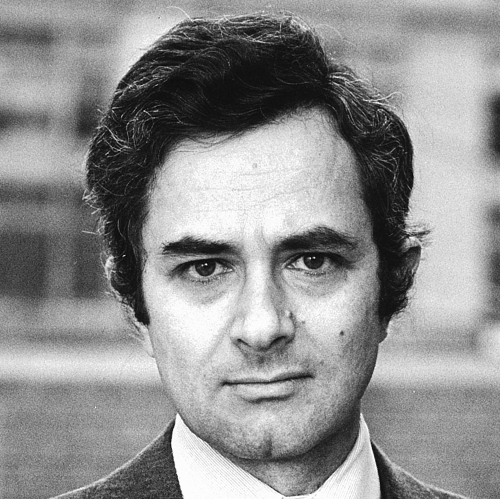
Our own experience provides the basic material for our imagination, whose range is therefore limited. It will not help to try to imagine that one has webbing on one's arms, which enables one to fly around at dusk and dawn catching insects in one's mouth; that one has very poor vision, and perceives the surrounding world by a system of reflected high-frequency sound signals; and that one spends the day hanging upside down by one's feet in an attic. Insofar as I can imagine this (which is not very far), it tells me only what it would be like for me to behave as a bat behaves. But that is not the question. I want to know what it is like for a bat to be a bat. Yet if I try to imagine this, I am restricted to the resources of my own mind, and those resources are inadequate to the task.
▼
Source
source
p. 169.

5 months ago
Besides agreeing with the aims of vegetarianism for aesthetic and moral reasons, it is my view that a vegetarian manner of living by its purely physical effect on the human temperament would most beneficially influence a lot of mankind.
10 months ago
The Superior Man is all-embracing and not partial. The inferior man is partial and not all-embracing.
10 months 1 week ago
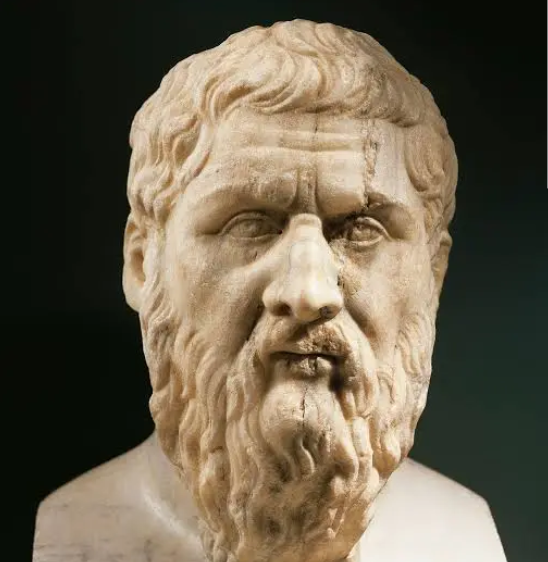
And the true order of going, or being led by another, to the things of love, is to begin from the beauties of earth and mount upwards for the sake of that other beauty, using these steps only, and from one going on to two, and from two to all fair forms to fair practices, and from fair practices to fair notions, until from fair notions he arrives at the notion of absolute beauty, and at last knows what the essence of beauty is.

9 months 2 weeks ago
Not because Socrates said so,... I look upon all men as my compatriots.
▼
Source
source
Book III, Ch. 9. Of Vanity
9 months 1 week ago
God may forgive sins, he said, but awkwardness has no forgiveness in heaven or earth.
▼
Source
source
Society and Solitude

9 months 1 week ago
Friendship is unnecessary, like philosophy, like art, like the universe itself (for God did not need to create). It has no survival value; rather it is one of those things which give value to survival.
5 months 1 week ago
You are not a miserable and momentary body; behind your fleeting mask of clay, a thousand-year-old face lies in ambush. Your passions and your thoughts are older than your heart or brain.

5 months 1 week ago
The Christian Scholastics... might have shown that God Himself said that He had "imprinted an active principle in the elements of matter (Gen. i; Is. lxvi).
▼
Source
source
Ch. V Concerning the Moving Force of Matter

8 months 3 days ago
Functional communication is only the outer layer of the one- dimensional universe in which man is trained to target-to translate the negative into the positive so that he can continue to function, reduced but fit and reasonably well. The institutions of free speech and freedom of thought do not hamper the mental coordination with the established reality. What is taking place is a sweeping redefinition of thought itself, of its function and content. The coordination of the individual with his society reaches into those layers of the mind where the very concepts are elaborated which are designed to comprehend the established reality. These concepts are taken from the intellectual tradition and translated into operational terms-a translation which has the effect of reducing the tension between thought and reality by weakening the negative power of thought.
▼
Source
source
p. 104

7 months 3 weeks ago
But it has been necessary, for the benefit of the social order, to convert religion into a kind of police system, and hence hell. Oriental or Greek Christianity is predominantly eschatological, Protestantism predominantly ethical, and Catholicism is a compromise between the two, although with the eschatological element predominating.

9 months 2 weeks ago
Tell your master that if there were as many devils at Worms as tiles on its roofs, I would enter.
▼
Source
source
Psalm. Ein feste Burg ist unser Gott (translated by Frederic H. Hedge), Reported in Bartlett's Familiar Quotations, 10th ed. (1919).

9 months 1 week ago
Did you not read our articles about the June revolution, and was not the essence of the June revolution the essence of our paper? Why then your hypocritical phrases, your attempt to find an impossible pretext? We have no compassion and we ask no compassion from you. When our turn comes, we shall not make excuses for the terror. But the royal terrorists, the terrorists by the grace of God and the law, are in practice brutal, disdainful, and mean, in theory cowardly, secretive, and deceitful, and in both respects disreputable.
▼
Source
source
The final issue of Neue Rheinische Zeitung (18 May 1849)''Marx-Engels Gesamt-Ausgabe, Vol. VI, p. 503

7 months 1 week ago
And see, a kind, refined lady will devour the carcasses of these animals with full assurance that she is doing right, at the same time asserting two contradictory propositions: First, that she is, as her doctor assures her, so delicate that she cannot be sustained by vegetable food alone, and that for her feeble organism flesh is indispensable; and, secondly, that she is so sensitive that she is unable, not only herself to inflict suffering on animals, but even to bear the sight of suffering. Whereas the poor lady is weak precisely because she has been taught to live upon food unnatural to man; and she cannot avoid causing suffering to animals - for she eats them.
▼
Source
source
Ch. IX

9 months 1 week ago
The strangest mores of the most of-the-way societies will, in spite of everything, be relatively comprehensible to the person who has a flesh-and-blood knowledge of man's needs, anxieties, and hopes. If, on the other hand, this experience is lacking, he will not even be able to understand the customs of those about him.
▼
Source
source
p. 139

9 months 1 week ago
England and France, the two most civilized nations on earth, who are in contrast to each other because of their different characters, are, perhaps chiefly for that reason, in constant feud with one another. Also, England and France, because of their inborn characters, of which the acquired and artificial character is only the result, are probably the only nations who can be assumed to have a particular and, as long as both national characters are not blended by the force of war, unalterable characteristics. That French has become the universal language of conversation, especially in the feminine world, and that English is the most widely used language of commerce among tradesmen, probably reflects the difference in their continental and insular geographic situation.
▼
Source
source
Kant, Immanuel (1996), page 226

8 months 6 days ago
If someone incessantly drops the word "life," you know he's a sick man.
7 months 1 week ago
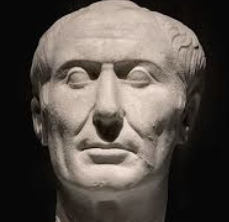
No one should be judge in his own cause.
▼
Source
source
Maxim 545

8 months 3 days ago
Beware of false prophets, which come to you in sheep's clothing, but inwardly they are ravening wolves.
▼
Source
source
Matthew 7:15 (KJV)
9 months 1 week ago
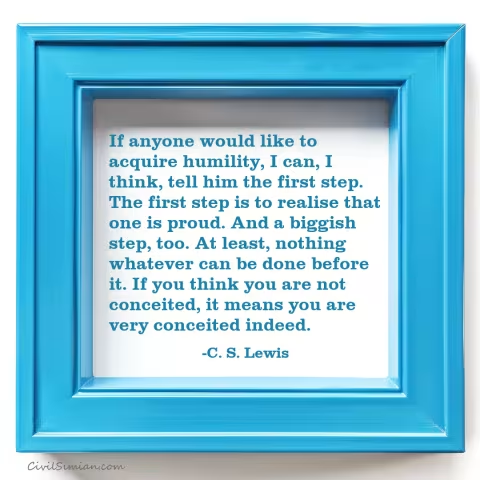
On recent and contemporary literature student's need is least and our help least. They ought to understand it better than we, and if they do not then there is something radically wrong either with them or with the literature. But I need not labour the point. There is an intrinsic absurdity in making current literature a subject of academic study, and the student who wants a tutor's assistance in reading the works of his own contemporaries might as well ask for a nurse's assistance in blowing his own nose.
▼
Source
source
"Our English syllabus", Rehabilitations and Other Essays (1939). Reprinted in Image and Imagination: Essays and Reviews by C. S. Lewis (2013), Cambridge University Press
9 months 6 days ago
"For many, abstract thinking is toil; for me, on good days, it is feast and frenzy." (XIV, 24) Abstract thinking a feast? The highest form of human existence? ... "The feast implies: pride, exuberance, frivolity; mockery of all earnestness and respectability; a divine affirmation of oneself, out of animal plenitude and perfection-all obviously states to which the Christian may not honestly say Yes. The feast is paganism par excellence." (WM, 916). For that reason, we might add that thinking never takes place in Christianity. That is to say, there is no Christian philosophy. There is no true philosophy that could be determined anywhere else than from within itself.
▼
Source
source
p. 5

5 months 3 weeks ago
That you may know that they whom anger possesses are not sane, look at their appearance; for as there are distinct symptoms which mark madmen, such as a bold and menacing air, a gloomy brow, a stern face
7 months 1 week ago
You worldly-minded people are most unfortunate! You are surrounded with sorrows and troubles overhead and underfoot and to the right and to the left, and you are enigmas even to yourselves.
▼
Source
source
p. 37
8 months 6 days ago
When you know quite absolutely that everything is unreal, you then cannot see why you should take the trouble to prove it.

8 months 6 days ago
To be or not to be is not the question where transcendence is concerned. The statement of being's other, of the otherwise than being, claims to state a difference over and beyond that which separates being from nothingness - the very difference of the beyond, the difference of transcendence.
▼
Source
source
Otherwise than Being, or Beyond Essence (1974) Chapter I, Section 1.

7 months 3 weeks ago
Everywhere and always, since its very inception, Christianity has turned the earth into a vale of tears; always it has made of life a weak, diseased thing, always it has instilled fear in man, turning him into a dual being, whose life energies are spent in the struggle between body and soul. In decrying the body as something evil, the flesh as the tempter to everything that is sinful, man has mutilated his being in the vain attempt to keep his soul pure, while his body rotted away from the injuries and tortures inflicted upon it.The Christian religion and morality extols the glory of the Hereafter, and therefore remains indifferent to the horrors of the earth. Indeed, the idea of self-denial and of all that makes for pain and sorrow is its test of human worth, its passport to the entry into heaven.

9 months 1 week ago
It is generally admitted that most grown-up people, however regrettably, will try to have a good time.
7 months 3 weeks ago
These terrible sociologists, who are the astrologers and alchemists of our twentieth century.
▼
Source
source
Fanatical Skepticism
5 months 1 week ago
A whale is not a fish in natural history, but it is a fish in commerce and law. A plea that human laws which mention fish do not apply to whales, would be rejected at once by an intelligent judge.
8 months 6 days ago
Maybe suffering has no more justification than life.

9 months 1 day ago
He who abhors and shuns the light of the Sun, He who refuses to behold with respect the living creation of God, He who leads the good to wickedness, He who makes the meadows waterless and the pastures desolate, He who lets fly his weapon against the innocent, An enemy of my faith, a destroyer of Thy principles is he, O Lord!
▼
Source
source
Ahunuvaiti Gatha; Yasna 32, 10.
CivilSimian.com created by AxiomaticPanic, CivilSimian, Kalokagathia