
5 months 1 week ago
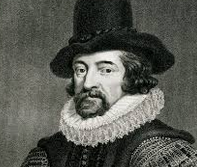
One of the simplest and broadest aspects under which to view the physical world, is that of a system of final causes, or, on the other hand, of initial or effective causes. Bacon, having it in view to extend our power over nature, adopted the latter. He took firm hold of the idea of causation (in the common sense of the word) as contrasted with that of design, refusing to mix up the two ideas in one inquiry, and denouncing such traditional interpretations of facts, as did but obscure the simplicity of the aspect necessary for his purpose. He saw what others before him might have seen in what they saw, but who did not see as he saw it. In this achievement of intellect, which has been so fruitful in results, lie his genius and his fame.
▼
Source
source
John Henry Newman, A Grammar of Assent (London: Burns, Oates, & Co., 1870), p. 366
CivilSimian.com created by AxiomaticPanic, CivilSimian, Kalokagathia