

4 months 2 weeks ago
War is not a courtesy but the most horrible thing in life; and we ought to understand that, and not play at war. We ought to accept this terrible necessity sternly and seriously. It all lies in that: get rid of falsehood and let war be war and not a game. As it is now, war is the favourite pastime of the idle and frivolous.
▼
Source
Bk. X, ch. 25

4 months 2 weeks ago
Society did not recognize philosophy or the right of philosophizing. There was no harmony between philosophy and society. The philosophers were very far from being exponents of society or of parties. They defended the interests of philosophy and of nothing else. In doing this, they believed indeed that they were defending the highest interests of mankind. The exoteric teaching was needed for protecting philosophy. It was the armor in which philosophy had to appear. It was needed for political reasons. It was the form in which philosophy became visible to the political community. It was the political aspect of philosophy. It was "political" philosophy.

4 months 2 weeks ago
Let me never fall into the vulgar mistake of dreaming that I am persecuted whenever I am contradicted.
▼
Source
November 8, 1838

4 months 2 weeks ago
There is a way in which the movements of the sixties and early seventies are set up as models of activism for young people today. Incredibly dramatic movements from that era remain etched in our national memory, whether we experienced them or not, the student movement, the Black Power Movement, movements of Chicanos, Native Americans, Asian Americans. Many young people are led to romanticize the participants and the strategies and styles of those movements. You don’t necessarily consider how hard it was to organize.

4 months 2 weeks ago
Who does not believe in Fate proves that he has not lived.
4 months 2 weeks ago
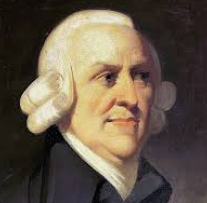
The statesman who should attempt to direct people in what manner they ought to employ their capitals, would not only load himself with a most unnecessary attention, but assume an authority which could safely be trusted, not only to no single person, but to no council or senate whatever, and which would nowhere be so dangerous as in the hands of a man who had folly and presumption enough to fancy himself fit to exercise it.
▼
Source
Chapter II
4 months 2 weeks ago
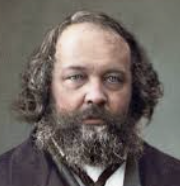
If there is a devil in human history, that devil is the principle of command. It alone, sustained by the ignorance and stupidity of the masses, without which it could not exist, is the source of all the catastrophes, all the crimes, and all the infamies of history.
▼
Source
"On the Program of the Alliance" (1871), in Bakunin on Anarchy (1971), translated and edited by Sam Dolgoff | Variant translation: If there is a devil in history, it is the power principle. | As quoted in the leader to the film [https://www.youtube.com/wa
4 months 2 weeks ago
The death of Alexander (323 BC) quickened this process of decay. The boy-emperor, barbarian though he remained after all of Aristotle’s tutoring, had yet learned to revere the rich culture of Greece, and had dreamed of spreading that culture through the Orient in the wake of his victorious armies.... But he had underrated the inertia and resistance of the Oriental mind, and the mass and depth of Oriental culture. It was only a youthful fancy, after all, to suppose that so immature and unstable a civilization as that of Greece could be imposed upon a civilization immeasurably more widespread, and rooted in the most venerable traditions. The quantity of Asia proved too much for the quality of Greece.

4 months 2 weeks ago
Human beings act, certainly. But none of them knows why they act as they do. There is a scattering of facts, which can be known and reported. Beyond these facts are the stories that are told. Human beings may behave like puppets, but no one is pulling the strings.
▼
Source
In The Puppet Theatre: Puppetry, Conspiracy and Ouija Boards (p. 136)

4 months 2 weeks ago
Scientific theories are distinguished from myths... in being criticizable, and... open to modifications... They can be neither verified nor probabilified.
4 months 2 weeks ago
Quite often a man goes on for years imagining that the religious teaching that had been imparted to him since childhood is still intact, while all the time there is not a trace of it left in him.
▼
Source
Pt. I, ch. 1
4 months 2 weeks ago
The clarification of our political ideas insensibly changes into and becomes indistinguishable from the history of political ideas.
▼
Source
p. 73
4 months 2 weeks ago
The charming landscape which I saw this morning, is indubitably made up of some twenty or thirty farms. Miller owns this field, Locke that, and Manning the woodland beyond. But none of them owns the landscape. There is a property in the horizon which no man has but he whose eye can integrate all the parts, that is, the poet. This is the best part of these men's farms, yet to this their warranty-deeds give no title. To speak truly, few adult persons can see nature. Most persons do not see the sun. At least they have a very superficial seeing. The sun illuminates only the eye of the man, but shines into the eye and the heart of the child. The lover of nature is he whose inward and outward senses are still truly adjusted to each other; who has retained the spirit of infancy even into the era of manhood. His intercourse with heaven and earth, becomes part of his daily food.
▼
Source
Nature
4 months 2 weeks ago
Why can’t it be simple? If we were only to focus on gender, it would make things so much easier. But of course, it has been this yearning toward simplicity that has racialized feminism as white, that has been responsible for its false universals.
4 months 2 weeks ago
I know several writers, young writers, who tried to publish something and were frustrated, whereupon they wanted to take their lives. I understand that in some way, but it is exceptionally difficult to comfort someone who is so far gone. The most shocking things in life are perhaps the great defeats, and there are many of them, for everyone. When one gets to know people in that situation, one experiences the most of them. I am very often visited by people in complete despair, mostly young, who feel that they have failed. It is quite an extraordinarily important lesson, for there are people for whom it is not easy to go through such a crisis; it is a matter of sensitivity, of nerves, possibly even something inherited. Nevertheless, there are these crises in every social sphere and one must say that, fundamentally, failure merely constitutes the experience of life. That is really not so bad for the one who comprehends everything—what can happen to him? But it hits the ambitious exceptionally hard, those who have a plan for their lives, who think about the future, who have a future. Just because they take everything so seriously, I say to these people, "Go to the cemetery!" and it is right, and the results prove it. It is the only weapon with which to minimize such an essentially tragic situation.... Best of all, go find the grave of a friend! It is perhaps absurd and yet it has not only meaning, but is, as I said, the only way to alleviate a personal drama. One learns in life just about everything but this, how to survive such a crisis. And in literary circles, which are often afflicted in this regard, there is certainly a lot of disappointment.
4 months 2 weeks ago
The tolls for the maintenance of a high road, cannot with any safety be made the property of private persons.
▼
Source
Chapter I, Part III, Article I, p. 786 (See also.. Public-private partnerships).
4 months 2 weeks ago
This contradiction lies here: they wish God, and they wish humanity. They persist in connecting two terms which, once separated, can come together again only to destroy each other. They say in a single breath: "God and the liberty of man," "God and the dignity, justice, equality, fraternity, prosperity of men" — regardless of the fatal logic by virtue of which, if God exists, all these things are condemned to non-existence. For, if God is, he is necessarily the eternal, supreme, absolute master, and, if such a master exists, man is a slave; now, if he is a slave, neither justice, nor equality, nor fraternity, nor prosperity are possible for him. In vain, flying in the face of good sense and all the teachings of history, do they represent their God as animated by the tenderest love of human liberty: a master, whoever he may be and however liberal he may desire to show himself, remains none the less always a master. His existence necessarily implies the slavery of all that is beneath him. Therefore, if God existed, only in one way could he serve human liberty — by ceasing to exist.
4 months 2 weeks ago
The principle of the family was mutual aid; but the principle of society is competition, the struggle for existence, the elimination of the weak and the survival of the strong.
▼
Source
Ch. 2 : On Youth
4 months 2 weeks ago
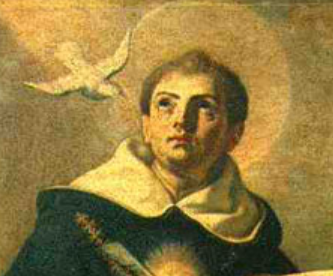
Natural inclinations are present in things from God, who moves all things. So it is impossible for the natural inclinations of a species to be toward evil in itself. But there is in all perfect animals a natural inclination toward carnal union. Therefore it is impossible for carnal union to be evil in itself.
▼
Source
III, 126, 3
4 months 2 weeks ago
Our principles fix what our life stands for, our aims create the light our life is bathed in, and our rationality, both individual and coordinate, defines and symbolizes the distance we have come from mere animality. It is by these means that our lives come to more than what they instrumentally yield. And by meaning more, our lives yield more.
▼
Source
The Nature of Rationality (1993), Ch. V : Instrumental Rationality and Its Limits; Rationality's Imagination, p. 181
4 months 2 weeks ago
I got to know Bertrand Russell in the last years of his life. I knew Karl Popper quite well, and they were a whole class above me in intelligence. It wasn’t that I was jealous, it was that I was trying to grapple with these problems with inadequate weaponry… Popper had this originality, Russell had it, and Einstein had it in spades.
▼
Source
Bryan Magee, The New Statesman, 8 April 2018
4 months 2 weeks ago
The precise reason why abstinence from animal food will be the first act ... of a moral life is admirably explained in the book, The Ethics of Diet [by Howard Williams]; and not by one man only, but by all mankind in the persons of its best representatives during all the conscious life of humanity. ... the moral progress of humanity — which is the foundation of every other kind of progress — is always slow; but ... the sign of true, not casual, progress is its uninterruptedness and its continual acceleration. And the progress of vegetarianism is of this kind. That progress, is expressed both in the words of the writers cited in the above-mentioned book and in the actual life of mankind, which from many causes is involuntarily passing metre and more from carnivorous habits to vegetable food, and is also deliberately following the same path in a movement which shows evident strength, and which is growing larger and larger — viz., vegetarianism.
▼
Source
Ch. X
4 months 2 weeks ago
In 1938 Strauss moved to the United States, where after the war he occupied a chair at Chicago in the same period that Oakeshott was at the LSE. There he produced the remarkable series of works – in form, an oracular retrospect of the history of philosophy from Socrates to Nietzsche, in effect, a systematic political doctrine – which has since nurtured the most distinctive and strong-minded school of American conservatism. There were two principal themes in this oeuvre. A just political order must be grounded in immutable demands of natural right. Nature, however, is inherently unequal. The capacity to discover truth is restricted to a few, and to endure it exhibited by scarcely more. The best regime will therefore reflect differences in human excellence, and be led by an appropriate élite. But although the highest virtue is philosophical contemplation of the truth, this does not mean – contrary to a superficial reading of the Republic – that the just city will be ruled by philosophers. For philosophy gazes without faltering, not only at the necessary conditions of political order, discomfiting as these may be to demotic prejudice, but at the far more terrible realities of cosmic disorder: the absence of any divine authority, the delusion of any common morality, the transience of the earth and its species – every insight that religion must deny and society cannot survive. Unfolded at large, these truths would destroy the protective atmosphere of any civilisation and with it the conditions for the pursuit of philosophy itself. Esoteric wisdom and exoteric opinion must therefore remain distinct, on pain of mutual destruction. Leisured gentlemen instructed in rule – but not raised to truth – by philosophers should uphold a rational order of political stability against levelling temptations. Under their rule, theoretical knowledge could find institutional shelter, without dangerous side-effects on civic practice.
▼
Source
Perry Anderson, "The Intransigent Right: Michael Oakeshott, Leo Strauss, Carl Schmitt, Friedrich von Hayek" (1992)
4 months 2 weeks ago
Thought is all light, and publishes itself to the universe. It will speak, though you were dumb, by its own miraculous organ. It will flow out of your actions, your manners, and your face. It will bring you friendships. It will impledge you to truth by the love and expectation of generous minds. By virtue of the laws of that Nature, which is one and perfect, it shall yield every sincere good that is in the soul, to the scholar beloved of earth and heaven.
4 months 2 weeks ago
I learned a lot from the black arts movement. I loved reading black feminist thinkers on my own (outside of academia)—Audre Lorde, Barbara Smith, Angela Davis, June Jordan, bell hooks, etc.
▼
Source
Marilyn Chin [https://asianreviewofbooks.com/content/marilyn-chin-talks-to-jennifer-wong/ Interview] with Asian Review of Books (2020)
4 months 2 weeks ago
Mr. Burke talked in very high terms of Dr. Adam Smith; praised the clearness and depth of his understanding, his profound and extensive learning, and the vast accession that had accrued to British literature and philosophy from these exertions, and described his heart as being equally good with his head and his manners as peculiarly pleasing. Mr. Smith, he said, told him, after they had conversed on subjects of political economy, that he was the only man, who, without communication, thought on these topics exactly as he did.
▼
Source
Robert Bisset, The Life of Edmund Burke, Volume II (1800), pp. 428-429
4 months 2 weeks ago
Hayek and Nozick both think that talk of distributive justice is misleading, because it suggests the presence of a distributing person or mechanism; in a developed economy there is no such thing, and in a free society, the attempt to institute such a thing would destroy all freedom. Hayek, however, supports this view with an account of the computational impossibility of deciding what to produce and distribute in order to achieve justice, while Nozick is more concerned to emphasize that the state has no right to seize the resources of individuals in order to distribute them according to any principle whatever.
▼
Source
Alan Ryan, Introduction in Justice (1993) edited by Alan Ryan
4 months 2 weeks ago
No feats of heroism are needed to achieve the greatest and most important changes in the existence of humanity; neither the armament of millions of soldiers, nor the construction of new roads and machines, nor the arrangement of exhibitions, nor the organization of workmen's unions, nor revolutions, nor barricades, nor explosions, nor the perfection of aerial navigation; but a change in public opinion. And to accomplish this change no exertions of the mind are needed, nor the refutation of anything in existence, nor the invention of any extraordinary novelty; it is only needful that we should not succumb to the erroneous, already defunct, public opinion of the past, which governments have induced artificially; it is only needful that each individual should say what he really feels or thinks, or at least that he should not say what he does not think.
▼
Source
Ch. 17

4 months 2 weeks ago
In the social body as in every organized body — that is, one in which the parts are arranged in certain relationships to each other relative to a given end — the cessation of vital functions does not come from the annihilation of their parts, but from their displacement and the disturbances of their relationships.
4 months 2 weeks ago
Olympian bards who sung Divine ideas below, Which always find us young And always keep us so.
▼
Source
Ode to Beauty, st. 2
4 months 2 weeks ago
Traditional philosophy's claim to totality, culminating in the thesis that the real is rational, is indistinguishable from apologetics.
▼
Source
p. 7

4 months 2 weeks ago
Philosophy is not a matter of knowledge; it is a matter of understanding, that is to say, of organizing what is known.
▼
Source
[https://books.google.com/books/about/What_I_Believe.html?id=bQnZcFiCz8QC&pg=PA14 What I Believe] (2006), p. 14
4 months 2 weeks ago
The social product grows from year to year. Who is now the true creator of this surplus value which grows wildly and beyond any measure? Who can afford to figure out the profit yielded causally adequate by this immense wealth and the series of economic miracles? In concrete terms: who is the legitimate distributor of the social product and who actually assesses the shares in practical life? As long as the issue is about value, all such questions must above all be formulated as economic questions.
4 months 2 weeks ago
What strikes one here above all is the crudely empirical conception of profit derived from the outlook of the ordinary capitalist, which wholly contradicts the better esoteric understanding of Adam Smith.
▼
Source
Karl Marx (1867) Das Kapital, Volume II, Chapter X, p. 202.
4 months 2 weeks ago
All the efforts of several hundred thousand people, crowded in a small space, to disfigure the land on which they lived; all the stone they covered it with to keep it barren; how so diligently every sprouting blade of grass was removed; all the smoke of coal and naphtha; all the cutting down of trees and driving off of cattle could not shut out the spring, even from the city. The sun was shedding its light; the grass, revivified, was blooming forth, where it was left uncut, not only on the greenswards of the boulevard, but between the flag-stones, and the birches, poplars and wild-berry trees were unfolding their viscous leaves; the limes were unfolding their buds; the daws, sparrows and pigeons were joyfully making their customary nests, and the flies were buzzing on the sun-warmed walls. Plants, birds, insects and children were equally joyful. Only men—grown-up men—continued cheating and tormenting themselves and each other. People saw nothing holy in this spring morning, in this beauty of God's world—a gift to all living creatures—inclining to peace, good-will and love, but worshiped their own inventions for imposing their will on each other.
▼
Source
Ch. 1

4 months 2 weeks ago
If there be in nature such a principle as justice, it is necessarily the only political principle there ever was, or ever will be. All the other so-called political principles, which men are in the habit of inventing, are not principles at all. They are either the mere conceits of simpletons, who imagine they have discovered something better than truth, and justice, and universal law; or they are mere devices and pretences, to which selfish and knavish men resort as means to get fame, and power, and money.
▼
Source
Section VIII, p. 15
4 months 2 weeks ago
Classics which at home are drowsily read have a strange charm in a country inn, or in the transom of a merchant brig.
▼
Source
Voyage to England

4 months 2 weeks ago
Being asked what was pleasant to men, he replied, "Hope."
4 months 2 weeks ago
Morality must be the heart of our existence, if it is to be what it wants to be for us. ... The highest form of philosophy is ethics. Thus all philosophy begins with “I am.” The highest statement of cognition must be an expression of that fact which is the means and ground for all cognition, namely, the goal of the I.
▼
Source
Fichte Studies § 556
4 months 2 weeks ago
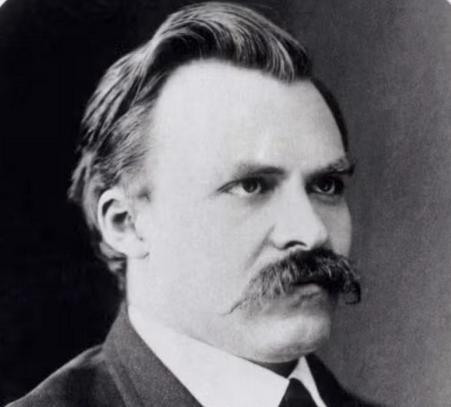
I've seen proof, black on white, that Herr Dr. Förster has not yet severed his connection with the anti-Semitic movement. ... Since then I've had difficulty coming up with any of the tenderness and protectiveness I've so long felt toward you. The separation between us is thereby decided in really the most absurd way. Have you grasped nothing of the reason why I am in the world? ... Now it has gone so far that I have to defend myself hand and foot against people who confuse me with these anti-Semitic canaille; after my own sister, my former sister, and after Widemann more recently have given the impetus to this most dire of all confusions. After I read the name Zarathustra in the anti-Semitic Correspondence my forbearance came to an end. I am now in a position of emergency defense against your spouse's Party. These accursed anti-Semite deformities shall not sully my ideal!!
▼
Source
[http://www.thenietzschechannel.com/correspondence/eng/nlett-1887.htm Draft for a letter] to his sister Elisabeth Förster-Nietzsche (December 1887).
4 months 2 weeks ago
Do not resist the evil-doer and take no part in doing so, either in the violent deeds of the administration, in the law courts, the collection of taxes, or above all in soldiering, and no one in the world will be able to enslave you.
▼
Source
V. "Do not resist the evil-doer" is an allusion to the words of Jesus Christ in Matthew 5:39.

4 months 2 weeks ago
My object in adopting this arrangement is that the truths should be at one time apparent and at another time concealed. Thus we shall not be in opposition to the Divine Will (from which it is wrong to deviate) which has withheld from the multitude the truths required for the knowledge of God, according to the words, "The secret of the Lord is with them that fear Him." (Psalm 25:14)
4 months 2 weeks ago
I wish that life should not be cheap, but sacred. I wish the days to be as centuries, loaded, fragrant.
▼
Source
Considerations by the Way
4 months 2 weeks ago
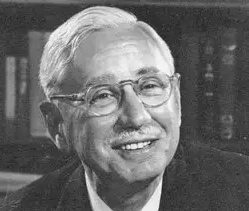
We speak erroneously of "artificial" materials, "synthetics", and so forth. The basis for this erroneous terminology is the notion that Nature has made certain things which we call natural, and everything else is "man-made", ergo artificial. But what one learns in chemistry is that Nature wrote all the rules of structuring; man does not invent chemical structuring rules; he only discovers the rules. All the chemist can do is find out what Nature permits, and any substances that are thus developed or discovered are inherently natural. It is very important to remember that.
▼
Source
"The Comprehensive Man", Ideas and Integrities: A Spontaneous Autobiographical Disclosure (1963), 75-76.
4 months 2 weeks ago
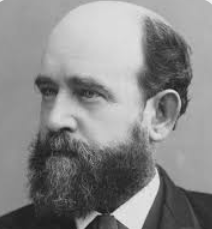
I propose in this inquiry to take nothing for granted, but to bring even accepted theories to the test of first principles, and should they not stand the test, freshly to interrogate facts in the endeavor to discover their law. I propose to beg no question, to shrink from no conclusion, but to follow truth wherever it may lead. Upon us is the responsibility of seeking the law, for in the very heart of our civilization to-day women faint and little children moan. But what that law may prove to be is not our affair. If the conclusions that we reach run counter to our prejudices, let us not flinch; if they challenge institutions that have long been deemed wise and natural, let us not turn back.
▼
Source
Introductory : The Problem
4 months 2 weeks ago
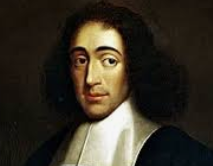
I had hoped that out of so many stories you would at least have produced one or two, which could hardly be questioned, and which would clearly show that ghosts or spectres exist. The case you relate... seems to me laughable. In like manner it would be tedious here to examine all the stories of people, who have written on these trifles. To be brief, I cite the instance of Julius Caesar, who, as Suetonius testifies, laughed at such things and yet was happy. ...And so should all who reflect on the human imagination, and the effects of the emotions, laugh at such notions; whatever Lavater and others, who have gone dreaming with him in the matter, may produce to the contrary.
▼
Source
Letter to Hugo Boxel (October 1674) [https://books.google.com/books?id=Nz1kRKDMbUMC The Chief Works of Benedict de Spinoza] (1891) Tr. R. H. M. Elwes, Vol. 2, Letter 58 (54).
4 months 2 weeks ago
No one, of a surety, wanders farther from the mark than he who fancies to himself that he already understands this marvellous Kingdom, and can, in few words, fathom its constitution, and everywhere find the right path. To no one, who has broken off, and made himself an Island, will insight rise of itself, nor even without toilsome effort. Only to children, or childlike men, who know not what they do, can this happen. Long, unwearied intercourse, free and wise Contemplation, attention to faint tokens and indications; an inward poet-life, practised senses, a simple and devout spirit: these are the essential requisites of a true Friend of Nature; without these no one can attain his wish.
4 months 2 weeks ago
It is only necessary to make war with five things; with the maladies of the body, the ignorances of the mind, with the passions of the body, with the seditions of the city and the discords of families.
▼
Source
As quoted in [http://books.google.com/books?id=aJ8CAAAAQAAJ&pg=RA1-PA331&dq=%22only+necessary+to+make+war+with+five+things%22&ei=8jG1SZKiIIGklQTL0KHHDg The Biblical Museum: A Collection of Notes Explanatory, Homiletic, and Illustrative on the Holy Scriptu
4 months 2 weeks ago
The individual itself as a struggle between parts (for food, space, etc.): its evolution tied to the victory or predominance of individual parts, to an atrophy, a "becoming an organ" of other parts. ... The aristocracy in the body, the majority of the rulers (struggle between cells and tissues). ... Slavery and division of labor: the higher type possible only through the subjugation of the lower, so that it becomes a function.
▼
Source
Sec. 660 : The Body as a Political Structure
4 months 2 weeks ago
If Mormonism is able to endure, unmodified, until it reaches the third and fourth generation, it is destined to become the greatest power the world has ever known.
▼
Source
This quote originates in Thomas J. Yates, "Count Tolstoi and the 'American Religion' ", Improvement Era (February 1939): [https://archive.org/details/improvementera4202unse/page/94/mode/2up 94]. According to Yates, American diplomat Andrew Dickson Wh
CivilSimian.com created by AxiomaticPanic, CivilSimian, Kalokagathia