
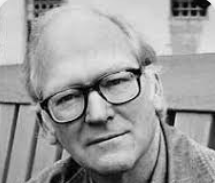
Donald Davidson
Member for
5 months 1 weekDonald Davidson — Radical Interpretation, Anomalous Monism, and the Unity of Mind, Language, and Action (1917–2003)
Donald Herbert Davidson was an American analytic philosopher — born in Springfield, Massachusetts in 1917, educated at Harvard where he studied with C. I. Lewis and Alfred North Whitehead, initially working on ancient philosophy before turning to logic, decision theory, and action theory, a naval aviator during the Second World War who trained spotters and served in the invasions of Sicily, Salerno, and Anzio, completing his PhD at Harvard in 1949, teaching at Stanford from 1951 to 1967 where he helped found a distinguished PhD program, then at Rockefeller University, Chicago, and Princeton, before settling at Berkeley in 1981 where he taught until his death in 2003 — who became, through a series of closely argued essays published between 1963 and his death, one of the most influential analytic philosophers of the twentieth century.
His work unified three domains that had typically been treated separately — the philosophy of action, the philosophy of language, and the philosophy of mind — into a single coherent position: that what it is to act, to speak, and to think were so deeply intertwined that none could be understood independently of the others, and that the key to understanding all three was the concept of rational interpretation — making sense of a creature's behavior by attributing to it a largely rational, largely coherent set of beliefs and desires.
His central concern: that the mental — the realm of beliefs, desires, intentions, and meanings — was irreducibly its own kind of thing, governed by norms of rationality rather than laws of physics, and yet fully part of the natural physical world, causally connected to it without being reducible to it.
Actions, Reasons, and Causes — Where the Philosophy Began
Davidson's 1963 paper "Actions, Reasons, and Causes" was the entry point into what became his lifelong project. The problem: when we explain an action by citing a reason — "She left the room because she was embarrassed" — are we offering a causal explanation? Many philosophers at the time said no: reasons were logical or conceptual connections, not causal ones. Causation was a relation between events under physical descriptions; reasons cited beliefs and desires, not physical events.
Davidson disagreed. He argued that rationalization — explaining action by citing reasons — was a species of causal explanation. The reason why an action occurred was that the agent had a certain belief and a certain desire, and that belief-desire combination caused the action. The conceptual connection between reason and action did not preclude a causal connection between the underlying events. This position — restoring reasons to the causal nexus — became the dominant view in the philosophy of action.
"Davidson's 1963 paper 'Actions, Reasons and Causes' famously argues that rationalization is a species of causal explanation — restoring reasons to the causal nexus of events and making the philosophy of action continuous with the philosophy of mind."
Truth and Meaning — Tarski in the Service of Philosophy of Language
Davidson's 1967 paper "Truth and Meaning" proposed a bold solution to a fundamental problem in semantics: how could a finite creature learn a language with infinitely many sentences? The answer had to invoke compositionality — the meaning of a complex expression was a function of the meanings of its parts. But how to give a rigorous compositional theory of meaning?
Davidson's proposal: adapt Alfred Tarski's formal truth definition — originally developed for formal languages — as a theory of meaning for natural languages. A Tarskian truth theory would give truth conditions for every sentence — specifying, for each sentence, under what conditions it was true — and this, Davidson argued, was all a theory of meaning needed to provide. To know the meaning of a sentence was to know its truth conditions. The approach linked meaning directly to truth, with compositionality built into the structure of the truth theory.
This proposal was immensely fruitful and immensely controversial. Critics argued that truth conditions did not capture meaning fully — two sentences could have the same truth conditions but different meanings. Defenders developed the proposal in multiple directions. Either way, "Truth and Meaning" set the agenda for philosophy of language for decades.
"In 'Truth and Meaning,' Davidson suggested that a truth theory in the style of Tarski could function as a theory of meaning if it adheres to the principles of compositionality and interpretability — linking semantics with the notion of truth rather than mere reference."
Radical Interpretation — Making Sense of Others
Davidson's concept of "radical interpretation" — developed in a series of papers in the 1970s — addressed what was involved in understanding a creature whose language and beliefs were initially entirely unknown. How could an interpreter, starting from scratch, assign meanings to utterances and beliefs to the speakers?
The central problem was that meaning and belief were interdependent: to understand what someone means by their words, you need to know what they believe; to know what they believe, you need to know what their words mean. Davidson's solution was the "Principle of Charity": hold belief as constant as possible while solving for meaning — attribute mostly true, mostly rational beliefs to the speaker, and assign meanings to utterances that make those beliefs mostly correct. Radical interpretation was the procedure by which any genuine understanding of another mind was achieved — not just the exotic case of confronting an alien language but the everyday case of understanding anyone at all.
"Radical interpretation is guided by normative principles and must proceed holistically: the interpreter assigns truth conditions to alien sentences that make native speakers right when plausibly possible — holding belief constant as far as possible while solving for meaning."
Anomalous Monism — Mind Without Reduction
Davidson's 1970 paper "Mental Events" introduced "anomalous monism" — his solution to the mind-body problem — as a position that reconciled three apparently incompatible commitments. First, the principle of causal interaction: mental events causally interact with physical events (my belief that it is raining causes me to take an umbrella). Second, the nomological character of causality: all causal relations are backed by strict laws. Third, the anomalism of the mental: there are no strict psychophysical laws connecting mental event-types to physical event-types.
These three seemed incompatible. If mental-physical causation required strict laws, and there were no such laws, how could mental events causally interact with physical ones? Davidson's answer: individual mental events were identical with individual physical events — every token mental event was some token physical event. This secured causal interaction (two physical events can cause each other without violating any strict mental-physical law) while preserving anomalism (no lawlike connection between mental types and physical types). The mental was not reducible to the physical because there were no bridge laws connecting the mental vocabulary to the physical — yet the mental was not a separate substance from the physical. It was monism without reduction.
"There is just one event that can be characterized both in mental terms and in physical terms. If mental events are physical events, they can at least in principle be explained and predicted, like all physical events, on the basis of physical science. However, according to anomalous monism, events cannot be explained or predicted as described in mental terms — only as described in physical terms."
The Third Dogma — Against Conceptual Schemes
In his 1974 essay "On the Very Idea of a Conceptual Scheme," Davidson attacked what he called the "third dogma of empiricism" — the scheme-content dualism that held that all knowledge was the result of a conceptual scheme being applied to raw experiential data. This framework, he argued, made relativism about truth seem coherent: if different communities applied different conceptual schemes to the same data, they might arrive at incommensurable, equally valid accounts of the world.
Davidson's argument: scheme-content dualism was incoherent. The very notion of an "alternative conceptual scheme" required that we could identify it as such — but identification required interpretation, and interpretation required enough shared truth to make communication possible at all. A system of behavior that we could not interpret as largely rational and largely true would not be a different conceptual scheme but simply incomprehensible behavior. The concept of an incommensurable conceptual scheme was therefore empty — we could not recognize one as such if we encountered it. This was one of the most decisive arguments in late-twentieth-century analytic philosophy against strong forms of relativism and cultural incommensurability.
"A form of activity that cannot be interpreted as language in our language is not speech behavior. Davidson shows that it is not possible to separate truth and meaning so as to allow for incommensurable conceptual schemes — rational behaviour is necessarily tied to the world which causes such behaviour."
The Swampman — What Meaning Requires
Davidson's most vivid thought experiment — the Swampman — illustrated what his theory of meaning required: a creature molecule-for-molecule identical to Davidson himself, created by lightning striking a swamp, would not mean what Davidson meant by any word it uttered, would not recognize any of Davidson's friends, would not remember Davidson's house. The Swampman's apparent behavior would be indistinguishable — but its apparent utterances would be meaningless because they had no causal history that connected them to the world. Meaning required not just the right physical constitution but the right kind of causal engagement with the world over time.
"My replica can't mean what I do by the word 'house,' since the sound 'house' it makes was not learned in a context that would give it the right meaning — or any meaning at all."
— Davidson, the Swampman thought experiment
Legacy — The Coherence of the Mental
Davidson died in Berkeley in 2003, still teaching, still refining his positions, still responding to objections that had accumulated over four decades. His collected essays — "Essays on Actions and Events" (1980), "Inquiries into Truth and Interpretation" (1984), "Subjective, Intersubjective, Objective" (2001), "Truth, Language, and History" (2005) — remain among the most cited and discussed works in analytic philosophy.
On CivSim he belongs alongside Wittgenstein, Quine, and Sellars — the philosophers who most shaped the analytic tradition's understanding of the relationship between thought, language, and world. His challenge to Universal Humanism is the interpretation challenge: that a framework claiming to articulate what all human beings need must be interpretable to those it claims to speak for — and that interpretation is not a neutral or trivial activity but one that necessarily attributes rationality, coherence, and truth to those being interpreted. A framework that makes most of its subjects irrational by its own standards has not described human beings — it has failed to interpret them.
"Objective truth is possible only for a creature that can triangulate on a common cause of the responses of two or more individuals."
— Davidson, "The Second Person" (2001)
CivilSimian.com created by AxiomaticPanic, CivilSimian, Kalokagathia