
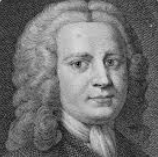
David Hartley
Member for
4 months 2 weeksDavid Hartley — Vibrations, Association, and the First Systematic Psychology of Mind and Body (1705–1757)
David Hartley was an English physician and philosopher — born in 1705 near Halifax, Yorkshire, his mother dying three months after his birth, his father — an Anglican clergyman — dying when David was fifteen, educated at Bradford Grammar School and Jesus College Cambridge, intended for holy orders, declined to subscribe to the Thirty-Nine Articles of the Church of England and turned instead to medicine, practicing at Newark, London, and Bath, where he died in 1757 at fifty-two — who published, in 1749, a two-volume work called "Observations on Man, His Frame, His Duty, and His Expectations" that appeared, as he put it, almost unnoticed at the time but which became one of the most influential books in the history of psychology, philosophy of mind, and moral theory.
Coleridge named his eldest son Hartley Coleridge and was painted holding a copy of the "Observations." Joseph Priestley — the discoverer of oxygen — was one of Hartley's closest advocates and disseminated his theory. James Mill, John Stuart Mill, and Jeremy Bentham all worked within the associationist framework Hartley established. William Godwin and Mary Wollstonecraft drew on Hartley's optimistic view of human perfectibility through association. The modern psychology of learning — from classical conditioning to cognitive associationism — stands in his shadow.
His central concern: to provide a single unified law — association — that could account for all psychological phenomena, from the simplest sensation to the most complex moral feeling, and to ground that law in a physiological theory of how nerves actually worked, borrowed and extended from Newton's speculations about vibrations.
The Newtonian Program — Applying Physics to Mind
Hartley's intellectual ambition was explicitly Newtonian: just as Newton had unified celestial and terrestrial mechanics under the single law of universal gravitation, Hartley proposed to unify all psychological phenomena under the single law of association, grounded in a physical theory of neural vibrations. The program had the grandeur of a unified field theory applied to human nature itself.
His starting point was Newton's suggestion, in the Opticks and Principia, that nervous activity involved vibrations in the "subtle elastic ether" that Newton had postulated to explain the propagation of light and gravity. Hartley extended this speculation: sensations occurred when external stimuli caused vibrations in the minute particles of the nervous substance; these vibrations propagated along the nerves to the brain; and they left behind residual "vibratiuncles" — fainter echoes of the original vibration — that constituted ideas or memories. The physical mechanism was hypothetical — Hartley was clear about this — but it gave the psychological theory a material substrate that previous theories of association had lacked.
"Since therefore sensations are conveyed to the mind by the efficiency of corporeal causes, it seems to me that the powers of generating ideas, and raising them by association, must also arise from corporeal causes, and consequently admit of an explication from the subtle influences of the small parts of matter on each other, as soon as these are sufficiently understood."
— Hartley, Observations on Man
Association — The Single Law of Mind
The psychological heart of Hartley's theory was the law of association: sensations that frequently occur together — synchronously or successively — become associated in the mind, so that the occurrence of one tends to call up the others. This was not original to Hartley — Locke had introduced the "association of ideas" and John Gay had begun to develop it theoretically. What Hartley did was make it the single explanatory principle for the entire range of mental life.
Starting from simple sensations, he showed — in systematic detail — how progressively more complex mental states emerged through association: ideas from sensations, emotions from ideas, memory from repeated association, imagination from recombined memories, reason from the association of ideas with propositions, voluntary action from the association of ideas with muscular movements, moral sentiment from the association of actions with pleasure and pain. Every mental phenomenon, however complex, was in principle analyzable into its component associations — and every apparent innate capacity, instinct, or emotion was in principle derivable from experience through the law of association.
"Just as Newton's law of universal gravitation unified celestial and terrestrial mechanics, Hartley proposed association as the foundational principle accounting for all psychological phenomena, from perception to personality."
Pleasure, Pain, and the Emergence of Moral Feeling
Hartley's account of the emotions followed directly from the vibration theory: pleasure was the result of moderate vibrations, pain of vibrations too violent or too weak to sustain the nervous system. But the account of moral feeling was philosophically more ambitious — and more optimistic — than this mechanical foundation might suggest.
He argued that genuine disinterested moral sentiment existed — that people were capable of genuinely caring about others' welfare independently of any calculation of benefit to themselves. But he also argued that this disinterested sentiment was a developmental achievement: it grew out of the self-regarding feelings through the progressive operation of association over time. The child began in pure self-interest, but the repeated associations of its own welfare with the welfare of others, of its pleasures with the pleasures of those around it, of praise and reward with virtuous action — all of these gradually transformed self-interest into genuine benevolence. Human nature was not innately moral but was capable of becoming so through the right associative history.
The implications were politically and educationally radical: if moral character was the product of associations, then the right social arrangements, the right education, could produce genuinely virtuous, genuinely benevolent human beings. Human perfectibility through environmental reform was not merely a pious hope but a psychological possibility grounded in the science of association.
"He emphatically asserts the existence of pure disinterested sentiment, while declaring it to be a growth from the self-regarding feelings — a developmental account that underwrote the radical educational optimism of later reformers."
Determinism — The Reluctant Conclusion
If all mental states were the product of prior associations, and all associations were ultimately the product of physical vibrations, then voluntary action was itself determined by prior states that were themselves determined by still prior states — an inexorable chain of physical and psychological causation. Hartley arrived at hard determinism, but as he noted, only reluctantly — it was the conclusion forced on him by his own theory when that theory was nearly complete. He could not see how the law of association could be maintained while voluntary action remained genuinely free.
His resolution was religious rather than philosophical: he embedded his determinism within a theology of divine providence, arguing that the same associative processes that determined human behavior were themselves divinely ordered toward the moral and spiritual development of humanity as a whole. Determinism, in Hartley's framework, was not the negation of responsibility but its grounding — a providential mechanism through which the human species was being progressively shaped toward virtue and salvation. This was heterodox enough to deter him from ordination but orthodox enough to sustain his personal religious commitments.
"In the Freewill controversy Hartley took his place as a determinist. It was only with reluctance, and when his speculations were nearly complete, that he came to a conclusion on this subject in accordance with his theory."
Volume II — Duty and Expectations
The second volume of the "Observations on Man" — dealing with human duty and expectations — was less philosophically original than the first but revealed the religious and ethical framework within which Hartley understood his psychological science. He argued that the progressive refinement of human nature through association was oriented toward a final state of union with the divine — a secularized eschatology in which the perfection of moral sentiment was the telos of the associative process. He opposed the doctrine of eternal damnation on the grounds that it was inconsistent with a providentially good Creator.
For Hartley, psychology and theology were continuous: the science of mind was also a theology of human development, and the laws of association were the means by which divine providence worked through natural processes to realize human moral potential. This combination of scientific rigor with religious teleology gave his work an unusual character — neither the secular materialism of Holbach nor the traditional piety of orthodox Christianity, but something distinctively his own.
"Despite the materialistic ontology of Hartley's philosophy, this was all within a framework of deep religiosity — the physical and psychological description of the development of the human mind has at its core a spiritual component and purpose: the development of the human spirit toward salvation."
Legacy — The Associationist Tradition
Hartley's influence was transmitted through several distinct channels. Joseph Priestley condensed and popularized his theory in 1775, stripping out the physiology but preserving the associationist psychology — making it more accessible to the radical Dissenting tradition. James Mill and John Stuart Mill developed associationism as the philosophical foundation of utilitarian political theory: if character was the product of association, then the right social arrangements could produce virtuous citizens. William Godwin's "Political Justice" drew directly on Hartley's optimism about human perfectibility. Coleridge engaged deeply with Hartley before turning against associationism — his extended critique in "Biographia Literaria" was the most philosophically serious challenge to the theory from within the romantic tradition.
In the twentieth century, the associationist tradition Hartley founded was absorbed into behaviorism — Pavlov's conditioned reflexes and Skinner's operant conditioning are Hartley's associations stated in physiological terms. The cognitive revolution challenged behaviorism but did not eliminate associationism: connectionist models of neural networks are the contemporary computational expression of the principle that Hartley formulated from Newton's speculations about vibrations in 1749.
On CivSim he belongs alongside Locke, Hume, and James Mill — the British empiricist tradition that built moral and political theory on psychological foundations. His challenge to Universal Humanism is the developmental optimism challenge: if moral character is produced by association — if benevolence grows from self-interest through the right experiential history — then the design of social institutions and educational environments is not merely a question of justice but of psychology. Universal Humanism cannot merely specify what conditions are required for human flourishing; it must also specify the associative processes through which human beings capable of supporting and sustaining those conditions can reliably be produced.
"Hartley provided names for two fundamental principles: 'vibrations,' uniting world and brain, physics and neurophysiology, and 'association,' the analogue to gravitation, as the foundational principle accounting for all psychological phenomena, from perception to personality. Newton had taken giant steps toward a unified theory of nature; Hartley took the analogous steps toward a unified theory of mind."
CivilSimian.com created by AxiomaticPanic, CivilSimian, Kalokagathia