

2 months 1 week ago
To know what you prefer, instead of humbly saying Amen to what the world tells you you ought to prefer, is to have kept your soul alive.
▼
Source
source
An Inland Voyage (1878), Ch. III, "The Royal Sport Nautique".



5 months 2 weeks ago
When you read God's Word, in everything you read, continually to say to yourself: It is I to whom it is speaking - this is earnestness, precisely this is earnestness. Not a single one of those to whom the cause of Christianity in the higher sense has been entrusted forgot to urge this again and again as most crucial, as unconditionally the condition if you are to come to see yourself in the mirror.
2 months 2 weeks ago
I do feel that evolution is being controlled by some sort of divine engineer. I can't help thinking that. And this engineer knows exactly what he or she is doing and why, and where evolution is headed. That's why we've got giraffes and hippopotami and the clap.
▼
Source
source
On evolution vs. "intelligent design", interviewed by Jon Stewart, The Daily Show

3 months 2 weeks ago
The science of government being, therefore, so practical in itself, and intended for such practical purposes, a matter which requires experience, and even more experience than any person can gain in his whole life, however sagacious and observing he may be, it is with infinite caution that any man ought to venture upon pulling down an edifice which has answered in any tolerable degree for ages the common purposes of society, or on building it up again without having models and patterns of approved utility before his eyes.

5 months 4 days ago
Of our desires some are natural and necessary, others are natural but not necessary; and others are neither natural nor necessary, but are due to groundless opinion.

3 months 4 weeks ago
Not much younger than these (sc. Hermotimus of Colophon and Philippus of Mende) is Euclid, who put together the Elements, collecting many of Eudoxus' theorems, perfecting many of Theaetetus', and also bringing to irrefragable demonstration the things which were only somewhat loosely proved by his predecessors. This man lived in the time of the first Ptolemy. For Archimedes, who came immediately after the first (Ptolemy), makes mention of Euclid: and, further, they say that Ptolemy once asked him if there was in geometry any shorter way than that of the elements, and he answered that there was no royal road to geometry. He is then younger than pupils of Plato but older than Eratosthenes and Archimedes; for the latter were contemporary with one another, as Eratosthenes somewhere says.
▼
Source
source
As quoted by Sir Thomas Little Heath, The Thirteen Books of Euclid's Elements (1908) Vol.1 Introduction and Books I, II p.1, citing Proclus ed. Friedlein, p. 68, 6-20.

4 months 4 weeks ago
Remember that it is not he who gives abuse or blows who affronts, but the view we take of these things as insulting. When, therefore, any one provokes you, be assured that it is your own opinion which provokes you.
▼
Source
source
(20).
1 month 1 week ago
Carnap made a detailed analysis of Heidegger's statement, "Nothing nihilates," in order to show that it is purely verbal, devoid of empirical meaning. (Incidentally, this is the only sentence from existentialist philosophy the majority of contemporary positivists appear familiar with.)
▼
Source
source
Chapter Eight, Logical Empiricism, p. 187

4 months 1 week ago
It is for the sake of order that I seduced Clytemnestra, for the sake of order that I killed my king. I wanted for order to rule and that it rule through me. I have lived without desire, without love, without hope: I made order. Oh! terrible and divine passion!
▼
Source
source
Aegistheus, Act 2

4 months 2 weeks ago
The conception of the necessary unit of all that is resolves itself into the poverty of the imagination, and a freer logic emancipates us from the straitwaistcoated benevolent institution which idealism palms off as the totality of being.
▼
Source
source
p. 9

4 months 2 weeks ago
None shall rule but the humble, And none but Toil shall have.
▼
Source
source
Boston Hymn

5 months 2 weeks ago
But let us not forget this either: it is enough to create new names and estimations and probabilities in order to create in the long run new "things."

4 months 2 weeks ago
If good music has charms to soothe the savage breast, bad music has no less powerful spells for filling the mildest breast with rage, the happiest with horror and disgust. Oh, those mammy songs, those love longings, those loud hilarities! How was it possible that human emotions intrinsically decent could be so ignobly parodied.
▼
Source
source
"Silence is Golden," p. 59
1 week 3 days ago
But here is the "ego" of the Russian revolutionary again! Pirouetting on its head, it once more proclaims itself to be the all-powerful director of history - this time with the title of His Excellency the Central Committee of the Social Democratic Party of Russia.
3 months 1 week ago
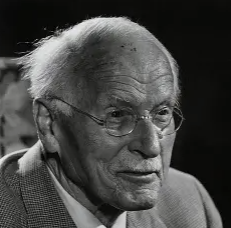
For a woman, the typical danger emanating from the unconscious comes from above, from the "spiritual" sphere personified by the animus, whereas for a man it comes from the chthonic realm of the "world and woman," i.e., the anima projected on to the world.
▼
Source
source
"A Study in the Process of Individuation" (1934) In CW 9, Part I: The Archetypes and the Collective Unconscious. P. 559

4 months 1 week ago
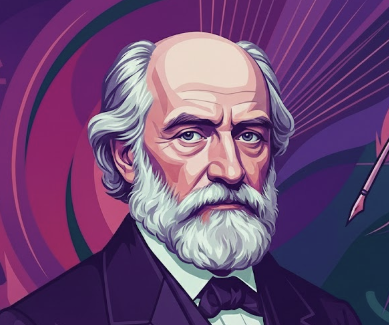
No text in the tradition seems as lucid concerning the way in which the political is becoming worldwide. concerning the irreducibility of the technical and the media in the current of the most thinking thought-and this goes beyond the railroad and the newspapers of the time whose powers were analyzed in such an incomparable way in the Manifesto. And few texts have shed so much light on law. international law. and nationalism.
▼
Source
source
Injunctions of Marx
3 months 1 week ago
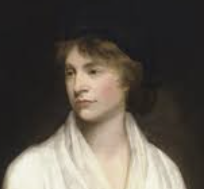
The rights and duties of man thus simplified, it seems almost impertinent to attempt to illustrate truths that appear so incontrovertible: yet such deeply rooted prejudices have clouded reason, and such spurious qualities have assumed the name of virtues, that it is necessary to pursue the course of reason as it has been perplexed and involved in error, by various adventitious circumstances, comparing the simple axiom with casual deviations.Men, in general, seem to employ their reason to justify prejudices, which they have imbibed, they cannot trace how, rather than to root them out. The mind must be strong that resolutely forms its own principles; for a kind of intellectual cowardice prevails which makes many men shrink from the task, or only do it by halves. Yet the imperfect conclusions thus drawn, are frequently very plausible, because they are built on partial experience, on just, though narrow, views.
▼
Source
source
Ch. 1

4 months 1 week ago
If we compare the third-person attitude of someone who simply says how things stand (this is the attitude of the scientist, for example) with the performative attitude of someone who tries to understand what is said to him (this is the attitude of the interpreter, for example), the implications ... become clear. ... First, interpreters relinquish superiority that observers have by virtue of their privileged position, in that they themselves are drawn, at least potentially, into negotiations about the meaning and validity of utterances. By taking part in communicative action, they accept in principle the same status as those whose utterances they are trying to understand. ... It is impossible to decide a priori who is to learn from whom.
▼
Source
source
p. 26
4 months 2 weeks ago
The effect of music is so very much more powerful and penetrating than is that of the other arts, for these others speak only of the shadow, but music of the essence.
▼
Source
source
Vol. I, Ch. II

3 months 1 week ago
The subversive character of truth inflicts upon thought an imperative quality. Logic centers on judgments which are, as demonstrative propositions, imperatives, - the predicative "is" implies an "ought." ... Verification of the proposition involves a process in fact as well as in thought: (S) must become that which it is. The categorical statement thus turns into a categorical imperative; it does not state a fact but the necessity to bring about a fact. For example, it could be read as follows: man is not (in fact) free, endowed with inalienable rights, etc., but he ought to be.
▼
Source
source
pp. 132-133
3 months 1 week ago
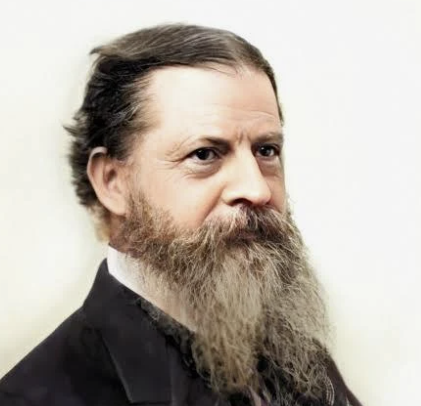
Mere imagination would indeed be mere trifling; only no imagination is mere.
▼
Source
source
Vol. VI, par. 286

4 months 1 week ago
My aim is: to teach you to pass from a piece of disguised nonsense to something that is patent nonsense.
▼
Source
source
§ 464
2 months 3 weeks ago
We distinguish diagrammatic from sentential paper-and-pencil representations of information by developing alternative models of information-processing systems that are informationally equivalent and that can be characterized as sentential or diagrammatic. Sentential representations are sequential, like the propositions in a text. Diagrammatic representations are indexed by location in a plane. Diagrammatic representations also typically display information that is only implicit in sentential representations and that therefore has to be computed, sometimes at great cost, to make it explicit for use. We then contrast the computational efficiency of these representations for solving several.illustrative problems in mathematics and physics.
▼
Source
source
p. 65
4 months 4 days ago
What needs saying is worth saying twice.
▼
Source
source
fr. 25

2 months 1 week ago
Since Sputnik there is no Nature. Nature is an item contained in a man-made environment of satellites and information.

2 months 3 weeks ago
And this in turn makes it plain that the Right Man problem is a problem of highly dominant people. Dominance is a subject of enormous importance to biologists and zoologists because the percentage of dominant animals - or human beings - seems to be amazingly constant. Bernard Shaw once asked the explorer H. M. Stanley how many other men could take over leadership of the expedition if Stanley himself fell ill; Stanley replied promptly: "One in twenty." "Is that exact or approximate?" asked Shaw. "Exact." And biological studies have confirmed this as a fact. For some odd reason, precisely five per cent - one in twenty - of any animal group are dominant - have leadership qualities. During the Korean War, the Chinese made the interesting discovery that if they separated out the dominant five per cent of American prisoners of war, and kept them in separate compound, the remaining ninety-five per cent made no attempt to escape.
▼
Source
source
p. 216
3 months 2 weeks ago
I: My consciousness of the object is only a yet unrecognised consciousness of my production of the representation of an object. Of this production I know no more than that it is I who produce, and thus is all consciousness no more than a consciousness of myself, and so far perfectly comprehensible. Am I in the right? Spirit. Perfectly so ; but whence then is derived the necessity and universality thou hast ascribed to these propositions, to that of causality for instance?
▼
Source
source
Jane Sinnett, trans 1846 p. 47
4 months 2 weeks ago
Many people think they are thinking when they are merely rearranging their prejudices.
▼
Source
source
To his young son from the Yosemite Valley on
3 months ago
Creatures inveterately wrong in their inductions have a pathetic but praiseworthy tendency to die before reproducing their kind.
▼
Source
source
"Natural Kinds", in Ontological Relativity and Other Essays (1969), p. 126
5 months 2 weeks ago
In the New Testament sense, to be a Christian is, in an upward sense, as different from being a man as, in a downward sense, to be a man is different from being a beast. A Christian in the sense of the New Testament, although he stands suffering in the midst of life's reality, has yet become completely a stranger to this life; in the words of the Scripture and also of the Collects (which still are read-O bloody satire!-by the sort of priests we now have, and in the ears of the sort of Christians that now live) he is a stranger and a pilgrim-just think, for example of the late Bishop Mynster intoning, We are strangers and pilgrims in this world! A Christian in the New Testament sense is literally a stranger and a pilgrim, he feels himself a stranger, and everyone involuntarily feels that this man is a stranger to him.

1 month 4 weeks ago
Instead of water belonging to millions of local communities, water too is to be controlled by five or six global water giants. These are recipes that use economic systems to appropriate for the few the base of survival of the majority.

4 months 2 weeks ago
The sense of justice and injustice is not deriv'd from nature, but arises artificially... from education, and human conventions.
▼
Source
source
Part 2, 1.17
2 months 1 week ago
Better to be ignorant of a matter than half know it.
▼
Source
source
Maxim 865

3 months 2 weeks ago
How it could come to pass I do not know, but I remember it clearly. The dream embraced thousands of years and left in me only a sense of the whole. I only know that I was the cause of their sin and downfall. Like a vile trichina, like a germ of the plague infecting whole kingdoms, so I contaminated all this earth, so happy and sinless before my coming. They learnt to lie, grew fond of lying, and discovered the charm of falsehood.
3 months 2 weeks ago
To disrespect the masses is moral; to honor them, lawful.
▼
Source
source
Lucinde and the Fragments, P. Firchow, trans. (1991), "Athenaeum Fragments" § 211
4 months 2 weeks ago
To his dog, every man is Napoleon; hence the constant popularity of dogs.
▼
Source
source
Reader's Digest, 1934
5 months 2 weeks ago
When you are reading God's Word, it is not the obscure passages that bind you but what you understand, and with that you comply at once. If you understood only one single passage in all of Holy Scripture, well, then you must do that first of all, but you do not first have to sit down and ponder the obscure passages.

5 months 1 week ago
Scientific writing is abhorrently stylized and places a premium on poor quality.

1 week 4 days ago
Nothing earthly succeeds by ignoring heaven, nothing heavenly by ignoring the earth.
▼
Source
source
(Hays translation) III, 14

1 week 5 days ago
Religious beauty is superior to ideal beauty, since it is the ideal of the ideal.
▼
Source
source
p. 287
4 months 2 weeks ago
The idea that the poor should have leisure has always been shocking to the rich.
▼
Source
source
Ch. 1: In Praise of Idleness

1 month 1 week ago
The United States has been in a long term decline, with its political institutions decaying. ...The single source of that decline is ...the pervasive polarization ...within American society that has made the United States unable to meet some of the basic governance challenges that it has faced. The most recent example... has been the COVID pandemic... Wearing a mask, instead of becoming a health measure that people take to protect themselves and their loved ones, becomes as political statement... You don't wear a mask if you're a Trump supporter, and you do... if you're a Democrat. This is... not the way that... coherent nations... meet systemic challenges like a global pandemic.
▼
Source
source
21:57
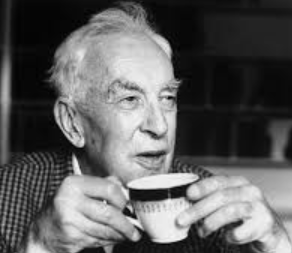
1 month 3 weeks ago
I don't believe a committee can write a book. ... It can, oh, govern a country, perhaps. But I don't believe it can write a book.
▼
Source
source
Interviewed by Christopher Wright (1955). Printed in James Nelson (ed.) Wisdom: Conversations with the Elder Wise Men of Our Day (New York: Norton, 1958) p. 208

4 months 2 weeks ago
Self-respect will keep a man from being abject when he is in the power of enemies, and will enable him to feel that he may be in the right when the world is against him.
▼
Source
source
Authority and the Individual (1949), p. 59

4 months 3 weeks ago
It might be wiser for me to avoid Camarina and say nothing of theologians. They are a proud, susceptible race. They will smother me under six hundred dogmas. They will call me heretic and bring thunderbolts out of their arsenals, where they keep whole magazines of them for their enemies. Still they are Folly's servants, though they disown their mistress. They live in the third heaven, adoring their own persons and disdaining the poor crawlers upon earth. They are surrounded with a bodyguard of definitions, conclusions, corollaries, propositions explicit, and propositions implicit. ...They will tell you how the world was created. They will show you the crack where Sin crept in and corrupted mankind.
▼
Source
source
as quoted by James Anthony Froude, Life and Letters of Erasmus: Lectures Delivered at Oxford 1893-4

4 weeks 1 day ago
Mercy often means giving death, not life.
▼
Source
source
line 329
CivilSimian.com created by AxiomaticPanic, CivilSimian, Kalokagathia