

2 months 3 weeks ago
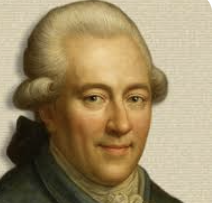
Before one blames, one should always find out whether one cannot excuse. To discover little faults has been always the particularity of such brains that are a little or not at all above the average. The superior ones keep quiet or say something against the whole and the great minds transform without blaming.
▼
Source
source
K 39 Variant translation: Before we blame we should first see whether we cannot excuse.
4 months 4 weeks ago
Since it is Reason which shapes and regulates all other things, it ought not itself to be left in disorder.
▼
Source
source
Book I, ch. 17, 1.

4 months 2 weeks ago
A life without adventure is likely to be unsatisfying, but a life in which adventure is allowed to take whatever form it will is sure to be short.
▼
Source
source
Authority and the Individual, 1949
4 months 2 weeks ago
There is a connected set of events (light-waves) travelling outward from a centre... there are some respects in which all events are alike, and others in which they differ... We must not think of a light-wave as a 'thing', but as a connected group of rhythmical events. The mathematical characteristics of such a group can be inferred by physics, but the intrinsic character of the component events cannot be inferred.
▼
Source
source
An Outline of Philosophy Ch.15 The Nature of our Knowledge of Physics, 1927
4 months 1 week ago
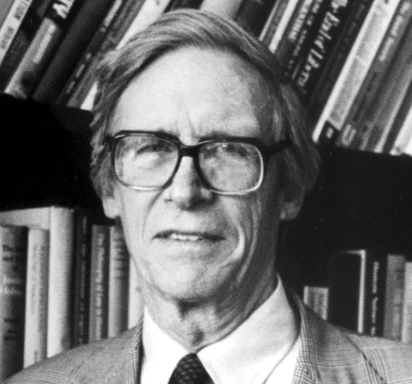
An intolerant sect has no right to complain when it is denied an equal liberty. ... A person's right to complain is limited to principles he acknowledges himself.
▼
Source
source
p. 217

1 month 5 days ago
Literary men are...a perpetual priesthood.
▼
Source
source
The State of German Literature.
5 months 4 days ago
It pertains to all men to know themselves and to learn self-control.

2 months 1 week ago
The audience, as ground, shapes and controls the work of art.
▼
Source
source
p. 48
4 months 2 weeks ago
Among the Romans in Christian times Mithras-worship as very widely spread, and so late as the Middle Ages we meet with a secret Mithras-worship ostensibly connected with the order of the Knights-Templars. Mithras thrusting the knife into the neck of the ox is a figurative representation belonging essentially to the cult of Mithras, of which examples have been frequently found in Europe. Hegel, Georg Wilhelm Friedrich, Lectures on the philosophy of religion, together with a work on the proofs of the existence of God.
▼
Source
source
Vol 2 Translated from the 2d German ed. 1895 Ebenezer Brown Speirs 1854-1900, and J Burdon Sanderson p. 81-82

4 months 2 weeks ago
Even in the games of children there are things to interest the greatest mathematician.
▼
Source
source
1688-1690
2 months 1 week ago
For my part, I travel not to go anywhere, but to go. I travel for travel's sake. The great affair is to move.
▼
Source
source
Travels with a Donkey in the Cévennes (1878).

3 months 1 week ago
Have ye not read, that he which made them at the beginning made them male and female, And said, For this cause shall a man leave father and mother, and shall cleave to his wife: and they twain shall be one flesh? Wherefore they are no more twain, but one flesh. What therefore God hath joined together, let not man put asunder.
▼
Source
source
19:4-6 (KJV)
2 months 1 week ago
What began as a "Romantic reaction" towards organic wholeness may or may not have hastened the discovery of electro-magnetic waves. But certainly the electro-magnetic discoveries have recreated the simultaneous "field" in all human affairs so that the human family now exists under conditions of a "global village." We live in a single constricted space resonant with tribal drums. So that concern with the "primitive" today is as banal as nineteenth-century concern with "progress," and as irrelevant to our problems. The new electronic interdependence recreates the world in the image of a global village.
▼
Source
source
(p. 36)

4 months 2 weeks ago
A bureaucracy always tends to become a pedantocracy.
▼
Source
source
Ch. VI: Of the Infirmities and Dangers to Which Representative Government Is Liable (p. 234)

4 months 2 weeks ago
Don't say things. What you are stands over you the while, and thunders so that I cannot hear what you say to the contrary.
▼
Source
source
Social Aims; sometimes condensed to "What you do speaks so loud that I cannot hear what you say."

1 week 5 days ago
Any institution is only a political structure. In physics and in morals, the laws are the same; you cannot build a large structure on a narrow foundation, nor a durable structure on a moving or transient base. In the political order, therefore, if one wants to build on a large scale and for the centuries, one must rely on an opinion, on a large and profound belief. For if this opinion does not dominate a majority of minds and if it is not deeply rooted, it will furnish only a narrow and transient base.

3 months 1 week ago
Independence I have long considered as the grand blessing of life, the basis of every virtue; and independence I will ever secure by contracting my wants, though I were to live on a barren heath.
▼
Source
source
Dedication

3 months 1 week ago
Compared to the refined culture of sclerotic forms and frames, which mask everything, the lyrical mode is utterly barbarian in its expression. Its value resides precisely in its savage quality: it is only blood, sincerity, and fire.
4 months 3 weeks ago
It is not among extraordinary and fantastic things that excellence is to be found, of whatever kind it may be. We rise to attain it and become removed from it: it is oftenest necessary to stoop for it.

1 month 3 weeks ago
Humanists today, who claim to take a wholly secular view of things, scoff at mysticism and religion. But the unique status of humans is hard to defend, and even to understand, when it is cut off from any idea of transcendence. In a strictly naturalistic view - one in which the world is taken on its own terms, without reference to a creator or any spiritual realm - there is no hierarchy of value with humans at the top. There are simply multifarious animals, each with their own needs. Human uniqueness is a myth inherited from religion, which humanists have recycled into science.
▼
Source
source
An Old Chaos: Humanism and Flying Saucers (p. 77)
4 months 2 weeks ago
The criminal law has, from the point of view of thwarted virtue, the merit of allowing an outlet for those impulses of aggression which cowardice, disguised as morality, restrains in their more spontaneous forms. War has the same merit. You must not kill you neighbor, whom perhaps you genuinely hate, but by a little propaganda this hate can be transferred to some foreign nation, against whom all your murderous impulses become patriotic heroism.
▼
Source
source
Part III: Man and Himself, Ch. 17: Fear, p. 175

3 months 1 day ago
In the root of the word "faith" itself... there is implicit the idea of confidence, of surrender to the will of another, to a person. Confidence is placed only in persons. We trust in Providence, which we perceive as something personal and conscious, not in Fate, which is something impersonal. And thus it is in the person who tells us the truth, in the person that gives us hope, that we believe, not directly or immediately in truth itself or in hope itself.
2 months 2 weeks ago
To challenge and to cope with this paradoxical state of things, we need a paradoxical way of thinking; since the world drifts into delirium, we must adopt a delirious point of view. We must no longer assume any principle of truth, of causality, or any discursive norm. Instead, we must grant both the poetic singularity of events and the radical uncertainty of events. It is not easy. We usually think that holding to the protocols of experimentation and verification is the most difficult thing. But in fact the most difficult thing is to renounce the truth and the possibility of verification, to remain as long as possible on the enigmatic, ambivalent, and reversible side of thought.
▼
Source
source
The Vital Illusion (2000) "The Murder of the Real". Wellek Library Lectures given May 1999 at the University of California, Irvine

2 weeks ago
Enlighten the people generally, and tyranny and oppressions of body and mind will vanish like evil spirits at the dawn of day.
▼
Source
source
Letter to Éleuthère Irénée du Pont de Nemours


5 months 2 weeks ago
Man is a synthesis of psyche and body, but he is also a synthesis of the temporal and the eternal. In the former, the two factors are psyche and body, and spirit is the third, yet in such a way that one can speak of a synthesis only when the spirit is posited. The latter synthesis has only two factors, the temporal and the eternal. Where is the third factor? And if there is no third factor, there really is no synthesis, for a synthesis that is a contradiction cannot be completed as a synthesis without a third factor, because the fact that the synthesis is a contradiction asserts that it is not. What, then, is the temporal?
3 months 6 days ago
Injustice, poverty, slavery, ignorance - these may be cured by reform or revolution. But men do not live only by fighting evils. They live by positive goals, individual and collective, a vast variety of them, seldom predictable, at times incompatible.
2 weeks 1 day ago
A vehement eros runs through the Universe. It is like the ether: harder than steel, softer than air. It cuts through and passes beyond all things, it flees and escapes.

4 months 2 weeks ago
An evil may be real, tho' its cause has no relation to us: It may be real, without being peculiar: It may be real, without shewing itself to others: It may be real, without being constant: And it may be real, without falling under the general rules. Such evils as these will not fail to render us miserable, tho' they have little tendency to diminish pride: And perhaps the most real and the most solid evils of life will be found of this nature.
▼
Source
source
Part 1, Section 6

5 months 4 days ago
Sincerity is that whereby self-completion is effected, and its way is that by which man must direct himself.

3 months ago
When, as a result of what was called Enlightenment in the eighteenth century, the priests had in fact almost entirely lost this function of guidance. Their place was taken by writers and scientists. In both cases it is equally absurd. Mathematics, physics, and biology are as remote from spiritual guidance as the art of arranging words. When that function is usurped by literature and science it proves there is no longer any spiritual life.
▼
Source
source
"Morality and literature," pp. 164-165
5 months ago
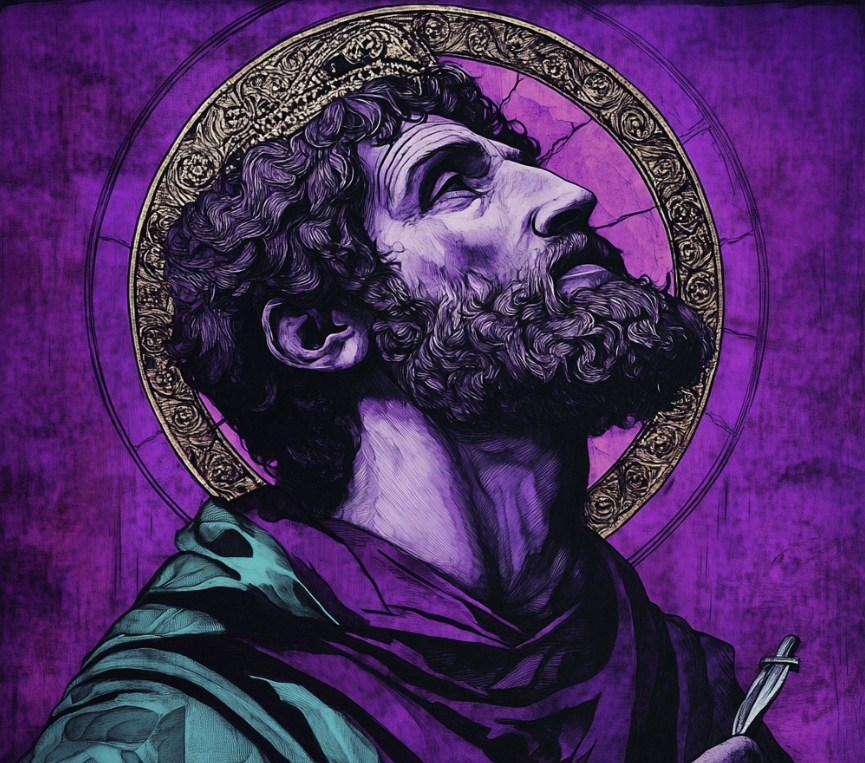
Wonderful is the depth of Thy oracles, whose surface is before us, inviting the little ones; and yet wonderful is the depth, O my God, wonderful is the depth. It is awe to look into it; and awe of honour, and a tremor of love. The enemies thereof I hate vehemently. Oh, if Thou wouldest slay them with Thy two-edged sword, that they be not its enemies! For thus do I love, that they should be slain unto themselves that they may live unto Thee.
▼
Source
source
XII, 14

4 months 2 weeks ago
Whether, then, all ought not immediately to discontinue and renounce it, with grief and abhorrence? Should not every society bear testimony against it, and account obstinate persisters in it bad men, enemies to their country, and exclude them from fellowship; as they often do for much lesser faults?
3 months 1 week ago
Read day and night, devour books - these sleeping pills - not to know but to forget! Through books you can retrace your way back to the origins of spleen, discarding history and its illusions.

4 months 2 weeks ago
When communist workmen associate with one another, theory, propaganda, etc., is their first end. But at the same time, as a result of this association, they acquire a new need - the need for society - and what appears as a means becomes an end. You can observe this practical processing its most splendid results whenever you see French socialist workers together. Such things as smoking, drinking, eating, etc., are no longer means of contact or means that bring together. Company, association, and conversation, which again has society as its end, are enough for them; the brotherhood of man is on mere phase with them, but a fact of life, and the nobility of man shines upon us from their work-hardened bodies.
▼
Source
source
"The Meaning of Human Requirements" p.99-100,The Marx-Engels Reader

4 months 3 weeks ago
For my own part, I cannot without grief see so much as an innocent beast pursued and killed that has no defence, and from which we have received no offence at all.
▼
Source
source
Ch. 11, tr. Cotton, 1685

2 months 3 weeks ago
For Jung, the 'psychic world' (i.e. the world of the mind) was an independent reality, and it was possible to travel there and make the acquaintance of its inhabitants.
▼
Source
source
p. 164
3 months ago
Traditional philosophy's claim to totality, culminating in the thesis that the real is rational, is indistinguishable from apologetics.
▼
Source
source
p. 7
5 months 3 days ago
We may treat of the Soul as in the body whether it be set above it or actually within it since the association of the two constitutes the one thing called the living organism, the Animate. Now from this relation, from the Soul using the body as an instrument, it does not follow that the Soul must share the body's experiences: a man does not himself feel all the experiences of the tools with which he is working.
5 months 4 days ago
No matter how busy you may think you are, you must find time for reading, or surrender yourself to self-chosen ignorance.


4 weeks 1 day ago
What, if you were to pass from the consideration of those single men against whom anger has broken out to view whole assemblies cut down by the sword, the people butchered by the soldiery let loose upon it, and whole nations condemned to death in one common ruin... as though by men who either freed themselves from our charge or despised our authority?
3 weeks 2 days ago
To fight on "the path of God" has been characterized as "medieval" fanaticism; conversely, it has been characterized as a most sacred cause to fight for "patriotic" and "nationalistic" ideals and for other myths that in our contemporary era have eventually been unmasked and shown to be the instruments of irrational, materialistic, and destructive forces... Soldiers went to the front to experience war as something else, namely, as a crisis that all too often did not turn out to be an authentic and heroic transfiguration of the personality, but rather the regression of the individual to a plane of savage instincts, "reflexes," and reactions that retain very little of the human...
2 months 1 week ago
Nationality is not the only kind of social membership, nor is it an exclusive tie. However, it is the only form of membership that has so far shown itself able to sustain a democratic process and a liberal rule of law.
3 months 1 week ago
The only subversive mind is the one that questions the obligation to exist; all the others, the anarchist at the top of the list, compromise with the established order.

4 months 2 weeks ago
Words are good servants but bad masters.
▼
Source
source
As quoted by Laura Huxley, in conversation with Alan Watts about her memoir This Timeless Moment (1968), in Pacifica Archives #BB2037

4 months 2 weeks ago
The annual produce of the land and labour of any nation can be increased in its value by no other means, but by increasing either the number of its productive labourers, or the productive powers of those labourers who had before been employed.
▼
Source
source
Chapter III, p. 377.

5 months 1 week ago
A man is more a man through the things he keeps to himself than through those he says.
4 months 2 weeks ago
That the sun will not rise to-morrow is no less intelligible a proposition, and implies no contradiction, than the affirmation, that it will rise.
▼
Source
source
§ 4.8
CivilSimian.com created by AxiomaticPanic, CivilSimian, Kalokagathia