


6 months 3 weeks ago
Money does not arise by convention, any more than the state does. It arises out of exchange, and arises naturally out of exchange; it is a product of the same.
▼
Source
source
Notebook I, The Chapter on Money, p. 85.

2 months 3 weeks ago
To constrain the brute force of the people, the European governments deem it necessary to keep them down by hard labor, poverty and ignorance, and to take from them, as from bees, so much of their earnings, as that unremitting labor shall be necessary to obtain a sufficient surplus to sustain a scanty and miserable life.
▼
Source
source
Letter to Justice William Johnson

5 months 4 weeks ago
How shall the dead arise, is no question of my faith; to believe only possibilities, is not faith, but mere philosophy.
▼
Source
source
Section 48
5 months 2 weeks ago
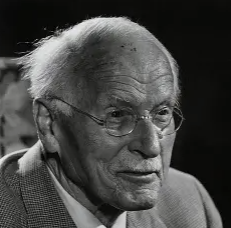
The secret is that only that which can destroy itself is truly alive.
▼
Source
source
Psychology and Alchemy

5 months 2 weeks ago
Since it is difficult to approve the reasons people invoke, each time we leave one of our 'fellow men', the question which comes to mind is invariably the same: how does he keep from killing himself?
6 months 3 weeks ago
But, suppose, besides, that the making of the new machinery affords employment to a greater number of mechanics, can that be called compensation to the carpet makers, thrown on the streets?
▼
Source
source
Vol. I, Ch. 15, Section 6, pg. 479.
5 months 2 weeks ago
Having destroyed all my connections, burned my bridges, I should feel a certain freedom, and in fact I do. One so intense I am afraid to rejoice in it.
2 months 3 weeks ago
To take from one, because it is thought his own industry and that of his fathers has acquired too much, in order to spare to others, who, or whose fathers, have not exercised equal industry and skill, is to violate arbitrarily the first principle of association, the guarantee to everyone the free exercise of his industry and the fruits acquired by it.

5 months 3 weeks ago
It cannot at this time be too often repeated; line upon line; precept upon precept; until it comes into the currency of a proverb, To innovate is not to reform.
▼
Source
source
p. 20
6 months 3 weeks ago
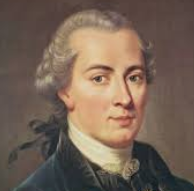
In the natural state no concept of God can arise, and the false one which one makes for himself is harmful. Hence the theory of natural religion can be true only where there is no science; therefore it cannot bind all men together.
▼
Source
source
Part III : Selection on Education from Kant's other Writings, Ch. I Pedagogical Fragments, # 60
6 months 2 weeks ago
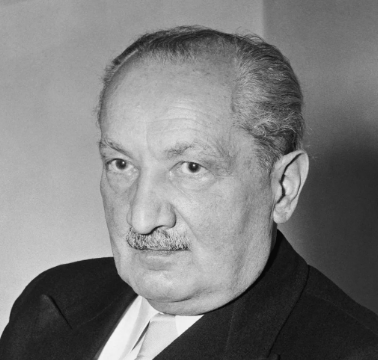
There is no information about the thingness of the thing without knowledge of the kind of truth in which the thing stands. But there is no information about this truth of the thing without knowledge of the thingness of the thing whose truth is in question. Where are we to get a foothold? The ground slips away under us. Perhaps we are already close to falling into the well. At any rate the housemaids are already laughing.
▼
Source
source
p. 27

6 months 3 weeks ago
All things living are in search of a better world.
▼
Source
source
Preface
2 months 3 weeks ago
Our legislators are not sufficiently apprized of the rightful limits of their power; that their true office is to declare and enforce only our natural rights and duties, and to take none of them from us. No man has a natural right to commit aggression on the equal rights of another; and this is all from which the laws ought to restrain him; every man is under the natural duty of contributing to the necessities of the society; and this is all the laws should enforce on him; and, no man having a natural right to be the judge between himself and another, it is his natural duty to submit to the umpirage of an impartial third. When the laws have declared and enforced all this, they have fulfilled their functions, and the idea is quite unfounded, that on entering into society we give up any natural right.
▼
Source
source
Letter to Francis W. Gilmer (27 June 1816); The Writings of Thomas Jefferson edited by Ford, vol. 10, p. 32
6 months 3 weeks ago
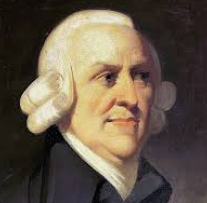
The necessaries of life occasion the great expense of the poor. They find it difficult to get food, and the greater part of their little revenue is spent in getting it. The luxuries and vanities of life occasion the principal expense of the rich, and a magnificent house embellishes and sets off to the best advantage all the other luxuries and vanities which they possess. A tax upon house-rents, therefore, would in general fall heaviest upon the rich; and in this sort of inequality there would not, perhaps, be anything very unreasonable. It is not very unreasonable that the rich should contribute to the public expense, not only in proportion to their revenue, but something more than in that proportion.
▼
Source
source
Chapter II, Part II, Article I, p. 911.

5 months 2 days ago
Just as the performance of the vilest and most wicked deeds requires spirit and talent, so even the greatest demand a certain insensitivity which under other circumstances we would call stupidity.
▼
Source
source
F 87
6 months 3 weeks ago
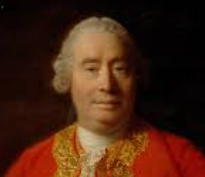
What a noble privilege is it of human reason to attain the knowledge of the supreme Being; and, from the visible works of nature, be enabled to infer so sublime a principle as its supreme Creator? But turn the reverse of the medal. Survey most nations and most ages. Examine the religious principles, which have, in fact, prevailed in the world. You will scarcely be persuaded, that they are any thing but sick men's dreams: Or perhaps will regard them more as the playsome whimsies of monkies in human shape, than the serious, positive, dogmatical asseverations of a being, who dignifies himself with the name of rational.
▼
Source
source
Part XV - General corollary


7 months ago
Bad company will lead a man to the gallows!
▼
Source
source
Act IV, scene vi
7 months ago
That which is good for the enemy harms you, and that which is good for you harms the enemy.
▼
Source
source
Rule 1 from Machiavelli's Lord Fabrizio Colonna: libro settimo (Book 7) (Modern Italian uses nemico instead of nimico.)

6 months 3 weeks ago
We are born helpless. As soon as we are fully conscious we discover loneliness. We need others physically, emotionally, intellectually; we need them if we are to know anything, even ourselves.
▼
Source
source
Introduction
7 months 3 weeks ago
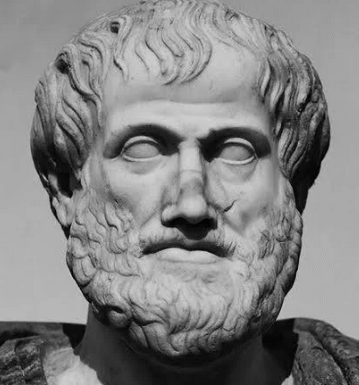
Remember that time slurs over everything, let all deeds fade, blurs all writings and kills all memories. Except are only those which dig into the hearts of men by love.
5 months 1 week ago
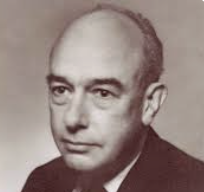
Nonbeing must in some sense be, otherwise what is it that there is not? This tangled doctrine might be nicknamed Plato's beard; historically it has proved tough, frequently dulling the edge of Occam's razor.
▼
Source
source
"On What There Is"
5 months 2 days ago
If we make a couple of discoveries here and there we need not believe things will go on like this for ever.... Just as we hit water when we dig in the earth, so we discover the incomprehensible sooner or later.
▼
Source
source
F 82
2 months 3 weeks ago
The selfish spirit of commerce knows no country, and feels no passion or principle but that of gain.
▼
Source
source
Letter to Larkin Smith

4 months 3 weeks ago
The inherent contradiction of human life has now reached an extreme degree of tension: on the one side there is the consciousness of the beneficence of the law of love, and on the other the existing order of life which has for centuries occasioned an empty, anxious, restless, and troubled mode of life, conflicting as it does with the law of love and built on the use of violence. This contradiction must be faced, and the solution will evidently not be favourable to the outlived law of violence, but to the truth which has dwelt in the hearts of men from remote antiquity: the truth that the law of love is in accord with the nature of man. But men can only recognize this truth to its full extent when they have completely freed themselves from all religious and scientific superstitions and from all the consequent misrepresentations and sophistical distortions by which its recognition has been hindered for centuries.
▼
Source
source
VI

6 months 3 weeks ago
In a world, man must create his own essence: it is in throwing himself into the world, suffering there, struggling there, that he gradually defines himself.
6 months 3 weeks ago
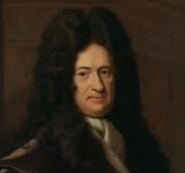
As regards the objection that possibles are independent of the decrees of God I grant it of actual decrees (although the Cartesians do not at all agree to this), but I maintain that the possible individual concepts involve certain possible free decrees; for example, if this world was only possible, the individual concept of a particular body in this world would involve certain movements as possible, it would also involve the laws of motion, which are the free decrees of God; but these, also, only as possibilities. Because, as there are an infinity of possible worlds, there are also an infinity of laws, certain ones appropriate to one; others, to another, and each possible individual of any world involves in its concept the laws of its world.
▼
Source
source
(May, 1686) as quoted in George R. Montgomery, Tr., "Correspondence between Leibniz and Arnauld," Leibniz: Discourse on metaphysics; correspondence with Arnauld, and Monadology (1916) VIII, p. 108
7 months 3 weeks ago
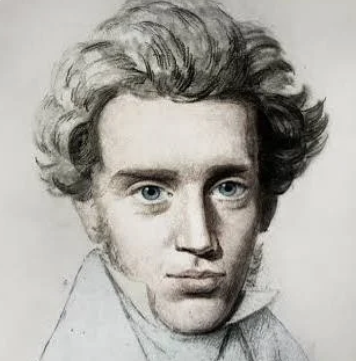
I have worked for this restlessness oriented toward inward deepening. But without authority. Instead of conceitedly making myself out to be a witness for the truth and causing others rashly to want to be the same, I am an unauthorized poet who influences by means of the ideas.
6 months 3 weeks ago
My dear Wormwood, I note what you say about guiding your patient's reading and taking care that he sees a good deal of his materialist friend. But are you not being a trifle naive? It sounds as if you suppose that argument was the way to keep him out of the enemy's clutches. That might have been so if he had lived a few centuries earlier.
▼
Source
source
Letter I
5 months 2 weeks ago
The multiplication of our kind borders on the obscene; the duty to love them, on the preposterous.
6 months 3 weeks ago
Society is undergoing a silent revolution, which must be submitted to, and which takes no more notice of the human existences it breaks down than an earthquake regards the houses it subverts. The classes and the races, too weak to master the new conditions of life, must give way. But can there be anything more puerile, more short-sighted, than the views of those Economists who believe in all earnest that this woeful transitory state means nothing but adapting society to the acquisitive propensities of capitalists, both landlords and money-lords?
▼
Source
source
"Forced Emigration," New York Daily Tribune, 22 March 1853.
2 months 3 weeks ago
Gather your strength and listen; the whole heart of man is a single outcry. Lean against your breast to hear it; someone is struggling and shouting within you. It is your duty every moment, day and night, in joy or in sorrow, amid all daily necessities, to discern this Cry with vehemence or restraint, according to your nature, with laughter or with weeping, in action or in thought, striving to find out who is imperiled and cries out. And how we may all be mobilized together to free him.

5 months 2 weeks ago
To have failed in everything, always, out of a love of discouragement.
4 months 5 days ago
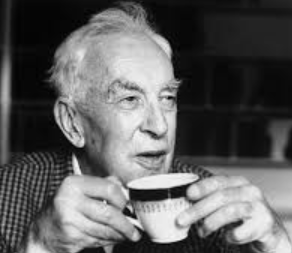
Man is a born geometer. Even when he is expressing himself in curves, as he has done in the undulating roofs of Eastern Asia and in the flowing sculptures at Borobudur, his lines follow mathematical laws that are unknown to Nature; and he is frankly defying her when he works in rectangles. Angkor is perhaps the greatest of Man's essays in rectangular architecture that has yet been brought to light... The Buddhist stupa at Borobudur in Central Java is a lyric poem in stone, flowing round the crown of a hill to the musical accompaniment of a jagged mountain range on one side and a green expanse of rice fields on the other. Angkor is not orchestral; it is monumental. It is an epic poem which makes its effect, like the Odyssey and like Paradise Lost, by the grandeur of its structure as well as by the beauty of the details. Angkor is an epic in rectangular forms imposed upon the Cambodian jungle.
▼
Source
source
27. Angkor

7 months 2 weeks ago
A man is more a man through the things he keeps to himself than through those he says.
2 months 3 weeks ago
People who live at the lower ends of watersheds cannot be isolationists - or not for long. Pretty soon they will notice that water flows, and that will set them to thinking about the people upstream who either do or do not send down their silt and pollutants and garbage. Thinking about the people upstream out to cause further thinking about the people downstream. Such pondering on the facts of gravity and the fluidity of water shows us that the golden rule speaks to a condition of absolute interdependency and obligation. People who live on rivers - or, in fact, anywhere in a watershed - might rephrase the rule in this way: Do unto those downstream as you would have those upstream do unto you.
3 months 1 week ago
Practice humility at first with man and only then before God. He who despises man, has also no respect for God.

6 months 3 weeks ago
Again, defenders of utility often find themselves called upon to reply to such objections as this-that there is not time, previous to action, for calculating and weighing the effects of any line of conduct on the general happiness. This is exactly as if any one were to say that it is impossible to guide our conduct by Christianity, because there is not time, on every occasion on which anything has to be done, to read through the Old and New Testaments. The answer to the objection is, that there has been ample time, namely, the whole past duration of the human species. During all that time mankind have been learning by experience the tendencies of actions.
▼
Source
source
Ch. 2
5 months 1 week ago
No criticism can be brought against a branch of technical science from outside; no thought fitted out with the knowledge of a period and setting its course by definite historical aims could have anything to say to the specialist. Such thought and the critical, dialectical element it communicates to the process of cognition, thereby maintaining conscious connection between that process and historical life, do not exist for empiricism; nor do the associated categories, such as the distinction between essence and appearance, identity in change, and rationality of ends, indeed, the concept of man, of personality, even of society and class taken in the sense that presupposes specific viewpoints and directions of interest.
▼
Source
source
p. 145.

3 months 1 week ago
How does the poet speak to men with power, but by being still more a man than they?
▼
Source
source
Burns.
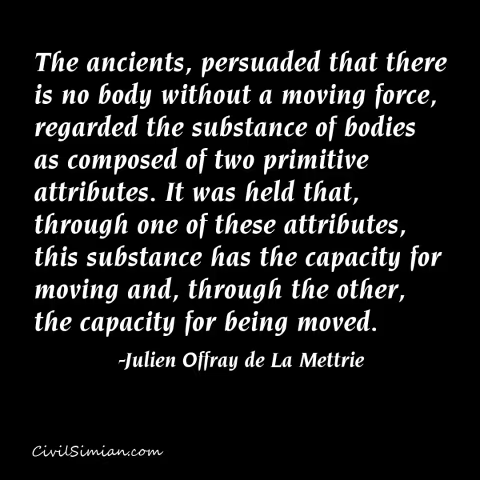
7 months 3 weeks ago
There is a contrast of primary significance between Augustine and Pelagius. The former crushes everything in order to rebuild it again. The other addresses himself to man as he is. The first system, therefore, in respect to Christianity, falls into three stages: creation – the fall and a consequent condition of death and impotence; a new creation - whereby man is placed in a position where he can choose; and then, if he chooses - Christianity. The other system addresses itself to man as he is (Christianity fits into the world). From this is seen the significance of the theory of inspiration for the first system; from this also is seen the relationship between the synergistic and the semipelagian conflict. It is the same question, only that the syngeristic struggle has its presupposition in the new creation of the Augustinian system.
7 months 2 weeks ago
It is all too easy to forget that there are emotional motivations in history, as well as economic ones.
6 months 3 weeks ago
Thus there is nothing waste, nothing dead in the universe; no chaos, no confusions, save in appearence. We might compare this to the appearence of a pond in the distance, where we can see the confused movement and swarming of the fish, without distinguishing the fish themselves.Thus we are that each living body has a dominante entelechy, which in case of an animal is the soul, but the members of this living body are full of other living things, plants and animals, of which each has in turn ita dominant entelechy or soul.
▼
Source
source
Monadology (69-70).

3 months 1 week ago
Would you know what makes men greedy for the future? It is because no one has yet found himself.
3 months 2 weeks ago
It has always been the task of formal education to set up behavior which would prove useful or enjoyable later in a student's life.
▼
Source
source
As quoted in Performance-based Assessment for Middle and High School Physical Education (2002) by Jacalyn Lea Lund and Mary Fortman Kirk, p. 165

3 months 2 weeks ago
A further threat to liberalism has to do with the mode of cognition that we call modern natural science. The early liberals were very closely aligned with the founders of modern natural science, people like Bacon and Descartes and Newton, who believed that there was an objective world beyond our subjective consciousnesses, that we could perceive this world through the experimental method, and then come to manipulate it. Natural science gave us technology... that made the world much more habitable, by conquering disease, by inventing things that vastly increased human productivity. So... it's closely related to the wealth, and... the safety and comfort of a modern economically developed world.
▼
Source
source
18:49

6 months 3 weeks ago
The great thing, then, in all education, is to make our nervous system our ally instead of our enemy.
▼
Source
source
Ch. 4
CivilSimian.com created by AxiomaticPanic, CivilSimian, Kalokagathia